
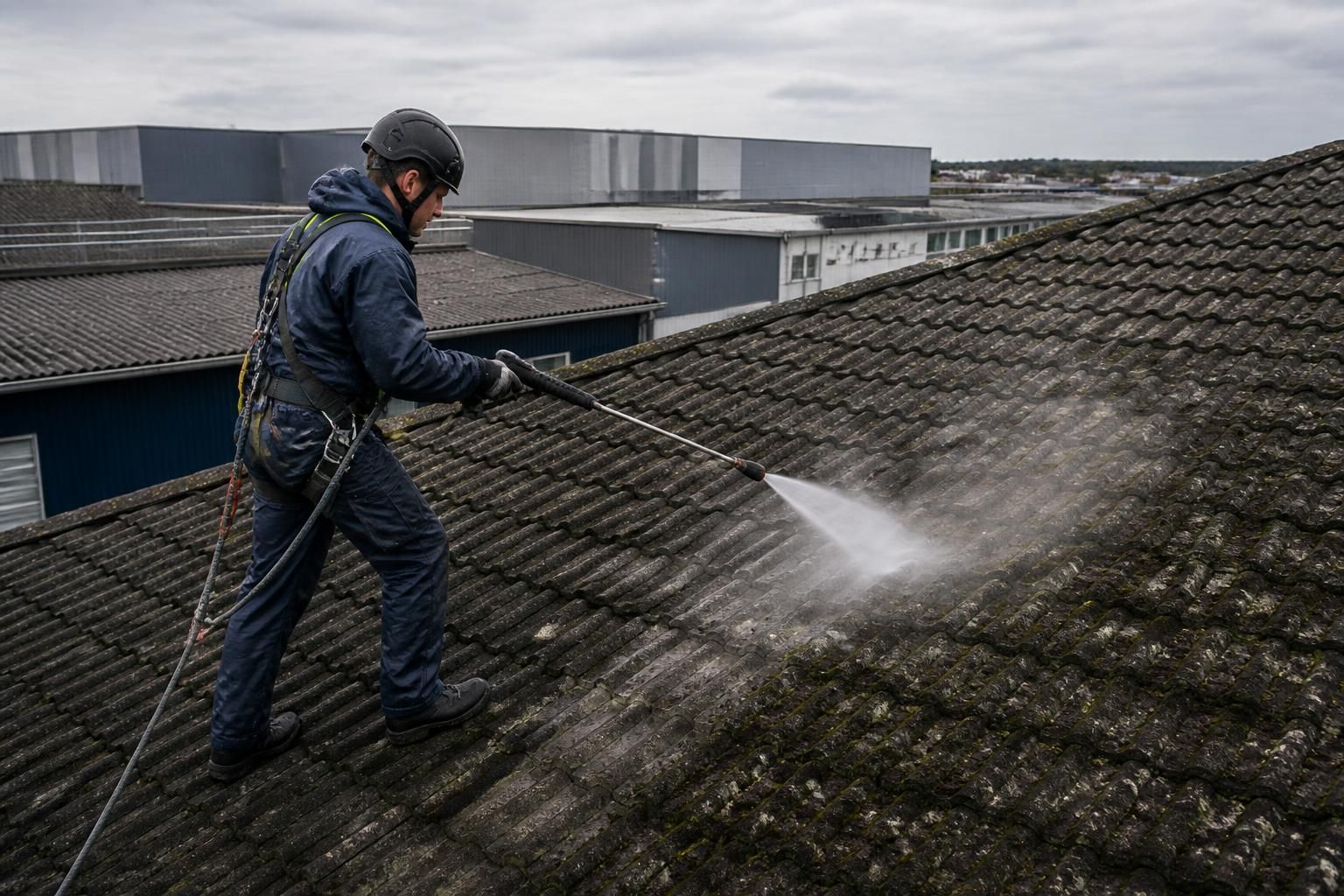
What cleaning methods are best for different types of roof tiles?
The best roof tile cleaning method depends on the material and condition: low-pressure washing with a suitable biocide is generally appropriate for concrete tiles, while clay, slate and older or fragile tiles usually require gentler soft washing or careful manual cleaning. A professional assessment should confirm the tile type, surface condition, existing coatings and risk of damage before any pressure, steam or chemical treatment is used.
The best roof tile cleaning method depends on the tile material, its age, surface finish and condition. Concrete tiles can often be cleaned with controlled low-pressure washing and a suitable biocidal treatment, whereas clay, slate, glazed, historic or damaged tiles generally require a gentler soft-washing or manual approach. A professional inspection should identify the material and assess cracked tiles, loose ridges, eroded mortar, existing coatings and areas of water ingress before cleaning begins.
Concrete roof tiles are usually the most tolerant of mechanical cleaning, but pressure must still be carefully controlled. Low-pressure washing can remove surface dirt, algae, moss and lichen when used with the correct nozzle, working distance and water flow. A compatible biocide may then be applied to deal with remaining organic growth and help slow regrowth. Excessive pressure can strip the tile surface, expose the aggregate, damage protective coatings and force water beneath laps or around flashing, so unrestricted jet washing is not appropriate.
Older concrete tiles need particular care because weathering can make them more porous and brittle. Where the surface is friable, heavily eroded or already losing its coating, soft washing and manual scraping may be safer than pressure washing. Moss should not be pulled from fragile areas if doing so could lift tiles or disturb bedding mortar. Any loose or broken tiles should be recorded and dealt with separately from the cleaning process.
Clay tiles should normally be cleaned with a low-impact method. Manual removal, soft brushing and a carefully selected treatment are often suitable for light moss, algae and lichen. Low-pressure rinsing may be used where the tiles are sound and the finish is compatible, but high-pressure washing can damage the surface, remove weathered material, affect coloured or glazed finishes and drive water into joints. Handmade, reclaimed and historic clay tiles may require a conservation-led approach rather than routine pressure cleaning.
Slate tiles are generally best cleaned by hand or with a gentle soft-washing system. Slate can split, delaminate or become loose if struck by a concentrated jet, and walking directly on it can cause breakage. Cleaning should therefore be planned around safe access equipment, with minimal foot traffic on the roof. Metal fixings, flashings and nearby render should also be checked because unsuitable chemicals or aggressive rinsing may cause staining or corrosion.
Glazed, coated or painted tiles need a method that preserves the finish. Abrasive brushing, strong chemicals and high-pressure washing can dull, lift or remove the coating. A small, inconspicuous test area should be assessed before the main work, followed by a mild detergent or compatible treatment and a controlled rinse if appropriate. Existing coatings should not be assumed to be sound simply because the tiles appear intact.
Interlocking and profiled tiles can collect dirt and organic growth in laps, channels and drainage points. These areas need detailed cleaning rather than simply washing the exposed face of each tile. Water should be directed so that it does not force debris under the interlocks or towards vulnerable roof penetrations. Valleys, abutments, verges and flashing should be inspected and cleared as part of the work, while damaged seals or mortar should not be concealed beneath treatment.
Natural stone and other specialist tiles should be assessed individually. Porous stone can absorb chemicals and dirty water, while some finishes are vulnerable to abrasion, salts or sudden changes in moisture. Low-pressure rinsing, steam or manual cleaning may be suitable depending on the stone and the type of contamination. Historic, listed or architecturally significant roofs may require approval and advice from a conservation professional before cleaning.
Asbestos-containing roof materials must not be treated as ordinary tiles. If asbestos cement or another potentially hazardous material is suspected, the surface should not be scraped, drilled, aggressively brushed or pressure washed. The material should be identified and the work assessed under the applicable health and safety requirements by suitably qualified specialists. Cleaning may not be appropriate if it could release hazardous fibres.
A suitable roof tile cleaning process commonly includes:
- Identifying the tile material, finish, age and construction.
- Checking for cracked, slipped or loose tiles, defective pointing, open laps, damaged flashing and blocked drainage routes.
- Assessing moss, algae, lichen, soot, bird fouling, atmospheric staining and any previous treatment.
- Carrying out a small test area to confirm that the chosen pressure, chemical and dwell time will not damage or discolour the surface.
- Removing heavy growth carefully, rather than relying on pressure alone.
- Using only a treatment compatible with the tiles, roof fittings, surrounding materials and planned runoff controls.
- Rinsing or allowing the treatment to weather as specified, while preventing contaminated water and debris from entering drains or sensitive areas.
- Inspecting the finished roof and gutters, and reporting defects that cleaning cannot remedy.
Steam cleaning can be useful for selected surfaces where reduced chemical use is important, but heat and moisture must be controlled. It is not automatically suitable for every roof, particularly where tiles are cracked, coatings are unstable or water could enter the roof build-up. Likewise, soft washing does not mean applying an untested strong chemical; the product, concentration, dwell time and rinsing method must all be appropriate for the material.
In practical terms, sound concrete tiles may accept controlled low-pressure cleaning; clay and slate usually benefit from manual or soft-washing techniques; coated, historic and fragile tiles require testing and a more conservative method; and suspected asbestos-containing materials require specialist assessment. The safest specification is therefore based on the actual roof rather than the appearance of the dirt. A method statement should set out access arrangements, protection for occupants and surrounding surfaces, runoff management, chemical controls and the inspection procedure before work starts.
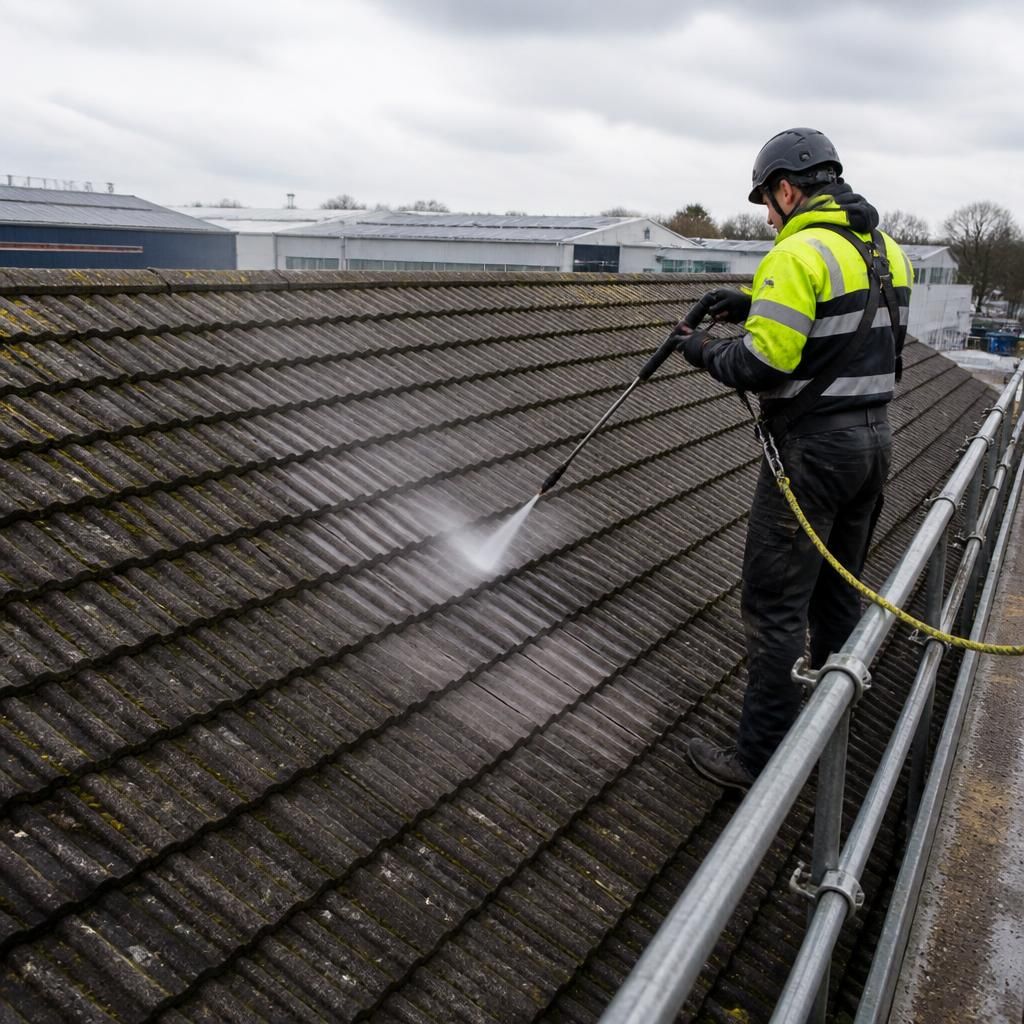
The safest roof tile cleaning method is determined by the tile material and its condition, not simply by how dirty the roof appears. Sound concrete tiles may tolerate controlled low-pressure washing, while clay, slate, glazed and older tiles usually need manual cleaning or a carefully specified soft-washing treatment.
Slate is particularly vulnerable to cracking, delamination and displacement from concentrated water jets or unnecessary foot traffic. Moss and lichen should be removed with minimal disturbance, using suitable access equipment and a compatible treatment. Any cleaning method should first be tested on an inconspicuous area and adjusted to protect the tile surface, fixings, flashing and surrounding materials.
Arrange a professional roof tile cleaning assessment
Arrange a professional roof tile cleaning assessment so the tile material, condition, access requirements and suitable cleaning method can be confirmed before work begins. Contact Encanto Exterior Cleaning to discuss your roof and receive a clear cleaning recommendation.