
What are the benefits of regular roof tile and gutter washing?
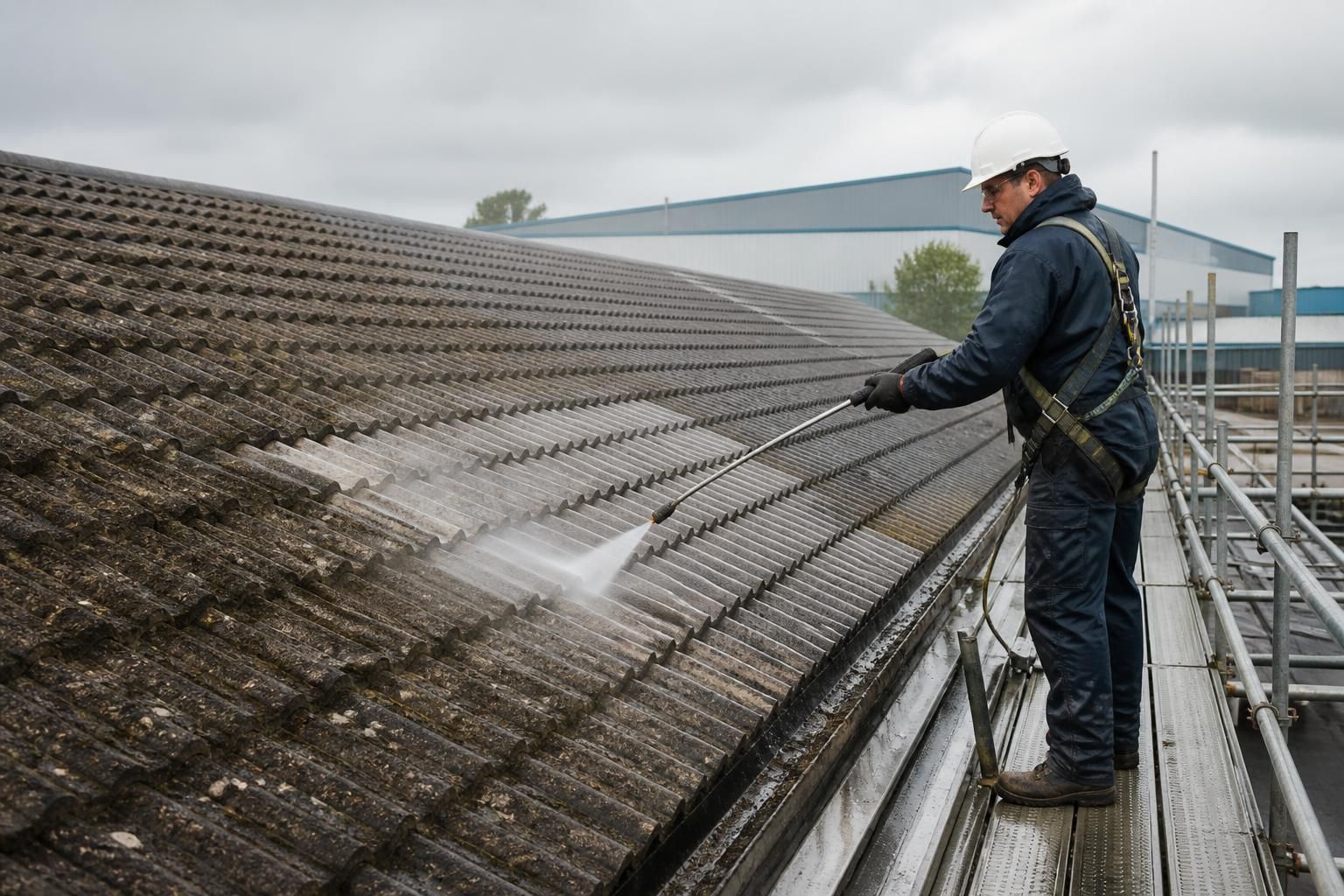
Regular roof tile and gutter washing removes moss, algae, dirt and blockages that can contribute to water ingress, damaged tiles and overflowing gutters. It helps maintain drainage performance, improve roof appearance and reduce the risk of costly repairs while supporting safer, better-presented premises.
Regular roof tile and gutter washing helps prevent avoidable water damage, maintain effective rainwater drainage and preserve the condition of the roof. Removing moss, algae, lichen, dirt, leaves and other debris reduces the likelihood of blocked gutters, overflowing water, damaged tile surfaces and moisture entering the building. For commercial and industrial premises, it also supports safer access routes, a more professional appearance and better control of planned maintenance costs.
The benefits depend on using a suitable cleaning method for the roof covering and carrying out the work safely. Washing should not be treated as a standard high-pressure process for every roof. Tile type, age, condition, pitch, previous treatments, surrounding trees and the building’s drainage arrangements should be assessed before cleaning begins.
Protecting the roof from water-related damage
Moss and organic growth can retain moisture against roof tiles and around joints. Debris may also obstruct the intended path of rainwater, causing water to run over tile edges, behind gutters or against fascia and masonry. Regular washing removes these deposits before they contribute to persistent dampness or make existing defects more difficult to identify.
Cleaning does not repair cracked tiles, failed pointing, defective flashing or damaged roof membranes. However, it makes these issues easier to see during inspection. Identifying defects promptly allows repairs to be planned before minor problems develop into wider water ingress, internal staining or damage to insulation, ceilings and building finishes.
Keeping gutters and downpipes working effectively
Gutters are designed to collect roof water and direct it safely into downpipes and drainage systems. Leaves, moss fragments, silt and windblown debris can reduce their capacity or form blockages at outlets and bends. Washing and clearing the gutter system helps water flow as intended and reduces the risk of overflowing onto walls, entrances, loading areas and pedestrian routes.
After cleaning, downpipes and discharge points should be checked where accessible. A gutter that appears clear at the top can still have a restriction lower down. The condition of brackets, joints, seals and outlets should also be noted, as cleaning cannot compensate for a leaking or poorly supported system.
Reducing maintenance and repair risks
Regular cleaning forms part of preventative maintenance. It can reduce the build-up that accelerates surface deterioration and helps property teams identify repairs while access and equipment are already being planned. This is generally more manageable than responding to an overflowing gutter, a leaking roof or damaged external finishes after severe weather.
For larger premises, a planned schedule also creates a useful maintenance record. Reports and photographs can document the condition of roof tiles, gutters, flashings, outlets and adjacent surfaces. This helps facilities managers prioritise remedial work, coordinate contractors and demonstrate that foreseeable external maintenance has been considered.
Improving the appearance of the building
Algae, moss, lichen, atmospheric soiling and streaking can make a roof look neglected even when the underlying covering remains serviceable. Removing this contamination restores a cleaner, more consistent appearance and can improve the presentation of offices, retail premises, managed estates, communal buildings and public-facing facilities.
Clean gutters and roof edges also help prevent dirty run-off marks on façades, cladding, windows and paving. Where appearance is important, roof washing can therefore support wider external cleaning and building-maintenance programmes.
Supporting safer premises
Blocked or overflowing gutters can create slippery surfaces on paths, steps, entrances and service yards. Water may also form nuisance drips above doorways or affect areas used by staff, visitors and contractors. Keeping the drainage system clear helps reduce these site hazards, although any persistent leak, pooling water or slippery surface should still be investigated and managed separately.
The cleaning operation itself must be risk assessed. Roof work may involve fragile or uneven surfaces, restricted access, electrical services, changing weather and falling debris. Competent operatives should select appropriate access equipment, use suitable personal protective equipment and control the area below the work. Where possible, cleaning from a safe position rather than walking directly on tiles reduces the chance of breakage and personal injury.
Extending the useful condition of roof components
Organic growth and trapped debris can keep surfaces damp and conceal damage. Removing these deposits allows roof tiles and associated components to dry more effectively and makes routine inspections more reliable. It may help preserve the existing condition of sound materials, but it should not be described as extending the guaranteed life of a roof. The result depends on the material, installation quality, exposure and any underlying defects.
Some roofs may benefit from a compatible treatment after washing to slow the return of moss or algae. Any treatment should be selected for the specific tile material and applied only where it will not affect coatings, sealants, rainwater goods or surrounding surfaces. Treatment is not a substitute for clearing gutters or repairing defective areas.
Reducing the chance of avoidable interior damage
Well-maintained roof drainage helps direct rainwater away from walls and building entrances. This can reduce the risk of damp patches, staining, mould-supporting moisture and deterioration to internal finishes caused by external water escaping from blocked or defective drainage. Cleaning cannot guarantee that a building will remain watertight, particularly where the roof covering or flashing has already failed, so inspections should accompany the work.
Making cleaning more controlled and environmentally responsible
Regular maintenance can allow contamination to be removed before it becomes heavily established, potentially reducing the need for aggressive cleaning. The method should be matched to the roof: lower-pressure washing, controlled rinsing, steam cleaning or manual removal may be more appropriate than powerful jetting on older, weathered or delicate tiles. Run-off should be controlled so that dirty water, moss and cleaning residues do not enter unsuitable drains or contaminate neighbouring surfaces.
Good practice includes protecting vulnerable façades and landscaping, collecting solid debris, using cleaning products only where necessary and following the product manufacturer’s instructions. The surrounding site, drainage system, water restrictions and any relevant environmental controls should be considered before work starts.
What regular roof tile and gutter washing should include
- An inspection of the roof covering, visible defects, gutters, downpipes, outlets and access conditions.
- Removal of moss, algae, lichen, leaves, silt and other loose contamination using a suitable technique.
- Careful control of water pressure to avoid unnecessary damage to tiles, joints, coatings and rainwater goods.
- Collection or safe management of removed debris and wash water.
- Checks for remaining blockages, overflowing points, loose brackets and leaking joints where accessible.
- Clear reporting of defects that require a roofer, drainage specialist or other follow-up contractor.
The most effective approach is a planned maintenance programme based on the roof’s condition, local exposure and the amount of surrounding debris, rather than cleaning only after a blockage or leak occurs. Regular roof tile and gutter washing will not prevent every roof problem, but it provides a practical way to maintain drainage, improve inspection access and address contamination before it contributes to more costly damage.
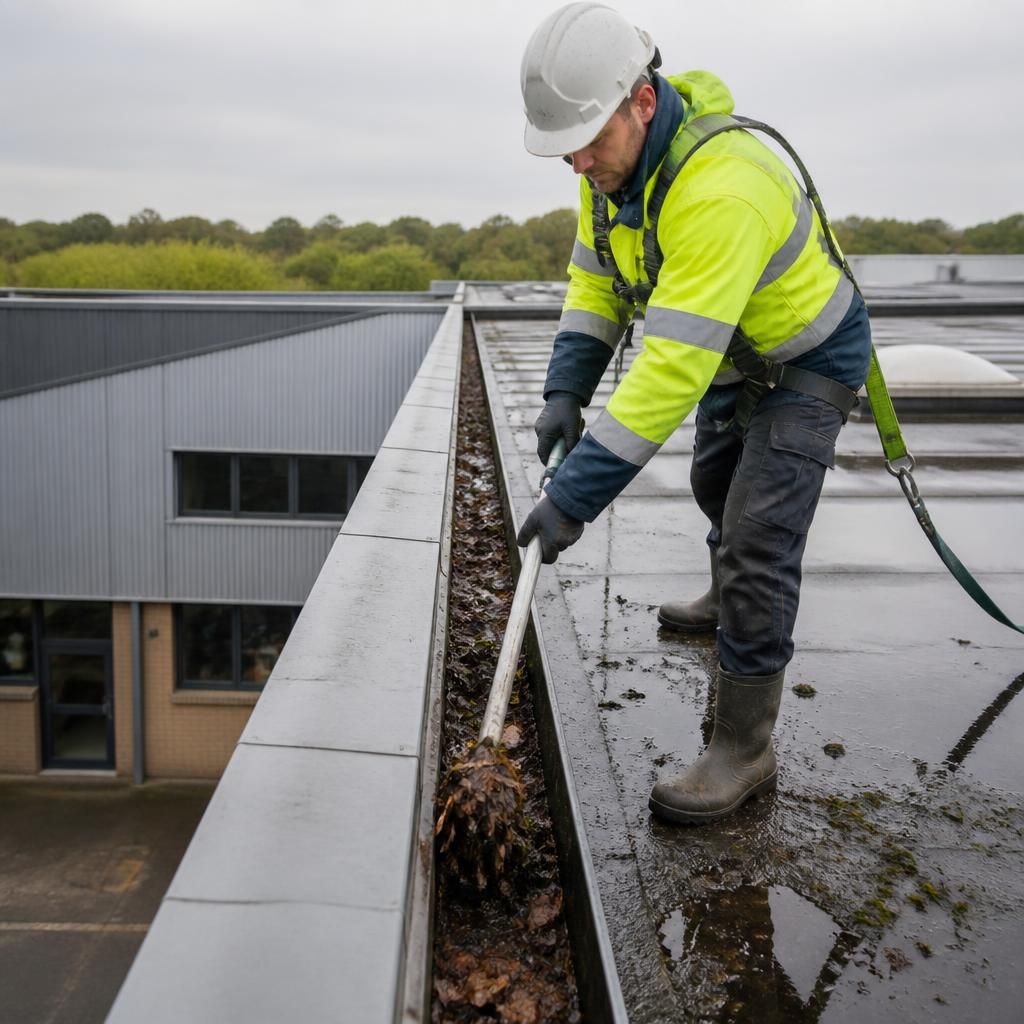
Regular roof tile and gutter washing helps maintain the roof drainage system by removing moss, leaves, silt and other debris that restrict the flow of rainwater. Clear gutters and downpipes reduce the risk of water overflowing onto fascias, walls, entrances and pedestrian areas, where persistent moisture can cause staining, dampness and deterioration.
Cleaning also makes defects easier to identify. Cracked tiles, loose brackets, leaking joints and damaged flashing should be reported for repair, as washing cannot correct structural or waterproofing problems. A suitable method should be selected for the tile material and condition, with controlled run-off and safe access used throughout the work.