
What are the benefits of professional roof tile and gutter cleaning?
Professional roof tile and gutter cleaning removes moss, algae, debris and blockages that can retain moisture, restrict drainage and contribute to roof and building damage. It helps protect the roof covering, reduce the risk of overflowing gutters and damp, improve site safety and maintain a clean, professional appearance.
Professional roof tile and gutter cleaning removes moss, algae, lichen, silt, leaves and other debris using methods selected for the roof covering and building. The main benefits are improved water management, reduced risk of damage, safer access and maintenance, and a cleaner, more professional appearance. Experienced contractors also identify defects and drainage problems during the work, allowing issues to be addressed before they develop into more expensive repairs.
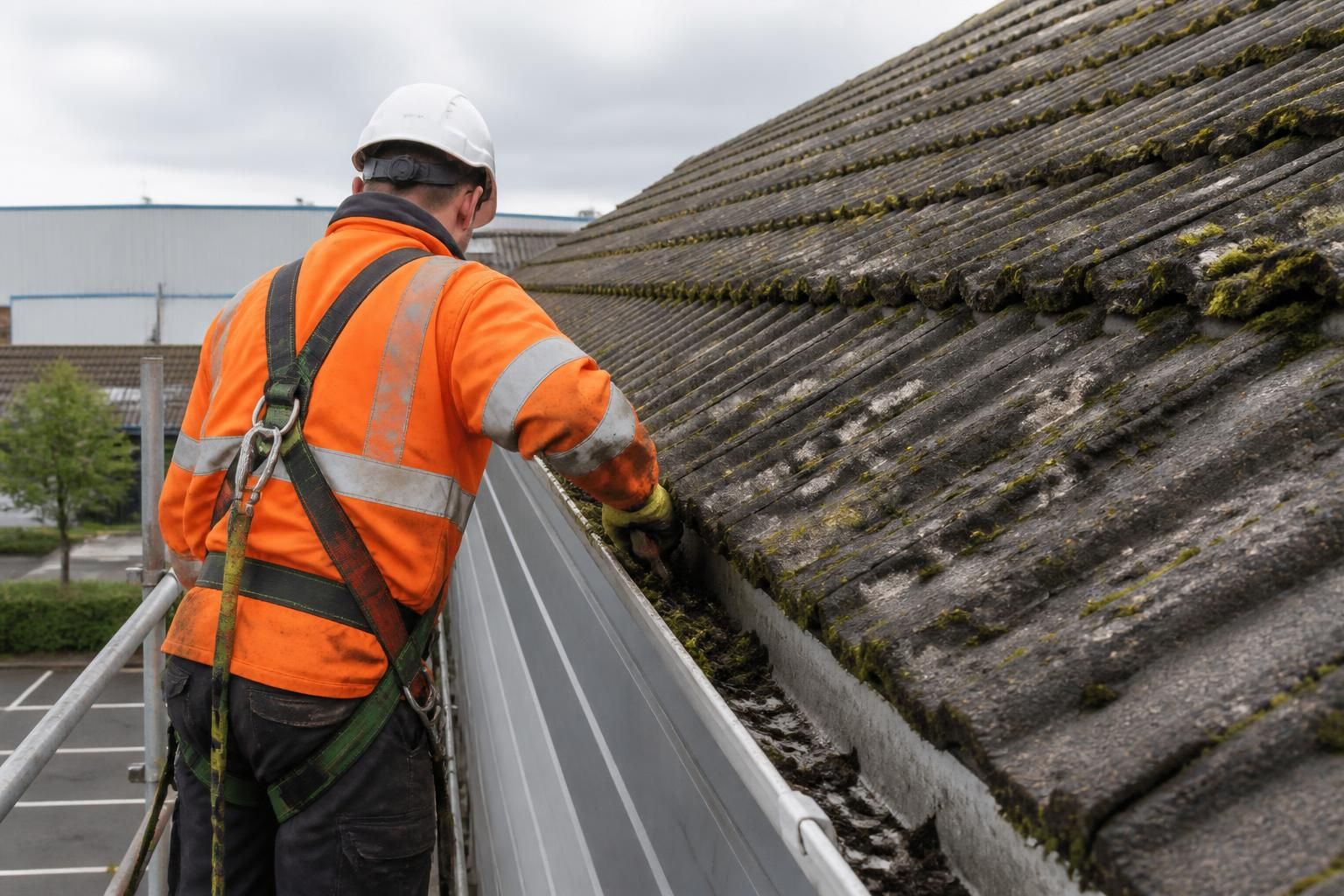
It helps prevent moisture-related damage. Moss and organic growth can hold water against roof tiles, particularly around laps, joints and areas with limited sunlight. Debris can also retain moisture against fascias, soffits and roof edges. Removing these materials helps the roof dry more effectively and reduces conditions that may contribute to staining, deterioration and damp. Cleaning does not repair cracked tiles, failed pointing or defective flashing, but it makes these issues easier to see and report.
It keeps gutters and rainwater outlets working properly. Gutters filled with leaves, moss and sediment cannot carry rainfall away efficiently. Blockages may cause water to overflow onto walls, windows, entrances, pathways and landscaped areas. They can also place additional weight on gutter brackets and joints. Clearing the gutter channels, downpipes, outlets and accessible connections restores the intended flow and helps direct water away from the building.
For commercial and industrial premises, reliable drainage is particularly important. Overflowing gutters can create slippery surfaces around entrances, disrupt customers or staff, and damage stock, equipment or external finishes. On larger sites, a planned clean can cover roof drainage routes, canopies, loading areas and other sections that are difficult to monitor during routine ground-level inspections.
It can extend the serviceable life of roof and drainage components. Regular removal of abrasive debris and moisture-retaining growth reduces avoidable stress on tiles, guttering and associated roofline materials. It also provides an opportunity to identify loose or damaged tiles, corrosion, split joints, sagging gutters and blocked outlets. Early reporting does not guarantee that a component will last longer, but it can prevent minor defects from being hidden until they cause a larger failure.
It improves safety around the property. Moss, algae and accumulated debris can fall from roof edges or contribute to slippery ground conditions when washed onto paths and access routes. Clearing gutters also reduces the risk of uncontrolled water discharge at doorways and walkways. Professional work includes planning for safe access, exclusion zones, suitable equipment and controlled handling of wash water. The exact arrangements depend on the building height, roof pitch, surrounding activities and access constraints.
It improves kerb appeal and presentation. Black streaks, moss growth, blocked gutters and dirty roof tiles can make a well-maintained property appear neglected. Cleaning can improve the appearance of rooflines, façades, canopies and entrances, which is useful for offices, retail premises, managed estates, public buildings and sites receiving visitors. A clean exterior also supports consistent standards across a property portfolio.
Professional cleaning reduces the risk of damage caused by unsuitable methods. Roof tiles are not all cleaned in the same way. Concrete, clay, slate and coated or aged tiles can respond differently to pressure, heat and cleaning agents. A competent contractor will assess the material, condition, pitch, previous treatments and nearby surfaces before choosing a method. Depending on the circumstances, this may involve low-pressure washing, controlled steam cleaning, soft washing, manual removal or a combination of techniques. Excessive pressure can dislodge tiles, drive water beneath laps or damage surface finishes, so more force is not necessarily better.
Professional equipment and access systems also help reduce the need to walk directly across fragile roof areas. Operatives can use suitable access equipment, ground-based methods or carefully planned roof access where appropriate. This is especially important on older roofs, roofs with fragile coverings and buildings where plant, vehicles or pedestrians remain active below.
It supports more effective planned maintenance. A cleaning visit can be incorporated into a wider exterior maintenance programme rather than treated as an isolated task. Before work begins, the roof and drainage system should be assessed for access, material type, contamination, defects and environmental controls. After cleaning, the condition of visible tiles, gutters, downpipes and roofline elements can be recorded, with recommendations for repairs, treatment or future inspection where required.
The environmental benefit depends on how the work is carried out. Responsible cleaning limits chemical use to situations where it is suitable, prevents contaminated run-off from entering surface-water drains, and uses containment, collection or filtration measures where necessary. Debris should be removed from the site rather than allowed to wash into drainage systems. The most appropriate approach balances cleaning performance, protection of the roof material, water use and control of run-off.
Professional roof tile and gutter cleaning is therefore preventative maintenance, not simply cosmetic washing. It helps maintain drainage, reveal defects, reduce avoidable safety hazards and preserve the appearance of the premises. The most effective programme is based on the roof material, surrounding trees, weather exposure, building use, previous cleaning and the condition of the gutters. Cleaning should be arranged alongside prompt repairs when inspection identifies damaged tiles, defective joints, failed flashing or other underlying problems.
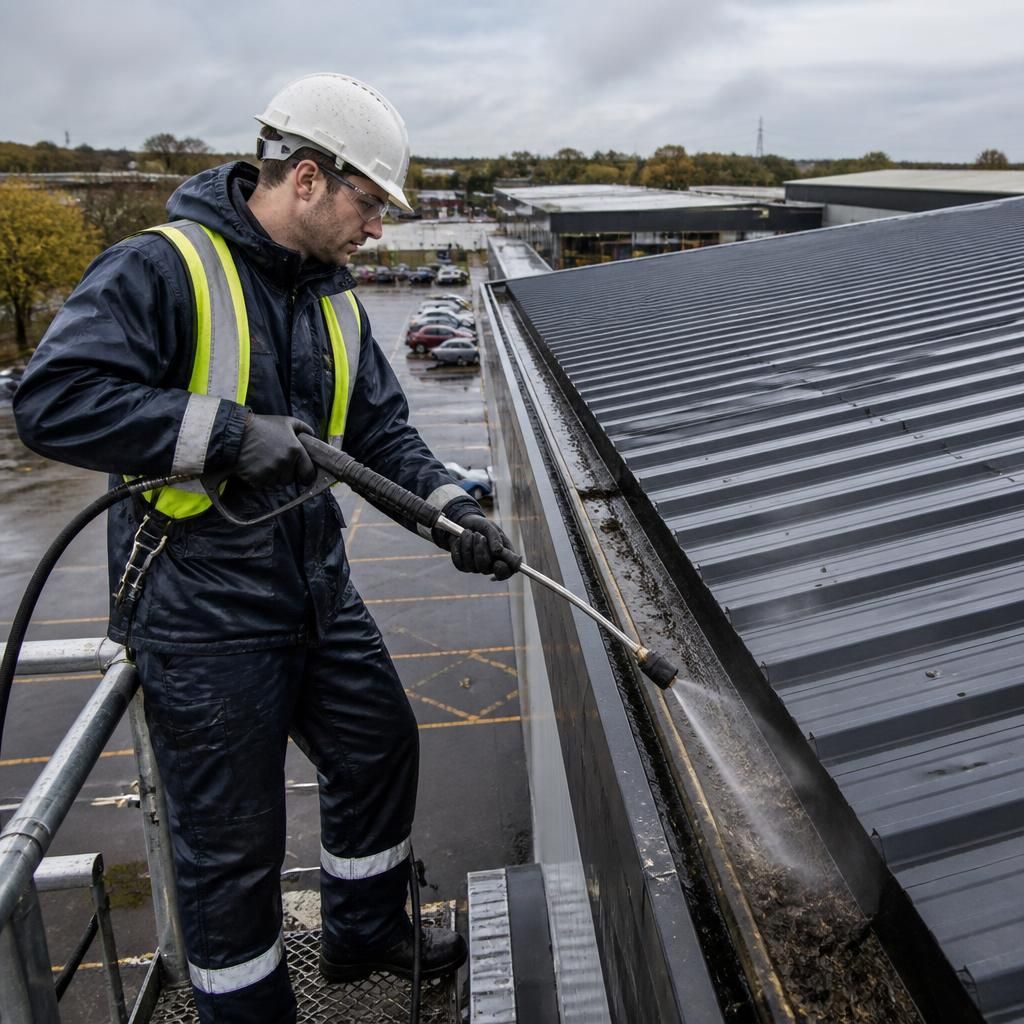
One of the main benefits of professional roof tile and gutter cleaning is improved rainwater control. Removing moss, leaves, silt and other debris allows water to travel through the guttering and downpipes as intended, reducing the risk of overflow at roof edges, walls, entrances and pedestrian areas.
Professional cleaning also helps identify problems that may be hidden by debris, including cracked tiles, loose sections, split joints, corroded guttering, sagging channels and blocked outlets. These defects can then be reported for repair before they contribute to damp, staining or damage to external finishes. Cleaning will not correct a failed flashing or damaged tile, but it makes the condition of the roof and drainage system easier to assess.
For commercial properties, this is particularly useful where uncontrolled discharge could create slippery surfaces, affect access routes or disrupt building users. The cleaning method and access arrangements should be selected according to the roof material, pitch, condition and surrounding site activity.