
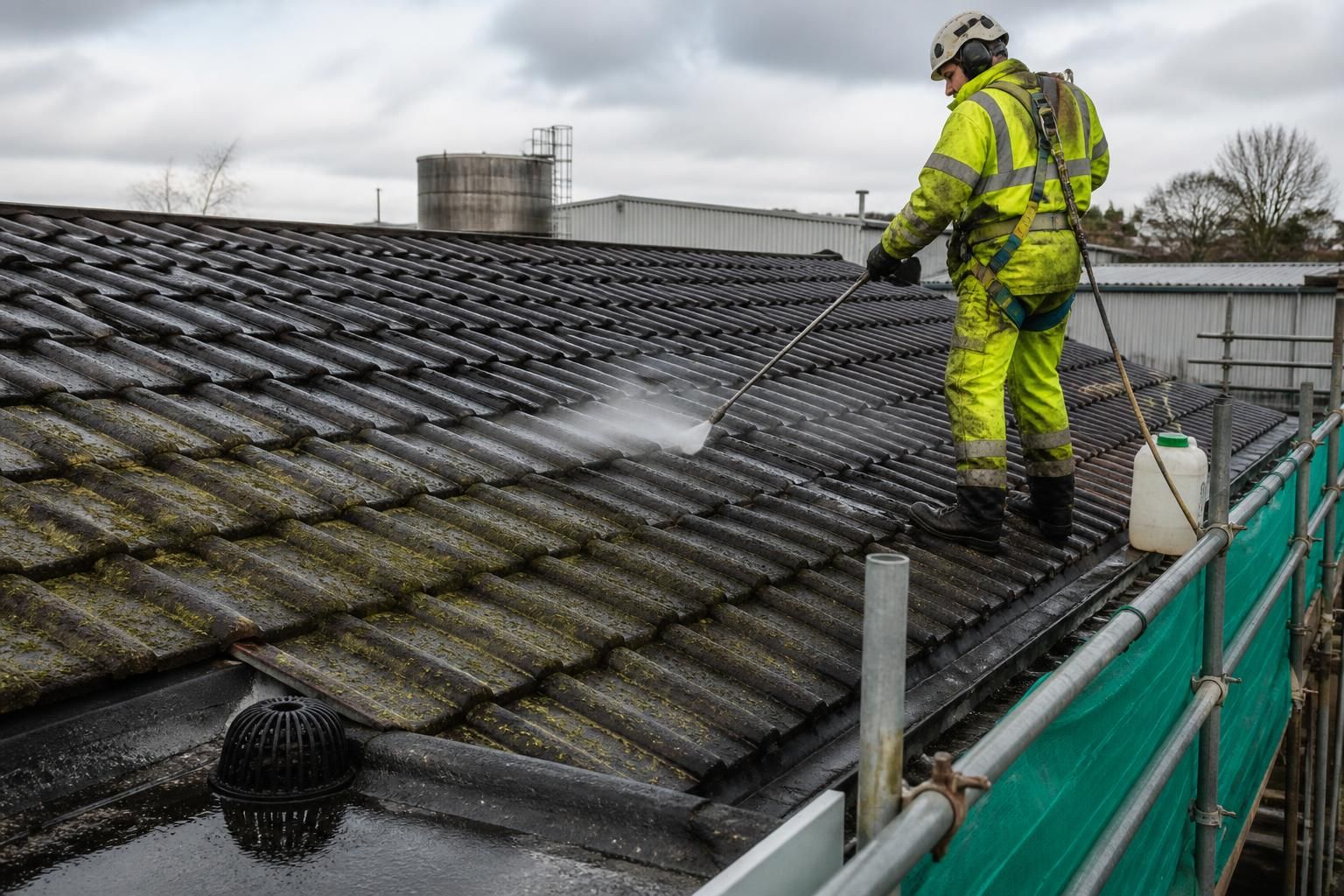
What safety measures should be implemented during the roof tile treatment process to protect both workers and the surrounding environment?
Roof tile treatment should be carried out under a documented risk assessment and method statement, using suitable access equipment, fall protection, PPE and controls for treatment chemicals, overspray and contaminated runoff. The work area should be isolated from workers, occupants and the public, with weather conditions, fragile tiles, drainage routes and waste disposal managed throughout the process.
Roof tile treatment should be planned and carried out under a documented risk assessment and method statement (RAMS), with suitable access equipment, fall protection, personal protective equipment (PPE), chemical controls and measures to prevent contaminated water or coating materials entering the surrounding environment. The work area should be isolated from occupants, other contractors and members of the public, while the condition of the roof, weather, drainage routes and waste-disposal requirements are monitored throughout the operation.
Plan the work before anyone accesses the roof
A competent person should inspect the building and prepare the RAMS before treatment begins. The assessment should cover the roof structure, tile condition, pitch, height, access points, nearby buildings, overhead services, fragile areas, skylights, roof edges and the risks created by cleaning or applying a coating. It should also identify whether the work falls within the requirements of the Health and Safety at Work etc. Act, the Work at Height Regulations and the Control of Substances Hazardous to Health (COSHH) Regulations. Construction projects may also require consideration of the Construction (Design and Management) Regulations.
The method statement should explain the sequence of work, equipment to be used, exclusion zones, emergency arrangements, inspection requirements and responsibilities. Workers should be briefed on the plan before starting and should have access to relevant safety data sheets for any biocides, detergents, sealants, paints or other treatment products.
Use a safe system for access and fall prevention
- Use properly selected and inspected scaffolding, access towers, mobile elevated work platforms or other suitable access systems rather than relying on ladders for prolonged work.
- Provide edge protection, guardrails, toe boards or other collective fall-prevention measures wherever practicable.
- Where personal fall-arrest or restraint systems are necessary, use suitable anchor points and ensure workers are trained in their use and rescue procedures.
- Keep ladders on stable ground and use them only for suitable short-duration tasks, with secure positioning and safe transfer arrangements where access to a roof is required.
- Inspect access equipment before use and after any event that could affect its stability, such as high winds or alteration of the scaffold.
Roof tiles can become particularly slippery when wet, treated with a biocide or covered in moss and algae. Workers should avoid walking directly on fragile or unsupported tiles wherever possible. Crawling boards, roof ladders or designated access routes may be required, but these must be appropriate for the roof construction and secured against movement.
Check the roof for fragile and defective areas
A visual inspection should identify cracked, loose, delaminated or poorly supported tiles, deteriorated battens, weak roof coverings and damaged flashing. Roofs containing fragile sheets, translucent panels or unprotected rooflights require additional controls and should not be treated as ordinary walkable surfaces. Areas that cannot safely support workers should be accessed from suitable platforms or treated using alternative methods.
Any suspected asbestos-containing materials should be assessed before cleaning or treatment. Work that could disturb asbestos must not proceed until the material has been identified and the appropriate legal controls and competent asbestos arrangements are in place.
Control cleaning water, chemicals and airborne spray
Product labels and safety data sheets should be followed for storage, dilution, application, contact time, ventilation and disposal. COSHH controls should address skin and eye contact, inhalation, accidental ingestion, incompatible products and the treatment of contaminated clothing or equipment. Chemicals should remain in labelled containers, with spill kits available and decanted products clearly identified.
- Wear PPE selected for the product and task, which may include chemical-resistant gloves, protective clothing, eye or face protection, safety footwear and suitable respiratory protection.
- Prevent spray drift by using controlled application equipment, suitable pressure and low-wind working conditions.
- Protect windows, doors, vents, air-conditioning intakes, vehicles, signage, painted surfaces, plants and other sensitive materials from overspray.
- Do not mix products unless the manufacturer specifically permits it. In particular, avoid improvised combinations of cleaning agents.
- Provide washing facilities and clear procedures for dealing with splashes, exposure and contaminated clothing.
High-pressure cleaning can generate hazardous aerosols and dislodge tile fragments, mortar, moss and dirt. The pressure and nozzle should be selected to clean effectively without damaging the tiles or forcing water beneath the roof covering. Operators should keep other people away from the discharge area and use eye, face and hearing protection where the assessment requires it.
Prevent pollution and protect drainage systems
Before cleaning begins, identify roof outlets, gutters, downpipes, gullies, surface-water drains, soakaways, watercourses and neighbouring land. Dirty wash water, algae, moss, chemical residues and coating materials must not be allowed to enter surface-water drainage or a watercourse. Suitable controls may include drain covers, temporary bunding, gutter isolation, collection systems, filtration and controlled recovery of wastewater.
Wastewater should be handled in accordance with the product instructions and applicable environmental requirements. It should not be discharged simply because it appears clear. Where recovery is not practicable, the proposed discharge route should be confirmed before work starts. Solid waste such as moss, damaged tiles, contaminated absorbents, empty containers and used protective sheeting should be collected, contained and disposed of through an appropriate waste route. Spillages should be stopped at source, contained and reported internally so that the correct clean-up and disposal method is used.
Plants, soil, ponds, water butts and other sensitive areas near the building should be protected from treatment products and dirty runoff. Any temporary sheeting should be secured so that it cannot obstruct drainage, create trip hazards or be blown into neighbouring property.
Control risks to building occupants, the public and other contractors
Set up a clearly defined exclusion zone below and around the work area. Barriers, warning signs and, where necessary, a banksman should prevent people from walking beneath access equipment or exposed roof edges. Do not leave tools, hoses, chemicals or loose materials where they could fall or create a trip hazard. Secure equipment when the site is unattended and keep emergency routes, entrances and fire points available.
Coordinate the work with the building manager and other contractors. Occupants should be told when treatment will take place, which areas are restricted and how to report an incident or suspected odour, leak or contamination. Windows, doors and ventilation systems may need to remain closed during spraying, subject to suitable arrangements for maintaining safe building conditions.
Monitor weather, equipment and changing conditions
Work at height and chemical application should be postponed when conditions make control measures unreliable. High winds can destabilise access equipment and increase overspray; rain can dilute products and create slip risks; frost can affect footing and product performance; and strong sunlight or heat can cause coatings to dry too quickly. The supervisor should monitor conditions throughout the shift rather than relying only on the forecast.
Hoses, cables and spray lines should be routed to prevent trips, snagging and damage. Electrical equipment must be suitable for the environment, protected from water and supported by appropriate inspection and testing arrangements. Workers should stop the task if tiles become unstable, runoff escapes containment, access equipment moves, visibility deteriorates or an unexpected hazard is found.
Provide supervision, welfare and emergency arrangements
Only trained and competent workers should operate access equipment, pressure-washing machinery or chemical application equipment. A responsible supervisor should check the controls, inspect the work area and make sure that lone working is avoided where a fall, chemical exposure or delayed rescue could occur.
The site should have a practical emergency plan covering falls from height, access-equipment failure, chemical splashes, fire, electric shock, severe weather and spills. It should identify how to raise the alarm, contact emergency services, provide first aid, recover an injured person and contain contaminated water. Rescue arrangements must be realistic for the roof and access system; simply relying on the emergency services may not be sufficient for a suspended or injured worker.
Following treatment, inspect the roof, gutters, surrounding surfaces and drainage controls before dismantling the work area. Remove residues and waste, check that no access equipment or protective materials remain, and record defects, incidents, product details and any areas requiring follow-up. These controls protect workers and the public while also reducing the risk of tile damage, chemical exposure, pollution and costly remedial work.
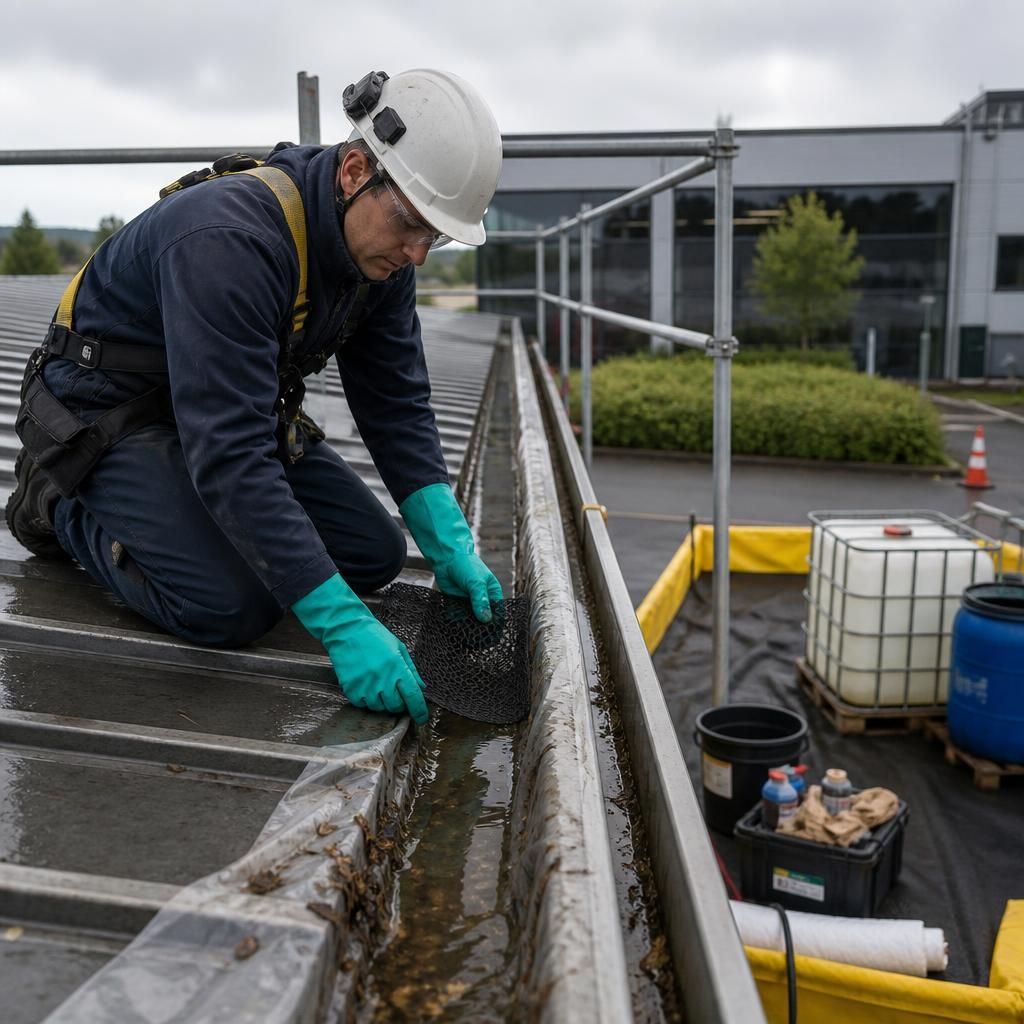
Controlling treatment chemicals and dirty runoff is essential during roof tile treatment because biocides, detergents, moss, algae and coating residues can contaminate drains, soil, ponds and nearby watercourses. Before work starts, identify gutters, downpipes, surface-water drains and sensitive areas around the building.
- Use drain covers, temporary bunding, gutter isolation or wastewater collection where appropriate.
- Prevent spray drift by using controlled application equipment and avoiding unsuitable wind conditions.
- Keep chemicals in labelled containers, follow the product safety data sheet and have a suitable spill kit available.
- Collect moss, contaminated absorbents, used sheeting and empty containers for disposal through an appropriate waste route.
Do not discharge treatment water simply because it looks clear. Confirm the correct disposal or discharge method before cleaning begins, and stop work immediately if contaminated water escapes the planned controls.
Discuss Safe Roof Tile Treatment for Your Property
If your roof requires treatment, contact Encanto Exterior Cleaning to discuss a safe, site-specific method for protecting workers, the building and the surrounding environment. We can assess the roof, access requirements, treatment products and drainage controls before work begins.