
What are the long-term benefits of applying protective coatings to roof tiles?
Protective coatings help roof tiles resist water penetration, weathering, staining, moss and surface deterioration, which can extend the roof’s service life. By reducing damage and slowing wear, they can also lower maintenance requirements, help preserve the roof’s appearance and reduce the risk of costly repairs.
Protective coatings can extend the serviceable life of sound roof tiles by reducing water absorption, surface weathering, staining and biological growth. By limiting the amount of moisture and contamination reaching the tile surface, a suitable coating can help preserve the roof’s performance, appearance and condition, while reducing the frequency and cost of remedial maintenance over time.
The long-term benefits depend on the condition and type of tile, the coating system selected and the quality of preparation and application. A coating is not a substitute for replacing cracked tiles, repairing defective flashings or resolving leaks. It should be applied only after the roof has been inspected, cleaned and confirmed as suitable for treatment.
Key long-term benefits include:
- Reduced water penetration: A suitable coating can help repel rainwater and reduce absorption into porous tiles. This is particularly useful where repeated wetting and drying may contribute to surface deterioration, frost-related damage or the gradual weakening of the tile.
- Slower weathering: Roof tiles are exposed to rain, wind, frost, airborne pollutants and changes in temperature. Protective coatings can form a barrier against some of these influences, helping to reduce erosion, surface chalking and loss of finish.
- Improved resistance to moss, algae and lichen: A cleaner, less absorbent surface gives organic growth fewer favourable conditions. This can help reduce moisture retention and limit the risk of growth lifting surface material or obstructing drainage channels.
- Lower maintenance requirements: When tiles absorb less water and accumulate less staining or biological growth, cleaning and inspection work may be easier to manage. This does not eliminate the need for maintenance, but it can support a more predictable maintenance programme.
- Better appearance retention: Coatings can help maintain a more consistent colour and finish by reducing staining, dirt adhesion and weather-related fading. This is valuable on commercial and managed properties where the roof forms part of the building’s overall presentation.
- Reduced risk of secondary damage: Limiting moisture ingress can help reduce the likelihood of deterioration affecting associated components, such as roof underlays, timber elements or insulation. The extent of this benefit depends on the roof construction and whether existing defects have been corrected.
- Potentially lower whole-life costs: Preventing or slowing deterioration may reduce the need for intensive cleaning, isolated repairs and premature tile replacement. The financial benefit is greatest when treatment is planned as part of wider roof maintenance rather than used to cover existing defects.
Protective coatings may also help make future cleaning more manageable. A suitably prepared and coated surface is often less likely to hold tightly bonded dirt and staining, which can reduce the need for aggressive cleaning methods. This can be important on older or more delicate tiles, although the correct cleaning pressure and method must still be selected for the substrate.
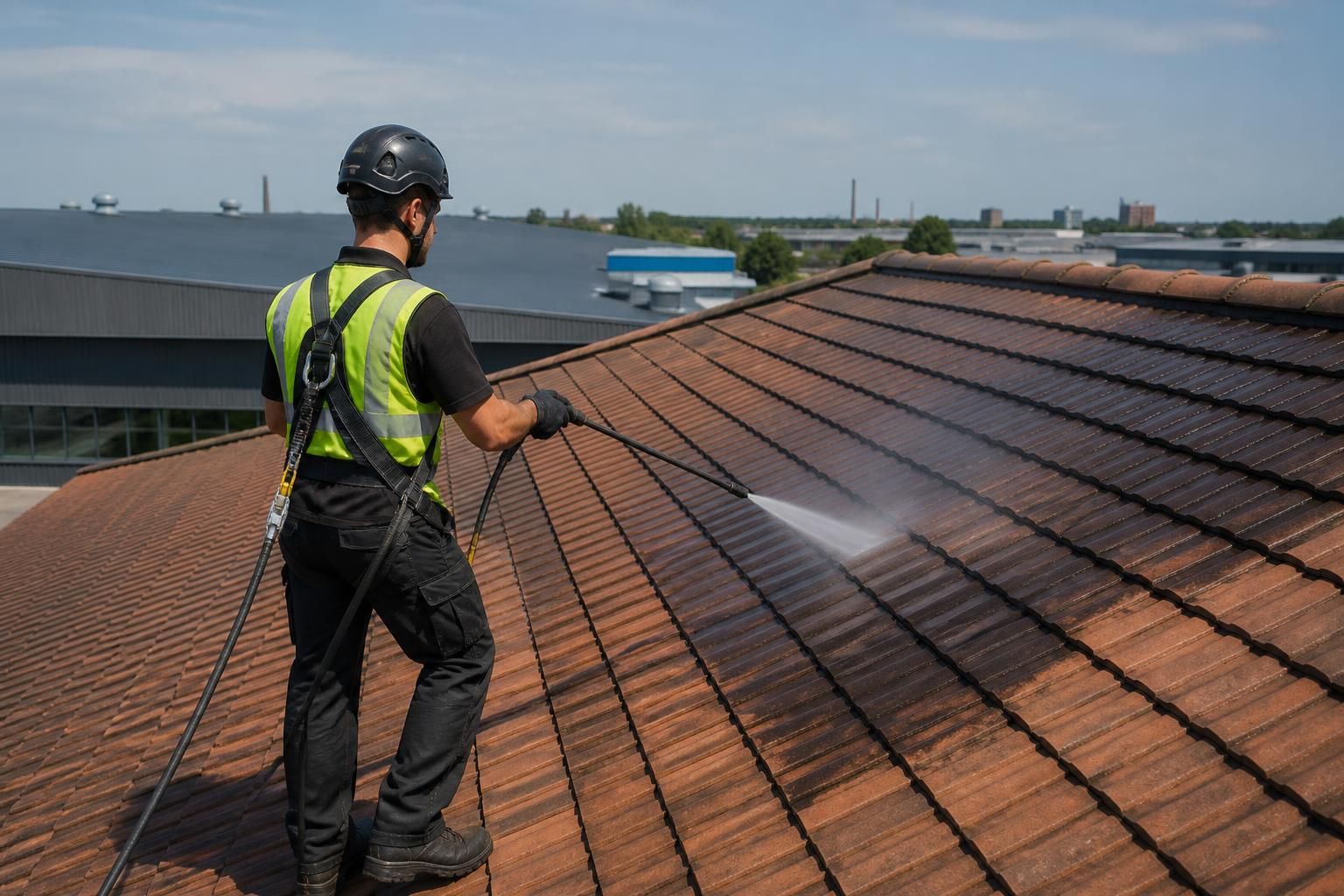
Coating performance is strongly influenced by preparation. Tiles normally need to be assessed for cracking, spalling, loose areas, previous coatings, failed pointing and defective water-shedding details. Moss, algae, dirt and friable material should be removed using a method that cleans effectively without damaging the tile or forcing water beneath the roof covering. Repairs should be completed before the coating is applied, and the surface should be sufficiently dry and stable for the chosen product.
The coating must also be compatible with the roof tile. Concrete, clay and other tile materials have different levels of porosity and may respond differently to preparation and treatment. A suitable system should provide the required water resistance without trapping moisture within the roof covering. On older or traditionally constructed roofs, maintaining appropriate breathability is particularly important. Product suitability, manufacturer guidance and the condition of the existing roof should therefore be considered together.
It is important to distinguish a protective coating from a guarantee against roof problems. Coatings cannot correct inadequate falls, blocked gutters, defective flashing, movement in the roof structure or leaks caused by damaged details. They can also deteriorate through ultraviolet exposure, standing water, abrasion, pollution and ongoing biological growth. Regular inspections remain necessary to identify failed areas, damaged tiles, open joints and problems around roof edges, penetrations and drainage points.
For the best long-term result, protective roof tile treatment should be managed as part of a planned maintenance cycle:
- Inspect the roof and identify defects, moisture issues and areas unsuitable for coating.
- Choose a coating compatible with the tile material, roof construction and required finish.
- Clean and prepare the surface without causing avoidable damage.
- Complete repairs and allow the roof to reach the condition required for application.
- Apply the coating evenly under suitable weather and surface conditions.
- Record the treatment and include the roof in routine inspections and gutter maintenance.
In summary, a correctly specified and professionally applied coating can help roof tiles remain cleaner, more water-resistant and less vulnerable to surface deterioration. Its value is greatest when the roof is fundamentally sound, preparation is thorough and future inspections are maintained. Where tiles are extensively damaged or the underlying roof has unresolved defects, repair or replacement may be more appropriate than coating alone.
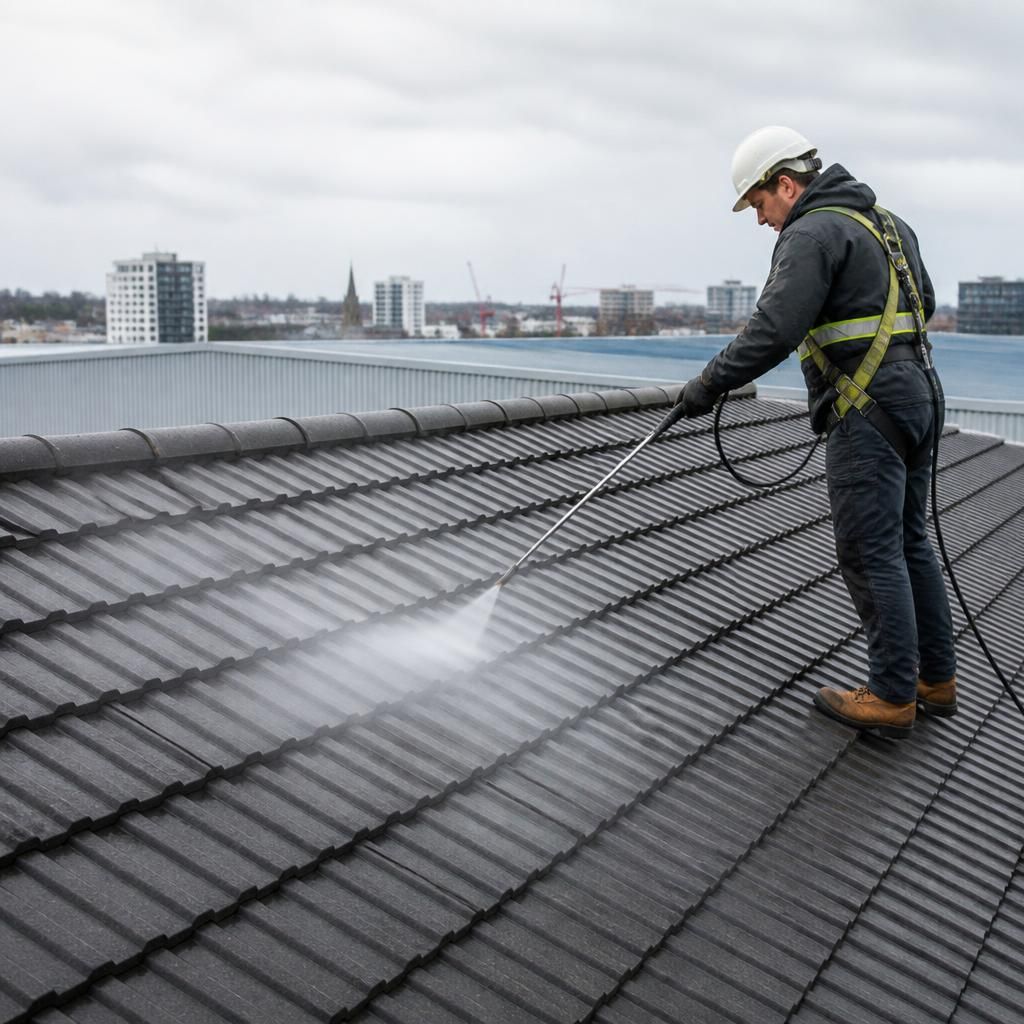
Protective roof tile coatings can extend the serviceable life of sound tiles by reducing water absorption and limiting surface weathering. This helps minimise the effects of repeated wetting, frost, dirt and biological growth, which can otherwise contribute to staining, surface deterioration and avoidable repairs.
A less absorbent surface is also generally easier to maintain, as moss, algae and bonded dirt have fewer favourable conditions for taking hold. Coating does not replace inspections or repairs, but when applied to a properly prepared roof it can support a more predictable maintenance programme and help preserve the roof’s appearance and performance.