
What specific cleaning techniques and equipment do you use for different types of roof tiles and gutter materials?
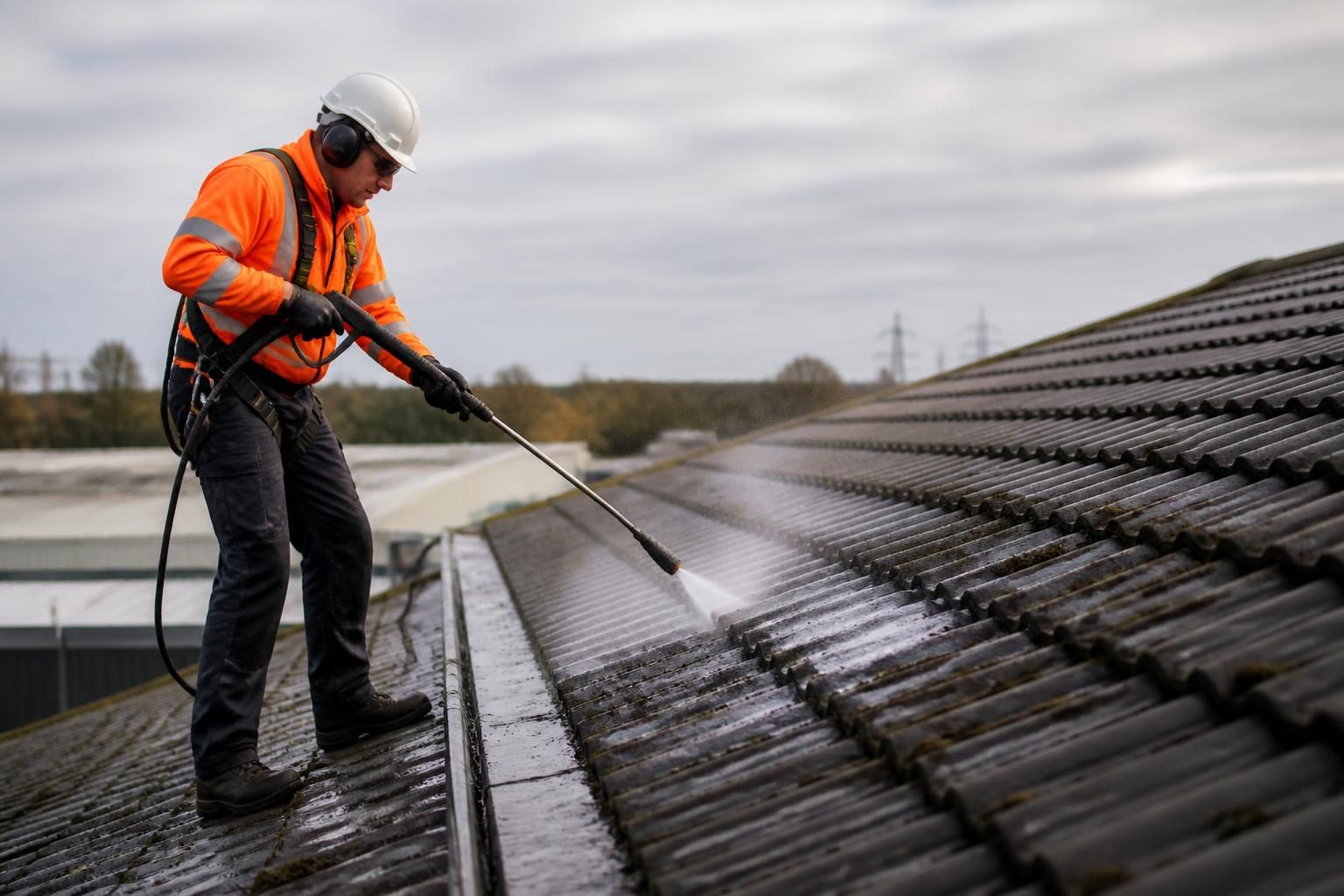
We match the cleaning method and equipment to the roof and gutter material, using controlled low-pressure washing, soft washing, steam cleaning or careful manual removal where appropriate. Slate, clay and delicate coated tiles are treated gently with soft-bristle tools and low-pressure systems, while robust concrete tiles may tolerate controlled pressure; gutters are cleared using hand tools, gutter-vacuum equipment and suitable low-pressure rinsing for materials such as uPVC, aluminium and cast iron.
The cleaning technique and equipment are selected according to the tile surface, coating, age, condition and gutter material. We normally begin with a roof and drainage inspection, identify fragile or damaged areas, and test the proposed method in an inconspicuous location. Depending on the findings, the work may combine manual debris removal, soft washing, controlled low-pressure rinsing, steam cleaning and gutter-vacuum equipment rather than applying one method across the whole property.
Slate roof tiles require particularly careful treatment because slate can delaminate, fracture or become loose if subjected to excessive pressure or unnecessary foot traffic. We use roof-safe access arrangements, soft-bristle brushes, scrapers and hand tools to remove moss and surface debris. Where additional treatment is appropriate, a controlled soft-wash application or low-pressure rinse may be used, with the solution and dwell time adjusted to the condition of the slate. We avoid directing force beneath tile laps, flashings and fixings.
Clay tiles can have an uneven, weathered or glazed surface. Loose moss and lichen are generally removed manually with non-abrasive tools before the tiles are rinsed gently. Steam cleaning can be suitable for some clay surfaces because it provides cleaning action with limited mechanical force, but the temperature and application distance must be controlled to avoid thermal shock or damage to old, cracked or previously repaired tiles. Glazed or decorative finishes are tested first, as aggressive cleaning can mark or dull the surface.
Concrete tiles are usually more robust, but age, porosity, surface coatings and previous frost damage still determine the safe method. We may use controlled low-pressure washing after removing loose growth, keeping the nozzle at a suitable distance and avoiding concentrated force at tile edges, ridges, verges and mortar joints. Soft washing or steam cleaning is often preferable where the concrete has weathered, where coatings are present, or where pressure could drive water beneath the tiles.
Coated, painted or fibre-cement tiles need a conservative approach. Abrasive brushes and strong pressure can strip the finish or expose the underlying material. We use soft-bristle tools, a compatible cleaning solution and low-pressure rinsing only where the coating and manufacturer’s guidance allow it. Fibre-cement products may also be fragile or contain hazardous materials in older buildings, so their composition and condition should be established before any disturbance or cleaning takes place.
Roof cleaning equipment may include telescopic poles, soft brushes, hand scrapers, low-pressure washing systems, steam-cleaning equipment, controlled dosing systems and suitable access equipment. The choice of access method is important: ladders are used only where appropriate, while scaffolding, roof ladders, edge protection or a suitable mobile elevating work platform may be required for larger, steeper or more exposed roofs. We do not use access equipment as a substitute for assessing the roof’s structural condition.
uPVC gutters are normally cleared using hand scoops, scrapers and brushes, followed by a controlled rinse to check that water flows through the outlets and downpipes. A gutter vacuum with lightweight poles can remove leaves, silt and moss from the ground or another safe position, reducing the need to work directly at the roof edge. Care is taken around brittle joints, unions, stop ends and older plastic that may split under pressure.
Aluminium gutters are cleaned with non-abrasive tools and controlled suction or rinsing. Aluminium is lightweight and can deform if leaned on or struck, while its coatings may be marked by harsh chemicals or aggressive brushing. We inspect joints and fixings during the clean and use a method that removes debris without distorting the channel or damaging the finish.
Cast-iron gutters need attention to corrosion, flaking paint, open joints and weakened brackets. Hand removal and gutter-vacuum equipment are generally suitable for loose debris, with gentle rinsing used to confirm drainage where the system is sound. We avoid forcing compacted material against fragile joints and note defects that may require repair or repainting rather than attempting to clean through them.
Copper, zinc and other specialist metal gutters are treated as finish-sensitive materials. We use soft tools and compatible, non-abrasive cleaning methods, avoiding chemicals that could stain the metal or accelerate corrosion. Patina may be an intended finish, so the objective is usually to remove leaves, silt and harmful deposits without trying to restore the gutter to a new appearance.
For every material, we protect walls, windows, planted areas and paved surfaces from dislodged debris and uncontrolled runoff. Downpipes are checked for blockages, outlets and hopper heads are cleared, and the system is tested after cleaning. If tiles are cracked, displaced or loose, or if gutters are leaking, heavily corroded or inadequately supported, we report the issue rather than applying additional pressure that could worsen the damage. This material-led approach produces a safer and more appropriate result than using high-pressure equipment indiscriminately.
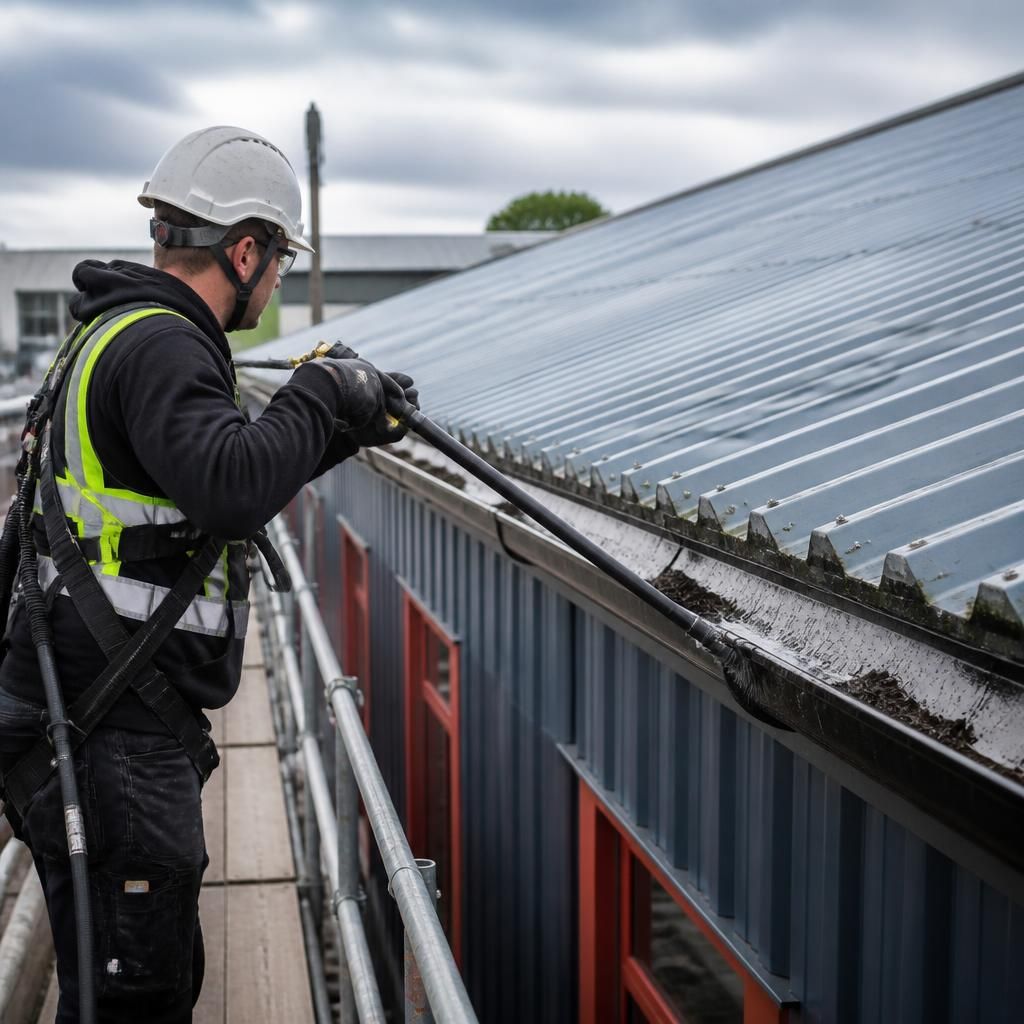
Roof and gutter cleaning equipment must be matched to the material, its condition and the type of contamination present. A method that is suitable for robust concrete tiles may damage slate, coated tiles, lightweight aluminium or older cast iron.
We inspect the roof and drainage system before cleaning, looking for cracked or loose tiles, failed coatings, corrosion, weak fixings and blocked outlets. The proposed technique is then tested in an inconspicuous area. Depending on the findings, we may combine hand tools, soft-bristle brushes, a gutter vacuum, controlled low-pressure rinsing or steam cleaning. This material-led approach removes moss, silt and debris while limiting the risk of forcing water beneath tile laps, disturbing finishes or damaging fragile gutter joints.