
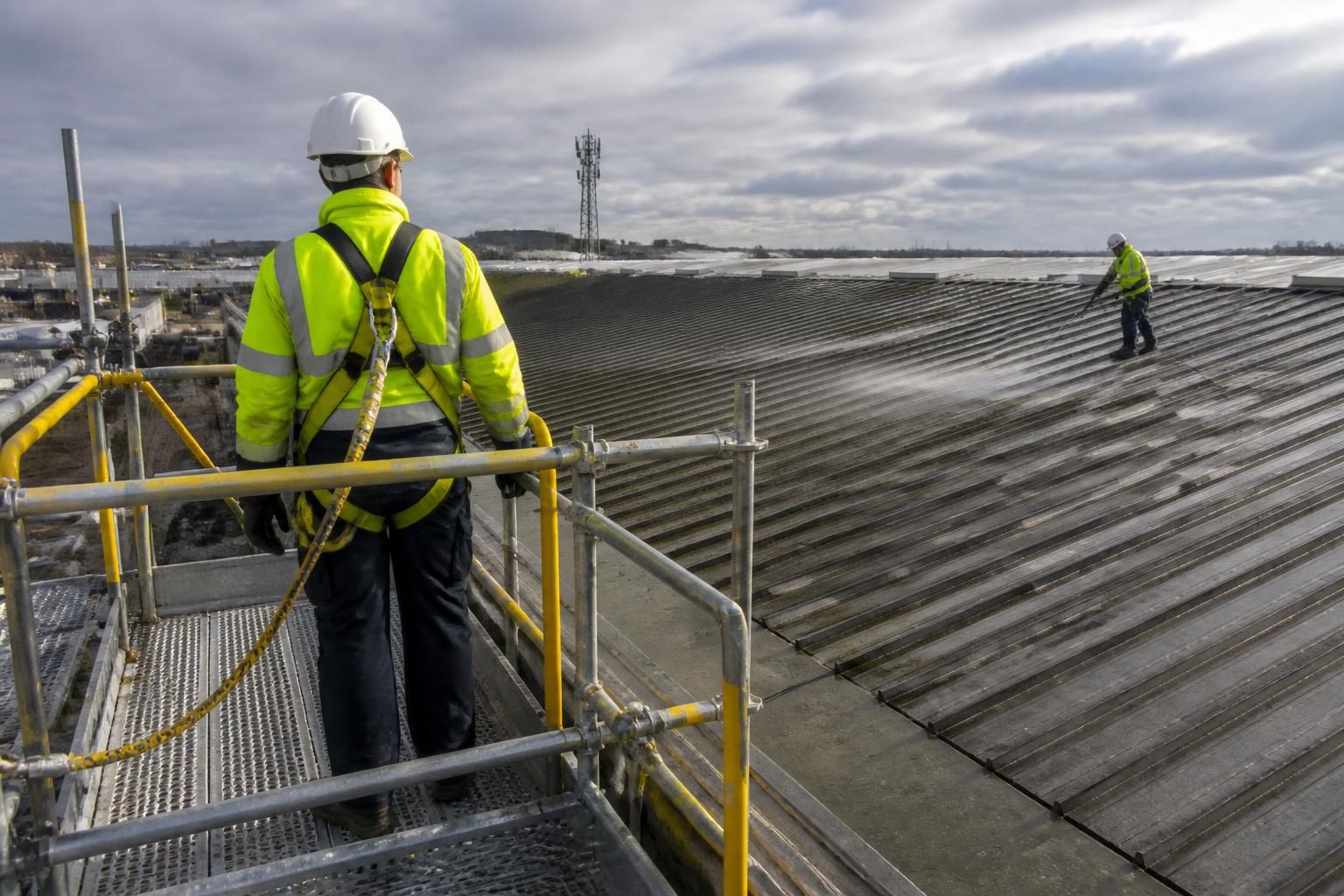
What safety measures do you implement during the roof tile and gutter cleaning process to ensure the protection of property and personnel?
We protect personnel and property through a documented site assessment, safe access planning, suitable personal protective equipment, controlled work areas and carefully selected cleaning methods. Roof tiles, gutters, façades, vehicles and surrounding surfaces are protected by inspecting the work area, managing water and debris, and avoiding unnecessary pressure or foot traffic on the roof.
Roof tile and gutter cleaning is carried out using planned work-at-height controls, suitable access equipment, personal protective equipment (PPE), controlled cleaning methods and protection for the building and surrounding areas. Before work starts, we assess the roof, gutters, access routes, weather conditions, nearby hazards and the condition of the property so that personnel can work safely without creating avoidable damage.
Site assessment and method planning
We inspect the roof covering, guttering, fascias, roof edges, access points and the ground below. This helps identify fragile, cracked or loose tiles, weak roof sections, unstable guttering, skylights, overhead services, confined areas and surfaces that could be damaged by water or falling debris. The findings inform a documented risk assessment and method statement, including the proposed access system, cleaning method, exclusion zones, waste controls and emergency arrangements.
Where the roof condition is unsuitable for access, we do not rely on foot traffic to complete the work. We review safer alternatives, such as working from an appropriate platform or using equipment that allows cleaning from a suitable position. Any defects that could affect safety are reported before cleaning proceeds.
Safe access and work-at-height controls
- Access equipment is selected according to the height, roof design, ground conditions, reach required and duration of the work.
- Depending on the site, this may include scaffold systems, mobile access towers, mobile elevating work platforms, roof access equipment or securely positioned ladders for limited access tasks.
- Ladders are not treated as a general working platform where a safer, more suitable system is required.
- Equipment is positioned on stable ground, checked before use and kept clear of openings, vehicle routes and other hazards.
- Where a fall risk remains, suitable edge protection, restraint or fall-arrest arrangements are used in accordance with the work plan.
- Personnel do not walk on roof areas that have been identified as fragile or unable to support the work safely.
Work at height is planned and managed in line with applicable UK requirements, including the Work at Height Regulations 2005. Access equipment is used only by people who are competent and suitably trained for the task and equipment involved.
Personal protective equipment
PPE is selected after the site risks have been assessed rather than used as a substitute for safe planning. Depending on the work, this can include safety footwear with suitable grip, protective gloves, eye protection, head protection, high-visibility clothing, hearing protection and waterproof clothing. Respiratory protection may also be considered where the assessment identifies a risk from dust, biological contamination or cleaning products.
Harnesses and associated fall-protection equipment are used only where the system is appropriate, correctly attached and supported by a suitable rescue plan. Personnel also use protection appropriate to the substances being handled, with chemical information and control measures reviewed under the Control of Substances Hazardous to Health requirements where relevant.
Protection of roof tiles and building materials
Cleaning pressure and temperature are selected for the tile type, surface condition and level of contamination. We avoid using excessive pressure, concentrated jets or unsuitable tools that could strip surface finishes, dislodge tiles, force water beneath overlapping tiles or damage pointing and flashing. Steam or low-pressure methods may be more appropriate where a gentler approach is needed.
Roof access is kept to the minimum necessary. We use established access routes and avoid placing equipment, hoses or excessive weight on vulnerable tiles, ridges, valleys, skylights and gutters. Before cleaning, loose items are secured and damaged sections are recorded so that existing defects are not confused with damage caused during the work.
Gutter cleaning and debris management
Gutters are cleaned in a controlled manner to prevent tools, waste and sludge falling onto people, vehicles or lower-level roofs. Debris is collected rather than allowed to enter downpipes or spread across the façade and ground. Downpipes are checked for blockages where included in the agreed scope, and guards, outlets and joints are handled carefully to avoid loosening or deforming them.
Ground-level areas are protected with suitable sheeting or collection measures where necessary. Drainage routes are monitored so that contaminated water, silt and organic material do not flow into entrances, neighbouring property, surface-water drains or landscaped areas without appropriate control.
Exclusion zones and public protection
Areas below and around the work are controlled to protect employees, visitors, residents, pedestrians and vehicles. Depending on the site, this can involve barriers, cones, warning signs, temporary closures, a banksman or coordination with the client’s site team. Tools and materials are kept secured, and no one is permitted to pass beneath an active work area.
For commercial premises, we plan around entrances, deliveries, staff movements, customer access and vehicle routes. Where cleaning could affect normal operations, the work is scheduled or phased to reduce interaction between the cleaning team and building users.
Water, equipment and electrical safety
Hoses are routed to reduce trip hazards and are kept away from sharp edges, access equipment and vehicle routes where possible. Connections, poles, vacuums, pumps and other equipment are checked before use. Electrical equipment is protected from water, and cleaning is not undertaken where conditions could make electrical contact or equipment operation unsafe.
Water application is controlled around doors, vents, windows, electrical installations, security systems and other openings. We use suitable collection or drainage measures and check affected areas during and after cleaning to prevent water ingress.
Weather and changing site conditions
Rain, high winds, ice, poor visibility and temperatures that affect surfaces or equipment can increase the risk of slips, falls and uncontrolled materials. Conditions are checked before and during the work. Activities are paused or rearranged when weather or changing site conditions mean that access, equipment, visibility or cleaning control can no longer be maintained safely.
Cleaning products and environmental controls
Any treatment or detergent is chosen for compatibility with the roof materials and surrounding surfaces. Products are handled, diluted, stored and removed in accordance with their instructions and the relevant risk assessment. We prevent unnecessary run-off, protect planted areas and manage collected debris responsibly. This reduces risks to personnel while also limiting harm to the building, drainage system and surrounding environment.
Final checks and communication
After cleaning, we inspect the work area for loose tiles, displaced components, blocked outlets, residual debris, water ingress and damage to surrounding surfaces. Access equipment and barriers are removed only when the area is safe to reopen. Any defects observed during the process are reported clearly, with recommendations for repair or further inspection where appropriate.
Everyone involved should understand the work plan, site restrictions, communication arrangements and emergency procedure before starting. If conditions change or an unexpected defect is found, the work is stopped and reassessed rather than continuing outside the agreed safe method.
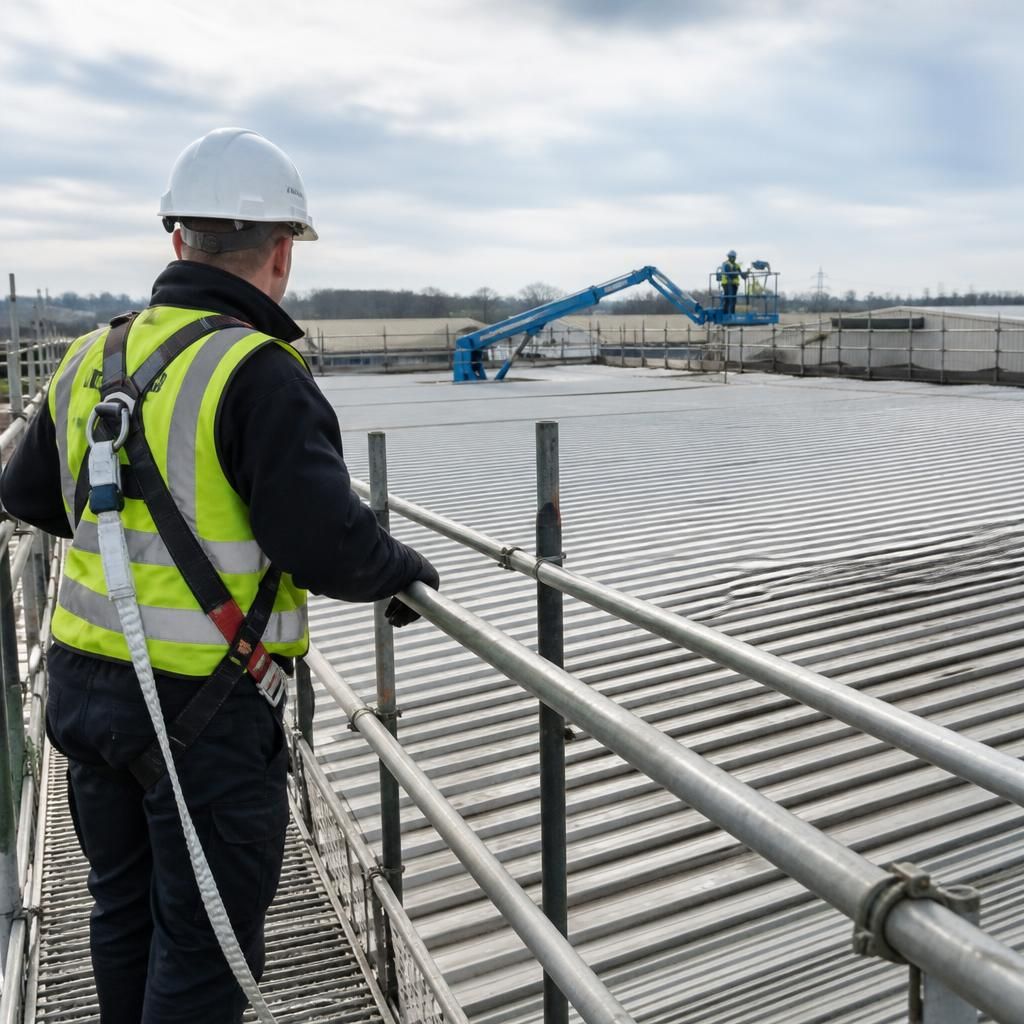
Safe roof tile and gutter cleaning starts with controlling work at height. We assess the roof condition, access points, ground conditions and surrounding hazards before selecting suitable equipment, such as scaffold systems, access towers or a mobile elevating work platform. Personnel avoid walking on fragile or damaged roof areas, and ladders are used only where appropriate for limited access.
Where there is a fall risk, the agreed controls may include edge protection, restraint or fall-arrest equipment supported by a suitable rescue plan. Areas below the work are protected with barriers and warning signs, while tools, hoses and removed debris are controlled to prevent injury or damage to vehicles, entrances, glazing and landscaping. Work is paused if wind, rain, ice or changing site conditions make safe access or equipment operation unreliable.