
What is the best method for cleaning roof tiles without causing damage?
The safest method for cleaning roof tiles is a condition-led approach using gentle brushing or low-pressure cleaning with a suitable treatment, rather than aggressive pressure washing. The technique should be matched to the tile material and condition, with controlled water flow, appropriate access equipment and careful protection of the roof surface, gutters and surrounding property.
The best method for cleaning roof tiles without causing damage is a condition-led process using manual removal, gentle brushing and controlled low-pressure washing, followed where appropriate by a tile-safe treatment. The method must be matched to the tile material, age, surface finish and condition. Aggressive pressure washing, unsuitable chemicals and unnecessary foot traffic can remove protective coatings, dislodge tiles, force water beneath the covering and worsen existing defects.
Before cleaning begins, the roof should be inspected from a safe position and, where necessary, from suitable access equipment. This assessment identifies cracked, slipped or spalled tiles, failed bedding and pointing, exposed underlay, damaged flashings, blocked valleys and fragile areas. Cleaning should not be used to conceal defects. Any significant damage should be recorded and referred for repair before the roof is washed.
Manual removal is usually the safest starting point. Loose moss, leaves and other debris can be lifted carefully using hand tools and soft brushes. This removes the bulk of the growth without abrading the tile surface or driving material into joints and drainage channels. Particular care is needed around laps, ridge tiles, valleys and roof edges, where levering or scraping can disturb the weatherproof arrangement.
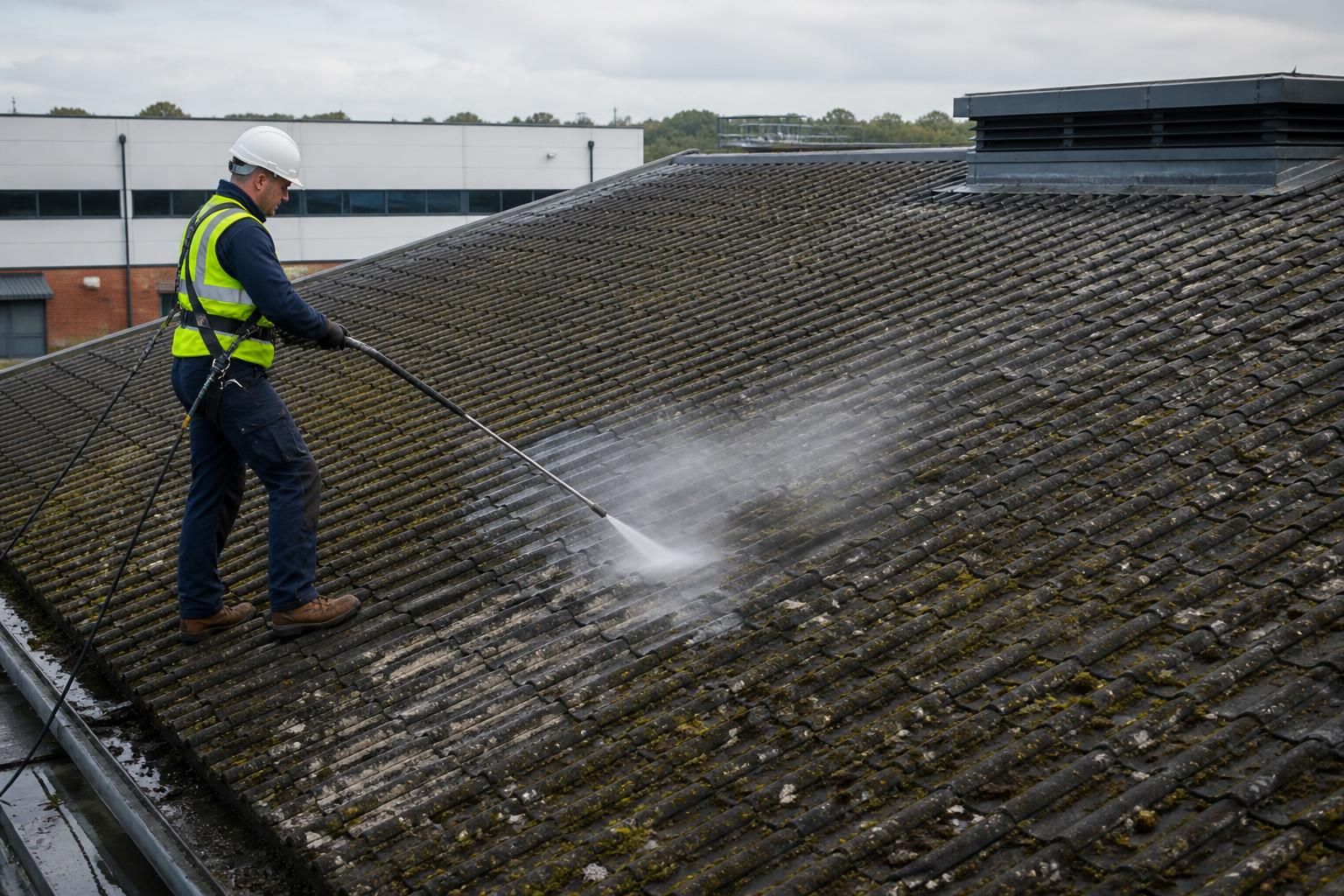
Once loose growth has been removed, a controlled low-pressure rinse may be suitable for robust concrete or glazed tiles in sound condition. Water pressure should be kept only as high as necessary to remove remaining residue, with the spray directed down the slope rather than underneath the tile laps. The operator should work in manageable areas, monitor the surface throughout and stop if the finish begins to erode or water is entering the roof space.
For more delicate or heavily colonised surfaces, a compatible biocidal or fungicidal treatment may be preferable to forceful washing. The treatment is applied according to the product instructions and the roof material, allowed to act for the required period, and rinsed or left to weather as specified. These treatments help deal with moss, algae and lichen at the surface and within small pores, but they are not a substitute for repairing damaged tiles or defective drainage.
The correct technique varies between materials:
- Concrete tiles: Sound concrete tiles can often tolerate careful low-pressure cleaning after dry debris has been removed. Older tiles may have a weathered or granular surface, so excessive pressure can remove the finish and expose the underlying material.
- Clay tiles: Clay can be durable but may become brittle with age, frost damage or previous deterioration. Gentle brushing and a compatible treatment are generally safer than intensive washing. Tiles should not be walked on unless their strength and the access method have been properly assessed.
- Slate: Slate can split, delaminate or become loose around fixings. It should be treated as a fragile covering, with minimal disturbance and no routine pressure washing. Manual cleaning from suitable access equipment is normally more appropriate.
- Coated, painted or sealed tiles: The cleaning method must preserve the coating. Abrasive brushes, hot water and strong chemicals can cause fading, blistering or peeling, so a small inconspicuous test area should be assessed before wider treatment.
- Interlocking and profiled tiles: Their joints and channels can trap debris, while forceful water can be driven through overlaps. Cleaning should follow the profile of the tile and avoid directing water against seals and laps.
Steam cleaning can be useful in some commercial and industrial applications, particularly where controlled heat helps remove organic contamination with limited chemical use. However, it is not automatically suitable for every roof. Heat, moisture and the condition of the tile, underlay, sealants and adjacent materials must be considered first. A method that is safe for a robust surface may damage an aged, coated or brittle roof.
Pressure washing is not always inappropriate, but it should never be treated as the default method for roof tiles. High pressure can strip protective finishes, loosen mortar, damage pointing, force water beneath tiles and spread contaminated runoff over walls and paving. It can also make a roof appear clean while shortening the life of the covering. If controlled washing is selected, the equipment, nozzle, pressure, spray direction and working distance should be adjusted to the material and verified on a discreet area.
Safe access is part of preventing damage. Personnel should avoid unnecessary walking on the roof and should use suitable towers, platforms, roof ladders, scaffold or other access equipment where required. Gutters, conservatories, rooflights, vents, solar equipment and fragile projections need protection before work starts. Rooflights in particular can be difficult to distinguish from roof coverings and must not be used as footholds.
Gutters and downpipes should be cleared before and after the roof is cleaned. Moss and wash water can block outlets, while uncontrolled runoff may stain façades, damage planting or enter surface-water systems. Downpipes may need to be disconnected or temporarily diverted, and collection or filtration measures may be appropriate where the material being removed contains heavy organic growth, paint residues or other contaminants.
After cleaning, the roof should be inspected again for displaced tiles, open joints, damaged flashings and areas where growth remains. Gutters should be checked for free flow, and the surrounding façade and hardstanding should be rinsed or cleaned where necessary. A suitable maintenance recommendation can then be made based on the roof’s exposure, shade, nearby vegetation, drainage and condition rather than applying the same interval to every property.
For commercial premises, the safest specification is therefore not simply “pressure wash the roof”. It is a documented process that identifies the tile type, tests the proposed method, uses the least aggressive effective technique, controls access and runoff, and includes a final condition check. Where tiles are fragile, heavily deteriorated or affected by structural defects, cleaning may need to be limited or postponed until roof repairs have been completed.
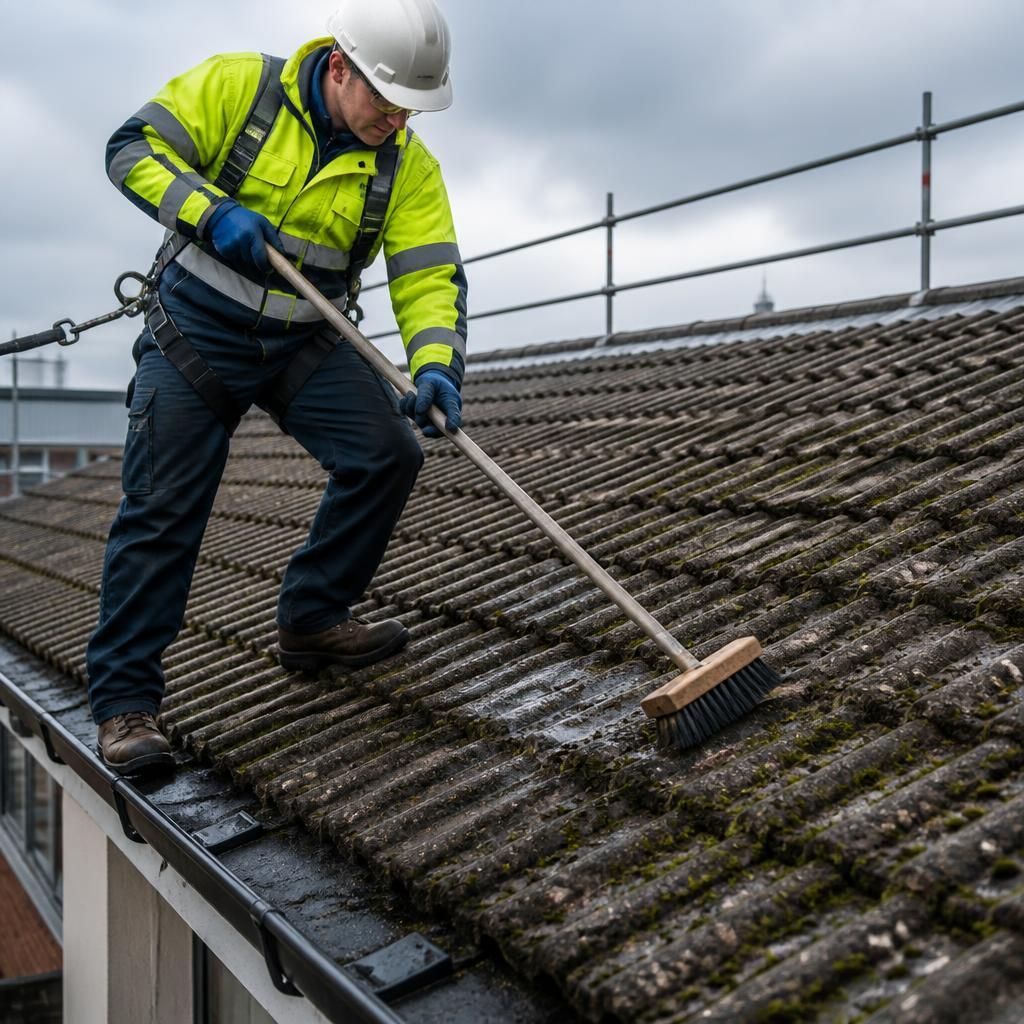
The safest way to clean roof tiles is to remove loose growth manually, then use gentle brushing or controlled low-pressure washing only where the tile material and condition allow it. This approach reduces the risk of stripping surface finishes, loosening tiles or forcing water beneath overlaps.
The cleaning method should be tested on a discreet area first and adjusted for the roof covering. Clay, slate, aged or coated tiles often require minimal disturbance and a compatible treatment rather than pressure washing. Access equipment should be used to avoid unnecessary foot traffic, while gutters, roof edges, flashings and nearby surfaces are protected from debris and runoff.