
What are the environmental considerations of roof tile and gutter cleaning?
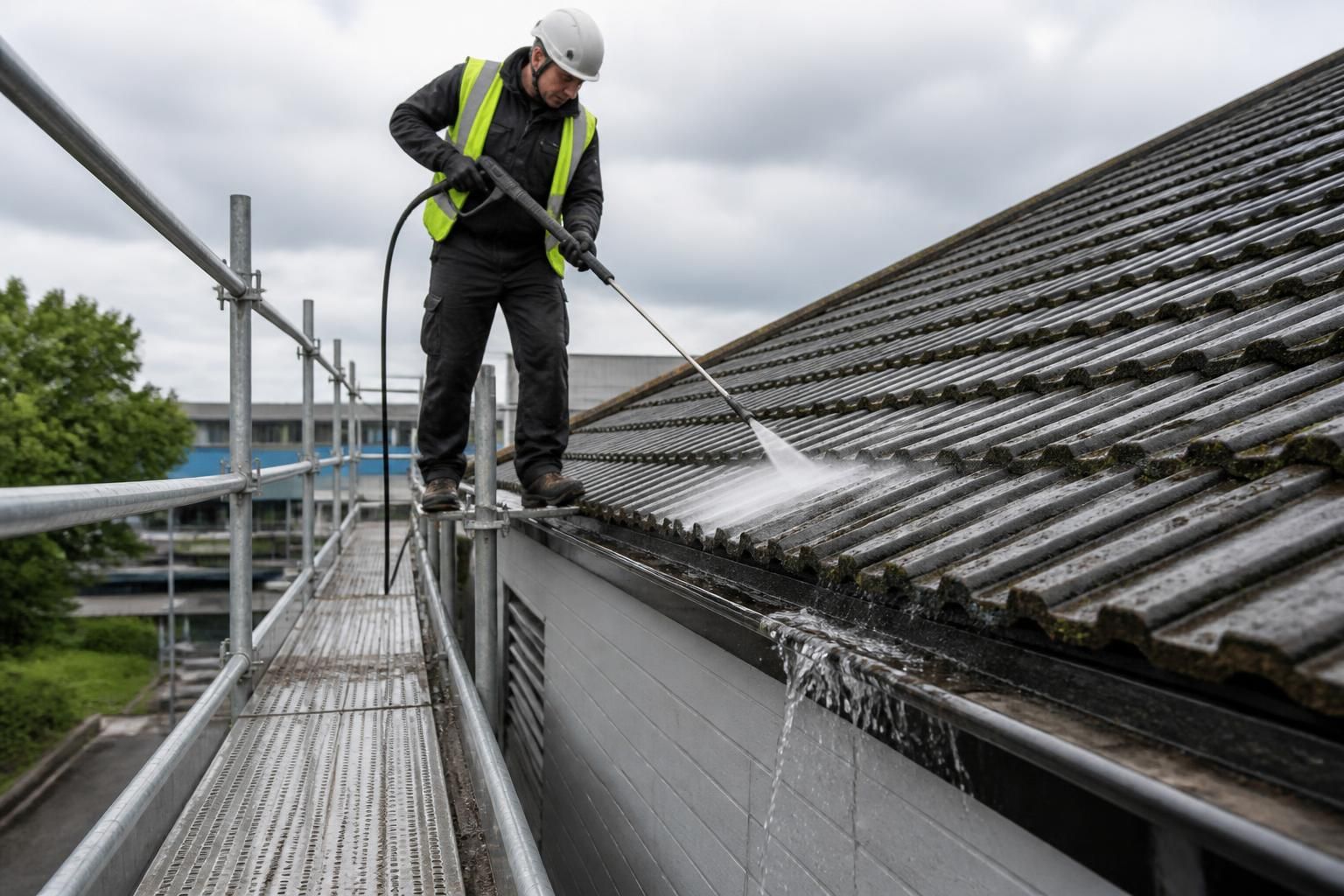
The main environmental considerations of roof tile and gutter cleaning are water consumption, chemical selection, runoff control and waste disposal. Responsible methods use only the water and treatments required, prevent contaminated runoff entering drains or watercourses, and collect leaves, moss and other debris for appropriate disposal.
The main environmental considerations of roof tile and gutter cleaning are water consumption, chemical selection, runoff control and waste disposal. Responsible cleaning uses the least intensive method that will achieve the required result, limits the use of detergents and biocides, prevents contaminated water entering surface-water drains or watercourses, and collects organic and other debris for appropriate disposal.
Water consumption and method selection
Water use depends on the condition of the roof, the tile material, the type of contamination and the equipment selected. High-pressure washing can use substantial volumes of water and may create more runoff than controlled low-pressure, soft-washing or steam-cleaning methods. It can also dislodge coatings, damage older tiles and force water beneath laps or around roof penetrations if used incorrectly.
A suitable contractor should assess whether dry removal, brushing, low-pressure rinsing, steam cleaning or a carefully controlled treatment is appropriate. The aim is not simply to use the most powerful equipment. Using the least aggressive effective method can reduce water demand, protect the roof covering and limit the volume of contaminated wastewater requiring control.
Water should be applied in a controlled manner rather than left running unnecessarily. Operatives can reduce waste by preparing the work area first, removing loose moss and leaves before rinsing, using equipment suited to the surface and stopping work when weather conditions would make runoff difficult to contain. Where appropriate, collected water may be filtered or managed in accordance with the site’s drainage arrangements, but it should not be reused without assessing what it contains.
Cleaning products and biocides
Roof cleaning may involve detergents, fungicidal treatments or biocides to address algae, moss and lichen. These products should not be treated as harmless simply because they are used outdoors. The product’s label, safety data sheet and application instructions should be followed, including requirements for dilution, weather conditions, contact time, storage and disposal.
Products should be selected for the specific contamination and used only where they provide a practical benefit. Over-application increases the risk of chemical runoff, affects nearby vegetation and creates additional waste without necessarily improving the result. A competent operator will consider whether mechanical removal, steam or water alone can achieve the required standard before introducing a chemical treatment.
Particular care is needed around planted areas, ponds, water features, rainwater harvesting systems, livestock, wildlife habitats and neighbouring properties. Vegetation should be protected where possible, and any treatment likely to affect plants or aquatic life should be controlled through suitable screening, temporary protection and runoff measures.
Runoff, drains and surrounding land
Runoff from a roof can contain moss, silt, organic matter, detergents, biocides, metals and particles from aged coatings or roofing materials. It must be prevented from flowing uncontrolled into surface-water drains, streams, ponds or areas where it could harm soil and vegetation. Surface-water drainage commonly discharges to the environment without the treatment associated with foul drainage, so it should not be assumed that a nearby drain is suitable for disposal.
Before work starts, the drainage layout and discharge route should be considered. Measures may include drain covers, temporary bunding, collection points, absorbent barriers, gutter plugs, wet vacuums and controlled pumping to an agreed disposal route. The exact arrangement depends on the property, the cleaning method and the substances present in the wastewater.
Runoff should also be kept away from entrances, loading areas, public footways and neighbouring land. This is particularly important on commercial and industrial sites, where contaminated water could enter yard drainage, affect business operations or create a slip hazard. Work should be postponed or adapted when heavy rain, strong wind or freezing conditions would make containment unreliable.
Gutter debris and waste disposal
Gutters commonly contain leaves, moss, silt, roof grit, bird fouling and small fragments of roofing material. This material should be removed from the drainage system rather than washed into a downpipe or surface drain. It should be contained during cleaning and transferred to an appropriate waste route.
The correct disposal option depends on the nature of the material and whether it is contaminated. Ordinary green waste may be handled differently from material containing oils, chemicals, heavy bird fouling or hazardous substances. Waste should not be left on roofs, washed into landscaped areas or placed in general refuse without considering its contents. Where waste is removed from a site, suitable records and transfer arrangements should be maintained in line with the applicable UK waste requirements.
Bird fouling requires additional hygiene controls, particularly where it has accumulated in gutters or around roof plant. Operatives should avoid creating airborne dust or spreading contamination, and the material should be managed using appropriate protective equipment and disposal procedures.
Protecting roof materials and biodiversity
Environmental responsibility also includes preventing avoidable damage to the roof and its surrounding habitat. Excessive pressure can shorten the service life of tiles, remove protective finishes and create additional repair or replacement waste. Care is also required around rooflights, solar panels, vents, membranes, sealants, pointing and fragile or historic materials.
Roofs and gutters may support nesting birds, insects and other wildlife. A pre-work inspection should identify active nests, protected species, access points and sensitive vegetation. If wildlife could be disturbed, the work may need to be altered, delayed or referred for specialist advice. Moss and lichen should not be removed automatically where they are not obstructing drainage or contributing to damage; the cleaning requirement should be balanced against the condition and use of the building.
Energy use, equipment and site controls
Environmental impact is not limited to water and chemicals. Fuel-powered pressure washers, access equipment and transport generate emissions and noise. Efficient equipment, sensible route planning, correct maintenance and the use of electric equipment where site conditions permit can reduce unnecessary fuel consumption. Equipment should be selected for the scale of the work rather than operated at excessive pressure or flow.
Noise, overspray and disturbance should be managed around occupied buildings, schools, healthcare premises, residential areas and wildlife-sensitive locations. Clear site controls, secure chemical storage and careful equipment setup help prevent spills and reduce the need for remedial cleaning.
What to confirm before cleaning begins
- Which cleaning method is suitable for the tile, gutter and surrounding surfaces?
- Will water, detergents or biocides be used, and why are they necessary?
- How will runoff be contained, filtered, collected or discharged lawfully?
- Where will moss, silt, bird fouling and other debris be taken?
- How will drains, planting, water features, neighbouring areas and building services be protected?
- Has the roof been checked for fragile materials, nesting wildlife and features requiring specialist care?
For commercial properties, these controls should form part of the method statement and site risk assessment. A responsible roof tile and gutter cleaning programme should leave the roof and drainage system clean without transferring pollution to drains, soil or watercourses. The most environmentally appropriate approach is therefore a planned, proportionate service that controls water, chemicals, waste and equipment throughout the work rather than treating environmental protection as an afterthought.
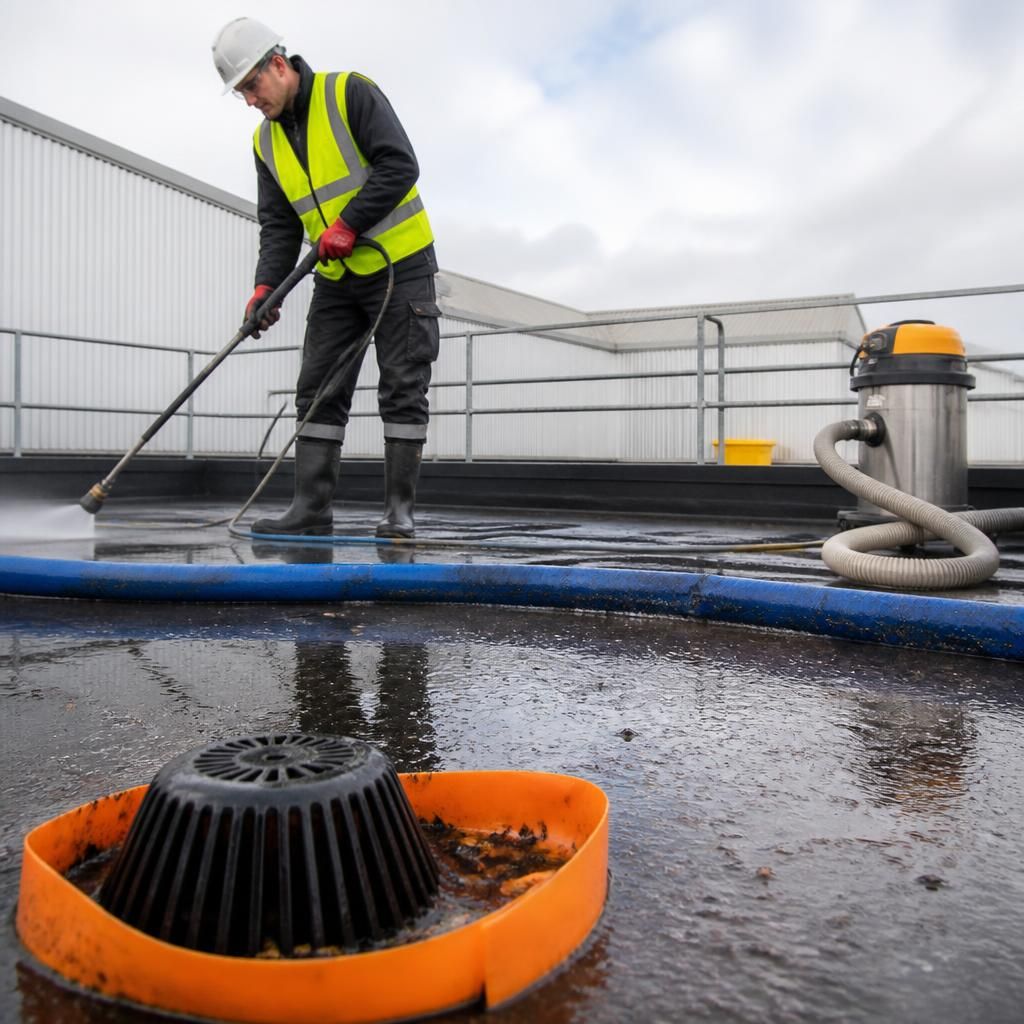
Runoff control is a key environmental consideration during roof tile and gutter cleaning because wash water can carry moss, silt, detergents, biocides and roof deposits into drains, soil or watercourses. Before work begins, the drainage layout should be checked and suitable controls, such as drain covers, gutter plugs, bunding or wet vacuums, put in place. Debris should be removed and contained rather than washed into downpipes, while any collected wastewater should be managed through an appropriate disposal route.
This is particularly important on commercial and industrial sites, where uncontrolled runoff can create pollution, slip hazards or disruption around entrances, yards and loading areas. Cleaning should be adapted or postponed during heavy rain or strong winds if containment cannot be maintained.
Discuss Environmentally Responsible Roof Tile and Gutter Cleaning
Contact Encanto Exterior Cleaning to discuss a roof tile and gutter cleaning plan that controls water use, runoff, chemicals and waste for your property. We can assess the roof, drainage layout and surrounding areas before recommending a suitable method.