
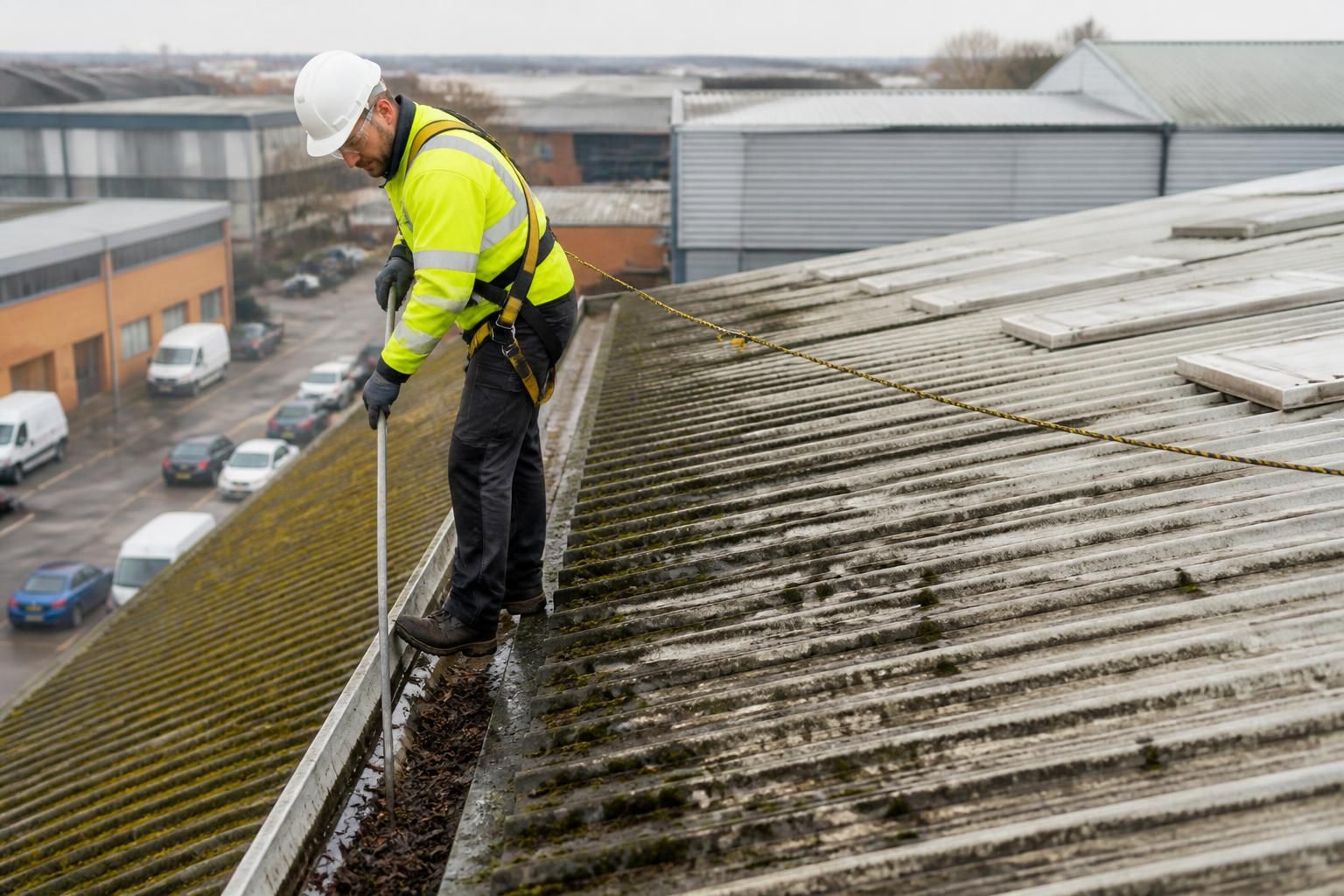
How often should roof tiles and gutters be cleaned for optimal performance?
Roof tiles should generally be inspected annually and cleaned when moss, algae, lichen or debris begins affecting drainage, while gutters should usually be checked and cleared at least twice a year, particularly after autumn leaf fall and severe weather. Buildings beneath trees, in shaded areas or exposed to heavy pollution may need more frequent cleaning to prevent blockages, damp and tile damage.
For optimal performance, roof tiles should be inspected at least annually and cleaned when moss, algae, lichen or accumulated debris begins to affect the roof surface or drainage. Gutters should normally be inspected and cleared in spring and again after autumn leaf fall, with more frequent attention where buildings are beneath trees, exposed to heavy weather or surrounded by pollution.
There is no single cleaning interval suitable for every property. The correct schedule depends on the roof covering, surrounding vegetation, roof pitch, local weather, building use and the condition of the existing drainage system. Cleaning too rarely can allow organic growth and silt to retain moisture, while unnecessarily aggressive or frequent cleaning can shorten the life of tiles, coatings and seals.
Roof tile cleaning
Annual visual inspections are useful even where a roof does not require annual cleaning. An inspection should check for moss, lichen, algae, loose or cracked tiles, displaced ridge and verge components, blocked valleys, damaged flashing and signs of water entry. Cleaning is generally appropriate when growth has become established, is lifting or obscuring tiles, is restricting water flow, or is contributing to damp staining and deterioration.
Roofs in shaded locations often need closer monitoring because limited sunlight slows drying and encourages moss and algae. Properties beneath overhanging trees may also accumulate leaves, twigs and organic matter more quickly. Industrial or urban buildings can collect airborne dirt and deposits on tiles and associated surfaces, although the appropriate treatment should be selected according to the material and the type of contamination.
A recently cleaned roof should still be inspected as part of planned building maintenance. Cleaning removes contamination but does not correct broken tiles, defective flashing, poor falls or failing mortar. Any defects identified during the process should be recorded and referred for suitable repair rather than concealed by further cleaning.
Gutter cleaning
Gutters should be checked at least around the main seasonal periods of leaf fall and heavy rainfall. They may need additional visits when the property is close to mature trees, when birds regularly carry nesting material onto the roof, or when wind deposits debris in the drainage channels. Commercial premises with large roof areas may require a planned inspection programme because a localised blockage can affect several elevations or discharge points.
Warning signs that gutters need attention include:
- Water overflowing from the front or joints of the gutter during rainfall.
- Persistent damp staining, moss or algae beneath the eaves.
- Plants or weeds growing in the gutter channel.
- Visible sagging, separated joints or loose brackets.
- Blocked downpipes, gullies or outlets.
- Water collecting near walls, entrances, foundations or service areas.
- Internal damp patches that occur after rain.
Gutter cleaning should not be delayed until an overflow is obvious. Debris can compact and become difficult to remove, while repeated saturation may damage fascia boards, masonry, insulation and internal finishes. Downpipes and discharge points must be checked as well as the horizontal gutter runs; clearing only the visible channel may leave the system unable to carry water away from the building.
Factors that change the recommended frequency
- Trees and vegetation: Leaf litter, seeds, needles and small branches can make routine gutter clearing necessary more often.
- Shade and moisture: North-facing or poorly ventilated roof areas commonly retain moisture for longer and may develop moss or algae sooner.
- Roof design: Valleys, dormers, roof junctions and complex drainage layouts can collect debris and require focused inspection.
- Building height and access: Higher or difficult-to-access roofs need a planned professional inspection rather than informal checks from ground level.
- Weather exposure: Strong winds and heavy rainfall can move debris, dislodge tiles and reveal weaknesses in gutter joints or fixings.
- Building use: Warehouses, retail premises, managed blocks and public buildings may need documented maintenance schedules to reduce disruption and protect occupants.
- Roof and gutter materials: Clay, concrete, slate, coated metal and plastic components tolerate different cleaning methods. The condition and age of the material are as important as the visible dirt.
A practical maintenance schedule
For many properties, a sensible programme is to inspect the roof and drainage system annually, arrange gutter checks in spring and after the main autumn leaf fall, and book roof tile cleaning when inspection confirms that growth or deposits are affecting performance. A further check should follow periods of severe weather or any nearby building work that may have deposited dust and debris.
Buildings with extensive tree cover, persistent shade or a history of blocked gutters may benefit from scheduled monitoring between planned cleans. Conversely, a relatively exposed roof with little organic growth may need only periodic cleaning, provided inspections confirm that tiles remain sound and rainwater is draining correctly. Keeping records of inspection findings, cleaning dates, defects and follow-up repairs makes it easier to adjust the interval based on the building’s actual needs.
Professional cleaning is particularly appropriate where roof access is difficult, the building is occupied, the roof is fragile or the work forms part of a wider commercial maintenance contract. The cleaning method should be matched to the tile and gutter material, with care taken to avoid dislodging tiles, forcing water beneath laps or allowing wash water and debris to enter sensitive areas. A competent contractor should also identify defects and advise whether cleaning, repair or a separate specialist assessment is required.
In summary, inspect roof tiles annually and clean them when contamination or organic growth begins to affect the covering or drainage. Check and clear gutters in spring and after autumn leaf fall, increasing the frequency where trees, shade, severe weather or previous blockages create additional risk. This condition-led approach protects the roof and rainwater system without treating every property as if it requires the same cleaning interval.
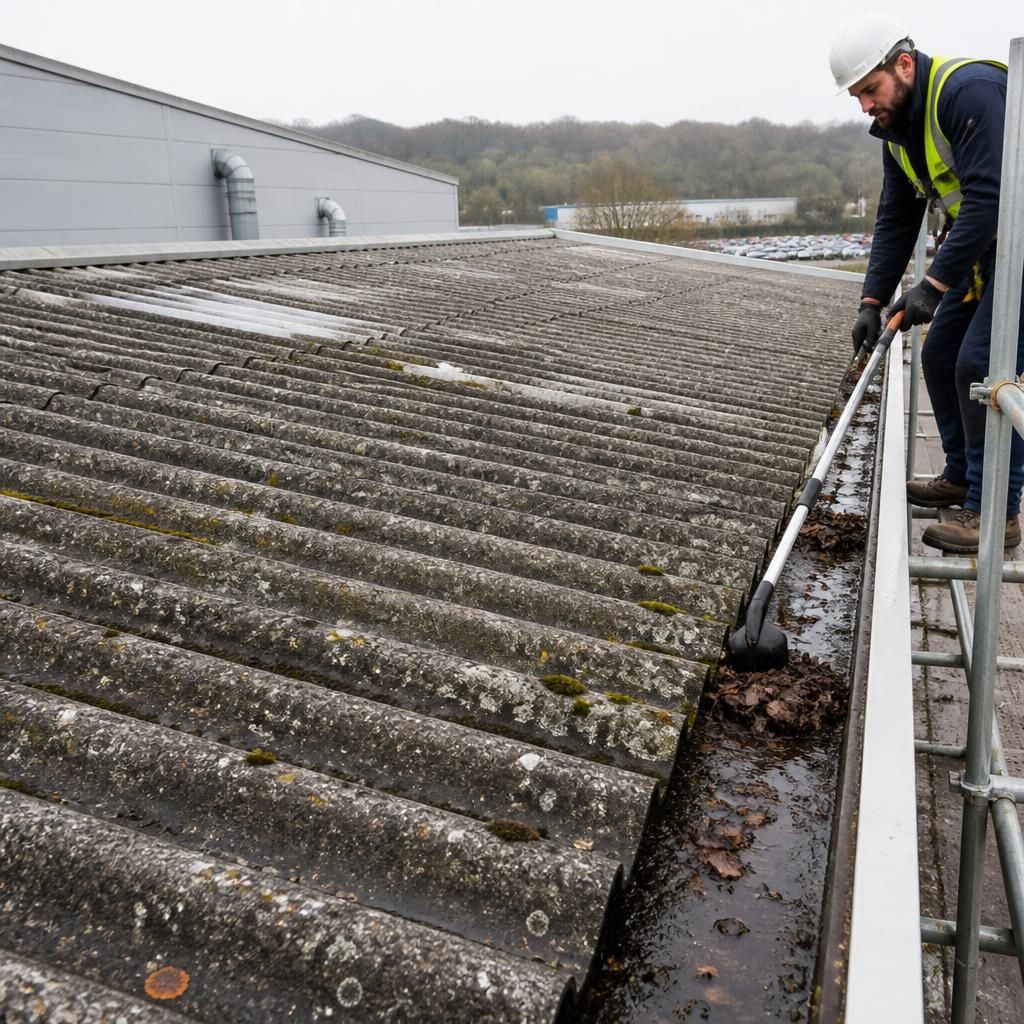
Roof tiles should be inspected annually and cleaned when moss, algae, lichen or debris begins to affect the roof surface or drainage. Gutters should generally be checked and cleared in spring and after autumn leaf fall, with more frequent attention for buildings beneath trees, in shaded locations or with a history of blockages.
This condition-led approach is more reliable than applying the same interval to every property. During each inspection, check the tiles, valleys, gutter channels, downpipes, joints and discharge points for retained moisture, cracking, displacement or restricted flow. Cleaning should be arranged promptly where growth is lifting tiles, water is overflowing or damp is appearing below the roofline.