
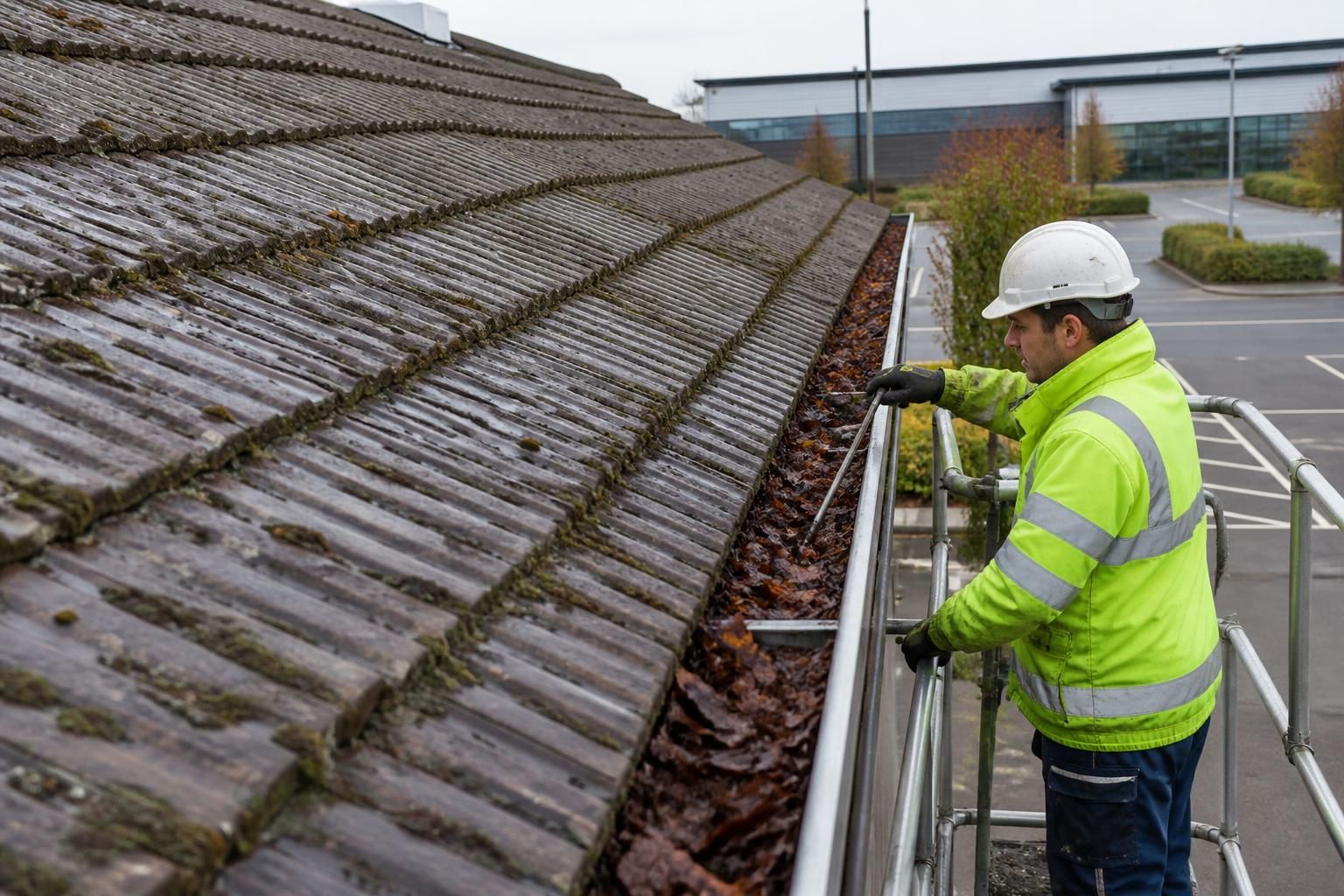
How often should roof tile and gutter cleaning be scheduled to ensure optimal functionality and prevent damage?
Gutters should generally be inspected and cleaned at least twice a year, particularly after autumn leaf fall, while roof tiles should be checked annually and cleaned when moss, algae, debris or staining begins to affect drainage or the tile surface. Properties beneath trees, exposed to severe weather or with a history of blocked gutters may require more frequent cleaning to prevent water ingress, damp and damage to roofline components.
For most properties, gutters should be inspected and cleaned at least twice a year, while roof tiles should be inspected annually and cleaned when moss, algae, lichen, debris or staining begins to affect drainage or the tile surface. Buildings beneath trees, exposed to severe weather or with a history of blockages may need more frequent inspections and cleaning. Scheduling work before problems develop helps prevent water ingress, damp, damaged roofline components and avoidable disruption.
A practical maintenance schedule
- Gutters: arrange an inspection and clean during spring, then repeat after autumn leaf fall. This removes accumulated leaves, seed pods, silt and other debris before they restrict the flow of rainwater.
- Roof tiles: inspect at least annually for moss, lichen, algae, slipped or cracked tiles, surface deterioration and debris collecting around roof features. Cleaning should be planned when growth or contamination is affecting the roof, rather than carried out automatically at the same interval as gutter cleaning.
- After severe weather: check the roof and rainwater system following strong winds, heavy rainfall, snow or prolonged freezing conditions. Storms can dislodge tiles, bring branches onto the roof and move debris into gutters and outlets.
- After nearby building or landscaping work: inspect the roof and gutters where construction dust, mortar, cuttings or fallen leaves may have entered the drainage system.
Roof tile and gutter cleaning are related but separate maintenance tasks. Gutters are designed to carry water away from the roof and require regular clearance because even a partial blockage can cause water to overflow against façades, soffits, brickwork and foundations. Roof tiles generally need condition-based cleaning. Excessive moss and organic growth can retain moisture, obscure defects and restrict water movement across the roof, while unsuitable cleaning methods can damage the tile surface or force water beneath the tiles.
Factors that can increase cleaning frequency
- Trees and vegetation: overhanging branches produce leaves, needles, blossom and seed debris. Properties surrounded by mature trees often need additional gutter checks between planned visits.
- Roof design: valleys, roof junctions, parapets, dormers and areas around vents or chimneys can collect debris and require closer inspection.
- Building location: exposed sites may receive more windblown debris, while damp or shaded elevations are more likely to develop moss and algae.
- Roof pitch and material: shallow-pitched roofs can drain differently from steeper roofs, and different tile materials have different tolerances for pressure, abrasion and chemical treatment.
- Previous problems: recurring overflow, damp staining, blocked outlets or past water ingress indicate that the maintenance interval should be reviewed rather than relying on a standard twice-yearly visit.
- Building use and risk: commercial premises, managed estates and public buildings may require documented inspections and planned works to reduce hazards for occupants, visitors and maintenance staff.
Signs that cleaning is due sooner
Arrange an inspection if water is spilling over the gutter edge, downpipes are slow to discharge, vegetation is growing from the gutter, or damp marks are appearing on external walls. Rusting joints, sagging gutters, loose brackets and staining below the eaves can also indicate that debris has caused prolonged moisture exposure or that the drainage system needs repair.
On the roof, visible moss or lichen, heavy algae staining, loose granules, cracked tiles and debris gathering in valleys should be assessed. Not every mark requires cleaning, and established growth should not simply be scraped or pressure washed without considering the tile material and condition. A suitable method may involve controlled soft washing, steam cleaning or carefully regulated pressure, depending on the surface and the risk to the roof covering.
How to plan an effective maintenance programme
- Record the roof covering, gutter layout, access requirements and any known defects.
- Schedule a visual inspection before the main cleaning visit so damaged tiles, leaking joints or unsafe access conditions can be identified.
- Plan gutter clearance around local vegetation and seasonal leaf fall rather than using a fixed date that does not reflect the site.
- Use a method appropriate to the tile and gutter materials, with controls to prevent damage, uncontrolled runoff and contamination of surrounding areas.
- Inspect outlets, downpipes, joints, brackets and discharge points after cleaning to confirm that water can flow freely.
- Keep a record of findings and photographs where appropriate, particularly for managed, commercial or multi-site properties.
Cleaning should not be treated as a substitute for repairs. Cracked or slipped tiles, defective flashing, damaged membranes, failed gutter joints and inadequate falls need to be reported and addressed by the appropriate roofing or building professional. Continuing to clean around a defect can hide the source of water ingress and allow damage to spread.
Because roof work involves work at height, the interval should also take account of safe access. Commercial sites may require access equipment, exclusion zones, protection for vehicles and pedestrians, and controls for water or debris falling onto occupied areas. A professional inspection can combine condition assessment with planned cleaning, helping to set a suitable schedule for the particular building instead of applying the same frequency to every roof.

Gutter cleaning should generally be scheduled in spring and again after autumn leaf fall, while roof tile cleaning should be based on the roof’s condition rather than a fixed interval. This approach clears seasonal debris from the drainage system and avoids unnecessary cleaning that could wear or damage roof tiles.
Properties beneath mature trees, in shaded areas or exposed to windblown debris may need additional inspections. Arrange an earlier check if gutters overflow, downpipes drain slowly, moss is spreading across tiles, or debris is collecting in valleys and around roof features. Inspect the roof and gutters after severe weather or nearby building work, and review the schedule if previous blockages or water ingress have occurred.