
What types of surfaces besides roof tiles can be effectively cleaned using jet washing?
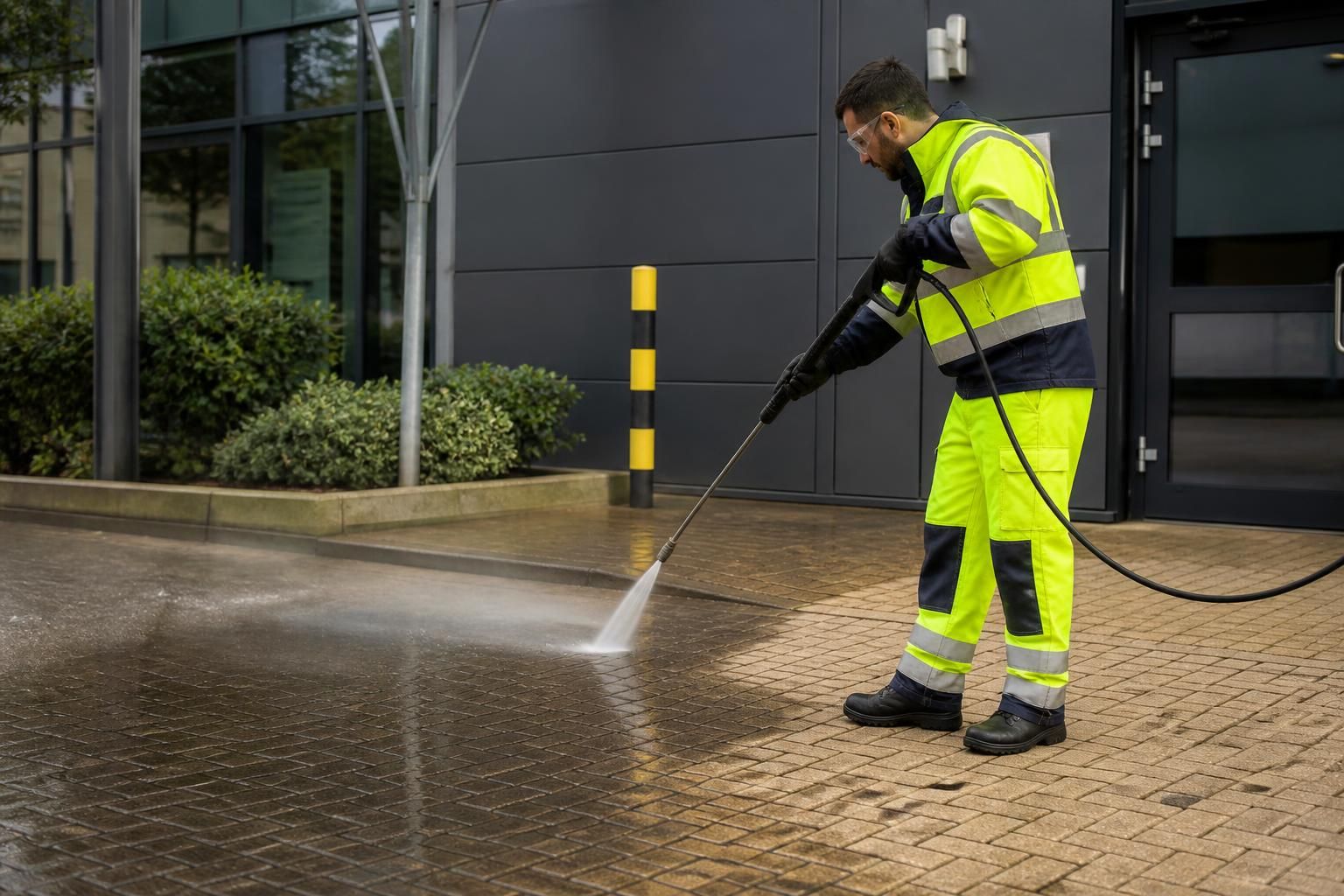
Jet washing can effectively clean block paving, concrete, tarmac, patios, paths, walls, façades, cladding, car parks, loading areas and other hard external surfaces. The pressure, temperature and cleaning method should be adjusted to suit each material, particularly painted finishes, rendered walls and aged or jointed paving.
Jet washing can effectively clean many hard external surfaces besides roof tiles, including block paving, concrete, tarmac, patios, paths, brickwork, façades, cladding, car parks, loading areas and external steps. The correct pressure, water temperature, nozzle, cleaning solution and technique must be selected for the material, because a setting that is suitable for sound concrete may damage painted finishes, aged mortar, soft stone or rendered walls.
Common surfaces suitable for jet washing include:
- Block paving: Jet washing removes surface dirt, algae, moss, weeds and some oil-related staining from paving blocks. Care is needed around joints, as excessive pressure can displace jointing material. Re-sanding may be required after cleaning where joint integrity has been affected.
- Concrete: Concrete yards, paths, slabs, forecourts and car parks can generally tolerate controlled pressure washing. It is effective against general soiling, organic growth, tyre marks and some spills. Cracked, flaking or weakened concrete needs a lower-impact approach to prevent further surface loss.
- Tarmac and asphalt: Jet washing can remove mud, loose debris, algae and some vehicle-related contamination from tarmac surfaces. Pressure must be managed carefully because aggressive cleaning can lift loose aggregate or mark deteriorated asphalt. Oil stains may also require a suitable degreaser and additional treatment rather than water pressure alone.
- Patios and paths: Natural stone, concrete paving and manufactured paving can often be cleaned effectively. The method should be adapted to the stone type, finish and condition. Soft or porous materials may require lower pressure, wider spray patterns or steam cleaning to avoid etching and surface damage.
- Brick walls and masonry: Sound brickwork can be cleaned to remove dirt, algae, atmospheric deposits and some staining. Mortar joints are more vulnerable than the bricks themselves, particularly where they are old, recessed or already eroded. A controlled method and suitable stand-off distance help protect the pointing.
- Building façades: Commercial and industrial façades may be cleaned with pressure washing where the construction materials and surface coatings allow it. Cleaning can remove accumulated dust, traffic film and biological growth, but painted, coated or delicate façades often need lower pressure, soft washing or steam cleaning instead.
- Cladding: Metal, powder-coated, composite and certain plastic cladding systems can be washed to remove dirt and staining. Operators need to avoid forcing water behind panels, seals, vents, joints and service penetrations. The condition of the coating is checked before work begins, as pressure will not safely restore a failing finish.
- Car parks, yards and loading areas: Large hardstanding areas can be cleaned using pressure washing equipment suited to the scale of the site. Surface cleaning can remove dirt, moss, tyre marks, food residue and general industrial grime, while targeted treatment may be needed for oil, grease, paint or chemical deposits.
- External steps, ramps and kerbs: Jet washing can improve the removal of slippery organic growth and ingrained dirt from access routes. Drainage, pedestrian safety and the condition of anti-slip surfaces must be considered so that cleaning does not reduce grip or leave contaminated water in circulation areas.
Some surfaces should not be treated with standard high-pressure jet washing without further assessment. Timber decking, soft natural stone, fragile render, loose pointing, painted surfaces, aged asphalt and damaged concrete may be marked, stripped or eroded. Glass, electrical equipment, open vents and vulnerable seals also require protection or an alternative cleaning method.
Before cleaning, the surface should be inspected for cracks, loose coatings, failed joints, corrosion, drainage issues and areas of previous repair. A small test area can confirm whether the selected pressure and detergent are appropriate. The cleaning pattern is then adjusted to avoid streaking, uneven shading or concentrated impact. For commercial sites, water collection and drainage controls may also be necessary to prevent silt, oil, detergents or other contaminants entering surface-water drains.
Jet washing is therefore most effective when it is treated as a surface-specific cleaning process rather than a single pressure setting. Where high pressure presents a risk, steam cleaning, soft washing, rotary surface cleaning or targeted chemical treatment can provide a safer result. The appropriate method depends on the material, its age and condition, the type of contamination and the surrounding drainage and access requirements.
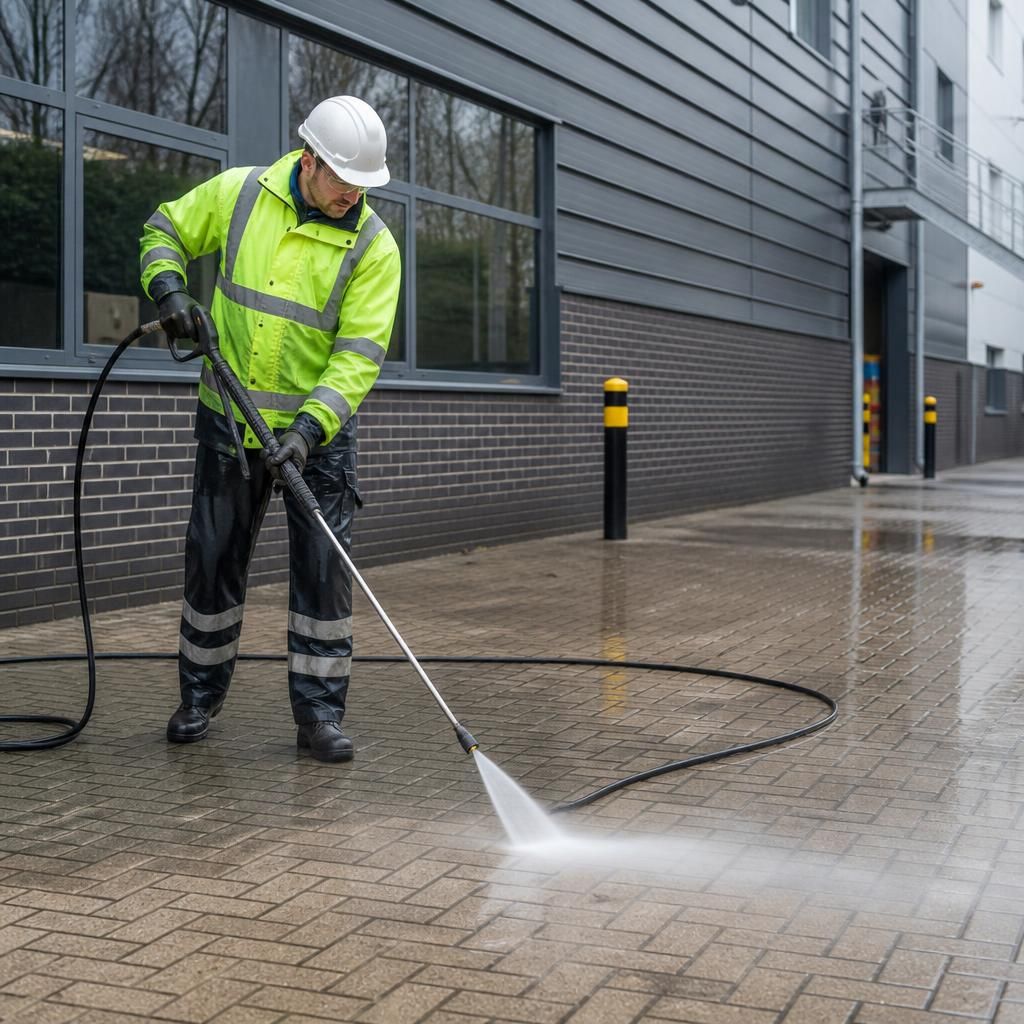
Besides roof tiles, jet washing can effectively clean hard external surfaces such as block paving, concrete, tarmac, patios, brickwork, cladding, façades, car parks and loading areas. The equipment settings must be matched to each material: excessive pressure can remove jointing sand from paving, damage aged mortar, lift loose tarmac aggregate or strip painted and coated finishes.
Before cleaning, the surface is assessed for cracks, loose coatings, weakened joints, drainage issues and previous repairs. A small test area helps confirm whether pressure washing is suitable or whether a lower-impact method, such as steam cleaning or soft washing, would provide a safer result. Contaminated runoff from oil, algae, detergents or industrial deposits may also require controlled collection or drainage protection.
Discuss the Right Jet Washing Method for Your Surface
Discuss the right jet washing method for your surface with our team before cleaning begins. We can assess the material, condition, contamination and drainage requirements, then recommend pressure washing, steam cleaning or a lower-impact alternative.