
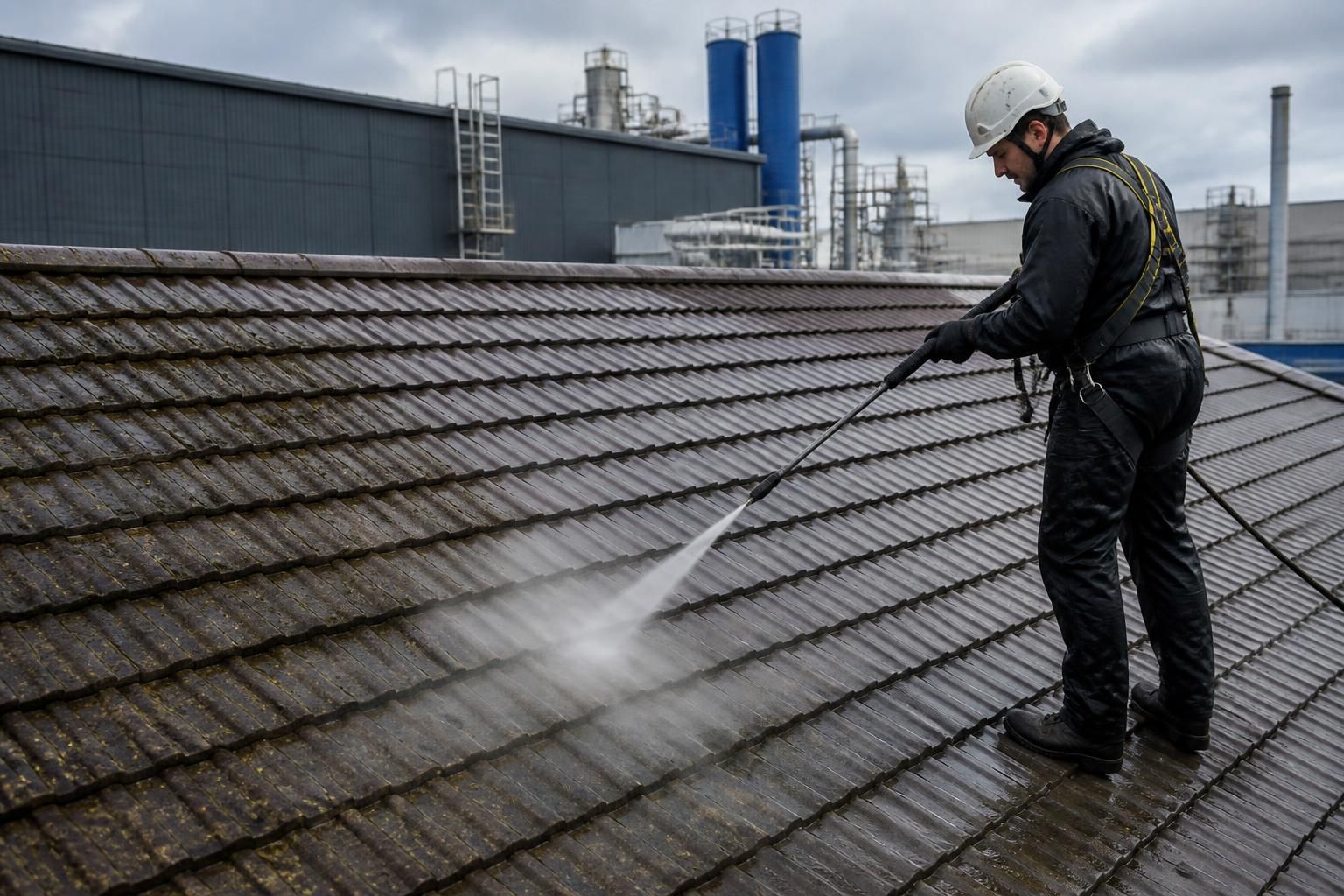
What precautions should be taken to prevent roof tile damage during jet washing?
To prevent roof tile damage during jet washing, first assess the tile material, age and condition, then use a suitable low-pressure setting, a wide spray pattern and the correct cleaning technique. Avoid directing the jet beneath tile edges or at damaged areas, protect vulnerable roof features, and use experienced operatives who can stop if tiles begin to move, crack or shed their surface.
Preventing roof tile damage during jet washing depends on matching the cleaning method to the tile type and condition, keeping the pressure controlled, and avoiding direct impact on vulnerable areas. Before work begins, the roof should be assessed for age, material, existing defects, previous repairs, loose tiles, failed bedding, damaged pointing and areas where the underlying structure may already be weakened.
Inspect the roof before cleaning
A visual inspection should identify cracked, slipped, delaminated or porous tiles, as well as damaged ridge tiles, verge tiles, valleys, flashings and chimney details. Tiles with a friable surface may shed their protective coating when subjected to aggressive pressure. If defects are found, they should be recorded and addressed before cleaning, or the affected areas should be excluded from the work. Jet washing should not be used to conceal or compensate for structural or maintenance problems.
The tile material is also important. Concrete, clay, slate and other roofing products have different levels of hardness, porosity and surface durability. Older tiles may be more vulnerable than their appearance suggests, particularly where repeated frost, weathering or biological growth has weakened the surface. The cleaning approach should therefore be selected for the actual roof rather than applied as a standard setting.
Use a test area and the lowest effective pressure
A small, inconspicuous test area should be cleaned first. This allows the operative to check whether the surface sheds granules, changes colour, becomes marked or allows water beneath the tile laps. Pressure should then be increased only when necessary and kept at the lowest effective level. Cleaning performance should come from the correct combination of water flow, nozzle selection, spray pattern and technique, not simply from using more pressure.
A wide fan spray is generally safer than a narrow, concentrated jet because it distributes the force over a larger area. The nozzle should be kept at a suitable distance from the surface and moved continuously rather than held over one tile. Excessive pressure, a narrow nozzle or prolonged work in one spot can erode the tile face, expose the underlying material and create points where water can penetrate.
Keep the spray direction controlled
Water should normally be directed in a manner that follows the designed fall of the roof, rather than forced upwards beneath overlapping tiles. Spraying directly into laps, joints, open edges, ridge interfaces or damaged sections can drive water into the roof covering and supporting layers. Operatives should take particular care around valleys, abutments, roof windows, vents, flashings and chimney stacks, where seals and junctions are more vulnerable than the main tile field.
The jet should not be used to move across the roof in a way that lifts or twists tiles. Loose tiles must not be treated as though they are securely fixed. Where access is required, suitable equipment and planned routes should be used to limit loading and avoid stepping on unsupported, fragile or damaged tiles.
Protect roof features and connected areas
Before cleaning, vulnerable items should be protected or isolated where appropriate. This may include roof windows, vents, solar equipment, leadwork, seals, pointing, gutters and downpipes. Protective measures must not obstruct safe drainage or create a route for contaminated water to enter the building. Openings, air intakes and sensitive equipment at ground level should also be considered, particularly on commercial or industrial premises.
Gutters and downpipes should be checked before work starts. Blocked or poorly secured drainage can cause dirty water to back up against the roof edge, overflow onto walls or enter the building. Run-off should be controlled, collected or diverted in accordance with the site plan, with suitable precautions taken where cleaning residue, moss or treatment products could affect surrounding surfaces or drainage systems.
Use safe access and competent operatives
Safe access equipment helps prevent both accidental impact and unnecessary loading of the roof. Depending on the building, this may include scaffold, a suitable access platform, edge protection or other planned systems of work. Ladders should not be treated as a substitute for a proper access arrangement where prolonged work or significant movement is required.
Operatives should understand how different roof coverings respond to pressure and should monitor the surface throughout the clean. Work should stop if tiles move, crack, expose a weak substrate or begin to lose their finish. Any unexpected defect should be reported rather than worked over. On larger commercial roofs, the method statement and risk assessment should account for access, fragile areas, falling debris, public protection, water management and emergency arrangements.
Control the surrounding conditions
Jet washing should be planned for suitable weather and site conditions. Strong wind can affect spray control and increase the risk of water entering openings or reaching nearby people and equipment. Poor visibility, ice or unsafe roof conditions can also make access hazardous. Cleaning should be postponed where the surface cannot be inspected or reached safely.
After cleaning, the roof should be inspected for displaced tiles, damaged mortar, exposed junctions, blocked outlets and any signs that water has entered areas it should not reach. Gutters, downpipes and surrounding walls should be checked and cleared where necessary. A final inspection is particularly important after moss or heavy soiling has been removed, as defects that were previously concealed may then become visible.
Where a roof is old, fragile, heavily weathered or already defective, a softer cleaning method may be more appropriate than jet washing. Manual removal, low-pressure rinsing or another controlled treatment can reduce the risk of disturbing the covering. The safest option is determined by the roof’s construction and condition, not by the desired cleaning speed alone.
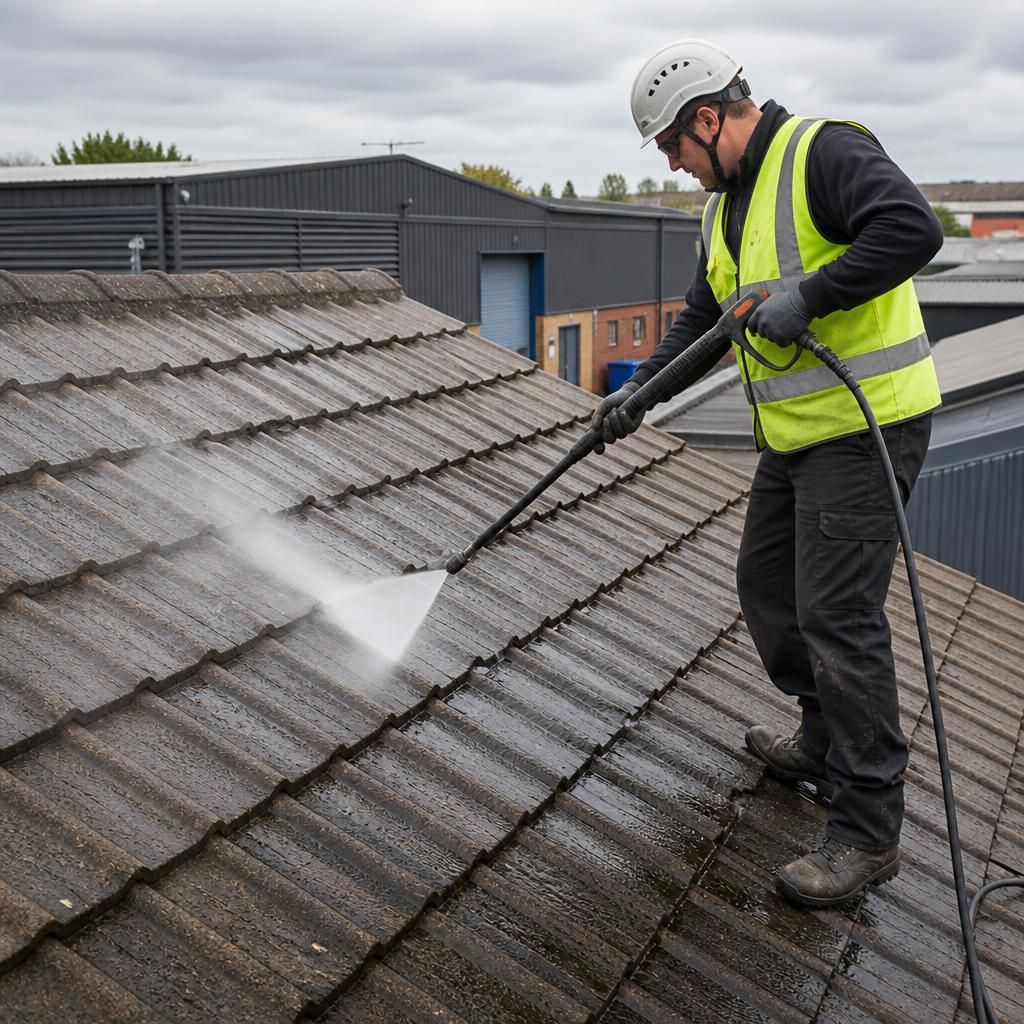
The safest way to prevent roof tile damage during jet washing is to test a small, inconspicuous area first and use the lowest pressure that removes the soiling effectively. This confirms how the particular tile responds before work continues across the wider roof.
A wide fan spray, suitable nozzle distance and continuous movement help distribute the force rather than concentrating it on one spot. The operative should check for surface erosion, colour changes, granule loss, cracking or water entering beneath the tile edges. If any of these signs appear, cleaning should stop and a gentler method or different treatment should be considered.