
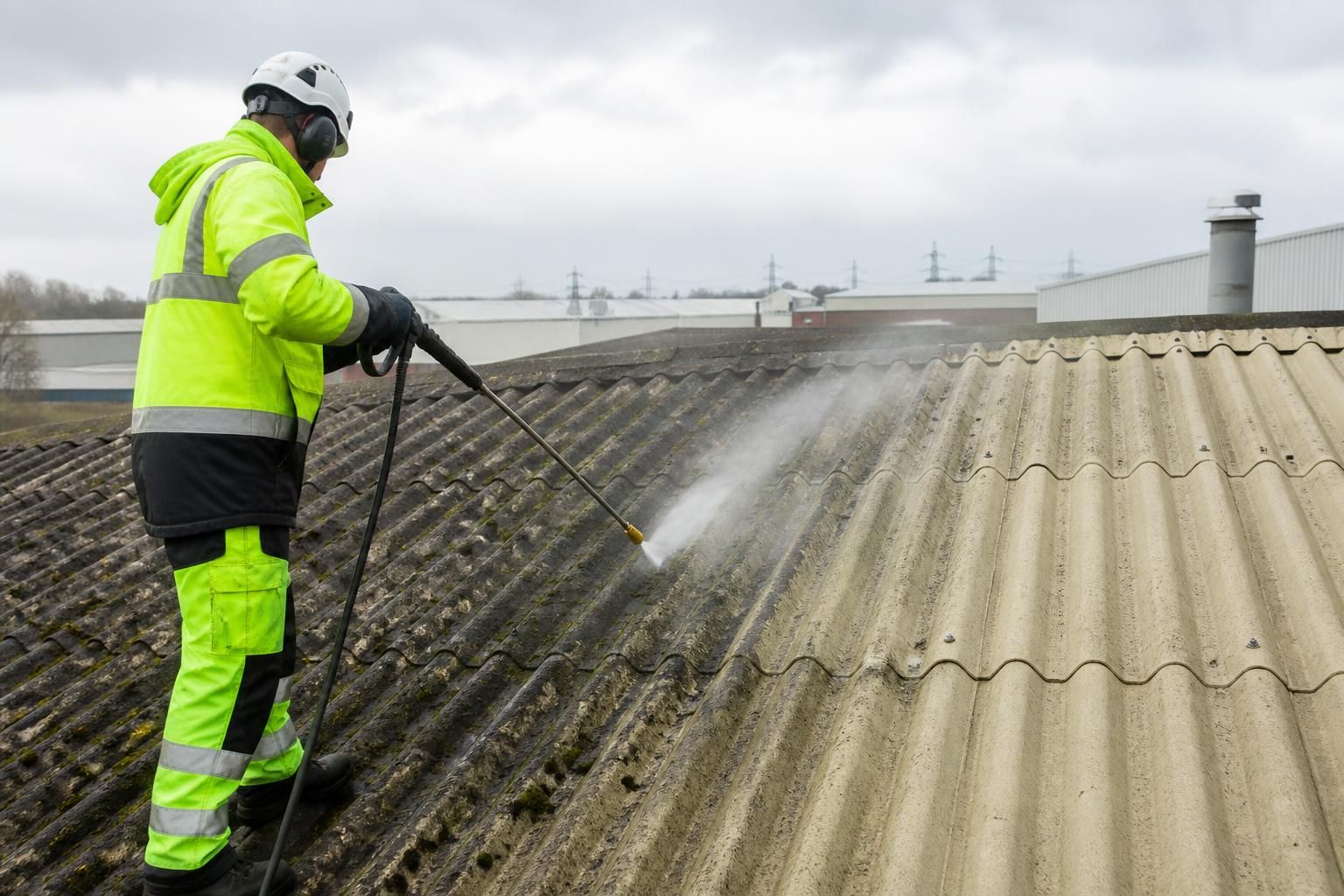
What measures are in place to ensure that the pressure used in jet washing is suitable for my specific type of roof tiles?
We assess the tile material, age, condition, profile and existing coatings before selecting the lowest effective jet-washing pressure. A controlled test area, appropriate nozzle and spray distance are used first, with the pressure adjusted or reduced if there is any risk of lifting, cracking or driving water beneath the tiles.
The pressure is selected according to the tile material, age, condition, profile and the type of contamination present. We do not use one fixed jet-washing setting across every roof. Instead, we inspect the roof first, choose the least aggressive cleaning method that can achieve the required result, and verify the setting on a small test area before proceeding.
Our assessment considers the following factors:
- Tile material: concrete, clay, slate and other roofing materials respond differently to water pressure. Some surfaces are more porous, brittle or prone to surface loss than others.
- Age and condition: weathered, cracked, loose, delaminating or previously damaged tiles require a more cautious approach. We also check ridge tiles, verges, flashings, pointing and other vulnerable details.
- Surface finish and coatings: painted, sealed or factory-finished tiles may be affected by excessive pressure or an unsuitable cleaning technique. Existing coatings are assessed before cleaning.
- Tile profile and roof design: interlocking profiles, overlapping joints and roof pitches influence how water travels across the surface and the risk of water being driven beneath the tiles.
- Type of soiling: moss, algae, lichen, dirt and staining do not always require the same treatment. Softening or treating the contamination first can reduce the pressure needed during rinsing.
Pressure is only one part of the cleaning process. We also control the nozzle type, spray pattern, water flow, distance from the tile and angle of application. A wider spray and greater working distance generally provide a more controlled clean than a concentrated jet held close to the surface. Water is directed across the face of the tiles rather than into laps, joints, vents or openings, helping to reduce the possibility of water entering beneath the roof covering.
Before full-scale cleaning, we carry out a controlled test on an inconspicuous section where practical. This allows us to check whether the selected method removes the contamination without lifting the tile surface, dislodging granules, disturbing coatings or exposing weaknesses. We inspect the test area for visible change and check nearby joints and overlaps. If the result indicates a risk of damage or insufficient control, we reduce the pressure, change the nozzle or increase the working distance. We may also recommend a different cleaning method instead of jet washing.
Manufacturer guidance and any available maintenance or warranty requirements are taken into account. Some older, fragile or specialist roof coverings are not suitable for high-pressure cleaning at all. Where the roof condition, tile type or warranty terms make jet washing inappropriate, we explain this before work starts and discuss a lower-impact alternative, such as soft washing, controlled rinsing or manual removal. Jet washing is never treated as automatically suitable simply because the roof has previously been cleaned in that way.
During the work, the operator monitors the tiles and adjusts the method if conditions change. Particular care is taken around:
- cracked, slipped or previously repaired tiles;
- ridge and hip tiles, verges and exposed edges;
- roof penetrations, vents, skylights and flashing;
- areas with loose pointing or deteriorated bedding mortar; and
- sections where moss or debris may be concealing existing defects.
Cleaning is paused if a tile moves, a coating begins to lift, damage becomes visible or water cannot be controlled safely. The roof is then checked for displaced tiles and other issues before the work continues or a revised approach is agreed. Access equipment and suitable working positions are used so that operators do not need to stand directly on vulnerable tiles or work at an unstable angle.
After cleaning, we inspect the roof covering and the details that could have been affected by the process. This includes checking for loose tiles, disturbed pointing, visible cracks and debris around drainage points. Any pre-existing defects identified during the initial inspection are distinguished from issues requiring attention after cleaning, and relevant findings are reported to the customer.
These controls ensure that the cleaning pressure is based on the specific roof rather than a standard machine setting. The objective is to remove the contamination with the lowest effective force while protecting the tile surface, maintaining the integrity of the roof covering and avoiding unnecessary water ingress.
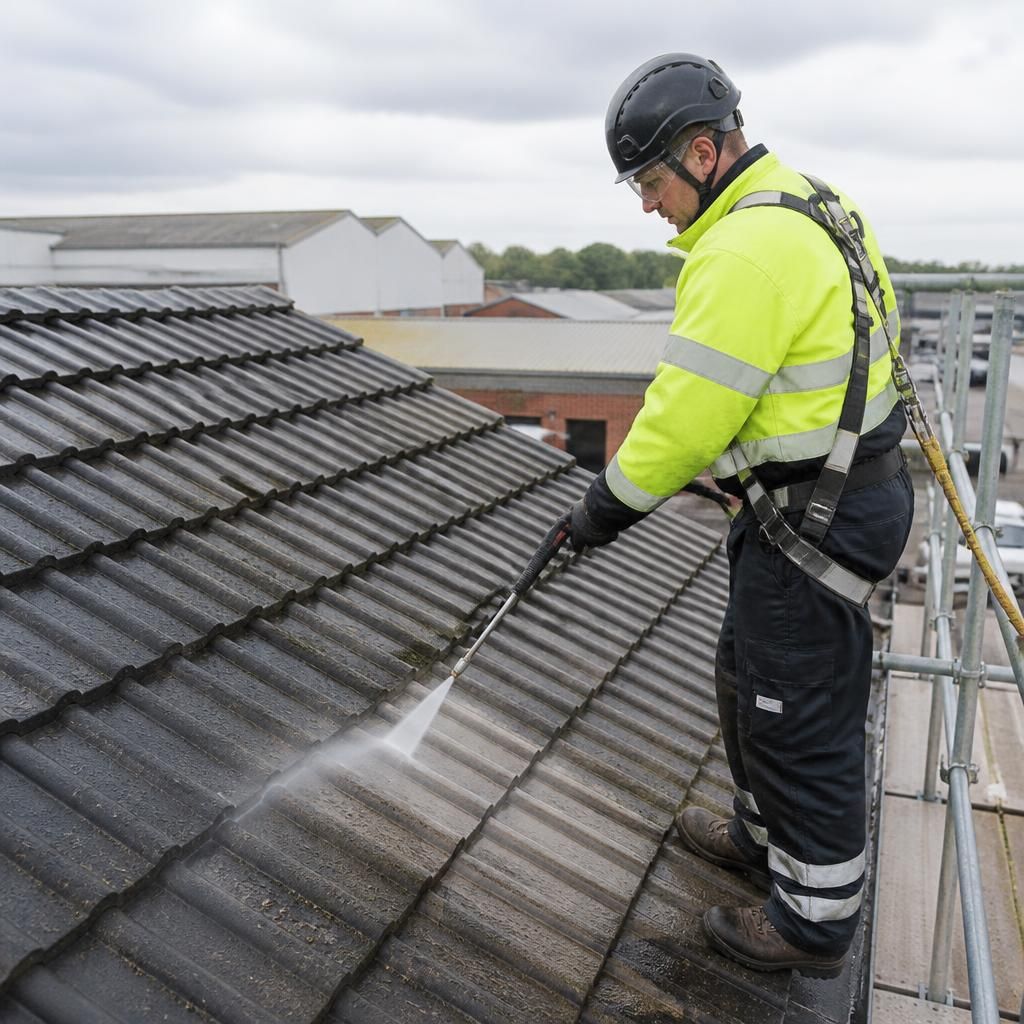
The pressure used for jet washing is confirmed on a controlled test area before full cleaning begins. We assess how the specific tile surface responds, checking that contamination is removed without lifting the finish, loosening the tile or driving water beneath overlaps and joints.
If the test shows any risk of damage, the method is adjusted by reducing pressure, using a wider spray pattern, increasing the working distance or choosing a different cleaning process. This ensures the roof is cleaned with the lowest effective force rather than a standard machine setting.