
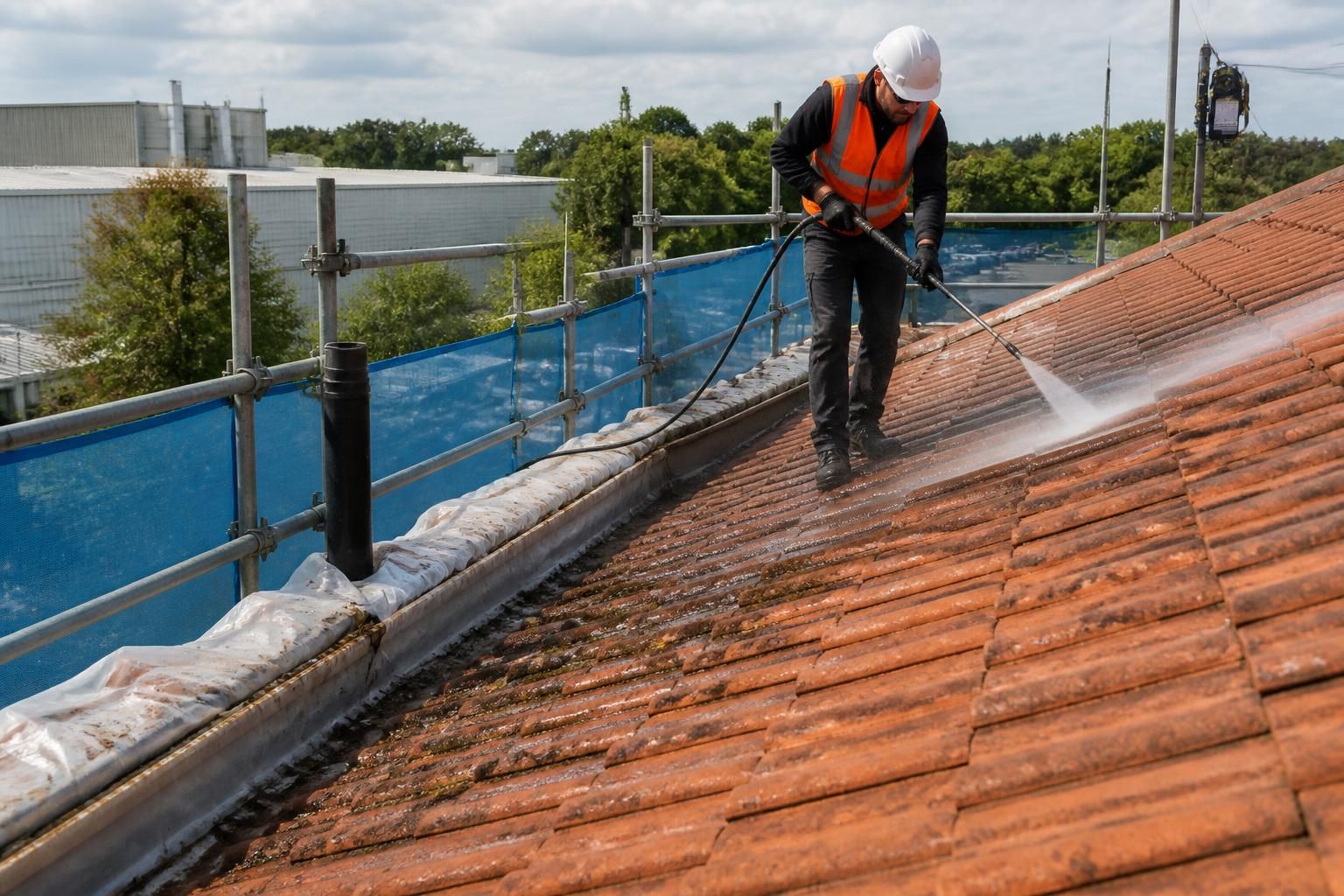
What environmental safeguards are implemented during the jet washing process to minimise impact on the surrounding area and local ecosystems?
During roof-tile jet washing, environmental safeguards include controlling water runoff, preventing detergents and loosened contaminants from entering drains or watercourses, and protecting nearby soil, planting and wildlife. The process is planned around suitable cleaning products, contained drainage, debris collection and responsible wastewater disposal, with pressure and water use kept to the minimum needed for effective cleaning.
Environmental safeguards during roof-tile jet washing are designed to control water, cleaning products and loosened contaminants so they do not spread into surrounding ground, surface-water drains, watercourses or neighbouring property. The work is planned before cleaning begins, with suitable pressure, limited water use, runoff controls, debris collection and responsible wastewater handling used together to reduce the risk to local ecosystems.
Site assessment and preparation
Before work starts, the surrounding area is assessed for drainage points, gullies, ponds, streams, planted borders, soil, vulnerable surfaces and access constraints. The team also considers the condition and pitch of the roof, the type of tile, the likely contaminants and the safest route for water to leave the roof. This helps determine whether additional sheeting, drain protection, collection equipment or temporary diversion measures are required.
Nearby doors, windows, air-conditioning equipment, vehicles, signage and external electrical fittings are protected where necessary. Loose items and movable obstacles are removed from the work area, while sensitive planting and habitats are shielded from spray and falling debris. If wildlife, nesting activity or other ecological sensitivities are identified, the cleaning programme can be adjusted or postponed until the risk has been properly addressed.
Runoff and drainage control
Jet washing can mobilise moss, algae, silt, dirt, bird fouling, coatings and other deposits. These materials are not allowed to wash uncontrolled into surface-water drainage systems. Drain covers, filters, temporary bunds, absorbent barriers or collection points may be used to prevent contaminated water entering gullies. Where practical, runoff is directed towards an agreed foul-water connection or collected for suitable disposal, subject to the site’s drainage arrangements and applicable requirements.
Surface-water drains are treated with particular care because they commonly discharge to watercourses without the same treatment as foul drainage. A drain is never assumed to be suitable for wastewater simply because it is convenient. The drainage layout is checked, and any collected wastewater is handled in accordance with the relevant site procedures and environmental requirements.
Controlled use of cleaning products
Water alone is used where it can achieve the required result. If a cleaning agent or biocidal treatment is needed for persistent organic growth, the product is selected for the tile type, contamination and surrounding conditions. It is applied at the lowest effective concentration and only where appropriate. Product instructions, control measures and required contact times are followed, rather than applying excessive chemical simply to speed up the process.
Cleaning products are kept away from open water, planted areas and unprotected soil. Runoff is monitored during application, and work is stopped or altered if containment is no longer effective. Chemicals are stored securely, measured carefully and prevented from entering drains through spills or incorrect rinsing. Unused products and empty containers are dealt with through appropriate waste arrangements.
Pressure, water use and debris management
The pressure and nozzle configuration are matched to the roof tiles and their condition. Using only the force required for effective cleaning reduces unnecessary water consumption, limits spray drift and helps prevent excessive erosion of the tile surface or bedding materials. The lance is operated at a controlled distance and angle, rather than being directed aggressively at vulnerable joints, edges or damaged areas.
Loose moss and larger debris are removed and gathered where possible instead of being flushed across the roof and into drainage systems. Downpipes, gutters and collection points are checked during the work so that displaced material does not create blockages or cause water to back up against the roof structure. Collected solids are separated from wastewater and disposed of through suitable waste channels.
Weather and working conditions
Weather conditions affect how safely water and cleaning products can be contained. Work may be rearranged during heavy rain, strong winds, freezing conditions or weather that would increase spray drift and uncontrolled runoff. Wind direction is considered when protecting nearby properties, planting and water features. Cleaning is also planned to avoid leaving treated areas exposed to rainfall before the required product contact time has been completed.
Inspection after cleaning
When jet washing is complete, the surrounding area, gutters, downpipes, drain protection and collection equipment are inspected. Visible debris is removed, temporary barriers are cleared only when the area is safe, and any collected wastewater is handled correctly. The roof and adjacent surfaces are checked for remaining runoff, displaced material or signs that drainage has been restricted.
These safeguards do not mean that every roof can be cleaned in exactly the same way. The appropriate controls depend on the roof construction, contamination, surrounding drainage, nearby habitats and the intended cleaning method. For complex commercial or industrial sites, the method statement and risk assessment should record the runoff route, products, containment measures, waste arrangements and emergency response for spills or unexpected discharge.
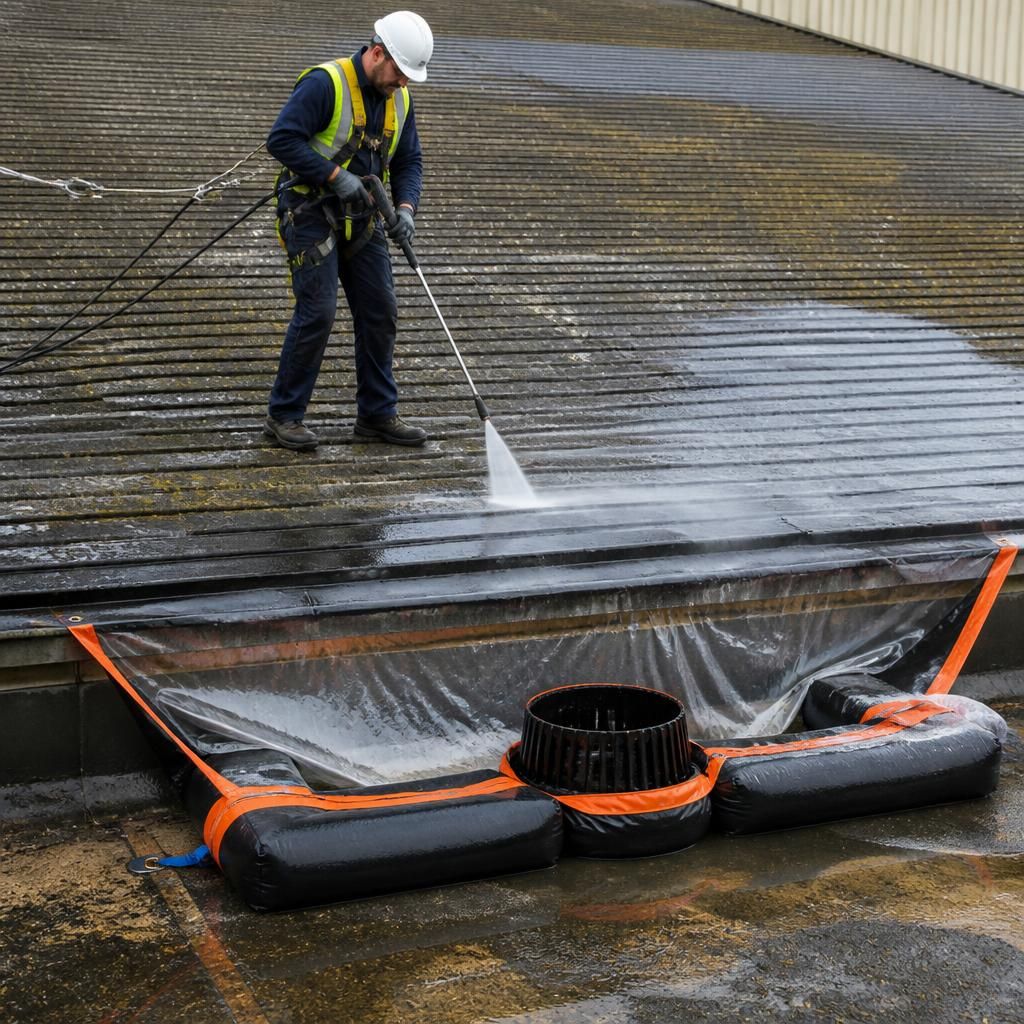
Runoff control is a key environmental safeguard during roof-tile jet washing. Water carrying moss, silt, algae, dirt or cleaning residue is contained so it cannot enter surface-water drains, nearby soil, ponds or watercourses without proper control.
Before cleaning, drainage routes are checked and gullies may be protected with drain covers, filters, temporary bunds or collection equipment. Loose debris is gathered rather than flushed away, while any collected wastewater is handled through suitable site drainage or disposal arrangements. Work can also be paused during heavy rain or strong winds if these conditions would make containment unreliable.