
What are the environmental considerations when jet washing roof tiles?
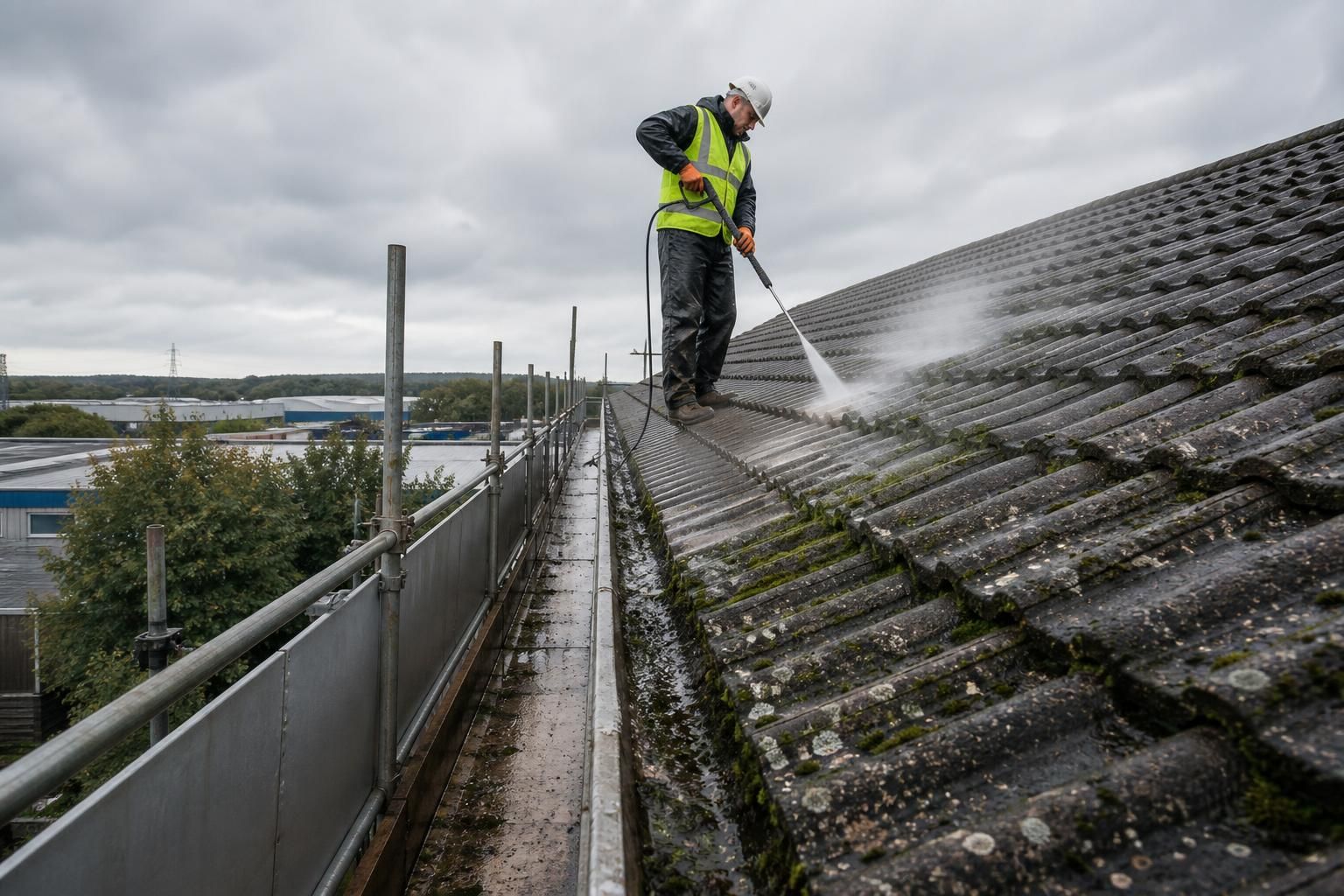
The main environmental considerations when jet washing roof tiles are controlling water use, preventing contaminated runoff, and avoiding cleaning chemicals entering drains, soil or watercourses. Responsible cleaning uses suitable pressure, contained drainage and, where possible, low-impact methods such as water-efficient equipment and biodegradable products.
The main environmental considerations when jet washing roof tiles are controlling water consumption, preventing contaminated runoff and keeping cleaning chemicals, roof debris and wastewater out of drains, soil and watercourses. Responsible roof cleaning uses the lowest effective pressure, avoids unnecessary chemical treatment and plans how water and loosened material will be contained, collected and disposed of.
Water use is an important consideration because roof cleaning can require substantial volumes of water, particularly where heavy moss, algae or accumulated dirt needs to be removed. Professional operatives should use well-maintained equipment, efficient nozzles and a controlled working method rather than leaving water running unnecessarily. In some cases, soft washing, steam cleaning or targeted low-pressure cleaning may achieve the required result with less water and reduced risk of runoff.
The most suitable method depends on the tile material, roof condition and type of contamination. Jet washing is not automatically the most environmentally responsible option for every roof. If high pressure is unnecessary, a lower-impact method may reduce water use, prevent avoidable tile erosion and limit the amount of debris entering the drainage system. Any alternative method should still be assessed for its effect on the roof covering, gutters, surrounding surfaces and local environment.
Runoff control is essential. Water from roof cleaning can contain moss, algae, silt, dirt, bird fouling, old coatings and residues from previous treatments. If this water is allowed to flow freely from the roof, it may stain walls and paving, overload surface drains or carry pollutants into soil and nearby watercourses. Before work starts, the drainage route should be assessed and gutters, downpipes and vulnerable areas protected where appropriate.
Where contaminated water cannot safely enter the normal drainage system, it should be diverted, collected or filtered in accordance with the site conditions and applicable requirements. Solid debris should be removed rather than washed into gullies. Collected wastewater must be handled responsibly, and it should never be discharged into a stream, pond, watercourse or surface-water drain simply for convenience. The correct disposal route may depend on the substances present, the local drainage arrangements and whether the water is classed as trade effluent.
Cleaning products require careful selection and application. Biodegradable or lower-impact products can reduce environmental persistence, but the term does not mean that a product is harmless in every situation. Concentrated treatments may still affect aquatic life, vegetation, soil or building materials if they are misapplied. Products should therefore be used only where necessary, mixed and applied according to the manufacturer’s instructions, and prevented from entering drains, ponds, planted areas and neighbouring properties.
Roof cleaning can also disturb nesting birds, insects and other wildlife. A visual check should be made before work begins, particularly around eaves, verges, roof spaces and areas with dense vegetation. Work may need to be postponed if an active nest or protected wildlife is identified. Moss and other biological growth should be removed in a way that limits unnecessary disturbance, and loosened material should be gathered rather than spread across gardens or habitats.
Noise, energy use and airborne debris should also be considered. Pressure-washing equipment can create noise and may disturb occupants, neighbours or wildlife, so operating times and access arrangements should be planned sensibly. Efficient equipment, regular maintenance and a method suited to the roof can help avoid excessive energy use. Operators should also control spray drift and protect nearby windows, ventilation openings, planted areas and water features.
A responsible roof-cleaning plan normally includes:
- Inspecting the roof, gutters, drainage routes and surrounding ground before cleaning.
- Choosing the least intensive effective method for the tile type and level of contamination.
- Using water and cleaning products in a controlled manner, with no unnecessary overspray.
- Preventing moss, silt and chemical residues from entering surface-water drains or watercourses.
- Collecting solid waste and arranging suitable disposal rather than washing it into the drainage system.
- Checking for wildlife, protecting vegetation and limiting disturbance to neighbouring areas.
- Inspecting the site afterwards and removing residual debris, pooled water and temporary protection.
Environmental protection must be balanced with roof safety and the condition of the tiles. Excessively gentle cleaning may leave contamination that continues to retain moisture, while excessive pressure or unnecessary chemicals can damage the roof and create additional waste through premature repairs. A site-specific assessment allows the cleaning method, water management and product choice to be matched to the roof and its surroundings.
For commercial or larger properties, the responsible approach is to record the planned method, substances used, drainage controls and waste arrangements before work begins. This provides a clear audit trail and helps ensure that the cleaning is completed without avoidable impact on the building, neighbouring land or local ecosystems.
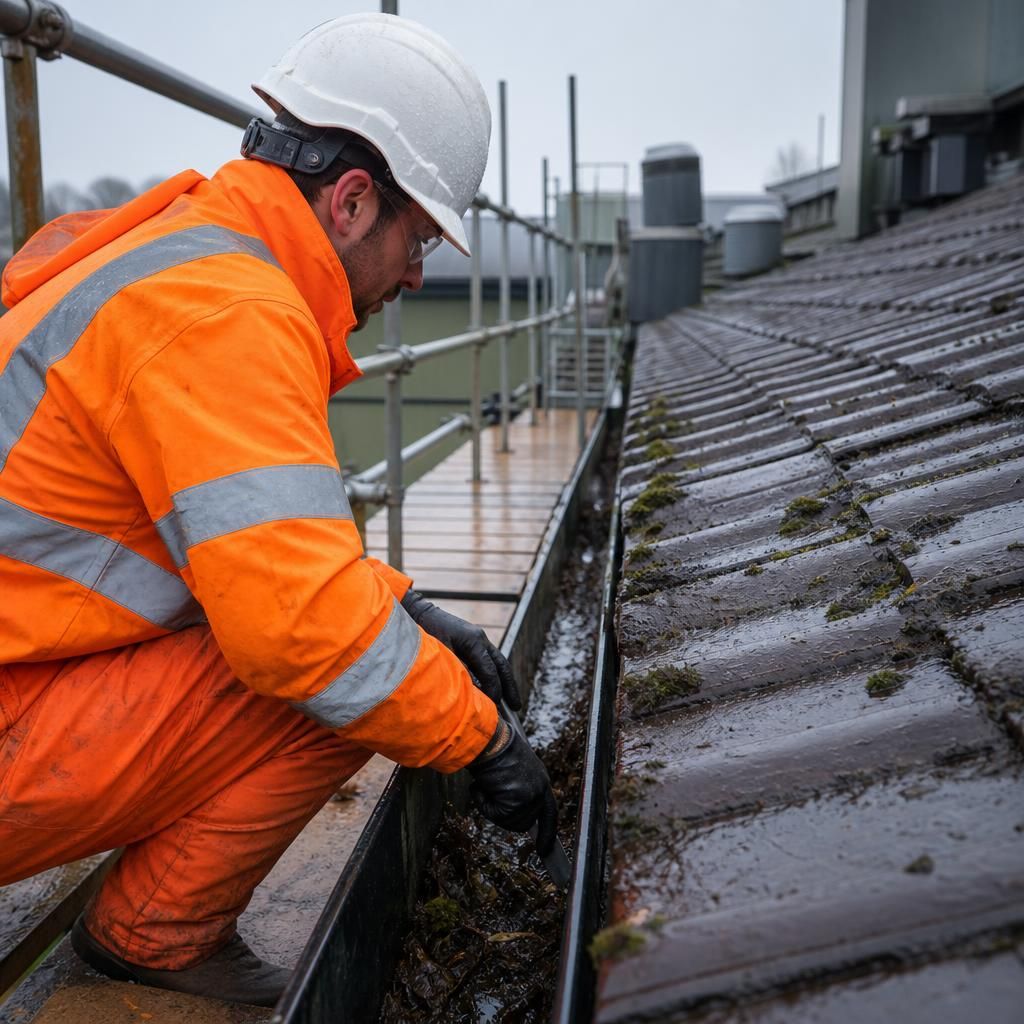
Controlling runoff is one of the most important environmental considerations when jet washing roof tiles. Cleaning water can carry moss, silt, dirt, bird fouling and treatment residues into gutters, surface-water drains, soil or nearby watercourses.
Before work starts, the drainage route and surrounding ground should be assessed. Solid debris should be collected rather than washed away, while contaminated water should be diverted, filtered or collected where necessary. Cleaning products must be used sparingly and kept away from ponds, planted areas and open drains. After cleaning, the gutters and surrounding surfaces should be checked to confirm that no residue or loose material has been left behind.
Arrange an Environmentally Responsible Roof Tile Cleaning Assessment
Arrange an environmentally responsible roof tile cleaning assessment to review the most suitable cleaning method, water controls, drainage arrangements and waste-disposal requirements for your roof. Contact Encanto Exterior Cleaning to plan the work around the building, surrounding areas and local environmental considerations.