
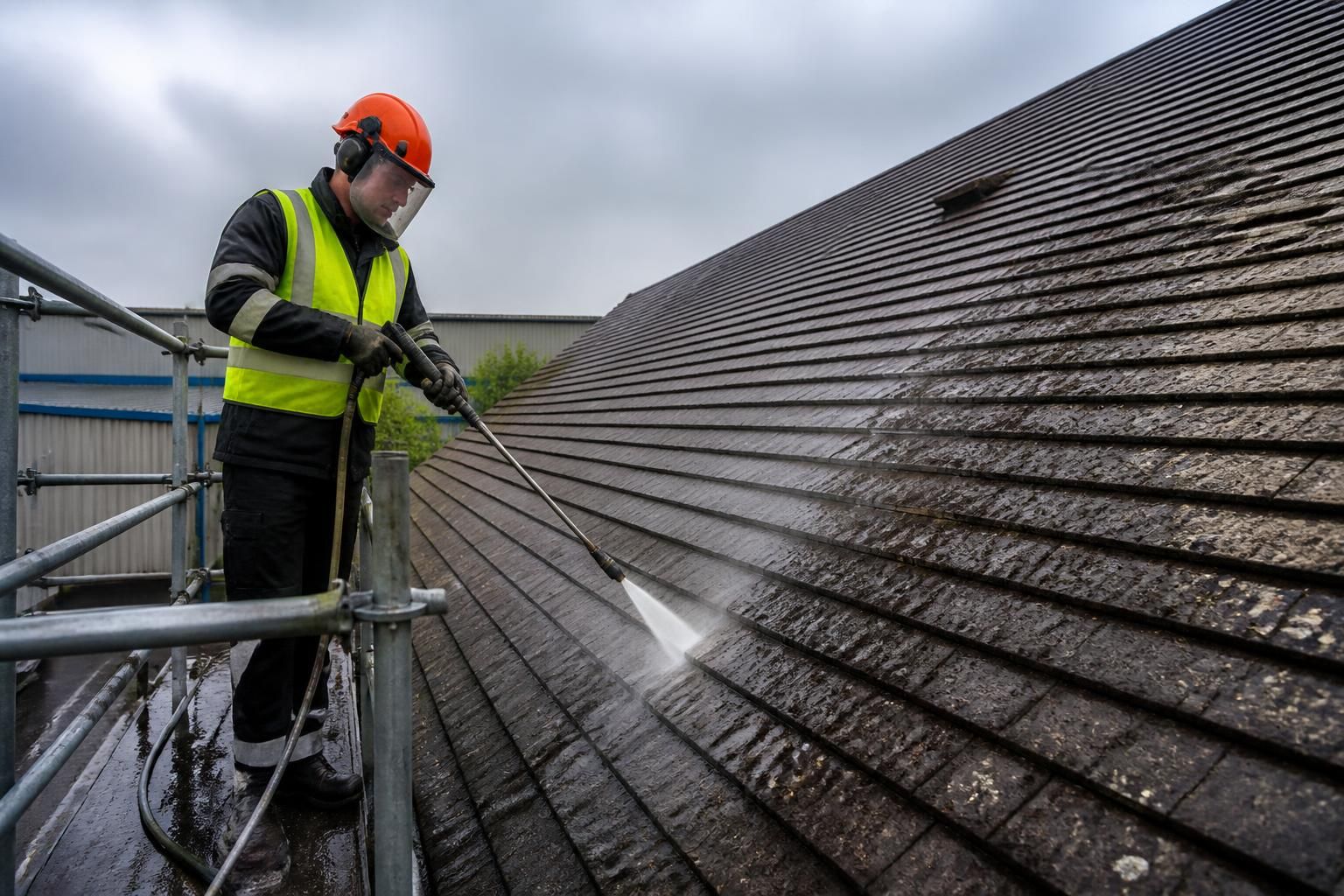
How often should roof tiles be jet washed to ensure optimal maintenance and prevent damage?
Roof tiles should not be jet washed on a fixed schedule; they should be professionally inspected and cleaned only when moss, algae, lichen or heavy soiling is affecting drainage or tile condition. The appropriate interval depends on the tile material, roof exposure and surrounding trees, with low-pressure or steam cleaning often safer than routine high-pressure washing.
Roof tiles should not be jet washed to a fixed timetable. They should be inspected regularly and professionally cleaned when moss, algae, lichen, bird fouling or heavy atmospheric soiling is affecting appearance, drainage or the condition of the roof. The suitable cleaning interval depends on the tile material, roof pitch, exposure, surrounding vegetation and the method used; in many cases, low-pressure cleaning or steam cleaning is safer than routine high-pressure washing.
A practical maintenance approach is to arrange a roof condition check at least annually, particularly where the building is surrounded by trees or is exposed to persistent shade and damp conditions. An inspection does not automatically mean the roof needs cleaning. If the tiles are sound, water is draining correctly and growth is limited, unnecessary jet washing could create more risk than benefit.
Cleaning may be appropriate when moss has formed thick mats, lichen has become established, algae has caused widespread staining or debris is obstructing gutters, valleys and drainage routes. Heavy growth can retain moisture against the tiles, lift or displace overlapping sections and restrict the flow of rainwater. These issues should be assessed alongside the condition of the underlay, flashings, ridge and verge details, as cleaning the tile surface alone will not resolve an underlying roof defect.
The interval between cleans varies according to the roof’s surroundings and construction:
- Roofs beneath trees: Falling leaves, twigs and organic deposits create damp conditions and can encourage faster moss and lichen growth.
- North-facing or shaded roofs: Limited sunlight slows drying, so surface growth may return sooner than on a bright, exposed elevation.
- Coastal, urban or industrial locations: Salt, airborne pollution and deposited grime can increase surface soiling, although the correct treatment still depends on the tile type.
- Older or weathered tiles: Existing cracks, surface erosion and weakened edges make aggressive pressure cleaning unsuitable and require a closer inspection before any work begins.
- Newer or well-maintained roofs: These may only need visual checks, gutter clearance and occasional spot treatment rather than full-surface cleaning.
Jet washing should never be treated as routine preventative maintenance without first confirming that the tiles can tolerate the proposed pressure. Concrete, clay, slate and coated or interlocking tiles have different characteristics. High pressure can remove protective surface coatings, drive water beneath laps, loosen pointing, damage fragile edges and expose defects that were not previously visible. It can also spread loosened moss into gutters and drainage outlets if suitable collection and clearance measures are not used.
Where cleaning is required, the method should be selected after identifying the tile material and checking for cracks, slipped tiles, failed mortar, damaged flashings and vulnerable roof penetrations. A controlled, low-pressure approach may be suitable for some robust concrete tiles, while steam cleaning or manual removal may be more appropriate for delicate, aged or coated surfaces. Pressure should be kept to the minimum necessary, directed in a way that does not force water beneath the tile courses, and tested in an inconspicuous area before wider treatment.
Cleaning frequency should also take account of the result achieved. Removing visible growth without addressing gutters, overhanging branches, poor drainage or persistent shade will not prevent it returning. Following the clean, gutters and downpipes should be checked, loose debris removed and any defects reported. In some circumstances, an appropriate biocidal treatment can slow regrowth, but it must be compatible with the tiles and applied with safeguards for surrounding surfaces, vegetation and drainage systems.
There is no reliable universal rule such as cleaning every year or every few years. A roof that remains clear and structurally sound may not require another full clean for a considerable period, whereas a shaded roof beneath mature trees may need more frequent inspections and localised maintenance. Repeat jet washing should be avoided where possible, particularly if the previous treatment has already worn the tile surface or revealed deterioration.
Before scheduling the work, check the tile manufacturer’s maintenance guidance and any applicable warranty conditions. Some warranties restrict pressure washing or specify an approved cleaning method. A professional assessment should confirm whether cleaning is necessary, identify the least aggressive effective method and distinguish cosmetic staining from growth that is affecting the roof’s performance. This condition-led approach provides better protection for the tiles and the wider roof structure than cleaning on a predetermined schedule.
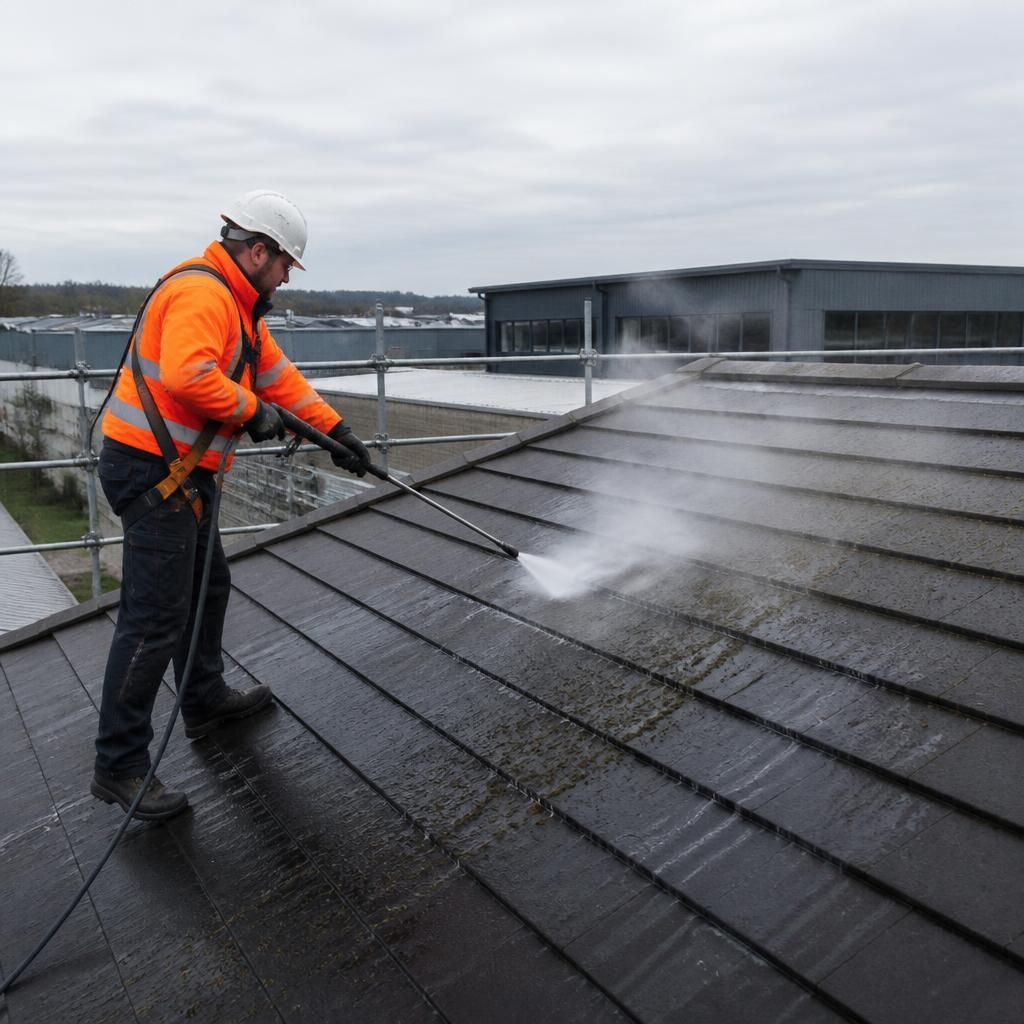
Roof tiles should be jet washed only when inspection shows that moss, algae, lichen, heavy soiling or blocked drainage is affecting the roof. There is no universal cleaning interval: shaded roofs beneath trees may need more frequent checks, while exposed, well-maintained roofs may require only occasional cleaning or localised treatment.
A condition-led schedule helps prevent unnecessary damage. Before cleaning, the tile material, age, surface condition, roof details and manufacturer’s guidance should be assessed. If cleaning is appropriate, the least aggressive effective method should be selected, as excessive pressure can erode tile surfaces, loosen mortar and force water beneath overlapping courses.
- Arrange regular visual inspections, especially on roofs exposed to shade, falling leaves or persistent damp.
- Clear gutters, valleys and drainage routes as part of the maintenance check.
- Use low-pressure, steam or manual methods where high-pressure washing could damage aged, coated or fragile tiles.
- Review the roof after cleaning and address defects or conditions that could encourage rapid regrowth.
Arrange a Professional Roof Tile Maintenance Assessment
Arrange a professional roof tile maintenance assessment to establish whether cleaning is necessary and identify the safest method for your roof.
Our team can inspect the tiles, drainage routes and vulnerable roof details before recommending an appropriate maintenance plan.