
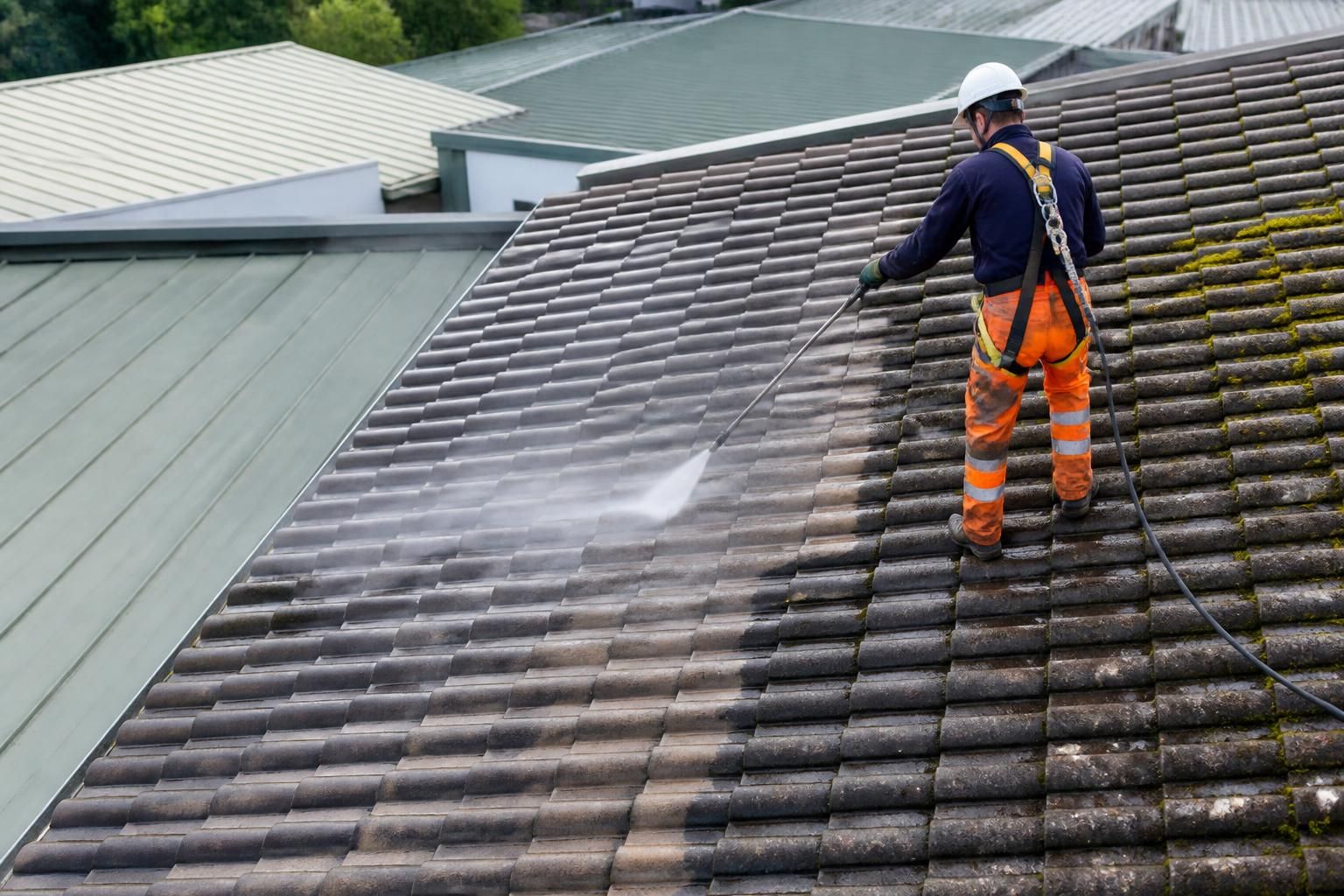
How frequently should roof tiles be jet washed to maintain their condition?
Roof tiles should not be jet washed on a fixed schedule; they should be professionally assessed and cleaned only when moss, algae, dirt or other deposits are affecting their condition or appearance. The appropriate interval depends on the tile material, roof age, surrounding trees, weather exposure and previous cleaning method, with periodic inspections helping to identify when lower-pressure cleaning or an alternative treatment is more suitable.
Roof tiles should not be jet washed to a fixed timetable. They should be professionally inspected regularly and cleaned only when moss, algae, lichen, dirt or other deposits are affecting their condition, drainage or appearance. For many properties, an annual roof inspection is a sensible minimum, but the interval between cleaning treatments depends on the tile material, roof age, surrounding environment, weather exposure and the method used previously.
Jet washing is not automatically the right treatment for every roof. High-pressure water can remove surface coatings, force water beneath laps and damage older, cracked or porous tiles. Where cleaning is necessary, the pressure, nozzle, distance and direction of the water should be selected for the specific roof. In some cases, a lower-pressure wash, steam cleaning or a specialist biocide treatment is more appropriate than conventional jet washing.
Factors that affect cleaning frequency include:
- Tile material: Concrete, clay, slate and coated tiles have different levels of porosity and resistance to pressure. Older clay tiles, slate and weathered concrete tiles may require more cautious treatment or may not be suitable for jet washing at all.
- Roof age and condition: Aging tiles, loose fittings, failed pointing, damaged flashings and deteriorated protective coatings increase the risk of water ingress during cleaning. A condition assessment should come before any pressure washing.
- Nearby trees and vegetation: Overhanging branches and persistent shade encourage moss and algae growth. Roofs in these locations may need inspection more often than exposed roofs, even if cleaning is not always required.
- Local weather exposure: Frequent rainfall, damp conditions and limited sunlight can accelerate the return of organic growth. Wind-exposed roofs may also collect more airborne dirt and debris.
- Roof pitch and drainage: Low-pitched areas can retain moisture and deposits for longer. Blocked valleys, gutters or outlets may make growth and staining more noticeable and can create wider drainage problems.
- Previous cleaning and treatment: A roof that has been cleaned and then treated appropriately may remain presentable for longer than one that has only had deposits removed. The suitability and expected durability of any treatment should be explained before work begins.
A practical maintenance approach is to arrange a visual inspection at least annually and after severe weather, building work or noticeable changes in the roof. The inspection should look for cracked or displaced tiles, moss accumulation, blocked gutters and valleys, damaged mortar, staining and signs that water is not draining correctly. Cleaning should then be scheduled according to the findings rather than carried out simply because a set period has elapsed.
Cleaning may be appropriate when moss is lifting at tile edges, organic growth is restricting water flow, deposits are retaining moisture, or dirt and staining are affecting the appearance of a commercial or residential property. However, small amounts of surface growth do not always justify jet washing. Removing sound tiles to access the roof, scraping aggressively or applying excessive pressure can cause more damage than the deposits themselves.
Before work starts, the roof should be assessed from a safe position and the tile type and condition confirmed. A suitable cleaning method should be agreed, including how pressure will be controlled, where wastewater will be directed and how gutters, drainage systems, walls, windows and planted areas will be protected. Any visibly damaged tiles or defects should be recorded so that cleaning does not conceal an existing maintenance issue.
After cleaning, the roof should be checked again for displaced or damaged tiles, clear drainage paths and remaining areas of organic growth. Gutters and downpipes should be cleared where necessary, and any treatment used should be applied in accordance with the manufacturer’s instructions and the condition of the roof. Regular inspections afterwards help identify regrowth early, when less aggressive maintenance may be sufficient.
In summary, roof tiles are best jet washed only when there is a clear maintenance reason and when the roof has been confirmed as suitable for the process. Annual inspection is a useful starting point, while the actual cleaning interval may be shorter in shaded, tree-lined or damp locations and longer on clean, well-drained roofs with limited exposure to organic growth. If the tiles are fragile, porous, coated or already damaged, an alternative low-pressure or non-pressure cleaning method should be considered instead.
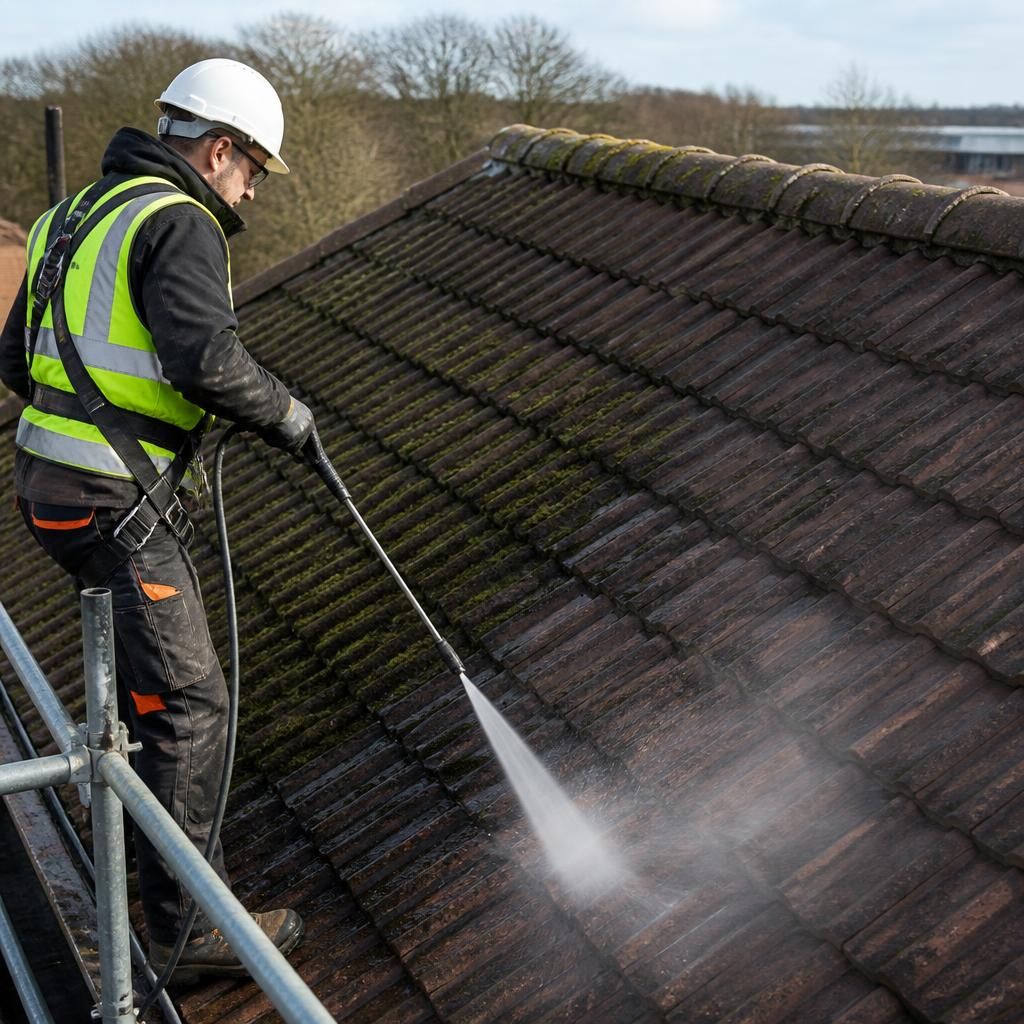
Roof tiles should be jet washed only when an inspection confirms that moss, algae, dirt or blocked drainage is affecting the roof. A fixed cleaning schedule is unsuitable because tile condition, surrounding trees, shade, weather exposure and previous treatments all influence how quickly deposits return.
Annual inspections provide a useful maintenance baseline, with additional checks after severe weather or nearby building work. If tiles are cracked, loose, porous or heavily weathered, a lower-pressure wash, steam clean or specialist treatment may be safer than conventional jet washing. Scheduling cleaning according to the roof’s condition helps remove harmful deposits without exposing sound tiles to unnecessary pressure.