
How do the professionals handle water drainage during and after the jet washing process to prevent damage to the roof structure?
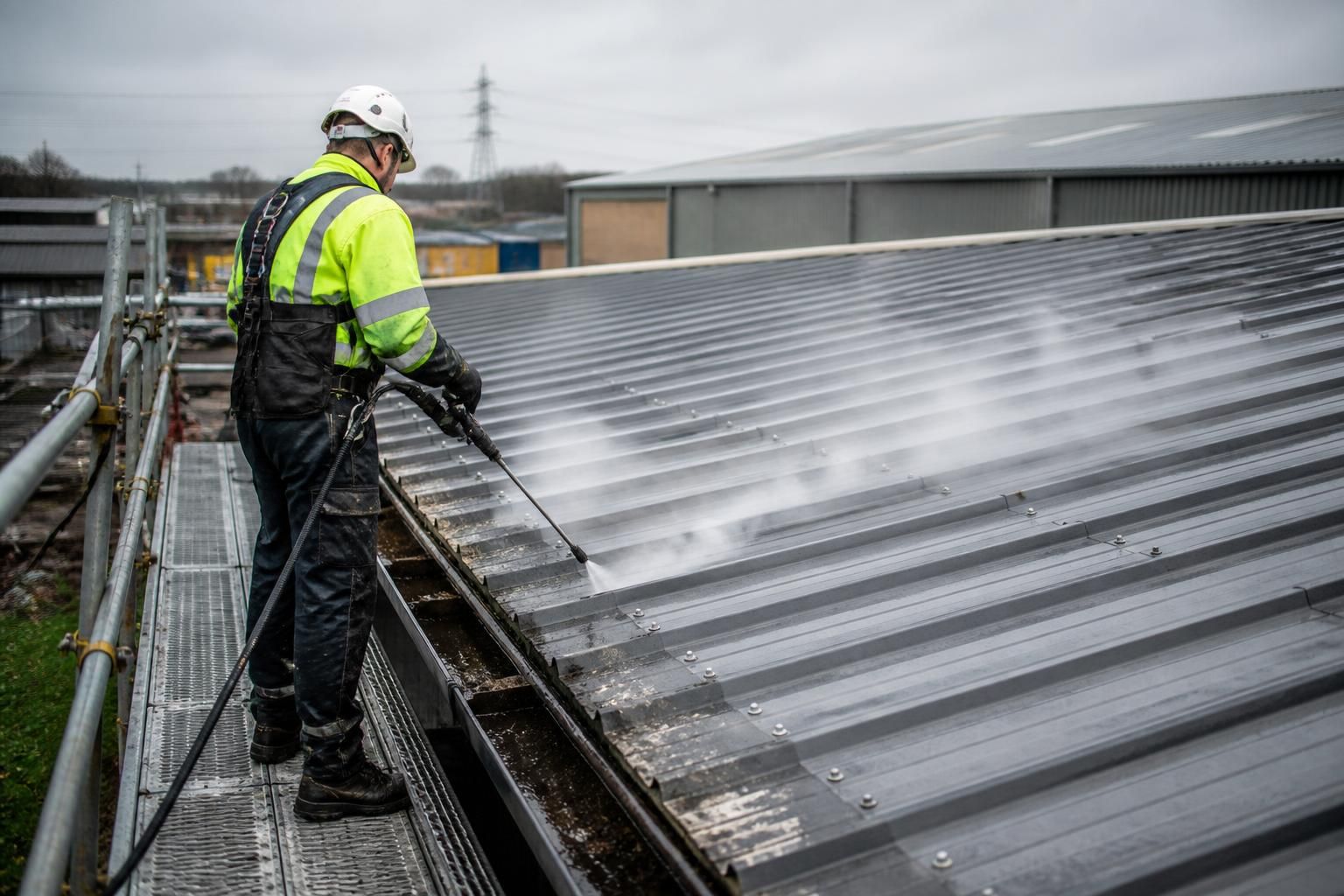
Professionals control roof-washing water by protecting and checking gutters, directing discharge through suitable downpipes or temporary drainage, and collecting contaminated runoff where required. After jet washing, they clear blockages, inspect outlets and roof edges, and confirm that water drains freely without pooling against the roof structure or building.
Professional roof jet washing relies on controlled drainage before, during and after cleaning. The aim is to prevent water from backing up beneath tiles, entering the roof structure, overflowing onto walls and windows, or carrying silt, moss and cleaning residues into areas where they could cause damage or pollution.
Before work begins, the drainage route is assessed rather than assuming that existing gutters and downpipes can handle the discharge. The team checks the roof falls, valleys, gutters, outlets, downpipes, gullies and nearby ground drainage. Existing leaves, moss and sediment are removed where necessary, and any damaged or poorly connected sections are identified. This is particularly important on large commercial roofs, where a blocked outlet can allow water to collect against roof edges, flashings or roof penetrations.
Where suitable, gutter outlets are protected with temporary guards or filters to retain loosened moss and debris while allowing water to pass. These measures are monitored during cleaning and cleared when necessary. They are not intended to create a sealed blockage: restricting the outlet completely can cause water to pond in the gutter or overflow into the building fabric.
Water is applied in a controlled direction and at a pressure appropriate to the roof covering. Operators work progressively towards suitable collection points rather than allowing runoff to travel uncontrolled across the roof. Hoses are positioned so that they do not obstruct outlets, damage tiles or pull against gutters, and water is not deliberately forced beneath tile laps, ridge details, flashing or damaged areas.
Runoff is normally directed into sound gutters and downpipes where their capacity and condition make this appropriate. If the existing drainage cannot safely accept the flow, temporary hoses, chutes, pumps, collection tanks or other controlled drainage arrangements may be used. Discharge points are selected to prevent concentrated flow from eroding soil, undermining paving, staining façades or flooding entrances, loading areas and neighbouring property.
Roof cleaning can release organic matter, silt, fragments of moss and other residues. These materials are kept out of drainage systems where they could settle and cause a blockage. On sites where runoff may contain cleaning chemicals or significant contamination, it is collected or diverted in line with the site’s drainage plan and applicable environmental requirements. Water is not simply allowed to enter a surface-water drain if doing so could pollute a watercourse or breach the site’s discharge controls. The appropriate disposal or treatment route is agreed for the project, especially where the client or local authority has specific requirements.
During the work, drainage is checked continuously rather than only at the end. The operative monitors gutter levels, downpipe flow, temporary collection equipment and areas below the roof. Overflow, slow drainage or unexpected pooling is treated as a reason to pause and clear or alter the drainage arrangement. This prevents a relatively small blockage from allowing water into eaves, soffits, wall cavities or internal areas.
After jet washing, the roof drainage system is cleaned and tested. Gutters, valley channels, outlets, hopper heads, downpipes and ground-level gullies are inspected for retained debris. Where safe and practicable, water is run through the relevant routes to confirm that it drains freely and does not back up, leak at joints or discharge against the building. Temporary guards and hoses are removed only after the system has been checked, and collected debris and wastewater are handled through the agreed disposal arrangements.
The final inspection also considers the roof structure and surrounding building elements. The team looks for standing water, displaced or cracked tiles, exposed underlay, damaged pointing, leaking flashings, overflowing gutters and damp marks around eaves or upper walls. Any defect that could affect drainage or allow water ingress is recorded and brought to the client’s attention rather than concealed by the cleaning process.
Good drainage control cannot compensate for a roof that is already structurally unsound. If tiles are loose, the underlay is deteriorated, gutters are detached or the roof has inadequate falls, the correct approach may be to recommend repairs, lower-impact cleaning or a separate drainage solution before washing proceeds. This protects the roof structure and ensures that cleaning does not turn an existing defect into water ingress or consequential building damage.
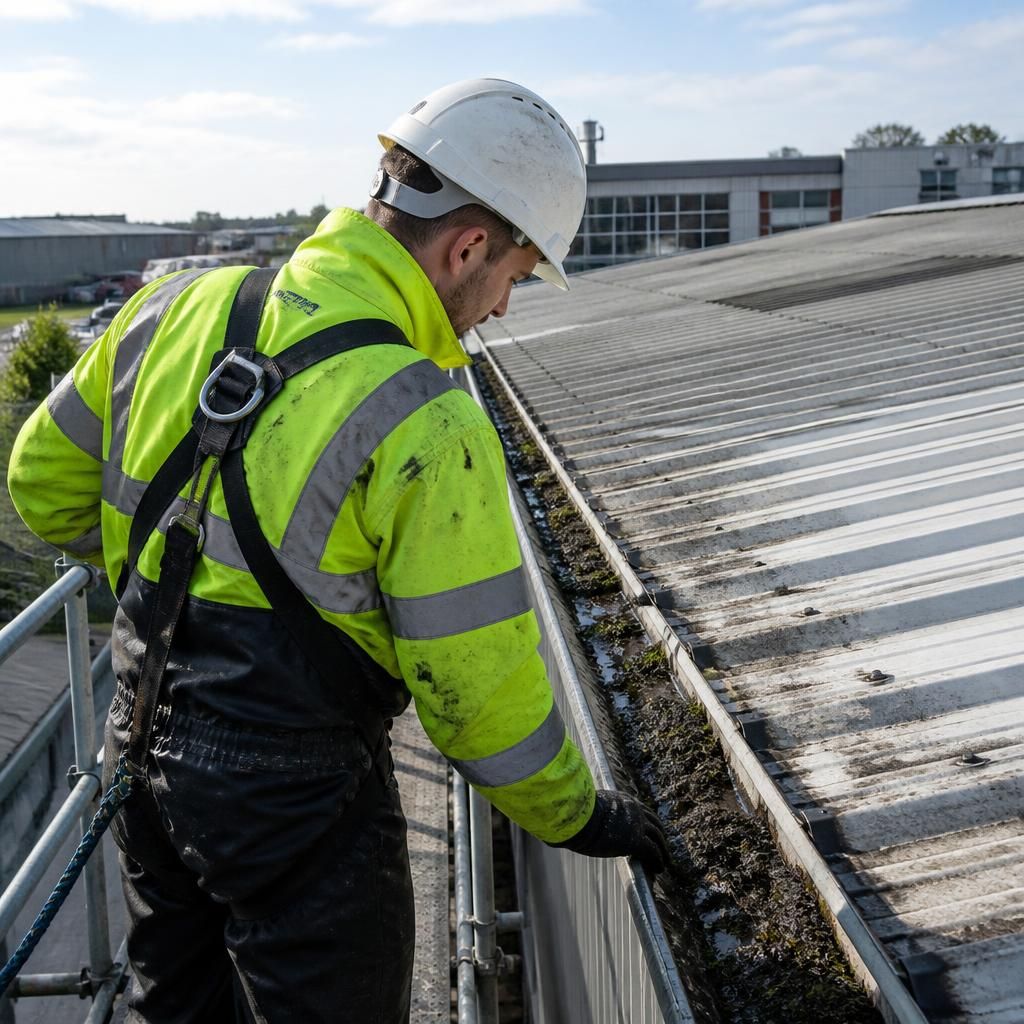
Professionals manage roof-washing water by monitoring the gutters, outlets and temporary drainage routes throughout the jet washing process. Runoff is directed into suitable discharge points, while moss, silt and loosened debris are prevented from blocking the system.
Operatives check for rising gutter levels, slow-flowing downpipes, pooling and overflow as cleaning progresses. If drainage becomes restricted, washing is paused so the obstruction can be cleared or the discharge route adjusted. This reduces the risk of water backing up beneath tiles, entering the eaves or saturating walls and roof components.
Once cleaning is complete, gutters, valleys, downpipes and nearby gullies are checked and flushed where appropriate. Any collected debris or contaminated runoff is removed through the agreed disposal route, rather than being left to enter surface-water drainage uncontrolled.