
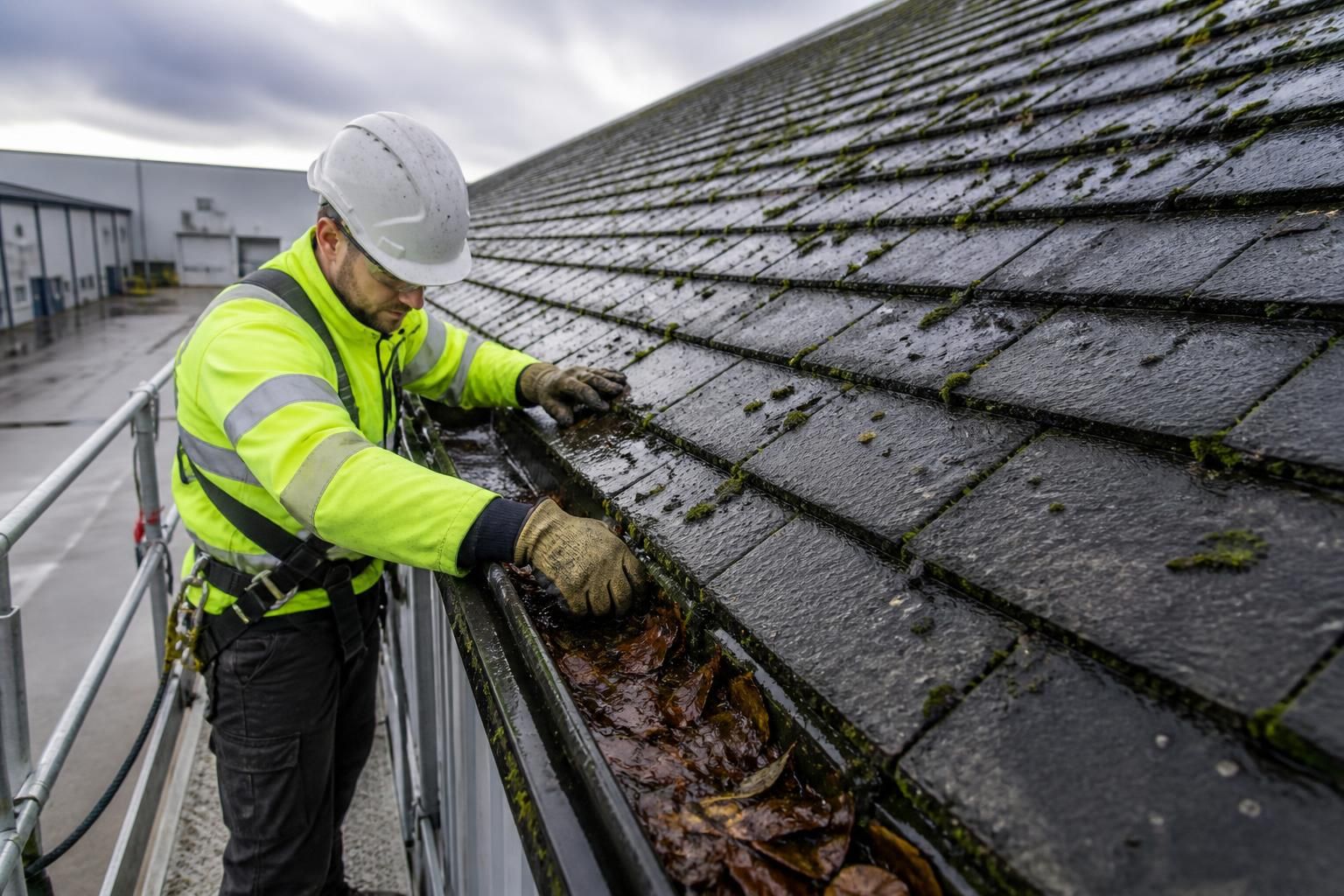
How often should roof tiles and gutters be cleaned?
Roof tiles should usually be inspected annually and cleaned when moss, algae, lichen or debris begins to affect their condition, while gutters commonly need cleaning at least twice a year. Properties beneath trees, exposed to heavy weather or surrounded by overhanging vegetation may require more frequent attention.
Roof tiles should generally be inspected at least once a year and cleaned when moss, algae, lichen, staining or accumulated debris begins to affect their condition. Gutters commonly need cleaning twice a year, typically in spring and autumn, although properties beneath trees, exposed to heavy weather or surrounded by overhanging vegetation may need more frequent attention. Cleaning should be based on the roof’s condition and surroundings rather than a fixed timetable alone.
Recommended inspection and cleaning intervals
- Roof tiles: arrange a visual inspection annually, and after severe weather where damage may have occurred. Cleaning is usually required when organic growth, dirt or atmospheric deposits are visibly building up, retaining moisture or obstructing the tile surface.
- Gutters: schedule cleaning at least twice a year to remove leaves, silt, moss and other debris before blockages develop. Additional visits may be needed during periods of heavy leaf fall or where the roof drains into heavily planted areas.
- Commercial and managed properties: include roof tiles and rainwater systems within a planned external maintenance programme. The appropriate interval depends on the building’s use, roof design, access arrangements, nearby vegetation and the consequences of blocked drainage.
Why the surrounding environment matters
Trees and overhanging branches are among the main reasons a standard cleaning schedule may be insufficient. Leaves, seeds, twigs and organic matter can enter gutters and form a compacted blockage. Shaded roof slopes also dry more slowly, creating conditions in which moss, algae and lichen are more likely to establish. Buildings in exposed locations can accumulate windblown debris, while properties near roads or industrial areas may experience heavier atmospheric soiling.
Roof pitch and design also affect the required frequency. Low-pitched sections, complex rooflines, valleys and areas behind parapets can retain water and debris more readily than steep, open slopes. Gutters with limited fall, inadequate outlets or nearby roof-mounted equipment may require closer monitoring because water cannot discharge efficiently if debris starts to collect.
Signs that roof tiles need attention
- Moss, lichen or algae is spreading across the tile surface or gathering around overlaps and edges.
- Debris is retaining moisture against the tiles or collecting in roof valleys.
- Tiles appear stained, weathered or obscured by organic growth during routine inspections.
- Mortar joints, ridge components or flashings show signs of deterioration that require assessment.
- Loose, cracked or displaced tiles are visible after high winds or other severe weather.
Organic growth should not automatically be removed using aggressive pressure. The appropriate approach depends on the tile material, age, condition and the type of contamination present. Excessive pressure or unsuitable equipment can disturb the tile surface, dislodge protective finishes or force water beneath laps and flashings. A professional assessment should identify whether washing, lower-pressure cleaning, steam cleaning, soft cleaning or a suitable treatment is appropriate.
Signs that gutters need cleaning
- Water spills over the front or sides of the gutter during rainfall.
- Downpipes discharge slowly or appear blocked.
- Plants, moss or compacted sediment are growing in the gutter channel.
- Gutters or downpipes are sagging, separating at joints or pulling away from the building.
- Damp staining, water marks or persistent saturation is visible on façades, soffits or around entrances.
- Puddles or erosion are forming near outlets because rainwater is not being carried away correctly.
Gutter cleaning is best carried out before periods when the drainage system will be under increased demand. Spring cleaning removes material accumulated over winter, while autumn cleaning clears falling leaves before prolonged wet weather. A further inspection after storms or unusually high winds can identify new blockages, displaced components and damage that a routine visit may not cover.
When more frequent cleaning is appropriate
A shorter interval should be considered where a property has mature trees, dense surrounding vegetation, persistent shade, a history of blocked gutters or recurring moss growth. Buildings with sensitive operations, public access routes or valuable façade finishes may also benefit from more regular checks because overflowing water and falling debris can create avoidable maintenance and safety issues.
For multi-building sites, schools, commercial premises, construction developments and managed estates, the schedule should reflect the whole site rather than treating every roof in the same way. Roof sections can be inspected and recorded separately, with high-risk elevations or drainage runs receiving more frequent attention. This makes it easier to identify recurring problems such as defective falls, damaged joints, inadequate outlets or vegetation encroachment.
What a suitable maintenance plan should include
- Inspect roof tiles, valleys, ridges, abutments and rainwater goods for contamination, damage and areas retaining water.
- Record the type and extent of moss, algae, lichen, leaves and general soiling.
- Check gutters, outlets and downpipes for blockages and signs of leakage or movement.
- Select a cleaning method that is suitable for the tile and gutter materials and proportionate to the contamination.
- Remove waste responsibly and prevent loosened debris from entering drainage systems or affecting occupied areas.
- Review the condition after cleaning and recommend repairs or a revised inspection interval where necessary.
Cleaning does not replace repairs. Cracked or displaced tiles, defective flashing, failed sealant, loose gutter brackets and damaged downpipes should be referred for appropriate remedial work. Washing a roof or clearing a gutter can reveal these defects, but it cannot correct them.
Roof-level work also requires suitable access equipment, work planning and precautions for fragile surfaces, falling debris, pedestrians and nearby building users. Roof tiles and gutters should not be cleaned from an unsafe ladder position or by walking on areas that have not been assessed. For that reason, scheduled professional inspections are particularly important on larger or difficult-to-access properties.
In practical terms, an annual roof inspection with condition-led tile cleaning, combined with gutter cleaning in spring and autumn, is a sound starting point for many UK properties. The interval should then be adjusted according to vegetation, shade, roof design, weather exposure, contamination levels and the site’s tolerance for drainage failure. Regular inspections make it possible to clean before growth and debris cause damage, rather than waiting for overflowing gutters or visible roof deterioration.
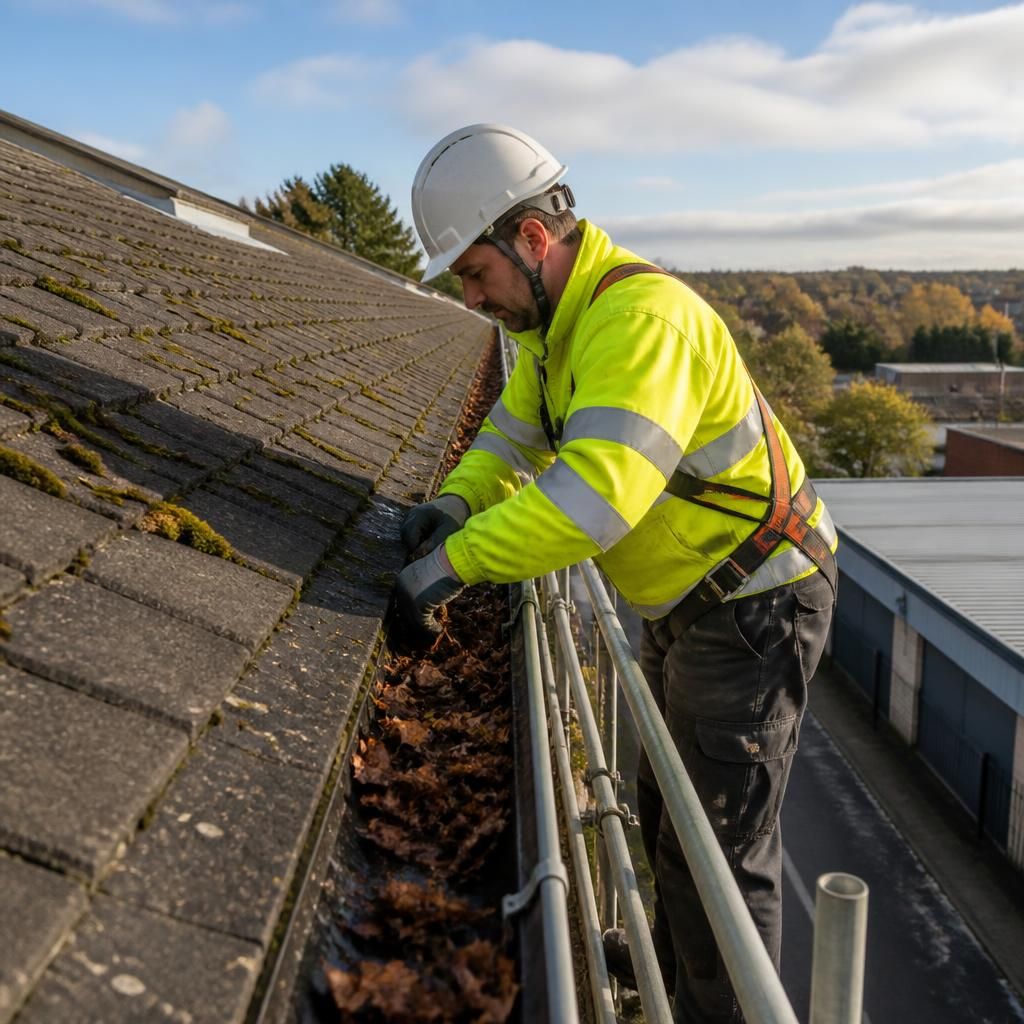
Gutter cleaning should usually be scheduled in spring and autumn, while roof tiles should be inspected annually and cleaned when moss, algae, lichen or debris begins to affect the surface. This interval should be adjusted where trees, shade, heavy weather or complex roof design increase the risk of contamination and blocked drainage.
Autumn cleaning removes leaves and organic matter before prolonged wet weather, while spring cleaning clears material accumulated over winter. Additional inspections may be appropriate after storms or periods of heavy leaf fall, particularly where gutters serve entrances, public walkways or sensitive commercial areas.
Roof tile cleaning is condition-led rather than purely calendar-based. Moss and lichen can retain moisture against tiles, while debris in valleys and around overlaps may restrict water flow. The cleaning method should be selected according to the tile material, age and condition, as excessive pressure can damage surfaces or force water beneath tile laps and flashings.