
How often should roof tiles and gutters be cleaned to ensure optimal performance?
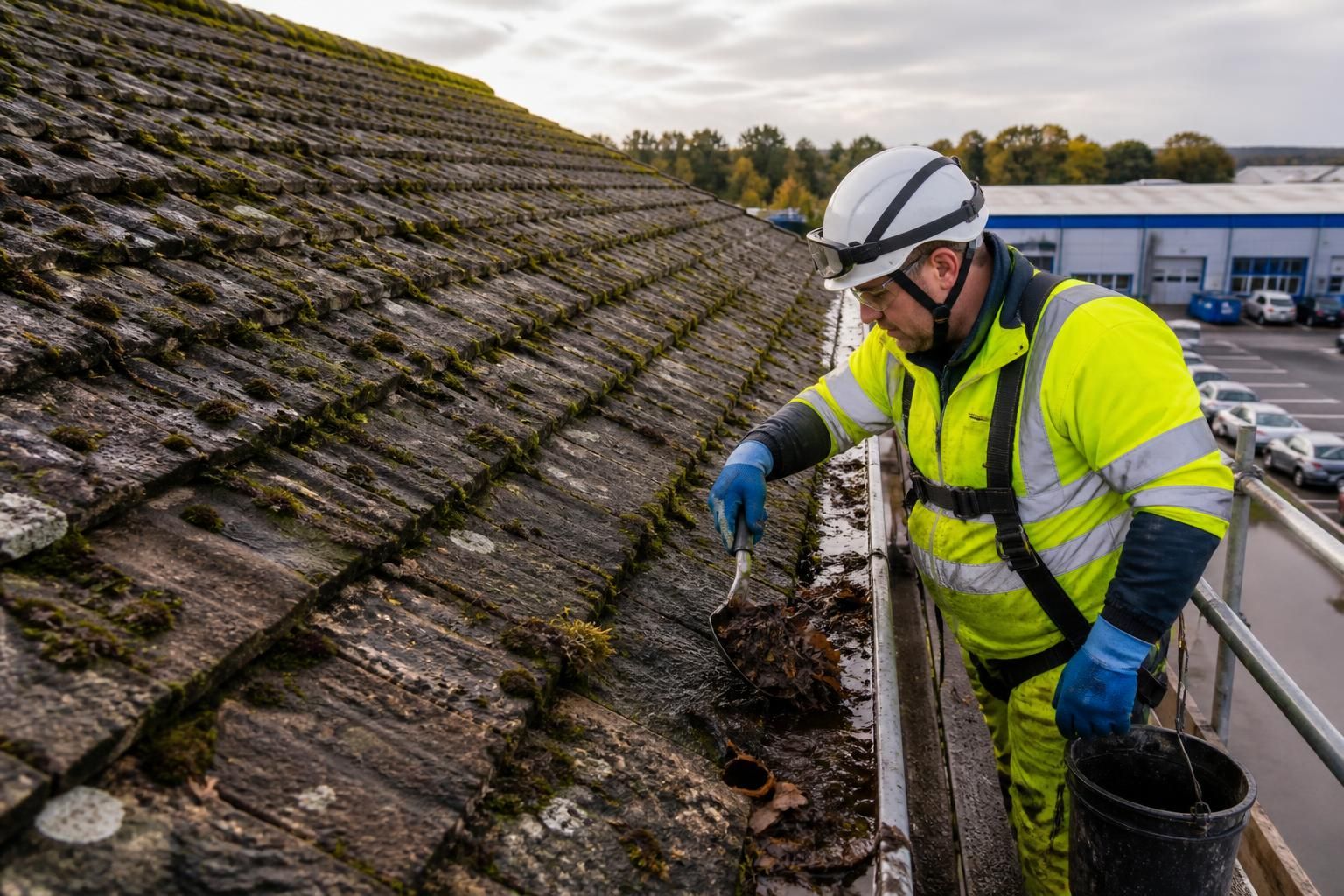
Roof tiles should generally be inspected and cleaned when moss, algae, lichen or accumulated debris begins to affect drainage or surface condition, while gutters should be cleared at least annually and more frequently where trees or heavy leaf fall are present. A site-specific maintenance schedule helps prevent blocked outlets, water ingress, tile deterioration and avoidable repair work.
Roof tiles should be inspected regularly and cleaned when moss, algae, lichen or debris begins to affect the surface or drainage. Gutters should generally be cleared at least annually, with more frequent attention where buildings are surrounded by trees, experience heavy leaf fall or have a history of blockages. The correct interval depends on the roof material, surrounding environment, weather exposure and condition of the drainage system.
A cleaning programme should be based on condition rather than a fixed date alone. Routine inspections identify early signs of blocked outlets, standing water, slipped tiles, damaged joints and excessive organic growth before these issues lead to water ingress or more extensive repairs.
Recommended maintenance approach
- Gutters: arrange clearance at least annually and review them after periods of heavy leaf fall, storms or prolonged wet weather. Properties beneath mature trees may require additional clearance because leaves, seeds, twigs and moss can quickly restrict water flow.
- Roof tiles: inspect at least as part of the planned roof maintenance programme, but clean only when deposits or contamination are affecting the tiles, drainage or appearance. A sound roof with minimal organic growth may not need routine washing at the same interval as its gutters.
- Downpipes and outlets: check whenever gutters are cleaned. A clear gutter will still overflow if an outlet or downpipe is obstructed, disconnected or unable to discharge water effectively.
- Commercial and larger premises: record inspection findings and schedule work around access requirements, occupancy, other maintenance activities and the consequences of drainage failure. High-level roofs, canopies and linked drainage systems often need a coordinated inspection rather than isolated cleaning.
Factors that can shorten the cleaning interval
- Overhanging trees or woodland close to the building
- Heavy moss, algae or lichen growth caused by shade and persistent moisture
- Roof valleys, parapets, abutments and other areas where debris collects
- Nearby construction, demolition or landscaping work that creates dust and loose material
- Bird activity and nesting material around roof edges and outlets
- Repeated reports of overflowing gutters, damp elevations or blocked downpipes
- Older or damaged guttering with poor falls, loose joints or inadequate discharge capacity
- Exposed sites affected by windblown debris or severe weather
Visible overflow is not the only indication that cleaning is required. Dark staining below the gutter line, damp patches on external walls, water marks around eaves, weeds growing in gutters and unusually heavy vegetation on tiles can all indicate restricted drainage or prolonged moisture retention. Inside the building, dampness near roof edges or upper walls should be investigated promptly rather than attributed to blocked gutters without an inspection.
Roof tile cleaning should be matched to the tile material and its condition. Concrete, clay, slate and aged or weathered tiles do not all tolerate the same pressure, agitation or treatment. Aggressive jet washing can remove surface finishes, drive water beneath laps, damage brittle tiles or disturb pointing and flashing. Where moss is established, controlled removal followed by an appropriate treatment may be more suitable than repeated high-pressure cleaning. The objective is to remove contamination without creating a greater maintenance problem.
Gutter cleaning also needs more than simply removing visible leaves. The operative should check that outlets are open, water can travel along the gutter, joints and brackets remain secure, and downpipes discharge correctly. Where safe access is available, a controlled flow test can help identify restrictions or leaks. Defects found during cleaning should be recorded and referred for repair instead of being concealed by the cleaning process.
Seasonal planning is useful, but weather should guide the final timing. Clearing gutters after the main period of leaf fall is often sensible, while a further inspection may be appropriate before periods of prolonged winter rain. Spring growth can increase moss and organic debris, and storms can introduce branches or other material at any time. A scheduled inspection should therefore be brought forward if the building has recently experienced severe weather or if drainage performance changes.
For properties with recurring blockages, the most effective approach is a planned maintenance schedule based on inspection findings. This may include regular gutter clearance, periodic roof tile cleaning, treatment of organic growth and prompt repair of defective drainage components. The schedule should be reviewed when the surrounding landscape changes, roof work is completed or the building begins to show signs of water-related deterioration.
Cleaning is not a substitute for roof repairs. Broken or slipped tiles, defective flashing, failed mortar, sagging gutters and damaged downpipes should be assessed by the appropriate roofing or building maintenance professional. Keeping inspection and cleaning records provides a useful history for identifying recurring problems and helps ensure that roof tiles and gutters continue to protect the building rather than contribute to avoidable water damage.
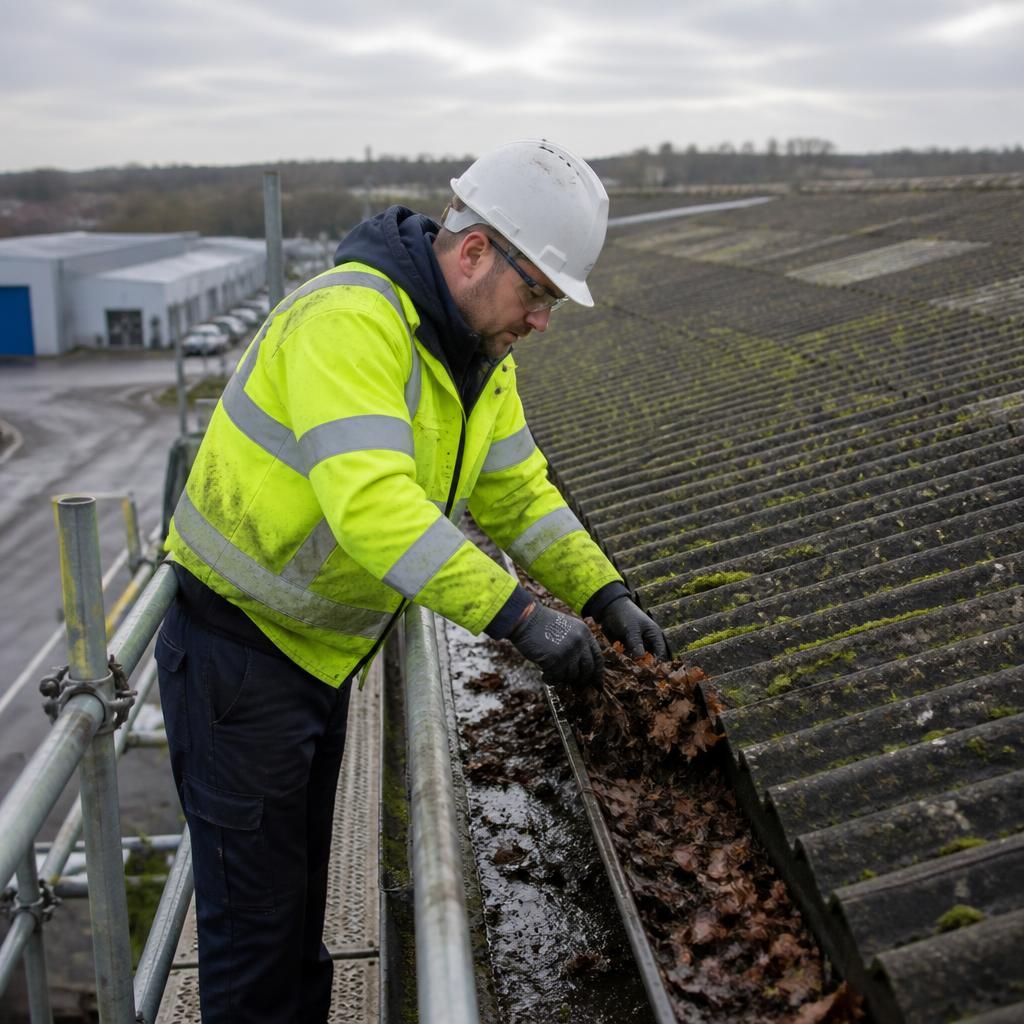
Gutters should generally be cleared at least annually, while roof tiles only need cleaning when moss, algae, lichen or debris begins to affect drainage or surface condition. The correct interval depends on the building’s surroundings, roof material and exposure to weather.
Properties beneath mature trees, near woodland or on exposed sites may need more frequent gutter inspections because leaves, twigs and windblown debris can restrict outlets quickly. Inspecting after heavy leaf fall, storms or prolonged wet weather helps identify blocked downpipes, overflowing gutters and damaged components before they contribute to water ingress.