
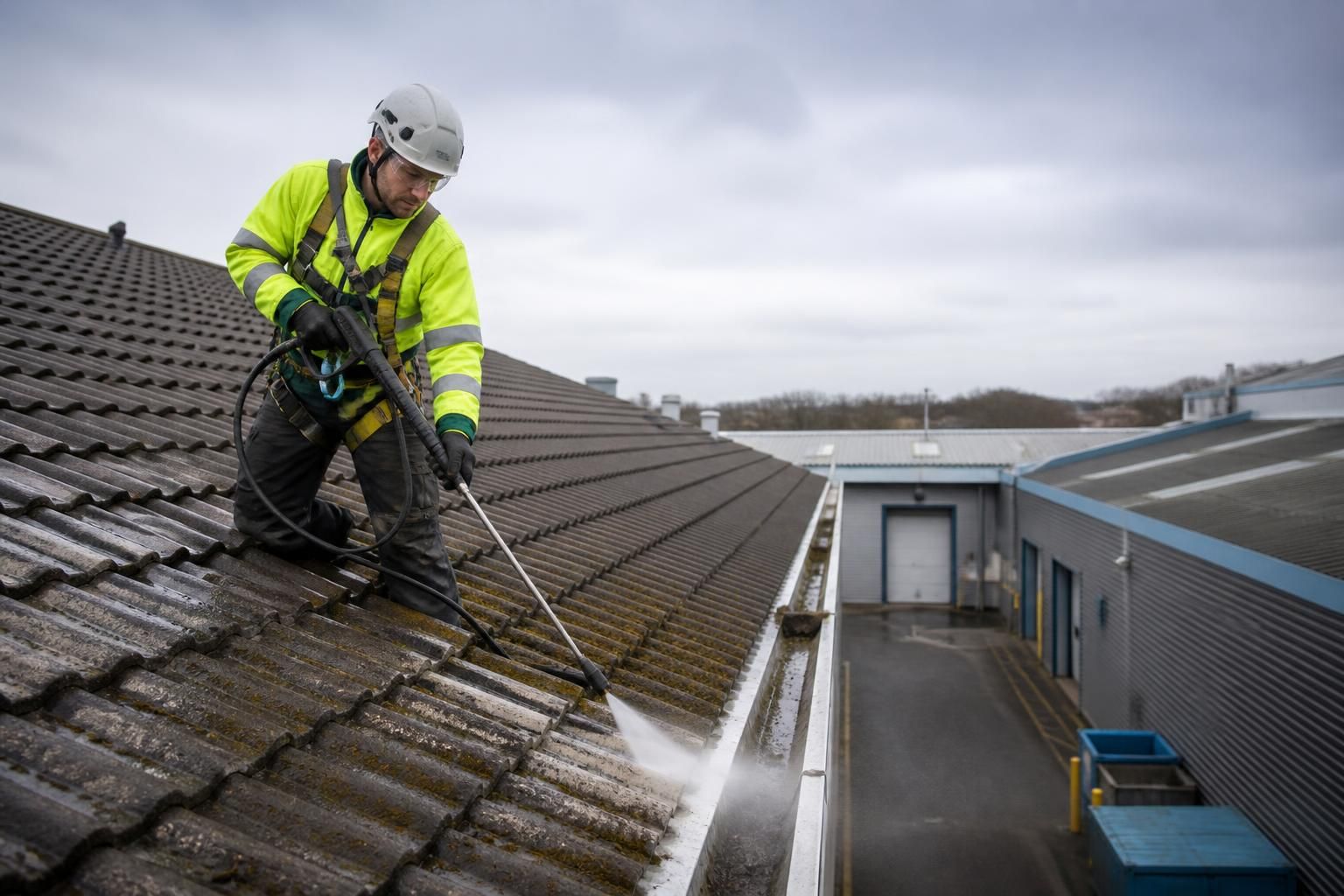
How often should roof tile and gutter washing be scheduled for optimal maintenance?
Schedule roof tile and gutter washing at least annually, with gutter clearance more frequently where properties are surrounded by trees or exposed to heavy debris. Commercial sites should also be inspected after severe weather so the maintenance interval can be adjusted for roof condition, drainage demands and local surroundings.
Roof tile and gutter washing should generally be scheduled at least once a year, while gutters may need clearing more often where a property is surrounded by trees, exposed to wind-blown debris or subject to heavy rainfall. Commercial and industrial premises should also be inspected after severe weather, building work or any reported drainage problem so the maintenance interval reflects the condition and use of the site.
A fixed annual visit provides a useful baseline for identifying moss, algae, lichen, accumulated dirt, blocked outlets, slipped debris and early signs of deterioration. However, the right frequency is not identical for every roof. A low-rise commercial building in an open area may remain serviceable between annual visits, whereas a site beneath mature trees, beside construction activity or near areas of airborne pollution may require more frequent gutter clearance and targeted roof washing.
It is useful to separate roof tile washing from gutter maintenance. Roof tiles usually need periodic cleaning when organic growth, staining or embedded deposits begin to affect appearance, water run-off or the condition of the surface. Gutters perform a drainage function and should be checked more frequently because leaves and other debris can restrict water flow even when the roof itself appears clean.
- Annual roof inspection and washing review: assess tile condition, moss and algae growth, staining, flashing, roof edges and the general effectiveness of drainage.
- More frequent gutter checks: consider additional visits for buildings beneath trees, sites exposed to high winds, premises with complex roof layouts and properties where leaves or roof granules collect quickly.
- Post-weather inspection: arrange a check after strong winds, prolonged heavy rain, freezing conditions or other severe weather that may dislodge tiles, move debris or overwhelm drainage points.
- Event-led cleaning: bring maintenance forward if there are overflowing gutters, damp patches, water marks, blocked downpipes, moss shedding onto walkways or visible changes in roof drainage.
Seasonal planning can help prevent avoidable disruption. Gutter clearance is often particularly important before periods of heavy autumn leaf fall and before wetter winter conditions. A follow-up inspection after the main leaf fall may be appropriate where trees are close to the building. Spring checks can identify damage caused by winter weather, while summer work may be easier to coordinate around operating requirements and access arrangements.
The surrounding environment is one of the strongest influences on the schedule. Trees, tall buildings, exposed sites, nearby roads, construction work and industrial emissions can all increase the amount of material deposited on roof tiles and in gutters. Buildings with extensive roof areas, internal valleys, parapets, multiple downpipes or vulnerable entrances also require careful inspection because a local blockage can affect a larger drainage system.
Roof material and surface condition should be considered before deciding how often washing is appropriate. Clay, concrete and other tile types can respond differently to pressure, moisture and cleaning products. Older, cracked, loose or weathered tiles may require a gentler method, localised treatment or repair before washing. The objective is to remove harmful build-up without dislodging tiles, damaging protective finishes or forcing water beneath the roof covering.
Cleaning should be scheduled around a condition assessment rather than applied as an unnecessarily aggressive routine. Light surface soiling may only need a controlled clean and inspection, while established moss or lichen may require treatment and planned follow-up. Where growth returns quickly, the maintenance plan should examine the cause, including shade, persistent moisture, poor drainage and overhanging vegetation, rather than relying on repeated high-pressure washing.
For commercial premises, the schedule should also account for occupancy, pedestrian traffic, vehicle movements and access constraints. Roof and gutter work may require exclusion zones, suitable access equipment, protection for vehicles and building features, and coordination with the site manager. Planning the work during quieter operating periods can reduce disruption, but safety and weather conditions must take priority over convenience.
During each visit, the condition of the roof and drainage system should be recorded. Checks should include gutters, outlets, downpipes, joints, brackets, roof valleys, tile edges and areas where water discharges near entrances or hard-standing. Any defects found should be reported separately from cleaning requirements, since washing cannot correct broken tiles, failed joints, defective falls or damaged drainage components.
A practical maintenance plan for most commercial properties is an annual roof tile condition review with washing when required, supported by gutter inspections based on debris levels and site risk. Properties with significant tree cover, recurring blockages or demanding drainage arrangements may benefit from a planned schedule of several inspections during the year. The interval should then be reviewed after each service using observed debris levels, recurring defects, weather exposure and the performance of the drainage system.
Regular records make it easier to refine the programme. Note the date of each inspection, areas cleaned, defects identified, access requirements and any recommendations for follow-up. This gives property managers, facilities teams and contractors a clear maintenance history and helps ensure that cleaning is arranged before blocked gutters or roof deposits cause damage, unsafe access conditions or disruption to the building.
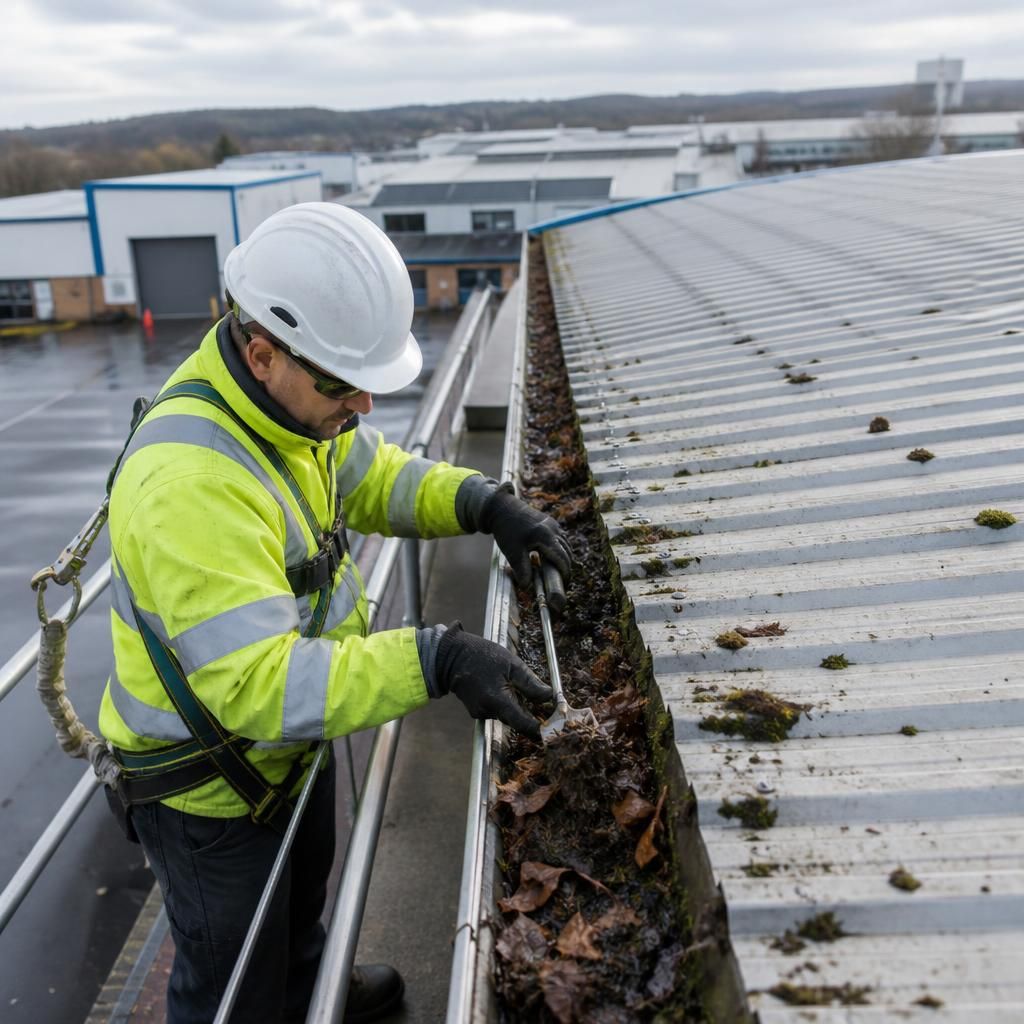
Gutters often need checking and washing more frequently than roof tiles because leaves, moss and wind-blown debris can restrict drainage before the roof surface appears heavily soiled. Properties beneath mature trees, exposed to strong winds or surrounded by construction activity may require additional inspections between planned roof cleaning visits.
Arrange a further check after severe weather, overflowing gutters, blocked downpipes or damp marks near the building. Reviewing debris levels and drainage performance after each visit allows the maintenance schedule to be adjusted to the property’s surroundings rather than relying on a fixed interval.
Plan Your Roof Tile and Gutter Washing Schedule
Arrange a roof tile and gutter washing assessment to review debris levels, drainage performance and the condition of your commercial property. We can help you establish a maintenance schedule suited to the site’s roof, surroundings and access requirements.