
How does seasonal weather affect the need for roof tile and gutter washing?
Seasonal weather increases the need for roof tile and gutter washing by encouraging moss and algae growth, depositing leaves and debris, and exposing tiles, joints and gutters to heavy rain, frost and wind. Scheduling inspections and cleaning around autumn leaf fall and before wetter winter conditions helps maintain drainage, reduce blockages and identify weather-related damage early.
Seasonal weather directly affects how often roof tiles and gutters need washing because rain, wind, frost, temperature changes and sunlight alter the condition of the roof surface and drainage system. In the UK, autumn and winter usually create the greatest demand for gutter clearance and inspection, while spring and summer can increase moss, algae and lichen growth. Planning cleaning around these conditions helps prevent blockages, protect roof materials and identify defects before they become more disruptive or costly.
Autumn: leaves, wind and falling debris
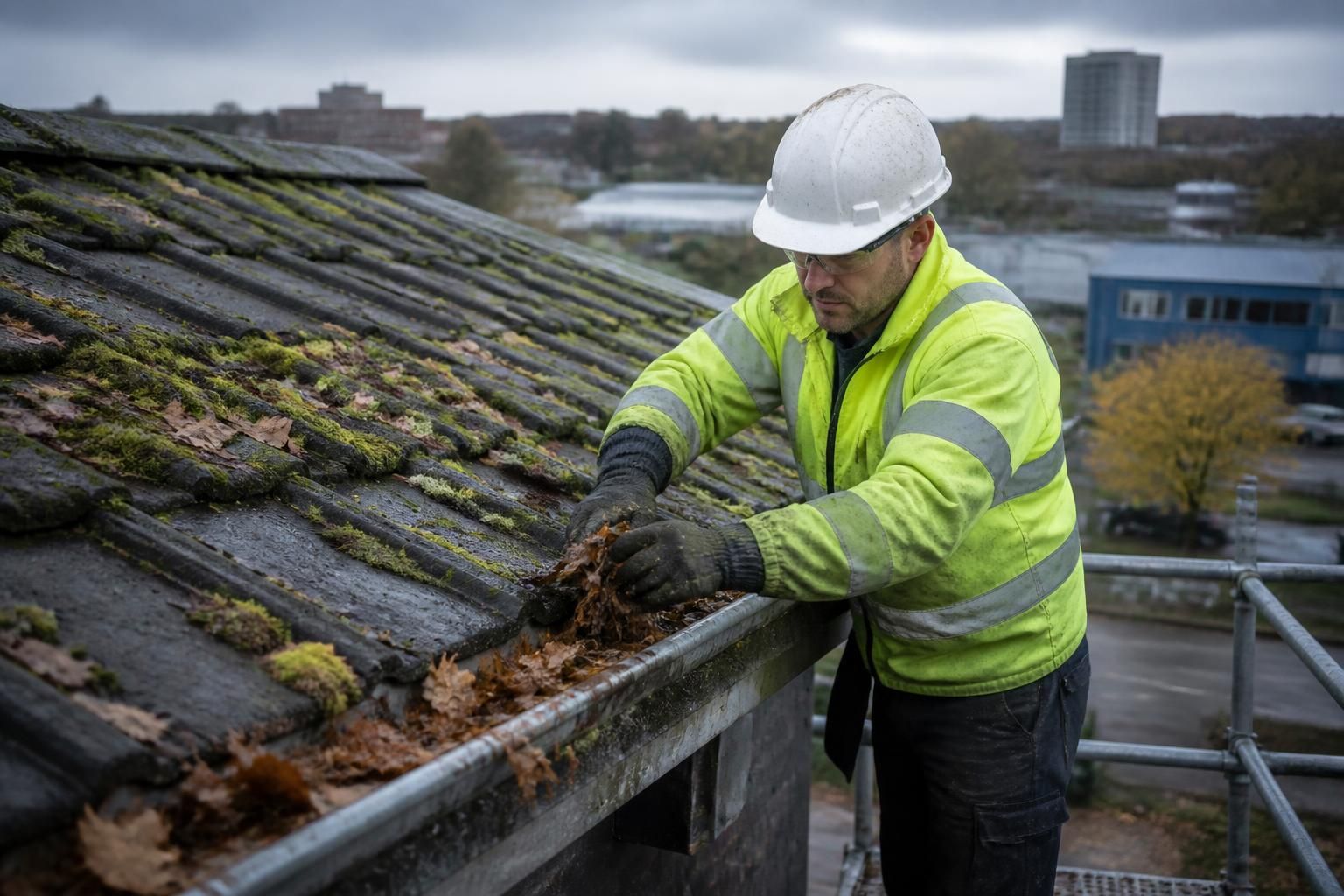
Autumn leaf fall is one of the main causes of blocked gutters and downpipes. Wind can carry leaves, twigs, seeds and other debris onto roofs, where rain then washes the material towards the guttering. When this debris accumulates, water may overflow at the eaves, collect around roof edges or discharge against façades and foundations.
For commercial properties, the risk is often greater where buildings are surrounded by mature trees, woodland, landscaped grounds or neighbouring structures that shed debris. A pre-winter inspection and gutter wash is advisable after the main leaf fall, particularly where the property has a history of overflowing gutters. Roof tiles should also be checked for moss, slipped tiles, cracked sections and debris trapped around roof fittings.
Winter: rainfall, frost and freeze-thaw damage
Persistent winter rain places greater demand on gutters, outlets and downpipes. Any restriction can prevent the system from carrying water away efficiently, increasing the chance of overflow and damp staining on external walls. Water retained in organic growth or small defects may freeze during colder weather, expand and worsen cracks in porous tiles, mortar joints and other roof components.
Frost does not automatically mean that a roof requires washing, and cleaning should not normally be carried out when surfaces are frozen or conditions make access unsafe. Instead, winter maintenance should focus on removing blockages before prolonged wet weather, checking drainage routes and recording any damage that needs repair. After storms, a visual inspection can help identify displaced tiles, damaged flashings or loose gutter sections.
Spring: moisture, growth and post-winter checks
Spring brings milder temperatures, rainfall and longer periods of daylight. These conditions can encourage moss, algae and lichen to develop, especially on shaded or north-facing roof slopes where surfaces remain damp. Organic growth can retain moisture against tiles, restrict water movement and contribute to debris entering the guttering.
Spring is also a useful time to assess the effects of winter. A roof tile and gutter wash can remove accumulated organic matter and reveal issues that were hidden beneath moss or dirt. Cleaning should be accompanied by checks for damaged tiles, deteriorated pointing, corrosion, loose brackets and signs of water tracking beneath the roof covering. Identifying these problems early is particularly important on occupied commercial premises, where leaks can affect internal areas, equipment and operations.
Summer: dry conditions, growth and planned access
Summer often provides more suitable conditions for planned external cleaning because surfaces may dry more quickly and access is less likely to be interrupted by frost or persistent rain. However, dry weather does not remove the need for maintenance. Moss, algae and lichen may remain established on shaded roof areas, while dust, traffic pollution, bird deposits and airborne debris can build up on tiles and gutters.
Periods of warm weather can also make organic growth more visible and allow treatment or low-pressure washing to be planned effectively. Cleaning methods should still be selected according to the tile material and condition. Excessive pressure can damage aged, weathered or porous tiles, dislodge protective finishes or force water beneath the roof covering. Controlled methods, suitable detergents and careful rinsing are more appropriate than applying the same pressure to every roof.
How weather affects cleaning frequency
Seasonal timing is a useful guide, but the appropriate washing schedule depends on the property and its exposure. More frequent inspections may be required where there are overhanging trees, heavy shade, high levels of traffic pollution, coastal exposure, large roof areas or complex drainage arrangements. Buildings with flat sections, internal valleys, parapets or concealed outlets can also retain debris that is not obvious from ground level.
- Arrange gutter inspections after significant leaf fall and before the wettest part of winter.
- Check roof tiles and drainage after severe wind, heavy rainfall or periods of frost.
- Review moss and algae growth during spring, particularly on shaded elevations.
- Use drier summer periods for planned washing, repairs and preventative treatments where appropriate.
- Increase inspection frequency if previous blockages, leaks or repeated overflow have been recorded.
Weather considerations during the work
Weather also affects when cleaning can be carried out safely and effectively. High winds can make roof access and the use of access equipment hazardous. Heavy rain can reduce visibility, create slippery surfaces and make it harder to control wash water. Freezing conditions can create slip risks and prevent treatments from working as intended, while very hot or rapidly drying conditions may affect detergent dwell time and rinsing.
A competent contractor should assess the forecast, roof condition, access requirements and surrounding environment before starting. Where work is postponed because of unsafe weather, the priority should be protecting the building and rescheduling rather than compromising safe working practices. Commercial sites may also need a method statement, exclusion zones, traffic or pedestrian controls and arrangements to prevent contaminated run-off entering drains.
Recommended approach for commercial properties
The most reliable approach is a planned maintenance cycle supported by event-based inspections. Schedule routine roof tile and gutter washing around the property’s exposure and previous maintenance history, then arrange additional checks after storms, prolonged leaf fall or signs of overflow. Cleaning should include the roof surface, gutters, outlets and downpipes where accessible, followed by checks for defects and a record of any remedial work required.
Seasonal washing is not a substitute for roof repairs. Cracked or slipped tiles, failed seals, damaged flashing and defective gutter joints should be addressed separately. Combining cleaning with a condition inspection enables property managers to distinguish between a drainage problem caused by debris and one caused by underlying damage, helping maintenance work to be prioritised accurately.

Autumn is usually the most important season for gutter washing because falling leaves, twigs and windblown debris can quickly restrict gutters, outlets and downpipes. Clearing the system after the main leaf fall and before prolonged winter rain helps maintain drainage and reduces the risk of water overflowing onto roof edges, façades and foundations.
Properties near mature trees, landscaped areas or exposed sites may require additional inspections. During the same visit, roof tiles should be checked for trapped debris, moss, slipped tiles, cracked sections and damage around flashings or roof fittings. Removing organic matter also makes defects easier to identify before wet and freezing conditions increase the likelihood of further deterioration.
Arrange Seasonal Roof Tile and Gutter Washing
Arrange seasonal roof tile and gutter washing with Encanto Exterior Cleaning to help keep your commercial property’s drainage system clear and identify weather-related defects early. Contact our team to plan cleaning around your site’s exposure, roof condition and maintenance requirements.