What tools and techniques are used in professional gutter cleaning?
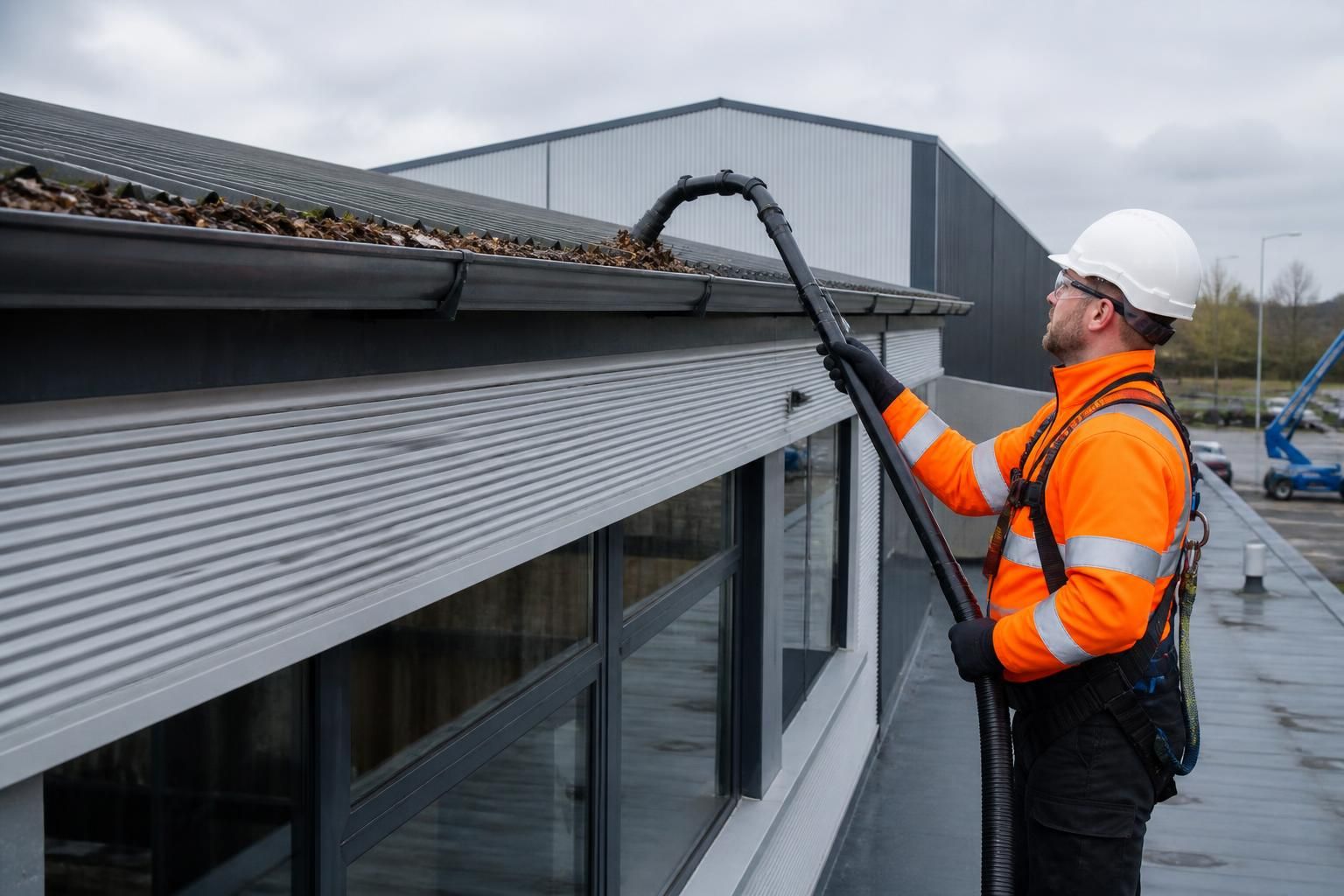
Professional gutter cleaning typically uses high-reach vacuum systems with inspection cameras, telescopic poles, hand tools and suitable access equipment to remove leaves, silt and other debris safely from ground level or at height. Technicians select the method according to the building, gutter condition and access constraints, then check water flow and downpipes to confirm the system is clear without causing damage.
Professional gutter cleaning combines high-reach vacuum equipment, inspection cameras, telescopic tools, hand tools and suitable access systems to remove debris without damaging the guttering, roof edge or façade. The technique is selected after considering the building height, gutter design, debris type, access restrictions and condition of the system. A proper service also includes checking outlets and downpipes, removing waste responsibly and confirming that water can discharge correctly.
High-reach gutter vacuum systems
For many commercial and industrial properties, a powerful gutter vacuum is the primary cleaning tool. Flexible suction hoses are connected to lightweight carbon-fibre or composite poles, allowing operatives to reach gutters from ground level where site conditions permit. Interchangeable end tools can be used for different gutter profiles and debris types, including wide nozzles for leaves and narrower attachments for compacted silt.
Vacuum cleaning is particularly useful around offices, retail units, schools, warehouses and other premises where working from the ground reduces disruption and avoids placing ladders against the building. It also helps contain loose material rather than allowing it to fall onto walkways, vehicles, landscaping or lower roofs. The collected debris is transferred into the vacuum’s container or collection system for removal from site.
Inspection cameras and visual checks
Small cameras mounted near the cleaning head, or used separately on telescopic poles, help technicians see inside concealed or difficult-to-view sections of guttering. This can reveal accumulated silt, rooted vegetation, standing water, damaged joints, displaced sections and blocked outlets. Camera inspection is useful both before cleaning, to identify the appropriate method, and afterwards, to check that the channel and outlets are clear.
Visual inspection remains important even when cameras are used. Technicians assess fascia boards, brackets, unions, stop ends, downpipe connections, roof coverings and nearby surfaces for signs of leakage or deterioration. Cleaning can expose an existing defect, but it should not be treated as a substitute for a formal roof or building survey.
Telescopic poles and specialist attachments
Telescopic poles provide reach while keeping the operative at a safer working position. Attachments may include angled vacuum heads, brushes, scrapers and claws. These tools allow debris to be loosened progressively rather than forcing a rigid implement through the gutter, which can damage linings, seals or brackets.
Attachments are chosen according to the material being removed. Loose leaves and twigs can usually be vacuumed directly, while wet silt, moss and compacted deposits may need to be agitated with a soft brush or carefully loosened with a hand tool. Where gutter guards or mesh covers are fitted, sections may need to be lifted or opened in accordance with the manufacturer’s design, then refitted securely after cleaning.
Hand tools for detailed work
Hand scoops, plastic scrapers, brushes and small rods are used where deposits are too compacted for suction alone or where access is restricted. Non-abrasive tools are preferred because metal implements can scratch coated metal, crack ageing plastic or disturb seals. Operatives work carefully around gutter joints, outlets and brackets, where excessive force can create or worsen a leak.
Downpipe rods or flexible cleaning equipment may be used to clear accessible blockages in vertical or horizontal sections. The method depends on the pipe material, configuration and suspected obstruction. A blockage should not simply be forced further into the system, as this can compact debris at a bend or damage a joint.
Water testing and downpipe checks
After visible debris has been removed, controlled water testing can confirm whether the gutter falls correctly towards its outlets and whether downpipes are discharging. Water may be introduced in manageable amounts while technicians observe joints, outlets, overflow points and ground-level discharge areas.
This process can identify slow drainage, trapped water, leaking unions and blocked underground connections. It also helps distinguish a gutter blockage from a wider drainage problem. Water testing must be carried out in a controlled manner, particularly on buildings with fragile façades, vulnerable landscaping, electrical equipment or known water-ingress issues.
Access equipment for work at height
Where ground-based equipment cannot safely reach the gutter, professional cleaning may require ladders, scaffold towers, mobile elevated work platforms or other suitable access equipment. The choice depends on the height and geometry of the building, the duration of the task, ground conditions, overhead hazards, vehicle movements and the need to reach several elevations.
Ladders are not automatically the best option for commercial work and should only be used where the risk assessment confirms that they are suitable. Towers and powered access platforms can provide a more stable working position for longer or more complex tasks, but they require appropriate planning, competent operation and adequate ground conditions. Roof access or specialist access methods may be considered for particular structures, subject to a specific assessment and suitable controls.
Safety equipment and site controls
Equipment selection is supported by task-specific risk assessments and method statements. Typical controls include inspection of access equipment, exclusion zones beneath the work area, protection of pedestrians and vehicles, secure handling of hoses and poles, and coordination with the site contact. Personal protective equipment may include gloves, eye protection, protective footwear, high-visibility clothing and head protection where site conditions require it.
Technicians also consider fragile roof surfaces, overhead cables, nearby plant, traffic routes, falling-object risks and the possibility of water or debris entering the building. On occupied commercial premises, the work may be scheduled to reduce interference with staff, visitors, deliveries and public access.
Techniques used to avoid damage
Effective cleaning is not simply a matter of applying maximum suction or pressure. Operatives adjust the vacuum setting, pole position and attachment to the gutter’s construction and condition. Brittle plastic, aged coatings, corroded metal and poorly supported sections require a lighter touch. Pressure washing is generally unsuitable for removing debris from gutters because uncontrolled water can drive material into downpipes, force water behind cladding or roof edges, and worsen existing defects.
Steam or low-pressure cleaning may have a role on associated external surfaces where appropriate, but it should not be used indiscriminately inside a gutter system. The correct approach is to remove deposits mechanically, inspect the system, and use controlled water only where it assists testing or final rinsing.
Typical professional cleaning sequence
- Review the property, gutter layout, access arrangements and known issues with the site contact.
- Inspect visible guttering, outlets, downpipes, roof edges and surrounding areas before work begins.
- Set up access equipment, exclusion zones and protection for people, vehicles and property.
- Remove loose and compacted debris using vacuum equipment, telescopic attachments or hand tools selected for the gutter material.
- Check outlets and downpipes, clearing accessible obstructions without forcing debris into the drainage system.
- Inspect cleaned sections, using a camera where visibility is limited or defects require closer assessment.
- Carry out controlled water-flow checks where appropriate.
- Collect and remove the waste, leave affected areas clean and report defects that require repair or further investigation.
The equipment and technique may change during the job if the gutter condition differs from the initial assessment. For example, a section that appears suitable for vacuum cleaning may contain hardened deposits, damaged brackets or a blocked outlet requiring slower manual work. This adaptable approach is important on large commercial sites, where gutter profiles, building heights and access conditions can vary across the same property.
Professional gutter cleaning therefore involves more than removing visible leaves. The combination of inspection, controlled debris removal, appropriate access equipment and post-cleaning checks helps maintain drainage performance while reducing the risk of damage to the building and surrounding areas. Any evidence of leaking joints, corrosion, sagging, cracked sections or defective downpipes should be recorded and referred for repair rather than concealed by the cleaning process.
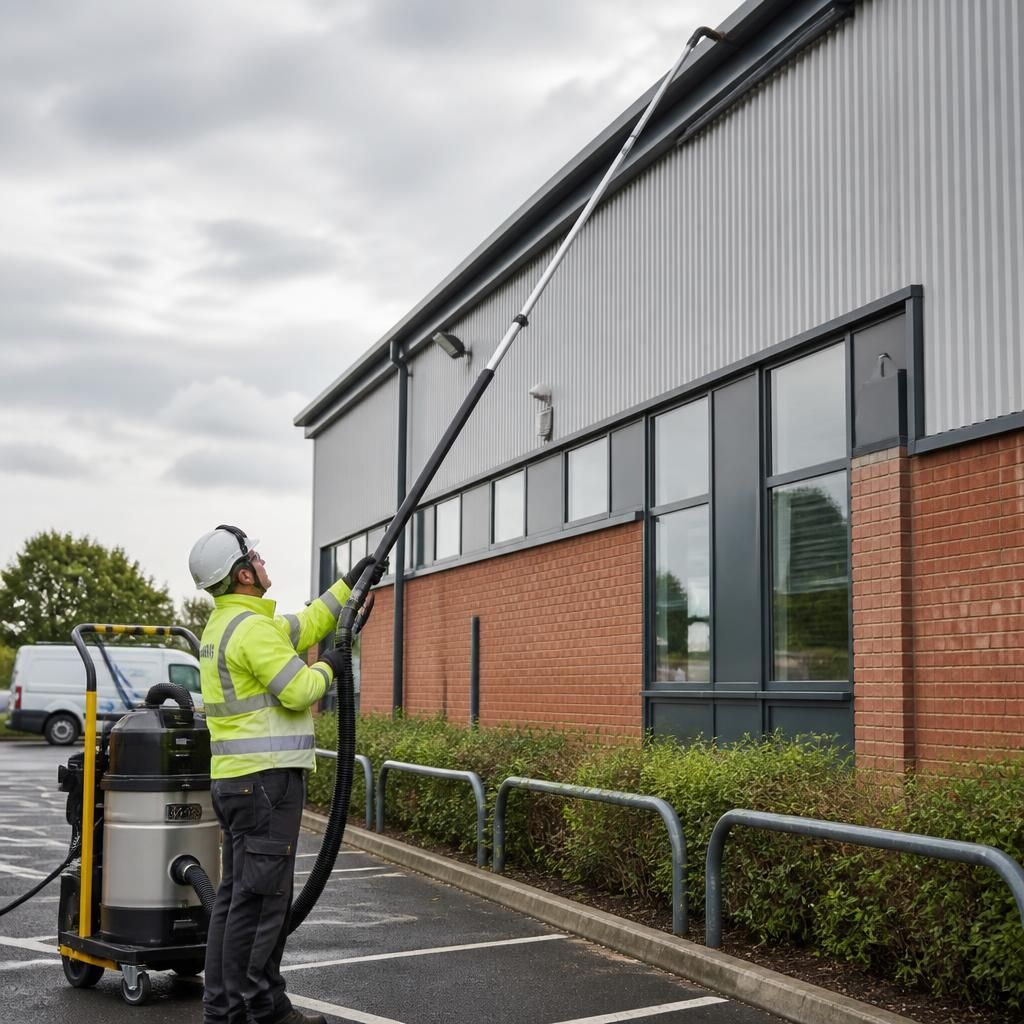
High-reach vacuum systems allow many gutters to be cleaned from ground level using flexible hoses, telescopic poles and interchangeable attachments. This reduces the need to place ladders against the building and helps contain leaves, silt and other debris instead of allowing it to fall onto vehicles, walkways or lower roofs.
An inspection camera fitted near the cleaning head can show whether deposits, damaged joints or blocked outlets remain hidden from ground level. The technician can then adjust the attachment or use suitable hand tools for compacted material, followed by a visual inspection and controlled water-flow check where appropriate.
Arrange a professional gutter cleaning assessment
Arrange a professional gutter cleaning assessment to review your gutter condition, access requirements and the most suitable cleaning method for your property.
For a free quote & consultation
Contact usAccreditations