What safety protocols and procedures do you implement during gutter cleaning operations?
During gutter cleaning operations, we use a documented risk assessment and method statement, inspect the site and gutter system, and select safe access equipment and working methods for the building. Our procedures include trained operatives, appropriate personal protective equipment, controlled work areas, protection for people and property below, weather checks, and clear communication throughout the work.
Our gutter cleaning operations follow a planned safe system of work designed to protect operatives, occupants, visitors, members of the public and the building itself. Before work starts, we assess the site and gutter system, prepare a risk assessment and method statement where required, select suitable access equipment and define the controls needed for the specific property.
Site assessment and planning
We inspect the building, surrounding ground conditions, access routes, roof edges, gutter arrangement and nearby hazards before selecting a cleaning method. The assessment considers working at height, fragile surfaces, sloping or uneven ground, overhead services, traffic, restricted access, falling debris, water run-off and the presence of building occupants or members of the public.
Where the work is part of a larger commercial or industrial project, our planning also considers other contractors, delivery areas, pedestrian routes, vehicle movements and the site’s own permit or induction requirements. The planned method is reviewed with the team so that everyone understands the sequence of work, individual responsibilities and required controls.
Competent operatives and supervision
Gutter cleaning is carried out by operatives who are trained and competent to use the selected equipment and access system. They receive suitable instruction in working at height, manual handling, equipment checks, emergency procedures and the risks associated with debris, contaminated material and water discharge. The level of supervision is matched to the complexity and risk of the site, with arrangements in place for communication and escalation if conditions change.
Safe access equipment
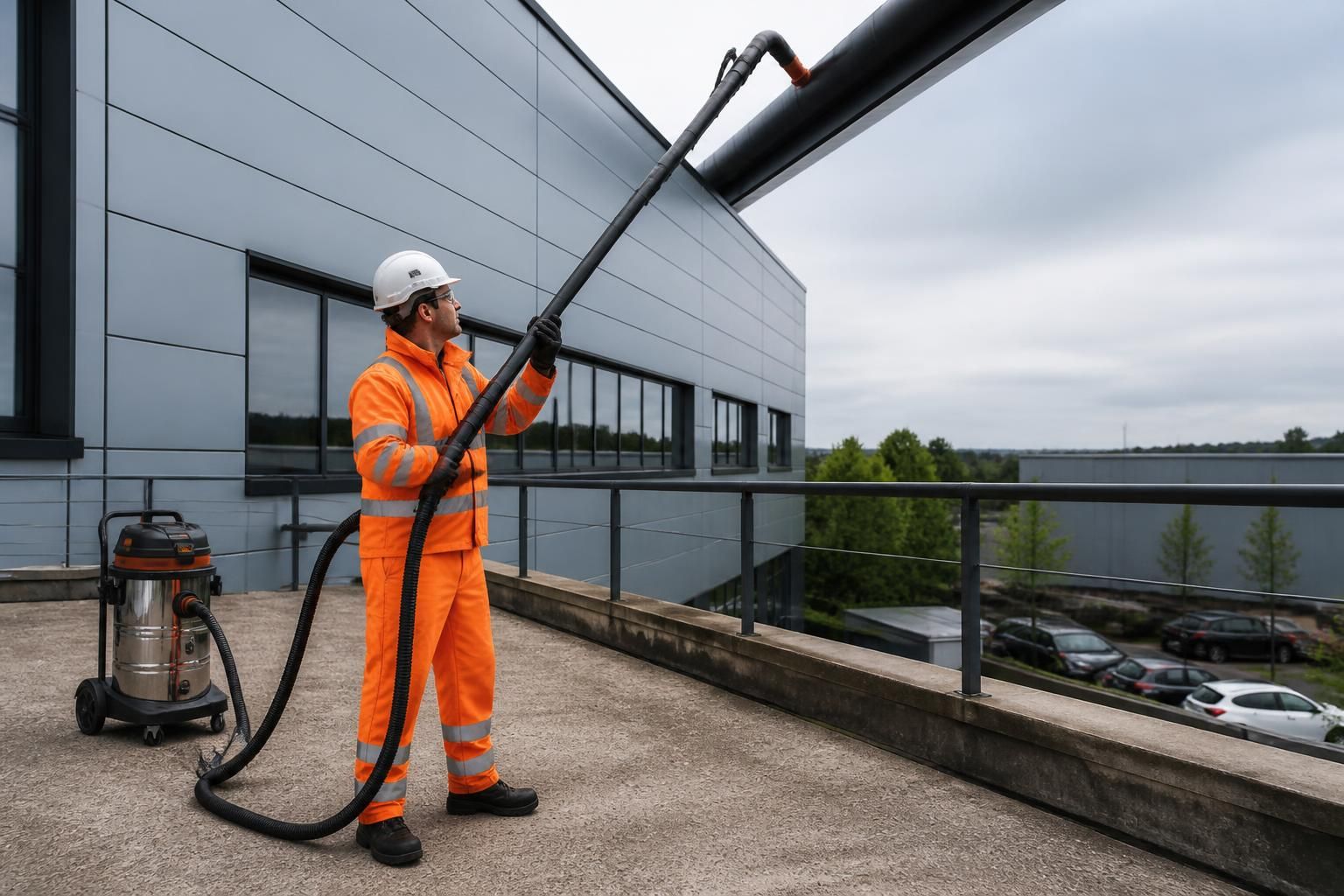
We select access equipment according to the height, layout, reach and condition of the building rather than relying on one standard approach. This may include telescopic vacuum systems used from ground level, ladders or mobile access equipment where appropriate, or other suitable access solutions for more complex sites. Access equipment is inspected before use, positioned on suitable ground and used in accordance with the manufacturer’s instructions and the planned method of work.
Working at height is avoided where a ground-based method can complete the work effectively. Where access at height is necessary, we follow the principles of the Work at Height Regulations by planning the task, avoiding unnecessary exposure, preventing falls where possible and using suitable fall protection where required. Operatives do not overreach, climb on unsuitable surfaces or use improvised platforms to gain additional height.
Personal protective equipment
Personal protective equipment is selected following the site assessment and the material being removed. Depending on the task, this can include safety footwear with suitable grip, gloves, eye protection, protective clothing and head protection. Respiratory protection or additional protective equipment may be required where the debris, contamination or cleaning method creates a specific exposure risk. PPE forms part of the control system but does not replace safe planning, suitable access or good housekeeping.
Exclusion zones and protection below the work area
Before cleaning begins, we control the area below and around the work zone. Barriers, cones, signage or a banksman may be used to prevent people from walking beneath the work area or entering the path of equipment. The arrangement is adapted to the site, particularly where gutters are above entrances, pavements, car parks, loading areas or public access routes.
Debris, tools and equipment are managed to reduce the risk of falling objects. Doors, windows, vehicles, planted areas and other vulnerable surfaces may be protected where necessary. If the work affects a busy access route, we agree suitable controls with the client, which may include temporary restrictions, altered pedestrian routes or coordination with site management.
Weather and changing conditions
Weather conditions are checked before and during the operation. Strong winds, heavy rain, ice, poor visibility and lightning can make access equipment unstable, surfaces slippery or communication difficult. We postpone, pause or change the method when conditions no longer support safe work. We also take account of wet roofs, water run-off and the effect of cleaning activity on ground conditions and nearby pedestrian areas.
Electrical, structural and environmental hazards
Overhead and nearby electrical services are identified during planning, with safe distances and additional controls applied where relevant. We do not place equipment where it could contact live services or create a foreseeable electrical risk. The condition of the guttering, fascia, roof edge and supporting surfaces is also considered; visibly unstable or damaged components are not treated as suitable support for access equipment.
Gutter debris can contain decaying organic material, sharp objects, animal waste or other contaminants. Operatives use appropriate hygiene controls, avoid unnecessary contact and contain removed material rather than allowing it to enter drains or spread across the site. Waste is collected and disposed of in line with the agreed site arrangements and applicable requirements. Any suspected hazardous material or unexpected contamination is reported and the work is paused until it can be assessed safely.
Equipment checks and controlled cleaning
Vacuum systems, hoses, ladders, platforms, vehicles and other equipment are checked for visible defects before use. Damaged equipment is removed from service. Hoses and cables are routed to minimise trip hazards, and equipment is positioned so that it does not obstruct fire exits, emergency routes or essential site operations.
Cleaning is carried out in a controlled manner to avoid damaging gutters, joints, roof coverings, fascia boards and external finishes. Operatives do not use excessive force or put their weight on guttering. Where water is used, run-off is controlled as far as practicable to prevent slippery surfaces, staining, flooding or the spread of contaminated material.
Communication and emergency arrangements
The team maintains communication throughout the work and reports hazards, access problems, damaged components or changes in conditions promptly. A clear method is established for stopping work and raising an alarm. Emergency arrangements take account of the building location, access for emergency services, first-aid provision, rescue requirements for work at height and the need to secure the area after an incident.
Work is stopped if the agreed controls cannot be maintained, if equipment develops a fault, if an unauthorised person enters the exclusion zone or if the condition of the building differs materially from the original assessment. The method is then reviewed before work resumes.
Completion checks and reporting
On completion, we check that the guttering has been cleared, removed debris has been collected, tools and barriers have been removed safely and affected areas are left in a suitable condition. We report defects such as loose joints, damaged outlets, failing fascia, corrosion, poor falls or evidence of leakage rather than attempting unauthorised repairs. Where relevant, the client receives details of observed condition issues, areas that could not be accessed safely and any recommended follow-up work.
These procedures are applied alongside the client’s own site rules and any project-specific requirements. The controls are tailored to each building, because a low-rise commercial unit, a multi-storey property, an industrial site and a public-sector facility can present very different access, traffic and occupancy risks.
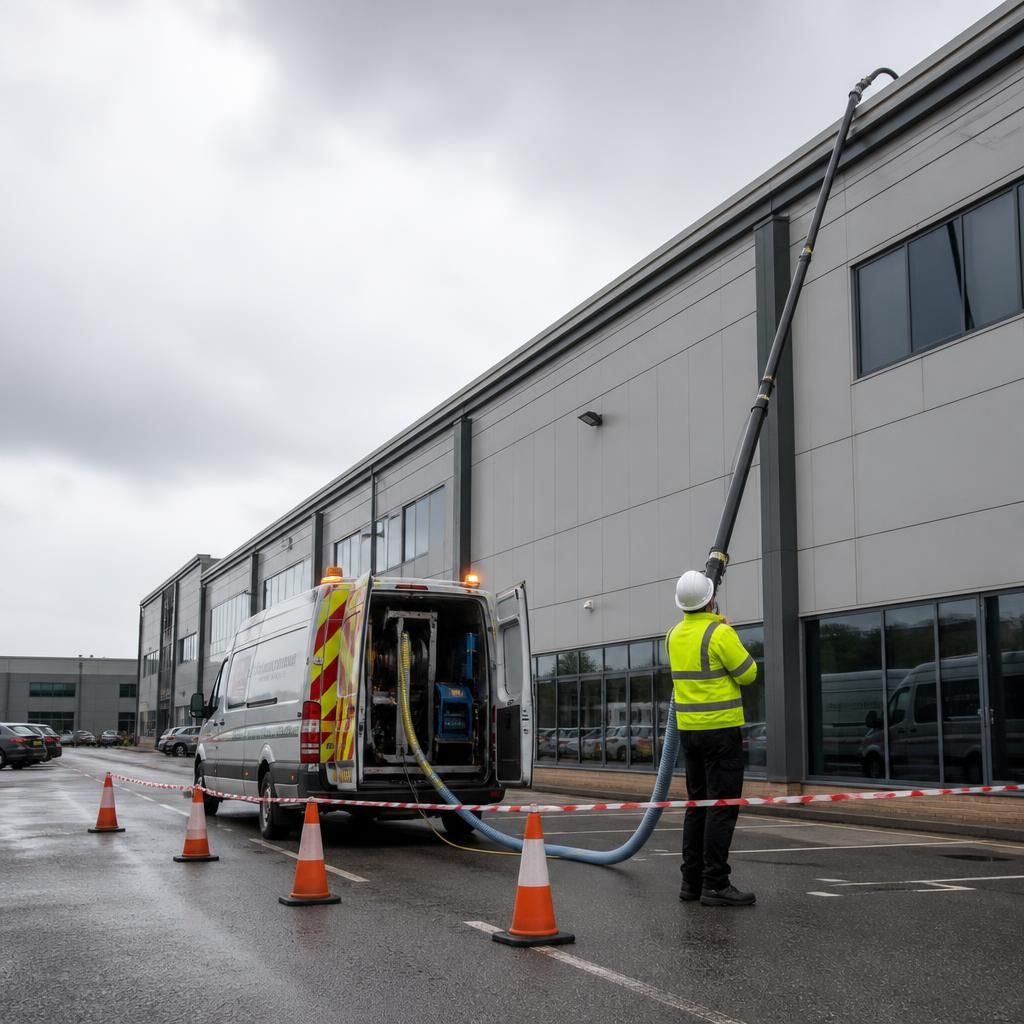
Our primary safety control is to avoid working at height wherever a ground-based gutter vacuum system can clean the gutters effectively. This keeps operatives away from roof edges and reduces the risk of falls, while also limiting disruption to occupants, vehicles and people using the site.
Where elevated access is necessary, we select equipment suited to the building, ground conditions and gutter layout. The equipment is checked before use, positioned securely and operated without overreaching or placing weight on fragile roofs, fascia boards or guttering. The work area below is controlled with barriers, signage or a banksman where required, preventing people from entering the path of falling debris or equipment.
Arrange a Safe Gutter Cleaning Assessment
Arrange a safe gutter cleaning assessment so we can review your building, access requirements and site-specific risks before work begins. Contact Encanto Exterior Cleaning to plan the appropriate cleaning method and controls for your property.

For a free quote & consultation
Contact usAccreditations