
What safety measures are implemented during professional gutter cleaning?
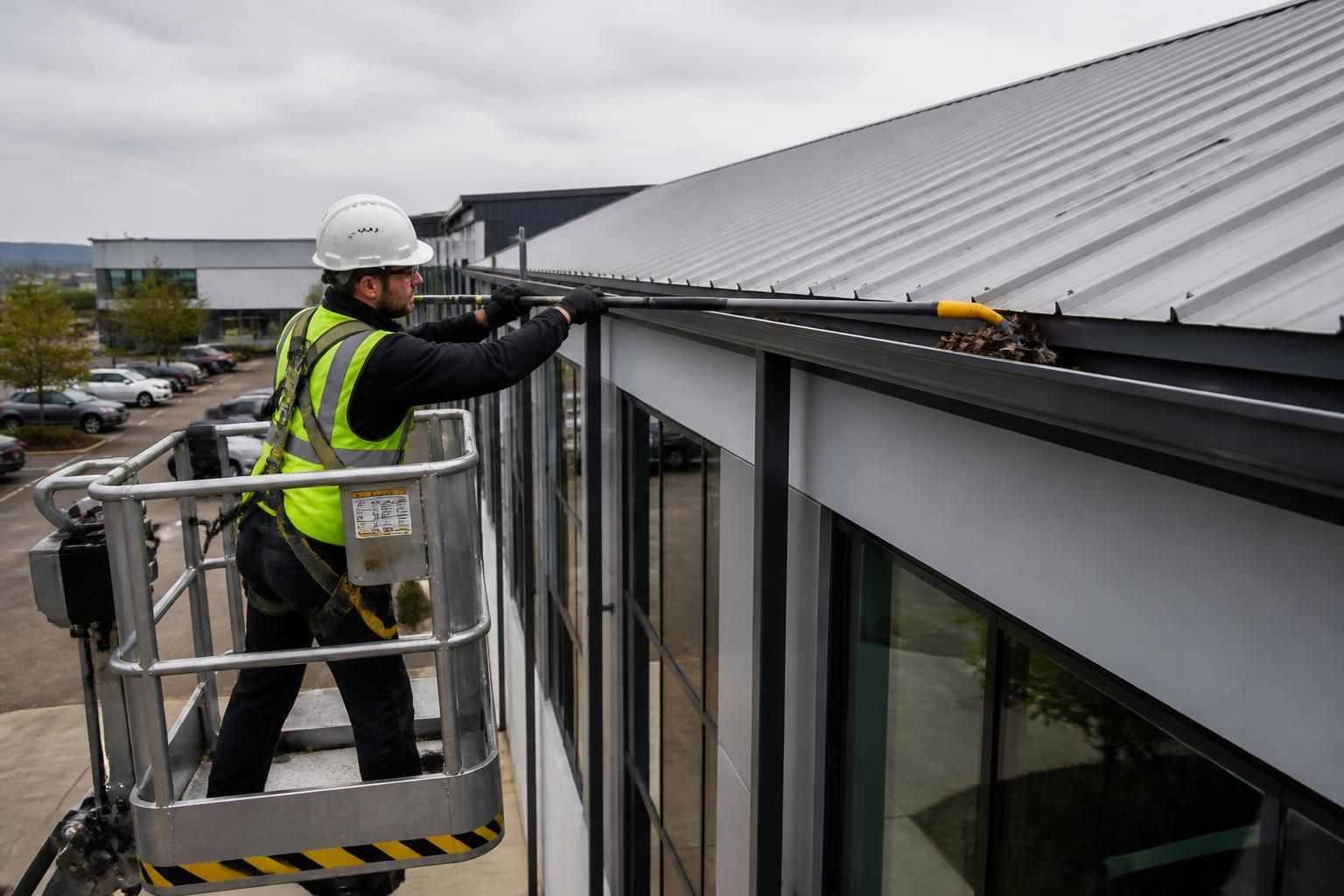
Professional gutter cleaning is carried out using documented risk assessments, suitable access equipment, trained operatives and task-specific PPE. We also control the work area, monitor weather and site conditions, protect the property from falling debris and water, and inspect equipment before work begins to safeguard people, the building and surrounding areas.
Professional gutter cleaning is managed through documented risk assessments, suitable access equipment, trained operatives, task-specific personal protective equipment (PPE) and controlled work areas. Before work begins, the team assesses the building, gutter system, access requirements, surrounding ground and potential hazards so that the cleaning method protects workers, occupants, visitors, the property and nearby vehicles.
Site-specific risk assessment and method statement
A site assessment identifies risks such as roof edges, fragile surfaces, uneven ground, overhead cables, restricted access, public footways, vehicle movements, falling debris and nearby electrical equipment. The findings determine the safe method of work, the equipment required and any precautions needed for the particular property. Where appropriate, the planned controls are recorded in a method statement and communicated to the operatives before cleaning starts.
Operatives also confirm who is responsible for site access, how the work area will be controlled and what arrangements apply if conditions change. If the planned method cannot be carried out safely, work is paused while an alternative approach is considered.
Safe access and work-at-height controls
Gutter cleaning often involves work at height, so access is selected according to the height, layout, condition and duration of the task. Depending on the building, this may include ground-based vacuum equipment, properly positioned ladders, mobile access equipment, scaffold or other suitable systems. The aim is to avoid unnecessary work at height and to use equipment that allows the gutters to be reached without overreaching or placing excessive load on the building.
Access equipment is inspected before use and positioned on stable ground. Ladders are used only where they are suitable for the task and can be secured and managed safely. Where mobile elevated equipment or other specialist access equipment is required, it is operated by appropriately trained personnel and set up with consideration for ground conditions, overhead obstructions and the exclusion zone below.
Operatives do not climb onto roofs, parapets, conservatories or other fragile surfaces unless a specific, properly controlled system has been put in place. They also avoid leaning beyond the safe working position or moving access equipment while occupied.
Equipment checks and maintenance
Gutter vacuums, poles, ladders, platforms, lifting equipment and associated tools are checked for visible damage, secure connections and serviceability before the task starts. Equipment is used within its intended limits and removed from service if a defect could affect safe operation. Cables, hoses and poles are routed to reduce trip hazards and to prevent contact with vehicles, doors, windows or members of the public.
Where equipment is used near the building façade, care is taken to avoid damaging roof coverings, cladding, render, windows, seals and decorative finishes. The cleaning method is selected to remove silt, leaves and other debris without applying unnecessary pressure or placing damaging loads on the guttering.
Exclusion zones and protection of people
The area beneath and around the work is controlled to reduce the risk of people being struck by tools, equipment, water or falling gutter debris. Barriers, cones or warning signs may be used where necessary, particularly near entrances, pavements, car parks, loading areas and shared access routes. Site occupants are kept clear of the immediate work area, and access points may be temporarily managed while cleaning is under way.
Tools and materials are not left unsecured at height. Debris is directed into suitable containers or controlled during removal rather than being allowed to fall freely. Vehicles, parked equipment and vulnerable external surfaces are moved or protected where practicable.
PPE and hygiene precautions
PPE is selected for the hazards identified in the assessment. This may include protective footwear with suitable grip, gloves, eye protection, head protection, high-visibility clothing and protective clothing for wet or dirty work. Additional PPE is used where the task creates a specific exposure, such as dust, contaminated material or chemical residues.
Gloves and safe handling procedures help reduce contact with decomposing vegetation, bird fouling and other material commonly found in blocked gutters. Hands, tools and equipment are cleaned as required, and waste is contained and removed responsibly. If potentially hazardous contamination is identified, the work is reassessed before handling continues.
Weather and ground-condition monitoring
Wind, rain, ice, lightning, poor visibility and saturated or unstable ground can make access equipment unsafe. Conditions are checked before work and monitored during the operation. Cleaning is postponed, suspended or changed to a safer method if weather or ground conditions compromise stability, visibility, grip or control of equipment. Wet surfaces are also considered when protecting entrances and managing slip risks caused by water or loose debris.
Electrical and surrounding-site hazards
Overhead and nearby electrical services are identified during the site assessment. Equipment is kept at a safe distance from electrical hazards, and the work method is changed or stopped where adequate clearance cannot be maintained. The team also considers skylights, roof-mounted equipment, ventilation outlets, alarm systems, fragile canopies and other features that could be damaged or create a hazard.
On commercial sites, additional controls may be needed for deliveries, pedestrians, contractors, plant and moving vehicles. Cleaning activity is coordinated with the person responsible for the premises so that it does not conflict with other high-risk operations.
Safe removal of debris and water
Leaves, silt, moss and other material are collected rather than washed into the drainage system, where they could create a further blockage. Waste is lowered and contained safely, then removed from the working area. Water discharge is controlled to prevent flooding, staining, slippery paths or damage to adjoining property.
Downpipes and outlets are checked as part of the cleaning process where they are accessible and included within the agreed scope. If a blockage cannot be cleared safely or appears to indicate a damaged section, the issue is reported rather than forcing equipment through the system.
Communication, supervision and emergency arrangements
Operatives communicate with the site contact about access, hazards, restricted areas and any changes to the work plan. The team knows how to stop the task, raise an alarm and obtain assistance if someone is injured, equipment becomes unstable, property is damaged or an unexpected hazard is found. Work is not resumed until the area and method have been reassessed.
After cleaning, equipment is removed safely, barriers are cleared only when the area is safe and the surrounding ground is checked for loose debris, water or trip hazards. Any defects, restricted sections or safety concerns identified during the work are recorded and explained to the customer so that cleaning and potential repairs are not confused.
These controls are applied alongside the agreed site requirements and the conditions identified during the pre-work assessment. Providing accurate information about access, occupancy, fragile features, known defects and site restrictions helps ensure the safest and most suitable gutter cleaning method is used.
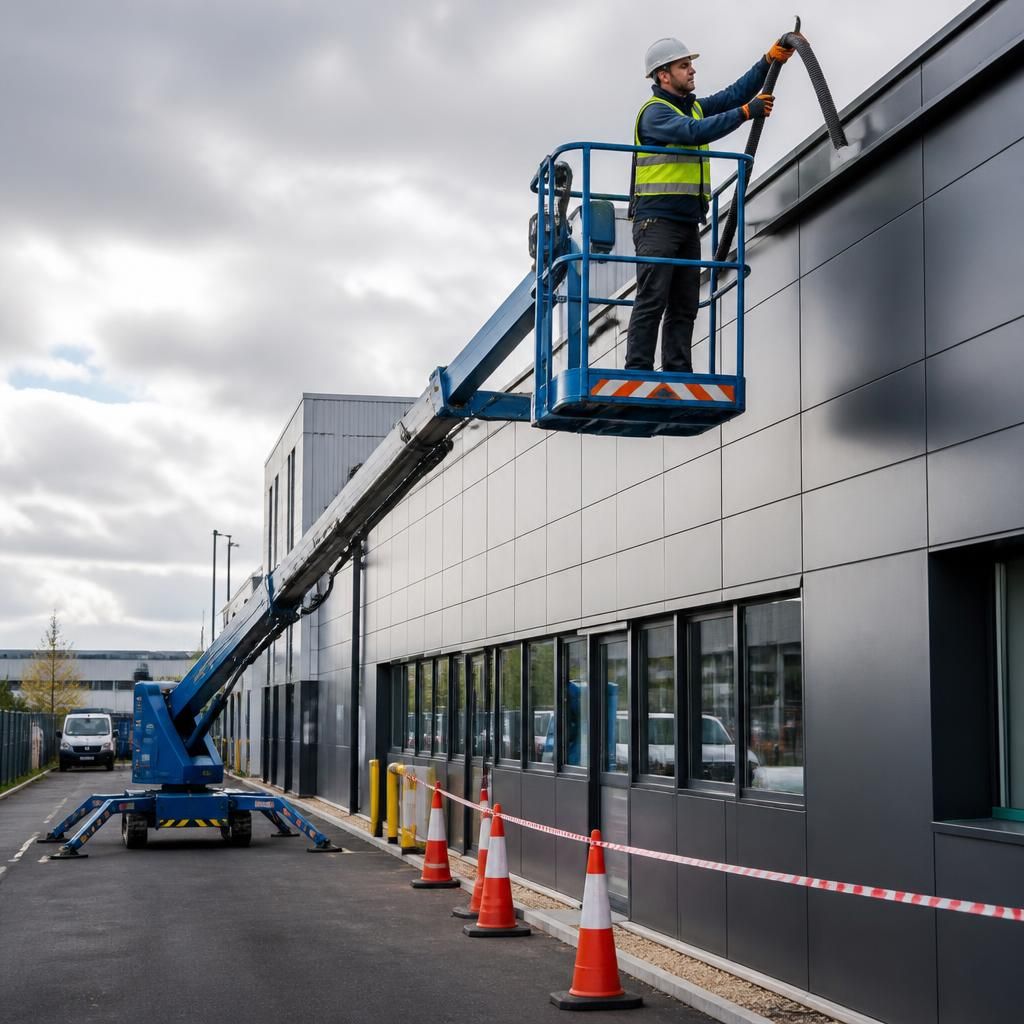
Professional gutter cleaning safety measures begin with choosing a safe way to reach the gutters. The method may involve ground-based vacuum equipment, secured ladders, mobile access equipment or another suitable access system, depending on the building, height, ground conditions and duration of the work.
Before cleaning starts, access equipment is checked, positioned on stable ground and kept within its intended limits. Operatives avoid overreaching, moving ladders while occupied or stepping onto fragile roofs, conservatories and other surfaces. The area below is controlled with barriers, cones or warning signs where needed, helping to protect occupants, visitors, vehicles and passers-by from falling debris, equipment and water.