
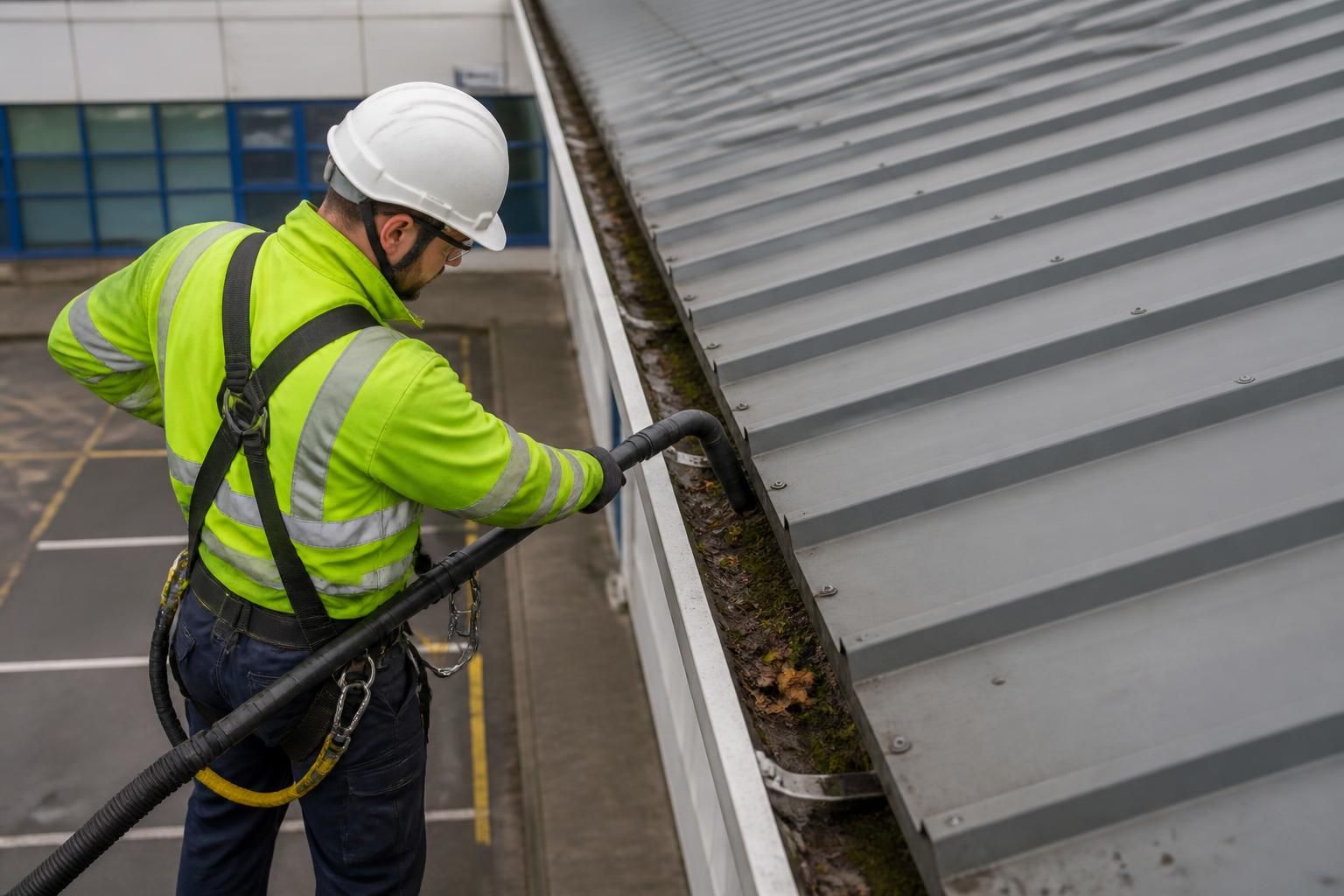
What methods and equipment do you use to ensure effective and non-damaging gutter cleaning?
We combine controlled manual removal with suitable access equipment and low-pressure vacuum cleaning to clear leaves, silt and other debris without damaging gutters, seals, roof coverings or façades. Where required, we use telescopic gutter vacuums, inspection cameras and carefully regulated water or steam cleaning, selecting the safest method for the gutter material, height and condition.
Effective, non-damaging gutter cleaning combines controlled debris removal, suitable access equipment and inspection-led methods. We select the approach according to the gutter material, roof design, height, access constraints and condition, rather than applying the same pressure or equipment to every system. This helps remove leaves, silt, moss and other debris while reducing the risk of distorting gutters, loosening joints, damaging seals or marking adjacent roof and façade surfaces.
Our main methods and equipment include:
- Manual removal: Hand tools are used to lift compacted vegetation, silt and larger debris from gutter channels, outlets and corners. This provides control around fragile joints, brackets, membranes and roof edges where mechanical equipment could cause damage.
- Telescopic gutter vacuum cleaning: A commercial gutter vacuum with extension poles removes loose and partially compacted debris from ground level or other controlled positions. Narrow nozzles and flexible attachments help reach long runs, box gutters and awkward sections without placing unnecessary weight on the guttering.
- Inspection cameras: Pole-mounted or vacuum-system cameras allow the operative to view concealed or elevated sections before and after cleaning. They help identify blocked outlets, remaining debris, standing water, displaced components and defects that may not be visible from ground level.
- Controlled water cleaning: Where rinsing is appropriate, water is applied in a regulated manner to flush remaining fine material towards suitable outlets. Flow and pressure are controlled to avoid forcing water behind cladding, beneath roof coverings or through poorly sealed joints.
- Steam cleaning where suitable: Low-pressure steam may be considered for particular deposits or associated external surfaces. It is used selectively, with attention to the substrate, coatings, sealants and nearby materials. Steam is not automatically suitable for every gutter or roof system.
- Access equipment: Depending on the property, we may use extension poles, access platforms, mobile elevating work platforms or other suitable equipment. The selected arrangement is based on reach, ground conditions, overhead obstructions, traffic or pedestrian risks and the need to work without leaning equipment against vulnerable guttering.
Before cleaning, we assess the gutter profile, material and fixing arrangement, along with the roof edge, outlets, downpipes and surrounding façade. We look for corrosion, cracks, open joints, loose brackets, deformation and signs that the system may not tolerate force or additional water. This assessment determines whether a vacuum, manual method, controlled rinse or combination of techniques is appropriate.
We work progressively rather than forcing blockages through the system. Debris is loosened and removed in manageable sections, with particular care around outlets and downpipe connections. Where a blockage is compacted, it is broken down carefully instead of being pushed into the outlet, which could transfer the problem further into the drainage system. Collected waste is removed from the site rather than left on roofs, paths or planted areas.
Non-damaging cleaning also depends on what we avoid. We do not use uncontrolled high pressure on fragile guttering, seals, roof coverings or coated surfaces, and we avoid dragging poles, hoses or access equipment across finished surfaces. Strong chemicals are not used as a substitute for proper debris removal. If staining or organic growth requires additional treatment, the product and application method must be compatible with the substrate and surrounding drainage arrangements.
After the work, we inspect accessible gutter runs, outlets and downpipe connections to confirm that debris has been removed and that water can discharge as intended. Where an inspection identifies a repair issue, such as a leaking joint, damaged section or loose bracket, we record it and explain the finding separately from the cleaning work. Cleaning can restore flow, but it cannot correct a failed component or defective fall.
For larger commercial and industrial properties, the method is also coordinated with site operations. We consider safe access, exclusion areas, vehicle movements, occupants, neighbouring surfaces and the handling of waste. This allows the cleaning to be completed with appropriate control while protecting the building fabric and maintaining a safe working environment.
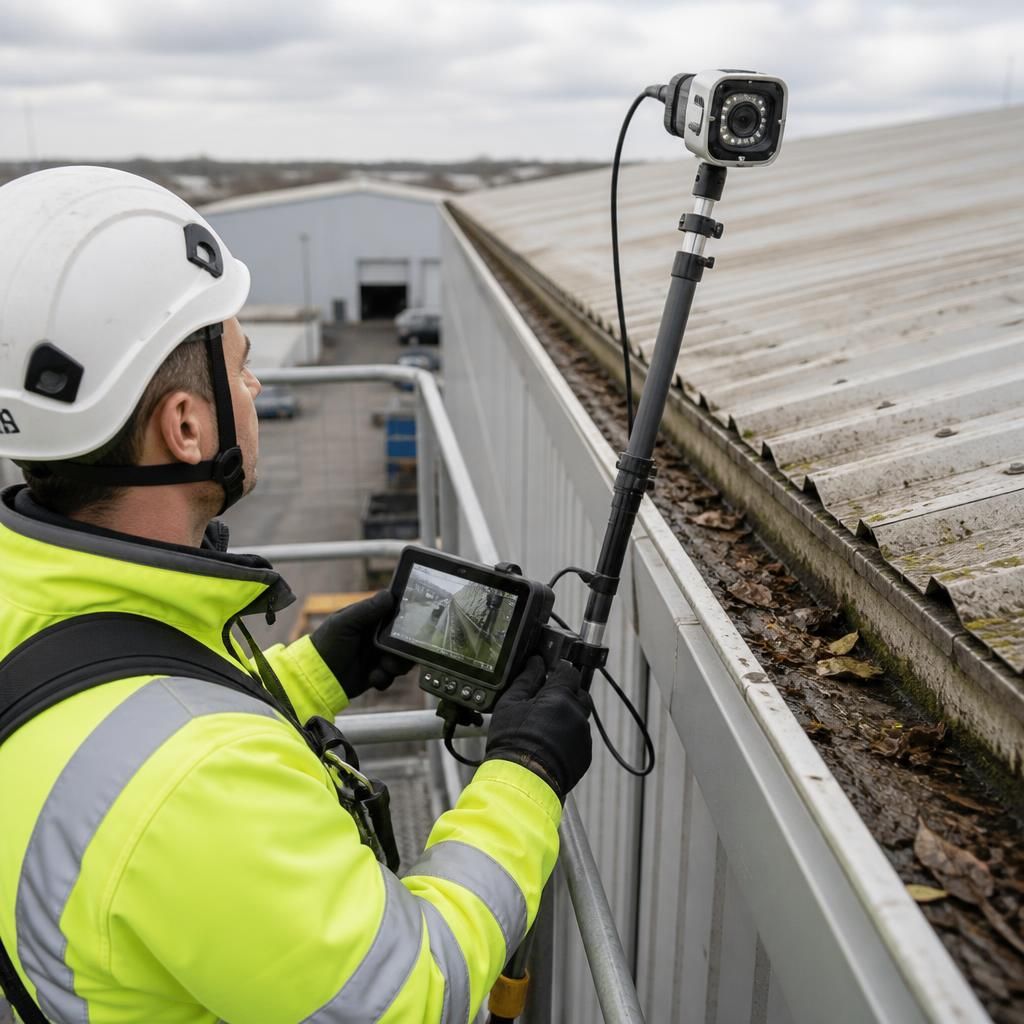
Inspection-led gutter cleaning uses visual checks before, during and after debris removal to select an effective method without applying unnecessary force. An operative assesses the gutter profile, material, fixings, outlets and surrounding roof edge, looking for corrosion, cracked joints, loose brackets, deformation and standing water.
Pole-mounted inspection cameras can view elevated or concealed sections and confirm whether debris remains after cleaning. This is particularly useful for long commercial rooflines, box gutters and areas that cannot be safely viewed from ground level. Where debris is loose, a telescopic vacuum can remove it with controlled suction and without placing weight on the gutter. Compact or fragile deposits are loosened manually, while any rinsing is applied at regulated flow and pressure rather than using uncontrolled high-pressure water.
The final inspection checks accessible runs, outlets and downpipe connections. If cleaning reveals a leaking joint, damaged section or loose bracket, the issue is recorded separately so it is not mistaken for a cleaning problem.