
What are the signs that my gutters need cleaning?
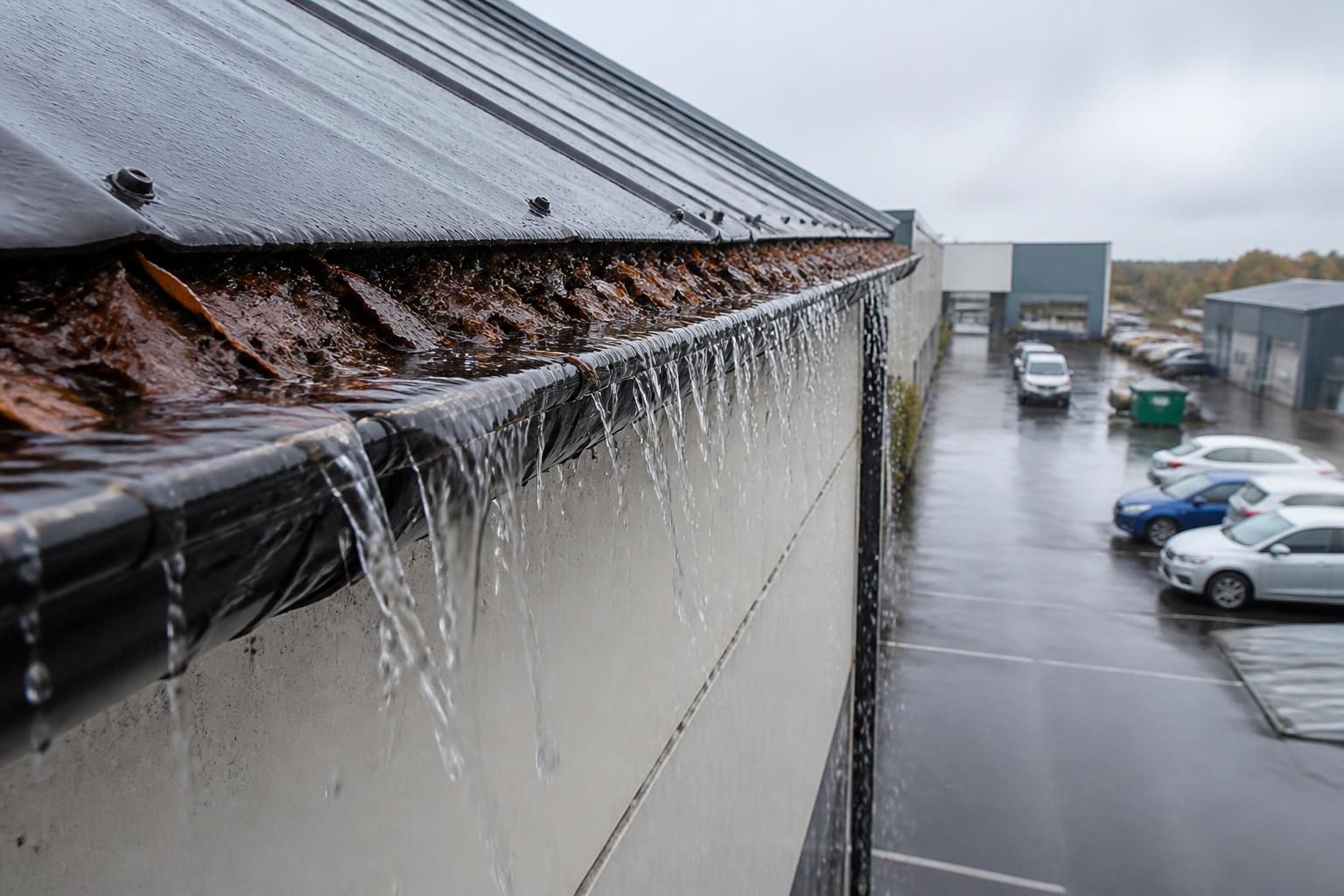
Your gutters may need cleaning if water overflows during rain, debris or weeds are visible, or the guttering is sagging or pulling away from the building. Damp patches, staining on walls, damaged fascias and pooling water around the foundations can also indicate blocked or poorly draining gutters that require prompt attention.
The clearest signs that gutters need cleaning are overflowing water, visible debris, slow drainage, sagging sections, damp staining and water pooling around the building. These symptoms usually indicate that leaves, moss, silt or other material is restricting the flow of rainwater. On commercial and industrial premises, an apparently minor blockage can quickly contribute to damage to façades, cladding, fascias, roofing systems and foundations, so it is best to arrange an inspection when these signs appear.
1. Water overflows during rainfall
Water spilling over the front or sides of a gutter is one of the most obvious indications of a blockage or drainage problem. It may happen along the length of the gutter or at a particular point where debris has collected. Overflowing water can saturate walls, stain external finishes and fall onto entrances, walkways or loading areas, creating a slip hazard.
Overflowing can also occur when gutters are undersized, poorly aligned or damaged. Cleaning should therefore be followed by a condition check if the problem continues after the channel and downpipes are clear.
2. Gutters or downpipes contain visible debris
Leaves, twigs, moss, silt, roofing granules and litter can often be seen from ground level. Vegetation growing in a gutter is a particularly clear sign that it has retained enough moisture and organic material for seeds to take root. Debris may not always be visible, however, especially where gutters are high, boxed in or protected by covers.
Downpipes should also be checked. A clean gutter will still overflow if the outlet or downpipe is blocked. Water testing, where appropriate, can help establish whether rainwater is draining freely through the complete system.
3. Water drains slowly or remains in the gutter
Standing water after rain suggests that the gutter has a blockage, insufficient fall or a distorted section. Persistent moisture adds weight to the gutter and can accelerate corrosion, joint failure and damage to supporting brackets. It can also attract moss and encourage further debris to accumulate.
Slow drainage is sometimes difficult to identify without inspecting the system during or after wet weather. Damp debris, tide marks and staining inside the gutter are useful indications that water has not been flowing normally.
4. Gutters are sagging, pulling away or visibly misaligned
A gutter that bows between brackets or separates from the fascia may be carrying excess water and debris. It may also have loose fixings, damaged brackets, rotten timber behind the fascia or corrosion. Cleaning removes the material adding weight, but it will not correct structural damage or poor installation.
Any gutter that is pulling away from the building should be assessed rather than simply cleared. Further movement can allow water to run behind the gutter and damage the roof edge or building fabric.
5. Damp patches, streaks or staining appear on walls and façades
Dark streaks, green growth, damp patches and discolouration beneath the gutter line can indicate repeated overflow or leakage from joints. On rendered, painted, brick or cladded buildings, this moisture can leave persistent marks and contribute to surface deterioration. Internal dampness near external walls may also be linked to defective rainwater disposal, although other causes should be ruled out.
Staining directly below a joint, outlet or end cap may indicate a local leak. Staining along a longer section is more consistent with overflow, a blocked channel or inadequate falls.
6. Fascias, soffits, roof edges or joints show damage
Peeling coatings, soft or decayed timber, rusting metal, split joints and loose fascia boards can all be associated with leaking or overflowing gutters. Water may enter behind the gutter and remain hidden from view, particularly around corners, outlets and areas where different roof sections meet.
Cleaning provides an opportunity to identify these defects early. Where damage is found, the cleaning work should be distinguished from repair or replacement requirements so that the appropriate contractor can address the underlying issue.
7. Water is pooling around the building or damaging nearby surfaces
Puddles beside walls, saturated ground, washed-out soil and splash marks around entrances can indicate that water is not being discharged correctly. Blocked downpipes may release concentrated flows against the building, while disconnected or damaged outlets can direct water towards foundations, paving, car parks and pedestrian routes.
On commercial sites, pooling water can also interfere with access, deliveries and drainage around service yards. Any area where water regularly accumulates should be inspected alongside the guttering and downpipe system.
When to arrange gutter cleaning
Do not wait for visible damage if the property is surrounded by mature trees, is close to construction activity, or has roof areas that collect moss, dust and airborne debris. Large commercial buildings, schools, managed estates and industrial premises may also have complex roof layouts where a blockage is not readily visible from the ground.
Contact the cleaning team promptly if water is entering the building, a gutter is pulling away, a downpipe is completely blocked, or water is discharging onto a public route. These conditions may require both cleaning and remedial work. A professional assessment can identify the location of the blockage, check the condition of brackets, joints and outlets, and establish whether access equipment is needed.
Gutter cleaning should be carried out using a method suitable for the building height, roof design and surrounding risks. On commercial and industrial sites, the work should be planned around access arrangements, pedestrian and vehicle movements, fragile surfaces and the need to prevent debris falling onto occupied areas. Clearing the system and checking that water flows through the outlets helps confirm whether the warning signs have been resolved, while any remaining overflow or dampness indicates that further investigation or repair may be necessary.
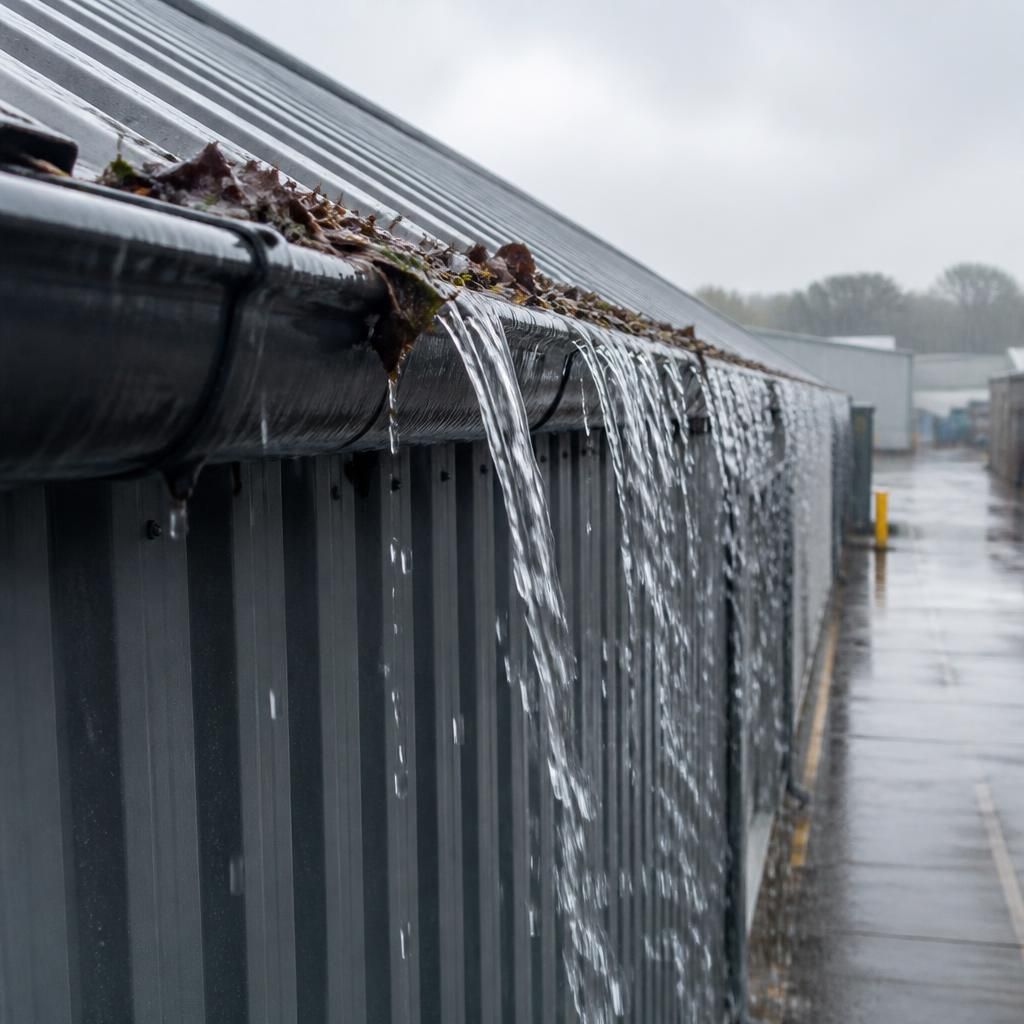
Water overflowing from the gutter during rainfall is one of the clearest signs that cleaning is needed. Leaves, moss, silt and other debris can restrict the channel or block the outlet, causing rainwater to spill over the front or back of the gutter instead of flowing into the downpipe.
Repeated overflow can stain façades, saturate fascias and soffits, and create slippery areas around entrances, walkways or service yards. If the gutter is still overflowing after it has been cleared, the system should be checked for damaged joints, inadequate falls, loose brackets or a blocked downpipe.
Arrange a gutter cleaning inspection
If you have noticed overflowing water, visible debris, sagging guttering or damp staining, arrange a gutter cleaning inspection so the system can be assessed and cleared safely. We can also identify blocked outlets, damaged joints or other defects that may require further attention.