

How often should gutters be cleaned to prevent blockages and damage?
Gutters should generally be inspected and cleaned at least once a year, with additional cleaning before and after the main leaf-fall period where trees, heavy rainfall or surrounding debris increase the risk of blockages. Commercial and industrial properties may need a more frequent schedule where roof areas are extensive, access is difficult or overflowing gutters could cause significant water damage.
Gutters should generally be inspected and cleaned at least once a year, with additional cleaning before and after the main leaf-fall period where trees, heavy rainfall or surrounding debris increase the risk of blockages. Commercial and industrial properties may need a more frequent schedule where roof areas are extensive, access is difficult or overflowing gutters could cause significant water damage.
The correct frequency depends on how quickly debris enters the system and how serious the consequences of a blockage would be. A building surrounded by mature trees may need seasonal gutter cleaning, while a property with limited vegetation and a simple roof design may remain clear for longer. The aim is not simply to remove visible leaves; it is to keep gutters, outlets, downpipes and discharge points working throughout periods of heavy rainfall.
A practical maintenance schedule
- Annual inspection and cleaning: This is a sensible minimum for many properties. It identifies accumulated silt, moss, leaves, nesting material and defects before they develop into an operational problem.
- Before the main leaf-fall period: Clearing gutters beforehand provides capacity for incoming debris and reduces the likelihood of early blockages during autumn and winter.
- After leaf fall: A further clean is often appropriate where deciduous trees are close to the building. Wet leaves can compact into dense obstructions, particularly around outlets and corners.
- Additional checks after severe weather: Strong winds, prolonged rainfall, snow or ice can move debris into gutters, dislodge materials and expose weaknesses in joints, fixings and brackets.
Some commercial and industrial buildings benefit from a planned maintenance visit more frequently than once a year. This may apply to warehouses, retail units, schools, offices, apartment blocks, public buildings and sites with large roof areas. Flat roofs, parapets, internal outlets and concealed drainage routes can be particularly difficult to assess, so they should be included in the inspection rather than treating the external gutter runs in isolation.
Factors that increase cleaning frequency
- Overhanging or nearby trees, especially trees that shed leaves, blossom, needles or small branches.
- Large or complex roof areas that collect more debris and feed several drainage runs.
- Moss growth on roofs, which can wash into gutters during rainfall.
- Bird nesting material or debris from nearby construction, demolition or maintenance work.
- Gutters with narrow channels, inadequate falls, damaged guards or restricted outlets.
- Buildings located in exposed areas where wind carries debris onto the roof.
- Premises where an overflow could affect stock, electrical equipment, pedestrian routes, vehicles or neighbouring properties.
- Sites where access is difficult and a missed blockage could remain unnoticed between visits.
High-risk premises should be managed through a documented inspection and cleaning plan rather than relying on a fixed calendar date. The schedule can be adjusted after each visit according to the amount and type of debris found, the condition of the drainage system and the consequences of a failure. Where several visits find little accumulation, the interval may be reviewed. Where gutters repeatedly block between planned cleans, the frequency or the drainage design may need reconsideration.
Why regular cleaning prevents damage
Blocked gutters can prevent rainwater from reaching the downpipes. Water may then overflow against façades, soak roof edges and cladding, stain external surfaces or enter areas around joints and openings. Persistent saturation can contribute to deterioration of mortar, timber, render, sealants and other building materials. On some commercial premises, uncontrolled discharge can also create slippery surfaces, interfere with access routes and increase the risk of water reaching sensitive equipment.
Cleaning should therefore include the full drainage route. Removing loose material from the gutter is not enough if the outlet or downpipe remains restricted. A professional assessment should check for standing water, poor falls, loose brackets, split joints, corrosion, damaged sections, blocked shoes and unsuitable discharge points. Cleaning and repair are separate tasks, but identifying defects while the system is accessible helps prevent recurring problems.
Gutter guards and screens can reduce the volume of larger debris entering a system, but they do not remove the need for inspection. Fine particles, moss, seeds and roof grit can still accumulate on or beneath them, and a poorly fitted guard may make access and cleaning more difficult. Their suitability should be considered alongside the roof type, surrounding vegetation and drainage design.
For most commercial properties, the most reliable approach is an initial condition assessment followed by a scheduled clean before the higher-risk season, a post-season check where debris is substantial, and inspections after significant weather or building work. Keeping records of findings, photographs, defects and completed work provides a clear maintenance history and helps determine whether the existing frequency remains appropriate.
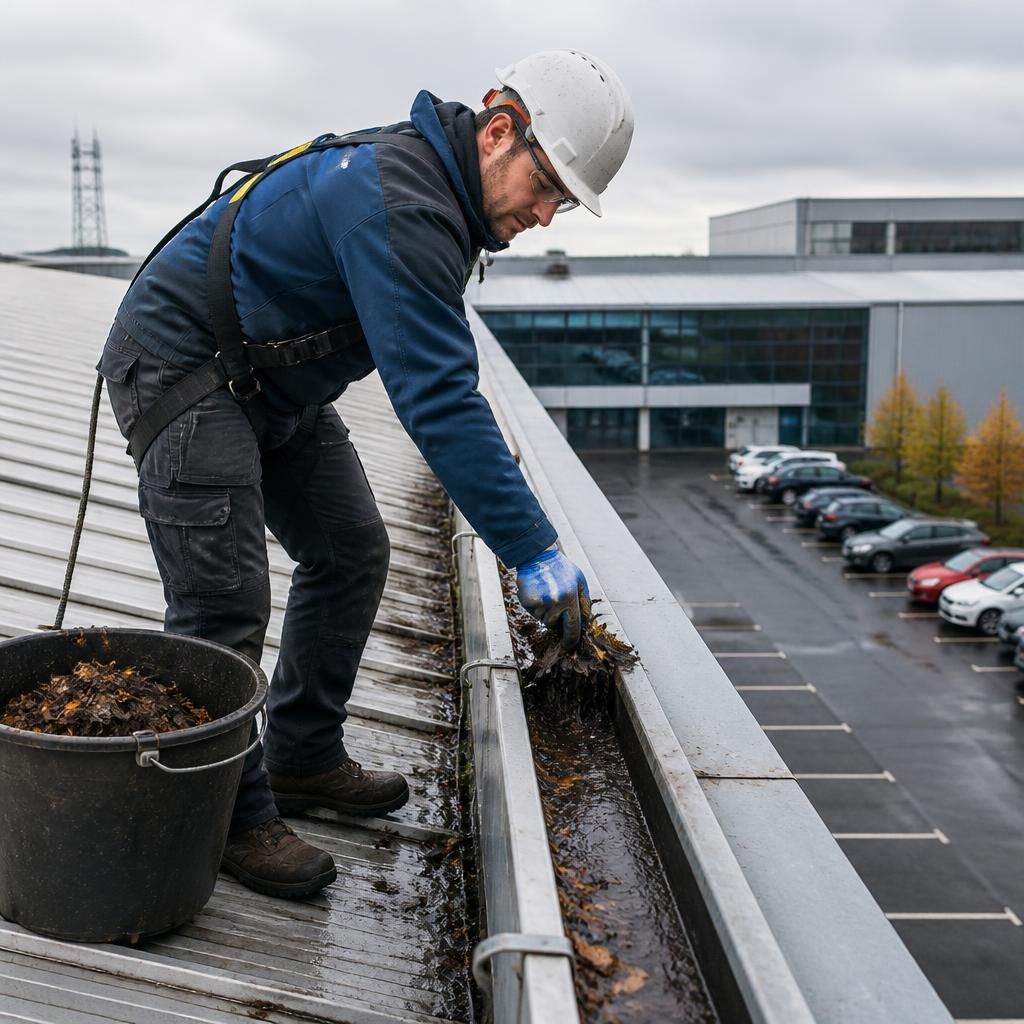
Commercial gutters should usually be inspected and cleaned at least annually, but properties exposed to trees, heavy debris or significant water-damage risks may require seasonal visits. The appropriate interval is determined by how quickly debris accumulates and how serious an overflow would be.
A practical schedule may include cleaning before the main leaf-fall period, a follow-up inspection after leaf fall and additional checks after severe weather or nearby construction work. Each visit should cover the complete drainage route, including outlets, downpipes, joints and discharge points. Recording the debris found and any defects identified makes it easier to adjust the cleaning frequency to the property’s actual needs.