
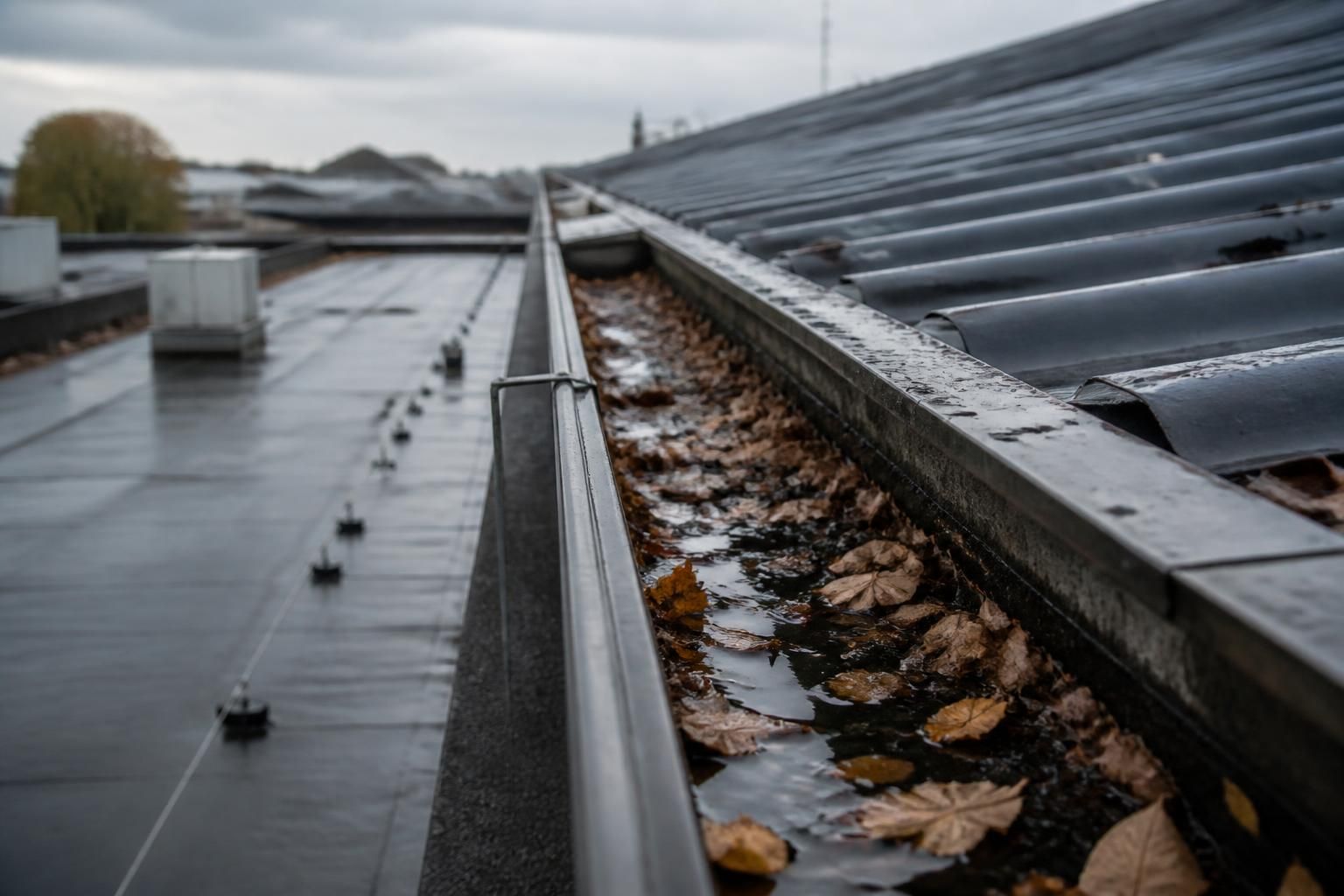
How does the weather impact the frequency of gutter cleaning?
UK weather can increase the need for gutter cleaning because heavy rain exposes blockages, autumn winds deposit leaves and debris, and frost can worsen existing damage. Properties surrounded by trees or exposed to severe weather may therefore need inspection and cleaning more frequently than those in sheltered areas.
UK weather directly affects how often gutters need cleaning because rainfall tests drainage capacity, wind carries leaves and debris into the system, and frost can worsen existing blockages or defects. A property exposed to heavy rain, strong winds or nearby trees may need inspection and cleaning more frequently than a sheltered building with little surrounding vegetation.
Rain does not clean gutters. It can wash small particles into downpipes, compact leaves and silt, and reveal problems that were not obvious during dry weather. When gutters are partially blocked, heavy rainfall may cause water to overflow at joints, corners and roof edges. Repeated overflow can stain façades, saturate masonry and contribute to damp around the building. Rain also makes it important to check that downpipes are discharging correctly rather than assuming the system is clear.
Autumn usually creates the greatest increase in cleaning demand. Falling leaves, seed pods, twigs and windblown debris can quickly cover gutter channels and outlet guards, particularly on buildings close to mature trees. Deciduous trees are not the only consideration: evergreen trees can shed needles throughout the year, while nearby construction, open land and busy roads may introduce dust and loose material into the drainage system.
Wind can alter the cleaning requirement even when there are no trees on the property. Strong gusts may carry leaves, roofing debris, moss and litter onto roofs and into gutters. Wind can also loosen existing material, dislodge poorly secured components or expose damaged seals. After particularly severe weather, a visual inspection is sensible, especially where the building has a large roof area, high elevations or exposed elevations.
Winter frost, ice and snow can make an existing problem more serious. Water trapped behind a blockage may freeze and expand, placing additional strain on gutter joints, brackets and downpipes. Snow and ice can also add weight to a system that is already holding wet leaves or silt. Cleaning before prolonged cold weather helps reduce this risk, although any inspection or work at height must take account of slippery surfaces, freezing conditions and safe access.
Spring weather can reveal damage that developed over winter. Thawing ice and heavier rainfall may expose cracked outlets, separated joints, loose brackets or blocked underground connections. Trees also begin producing pollen, blossom and other organic material, which can enter the drainage system. A spring inspection is useful for confirming that gutters are flowing properly and identifying repairs before the wetter months.
Summer should not automatically be treated as a low-risk period. Thunderstorms and intense rainfall can quickly overwhelm gutters that contain even a modest amount of debris. Dry conditions may also cause accumulated organic matter to harden, making it more difficult to remove and increasing the chance that water will divert over the front edge during the next storm.
The most suitable cleaning frequency depends on the interaction between weather exposure and the property itself. Factors to consider include:
- the number and type of trees near the roofline;
- the size, pitch and configuration of the roof;
- whether the building is exposed to prevailing winds or open ground;
- the age and condition of gutters, joints, brackets and downpipes;
- the presence of gutter guards, parapets or areas where debris can collect;
- previous blockages, overflow incidents or water-related damage; and
- the consequences of drainage failure for façades, entrances, stock, equipment and public areas.
For many commercial and industrial properties, planned inspections around the main leaf-fall period and again after winter provide a useful baseline. Buildings beneath trees, in exposed locations or with a history of blockages may require additional visits. Large premises may also benefit from a phased programme covering separate roof areas, access zones and downpipe outlets rather than relying on a single general check.
Weather-related triggers for an earlier inspection include overflowing gutters during rain, visible sagging, staining below the roofline, water collecting around downpipe outlets, loose sections after high winds, or debris remaining in the channels after surrounding trees have shed their leaves. Reports from occupants, site teams or facilities managers should be acted on promptly because a small blockage can become a wider maintenance issue during the next period of heavy rain.
Professional planning should therefore use both a seasonal schedule and condition-based checks. Reviewing previous cleaning records, noting where debris accumulates and inspecting the system after significant weather gives a more accurate frequency than applying the same interval to every property. This approach helps keep gutters flowing, reduces avoidable façade and drainage damage, and allows access equipment and cleaning methods to be planned safely for the building and current conditions.

Weather affects gutter cleaning frequency by changing the amount of debris entering the system and the strain placed on drainage components. Heavy rain can expose blockages, strong winds can deposit leaves and roofing debris, and frost can worsen damage where water is trapped behind an obstruction.
Properties near mature trees, open ground or exposed elevations may need inspection more often, particularly after autumn leaf fall and periods of severe weather. A further check after winter can identify cracked joints, loose brackets, blocked outlets or water staining before these defects lead to overflow and damage to façades or surrounding areas.
Book a Gutter Inspection After Severe Weather
Book a gutter inspection after severe weather to identify blockages, loose components, damaged joints and drainage problems before further rain causes overflow or façade damage. Contact Encanto Exterior Cleaning to arrange a safe, professional assessment for your property.