
How do you determine the appropriate frequency of gutter cleaning for different types of properties?
The appropriate gutter cleaning frequency depends on the property type, roof design, surrounding trees, local weather and the consequences of a blockage: homes commonly need seasonal checks, while commercial and industrial premises may require more frequent scheduled cleaning where roofs are larger, heavily vegetated or difficult to access. We assess the gutter system and surrounding conditions, then recommend a planned frequency that supports safe water drainage and helps prevent damage to façades, roofs and foundations.
The appropriate gutter cleaning frequency is determined by the property’s roof and gutter design, surrounding vegetation, local weather exposure, access requirements and the potential consequences of a blockage. A clear, relatively small domestic system may only need planned seasonal cleaning, while commercial and industrial premises often require a documented maintenance schedule because they have larger roof areas, more outlets, complex drainage routes and greater risks if water enters the building or disrupts operations.
We assess the site rather than applying a fixed interval. Our assessment considers the condition of the gutters, the amount and type of debris present, the roof layout, downpipe arrangement, nearby trees and the building’s use. We also consider whether the system has a history of overflowing, whether access is straightforward and whether a blockage could affect occupied areas, stored goods, electrical equipment, neighbouring properties or public spaces.
Domestic properties commonly benefit from checks during the main leaf-fall period and again before wetter winter conditions. Properties beneath mature trees, close to woodland or exposed to windblown debris may need additional visits. Gutter guards do not remove the need for inspection: moss, grit, leaves and smaller organic material can still collect around outlets and in valleys. Where a home has previously suffered overflowing gutters, damp staining or blocked downpipes, cleaning should be scheduled more frequently until the underlying cause is understood.
Flats and residential developments need a broader assessment because several roof sections, shared gutters and communal downpipes may serve multiple dwellings. Cleaning is normally coordinated across the development so that one blocked section does not continue to discharge water onto another property. Access restrictions, residents’ vehicles, communal paths and the need to protect occupants can also influence the timing and method of the work.
Commercial buildings often require planned maintenance rather than occasional reactive cleaning. Offices, retail units, schools, care facilities and managed property portfolios may have extensive roof perimeters, parapets, plant areas and concealed drainage points. A suitable schedule may involve routine inspections with cleaning at planned seasonal intervals, with additional visits where the site is heavily wooded or has a known debris problem. The frequency should also reflect the building’s occupancy and the disruption or liability that an overflow could cause.
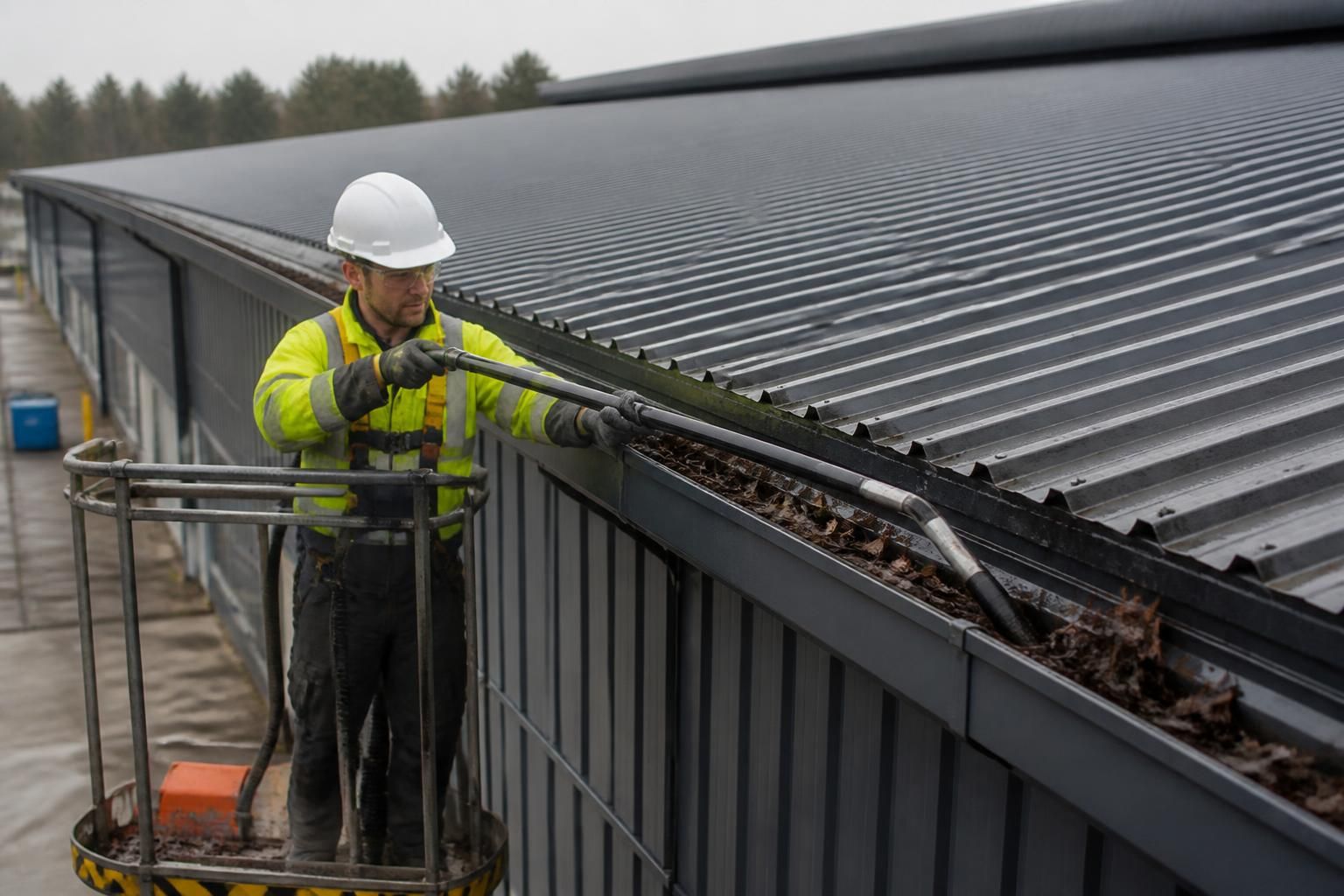
Industrial premises and warehouses can require more frequent monitoring because large roofs collect substantial quantities of leaf matter, silt, moss and airborne debris. Roof-mounted equipment, loading bays, production areas and high-level drainage can make blockages difficult to identify from ground level. Sites near construction activity, manufacturing processes or open storage may accumulate dust and fine material that combines with moisture and restricts outlets. Planned cleaning and inspection help reduce the risk of water reaching stock, machinery, electrical installations or operational areas.
Construction and recently completed properties should be checked after work that may leave behind mortar, dust, packaging material or other debris. New buildings can also have drainage issues that become apparent only during heavy rainfall. Clearing the system after construction activity and confirming that water flows correctly through each outlet should form part of the site handover or post-works maintenance plan.
The surrounding environment is one of the strongest influences on frequency. Overhanging branches, nearby woodland, nesting material, moss-covered roofs and prevailing winds can all increase the amount of debris entering a gutter. Buildings beside busy roads may collect additional dust and pollution residue, while coastal or exposed sites may experience windblown material and faster deterioration of certain components. These conditions can change, so the recommended schedule should be reviewed when landscaping, building works or neighbouring development alters the site.
Roof and gutter design also affects how quickly problems develop. Box gutters, parapet gutters, valley gutters and concealed channels usually need closer attention than simple, open eaves gutters because debris may be less visible and water can remain trapped. Long runs, shallow falls, restricted outlets and complicated downpipe systems increase the chance that a local blockage will affect a larger area. Gutter joints, brackets, seals and outlet connections should be checked during cleaning because a frequency plan cannot compensate for damaged or poorly draining components.
Weather changes the timing but should not be the only trigger. Autumn leaf fall is a common reason for increased cleaning demand, while prolonged wet weather exposes weak points by placing greater flow through the system. Strong winds can deposit debris shortly after a visit, and dry periods may conceal a developing blockage until the next heavy rainfall. It is therefore more reliable to combine planned cleaning with inspections after significant weather or site changes, rather than waiting for an overflow.
For commercial and industrial clients, we can structure the work around the property’s operational requirements. This may include scheduled inspections, planned cleaning, photographic reporting, identification of defects and recommendations for remedial work. Visits can be arranged to reduce disruption, coordinate with other contractors or meet the requirements of a wider planned maintenance programme. Where a site has several buildings, the schedule can prioritise areas with the greatest exposure or the highest consequence of failure.
The recommended frequency should be reviewed after each service. A system that contains little debris across successive visits may be suitable for a less intensive schedule, provided its design and surroundings remain unchanged. Conversely, repeated deposits, standing water, overflow marks, vegetation growth or recurring downpipe blockages indicate that the interval should be shortened or that repairs and design improvements may be necessary. Gutter cleaning removes the immediate obstruction; it does not correct inadequate falls, damaged outlets or defective drainage connections.
In practice, the most suitable plan is a risk-based maintenance schedule: seasonal or periodic attention for lower-risk properties, and more regular inspection and cleaning for large, complex, heavily vegetated or operationally sensitive sites. This approach keeps the frequency proportionate to actual site conditions while helping protect roofs, façades, internal areas, foundations and the people using the property.

Gutter cleaning frequency should be based on site risk rather than a fixed interval. Domestic properties with simple rooflines may need seasonal cleaning, while commercial and industrial buildings often need more regular inspections because larger roofs, concealed gutters, complex drainage and operational areas increase the consequences of a blockage.
When reviewing a property, we consider:
- the roof and gutter design, including long runs, valleys, box gutters and restricted outlets;
- nearby trees, woodland, construction activity and other sources of windblown debris;
- previous overflow, silt or downpipe blockage problems;
- the potential impact on façades, stock, machinery, electrical equipment, occupied areas or public access; and
- access requirements and the safest way to complete inspections and cleaning.
The recommended schedule can then be adjusted after each visit. Repeated debris, standing water or overflow marks may require more frequent cleaning or repairs to defective falls, joints and outlets.