
What specific cleaning methods and equipment will your service use for canopy and tile detailing?
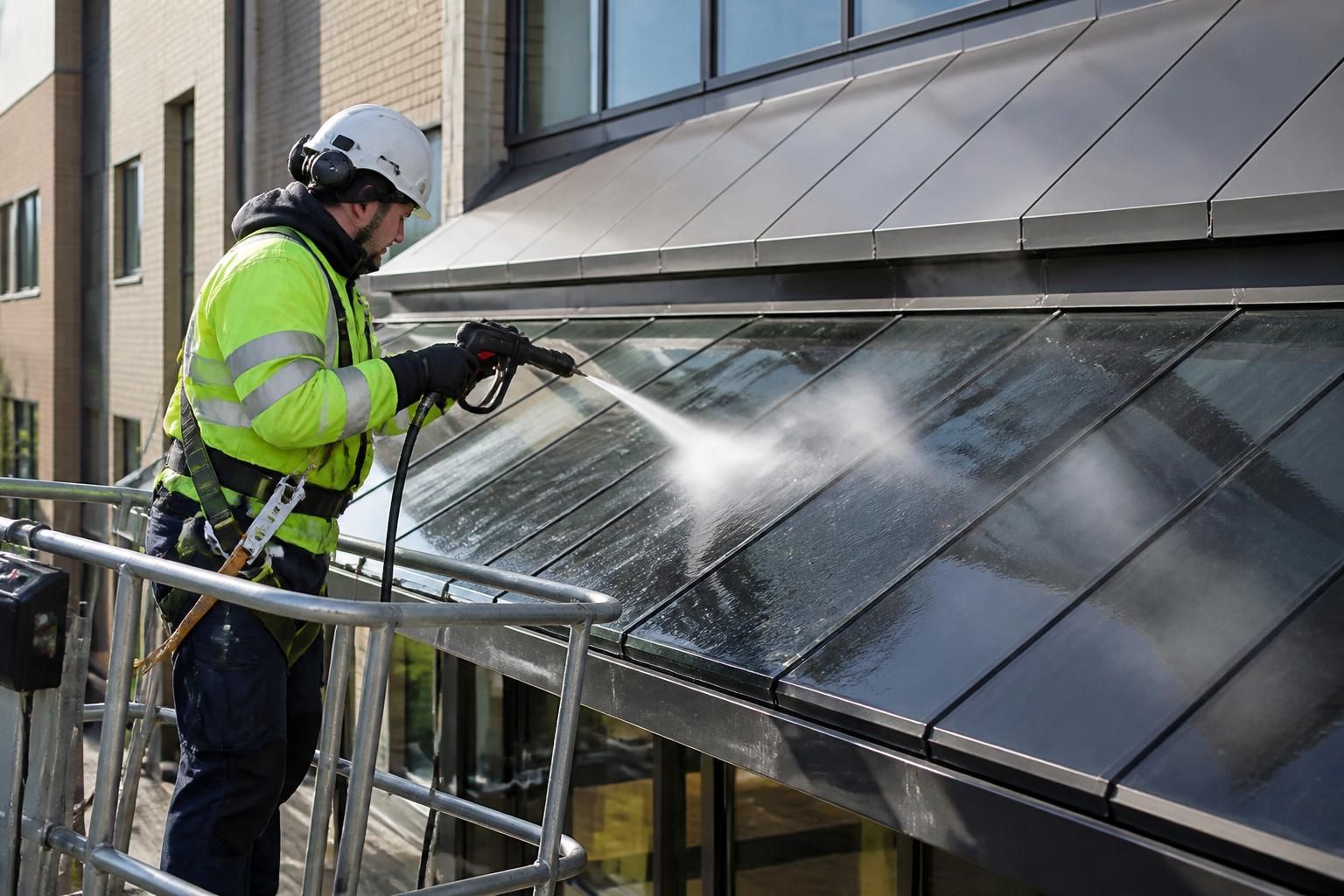
We use a surface assessment to select the safest effective method, typically low-pressure washing, steam cleaning or controlled pressure washing with suitable detergents for the canopy or tile material. Our equipment may include steam cleaners, adjustable-pressure washers, soft-bristle brushes, specialist applicators, water-recovery systems and access equipment where required, helping remove dirt, algae, staining and residue without damaging the surface.
Canopy and tile detailing uses a surface-led combination of low-pressure washing, controlled pressure washing, steam cleaning, manual agitation and appropriate detergents. The method and equipment are selected after assessing the material, condition, staining, drainage, surrounding features and safe access requirements, so that contamination is removed without loosening tiles, forcing water beneath joints or damaging canopy finishes.
Initial assessment and preparation
Before cleaning starts, we inspect the canopy or tiled area to identify its construction and condition. This includes checking for cracked or loose tiles, deteriorated pointing, open joints, failed sealants, flaking coatings, corrosion, fragile glazing and areas where water could enter the building. We also identify the type of soiling, such as general grime, algae, moss, bird fouling, traffic film, oil residue, atmospheric staining or old surface treatments.
The assessment determines whether the surface can tolerate water pressure, heat, detergents or mechanical agitation. Nearby walls, signs, lighting, entrances, vehicles, drainage points and pedestrian routes are protected or managed before work begins. Loose debris is removed first, and drainage is checked so that wash water can be controlled and directed appropriately.
Methods used for canopy detailing
- Low-pressure washing: Used for routine dirt and light biological growth on suitable canopy surfaces. Lower pressure reduces the risk of lifting coatings, opening seams or forcing water into vulnerable edges.
- Steam cleaning: Heated, low-moisture steam helps break down organic matter, grease and ingrained residue while using less water than conventional pressure washing. It is particularly useful where controlled cleaning is needed around joints, fittings and sensitive finishes.
- Controlled pressure washing: Adjustable-pressure equipment may be used on robust canopy materials and heavily soiled areas. The pressure, spray pattern and working distance are controlled rather than applying maximum force across the whole surface.
- Detergent treatment: A compatible cleaning solution may be applied to soften grease, traffic film, biological growth or other deposits before rinsing. Products are selected for the canopy material and used in a controlled manner to avoid staining, chemical damage or unnecessary environmental impact.
- Manual detailing: Soft-bristle brushes, non-abrasive pads and specialist applicators are used around seams, brackets, trims, framework, drainage channels and other areas that mechanical cleaning cannot treat precisely.
Transparent, coated or painted canopies receive particular care. We avoid abrasive methods that could scratch glazing or dull a finish, and we use controlled rinsing to minimise streaking and residue. Any method is tested in a discreet area where the material or coating is uncertain.
Methods used for tile detailing
Roof, wall and hardstanding tiles are cleaned according to their material, profile and condition. Low-pressure washing and steam cleaning can remove surface dirt, algae and organic deposits while reducing the likelihood of tile displacement or damage to aged surfaces. Where tiles are robust and well secured, controlled pressure may be used to deal with more established contamination.
Soft-bristle brushes and targeted agitation help clean textured, profiled or uneven tiles without relying solely on pressure. Moss and heavier growth may need to be loosened manually before the surface is washed. Detergent treatments can be used where they are compatible with the tile and surrounding joints, followed by suitable rinsing and collection of loosened debris.
We take care around porous or weathered tiles because excessive water, pressure or aggressive chemicals can worsen surface degradation, affect colour or drive moisture into the substrate. Cleaning is not used to disguise defects: cracked tiles, failing joints and damaged membranes are recorded and reported where identified.
Equipment used for the work
- Steam-cleaning equipment for heated, controlled treatment of grime, algae, grease and residue.
- Adjustable-pressure washing systems with suitable nozzles and spray patterns for different surfaces.
- Low-pressure application equipment for detergents and biological treatments.
- Soft-bristle brushes, extension poles, scrapers and non-abrasive pads for detailed manual work.
- Specialist applicators for seams, edges, framework, tile profiles and restricted areas.
- Wet vacuums, water-recovery equipment, drain protection and collection systems where runoff needs to be contained.
- Access equipment, including platforms, towers or other suitable systems, when the canopy or tiled area cannot be reached safely from ground level.
- Protective sheeting, barriers, warning signs and surface-protection materials for adjacent building features and public areas.
Equipment is set up to provide control rather than simply maximum cleaning power. Nozzles, temperature, pressure, water volume, chemical dwell time and working distance are adjusted during the job when the surface response requires it. This is important where one canopy or tiled elevation contains several materials or has areas with different levels of wear.
Rinsing, recovery and final checks
After treatment, surfaces are rinsed using the least aggressive approach that will remove loosened contamination and cleaning residue. Runoff is managed in line with the site requirements, particularly where detergents, oil, bird fouling or heavy biological material are present. We then inspect the finished area for remaining deposits, streaking, blocked channels, disturbed tiles and signs of coating or joint damage.
Where appropriate, any further treatment or maintenance recommendation is discussed with you before additional work is undertaken. The result is a cleaning process based on the actual canopy and tile materials, rather than a single pressure or chemical treatment applied indiscriminately across the site.
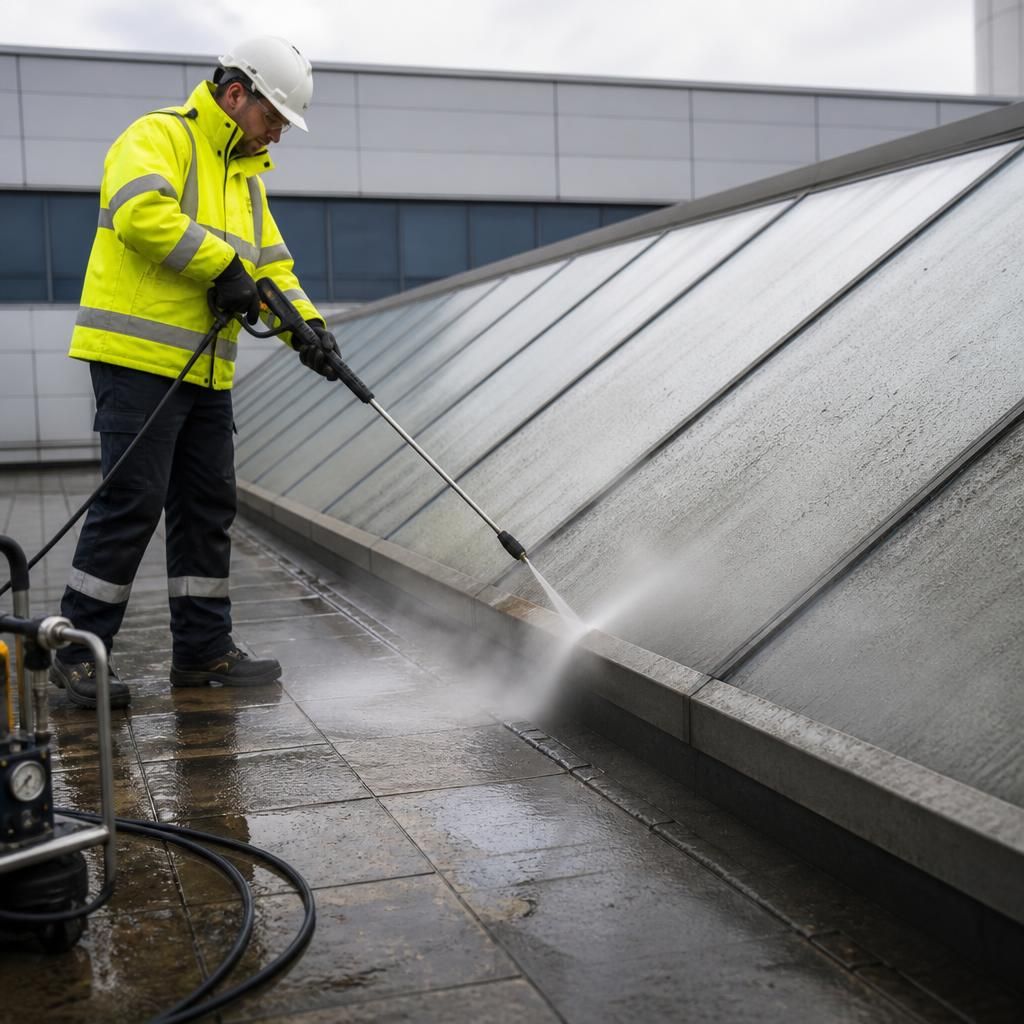
Canopy and tile detailing uses a controlled combination of steam cleaning, low-pressure washing, manual brushing and compatible detergents, selected according to the material, condition and type of contamination. This surface-led approach helps remove grime, algae, grease and residue without relying on excessive pressure that could damage coatings, joints, glazing or weathered tiles.
Equipment is adjusted for each area, including heated steam cleaners, variable-pressure washers, soft-bristle brushes, specialist applicators and water-recovery systems. We also use suitable access equipment, protective sheeting and barriers where required. Before treatment, a discreet test area confirms the safest working pressure, temperature and cleaning solution, particularly on painted, coated, porous or fragile surfaces.