
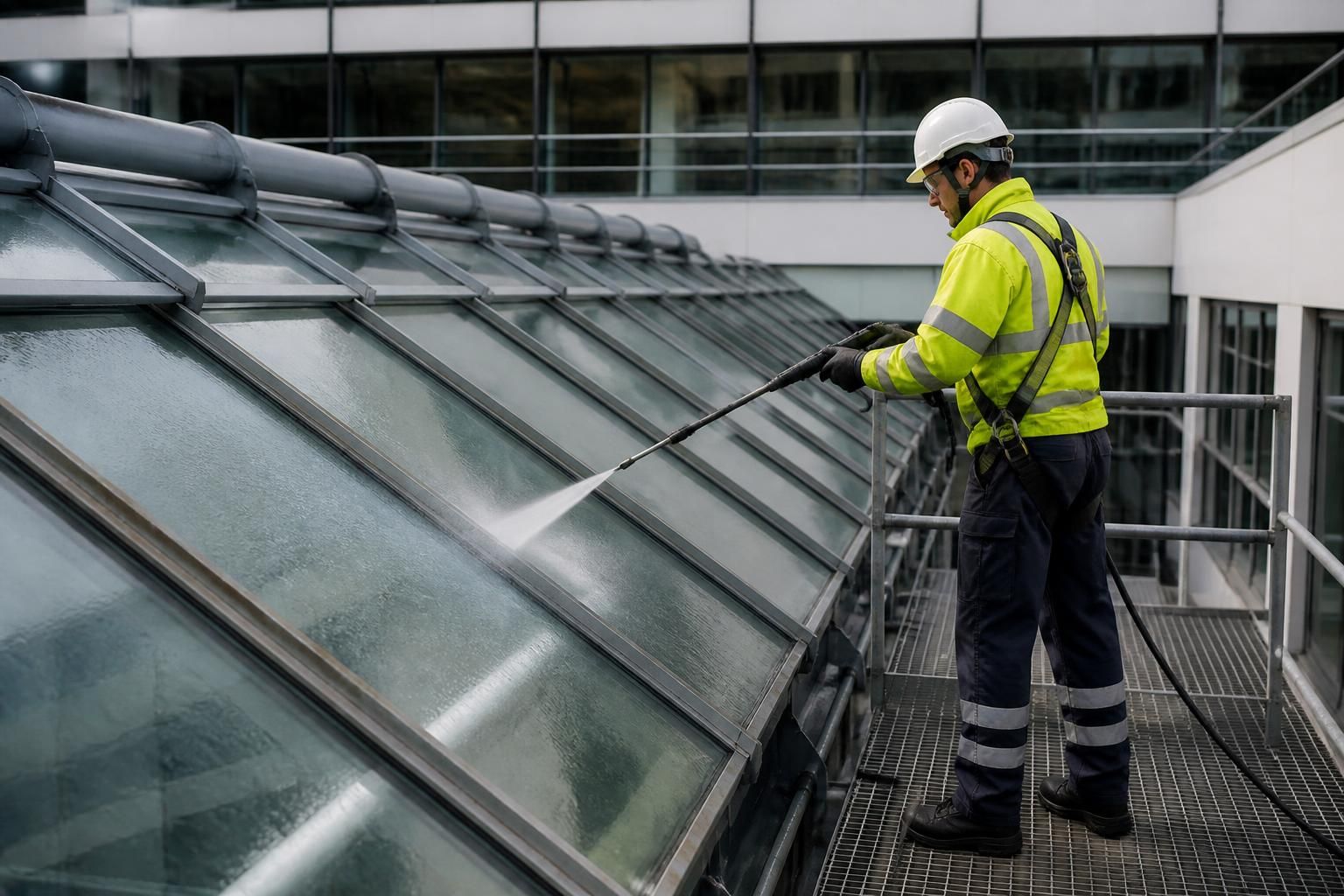
What safety measures are in place to protect both the building surfaces and the cleaning crew during the detailing process?
We protect building surfaces through a site-specific risk assessment, material checks, test patches and carefully controlled pressure, steam temperature and cleaning solutions. The cleaning crew and public are protected with suitable PPE, safe access equipment, exclusion zones, equipment inspections, controlled runoff and working procedures suited to the canopy, tiles and surrounding premises.
Safety is managed through a site-specific assessment that protects the canopy, tiles, surrounding building and cleaning team before detailing begins. We inspect the materials and their condition, identify access and environmental risks, select an appropriate cleaning method, and control pressure, steam temperature, water flow and cleaning products throughout the work.
Protecting building surfaces
- Material identification: We establish whether the surfaces are made from materials such as glass, polycarbonate, coated metal, fabric, concrete, clay tile, slate or sealed masonry. Different materials can react differently to pressure, heat, abrasion and chemical products.
- Condition checks: The inspection looks for cracked or loose tiles, failed sealants, corrosion, delamination, brittle coatings, damaged joints and existing leaks. We do not treat an unstable surface as though it were sound; defects are recorded and reported before cleaning proceeds.
- Test patches: A discreet area can be tested to confirm that the chosen pressure, steam setting, dwell time and cleaning solution remove contamination without marking, lifting coatings or affecting colour. The wider clean only proceeds when the result is suitable.
- Controlled equipment settings: Operators keep the lance at a safe distance and adjust pressure and flow to the material. Steam cleaning is controlled to avoid unnecessary heat exposure, while pressure washing is kept within the tolerance of the surface rather than using maximum power by default.
- Suitable cleaning products: Products are selected for the type of dirt and the surface being treated. They are correctly diluted, applied for the required dwell time and thoroughly rinsed where appropriate. Strong or abrasive products are not used simply to accelerate the work.
- Protection of vulnerable details: Drains, vents, seals, electrical fittings, joints, roof edges, signage and adjacent finishes are protected or treated separately where water, heat or cleaning solution could cause damage.
We also consider the likely direction of water and loosened debris. Runoff is controlled so that dirty water does not stain façades, enter sensitive areas or collect beneath roofing and canopy components. Where required, drainage points are protected and the area is rinsed after cleaning.
Protecting the cleaning crew
- Risk assessment and method statement: The work is planned around the height, layout, materials, access restrictions, public interface, weather exposure, water supply, electricity and nearby traffic. The team is briefed on the agreed method and any site-specific hazards before starting.
- Safe access: Access equipment is chosen for the building and task. This may include inspected ladders for suitable low-risk work, mobile access equipment, towers, fixed platforms or other specialist systems. Equipment is positioned on stable ground, used within its limits and secured as required.
- Personal protective equipment: PPE is selected according to the hazards present and can include protective footwear, gloves, eye and face protection, suitable workwear, hearing protection, head protection and respiratory protection where the assessment requires it. PPE complements, rather than replaces, safe working methods.
- Exclusion zones: Barriers, signs and controlled working areas help keep pedestrians, vehicles and other contractors away from falling debris, spray, hoses and access equipment. Work may be coordinated with the client to manage entrances, deliveries and busy periods.
- Equipment inspections: Hoses, lances, trigger mechanisms, steam equipment, pumps, cables, access systems and connection points are checked before use. Damaged or unsuitable equipment is removed from service rather than adapted on site.
- Chemical controls: Cleaning products are stored, labelled and handled in line with their safety information. The team uses the appropriate COSHH controls, avoids incompatible mixtures and maintains ventilation where products are used in enclosed or partially enclosed areas.
- Slip, trip and hose control: Hoses, cables and wet surfaces are managed to reduce trip risks. Water is directed away from walkways where possible, and affected areas are signed or isolated until they are safe for normal use.
Operators also monitor wind, rain, temperature, visibility and surface conditions. Work is paused or rearranged if weather makes access unsafe, causes excessive overspray, prevents effective rinsing or increases the risk of damaging the surface. Electrical points and equipment are kept away from water, and appropriate isolation arrangements are agreed where cleaning takes place near electrical installations.
Controls during and after the work
The team maintains communication with the site contact throughout the operation. Any change in surface condition, access, weather or surrounding activity is reassessed before the method continues. Emergency arrangements cover incidents such as equipment failure, chemical contact, a fall risk, uncontrolled runoff or an injury, with first-aid provisions and site reporting procedures followed as required.
After detailing, we inspect the cleaned area for missed contamination, surface changes, standing water, displaced debris and any issues affecting adjacent finishes. Protective coverings and barriers are removed only when the area is safe, and the site is left clear of equipment and cleaning residues. This combination of material checks, controlled cleaning settings, safe access, PPE, exclusion zones and runoff management protects both the building surfaces and the people working around them.
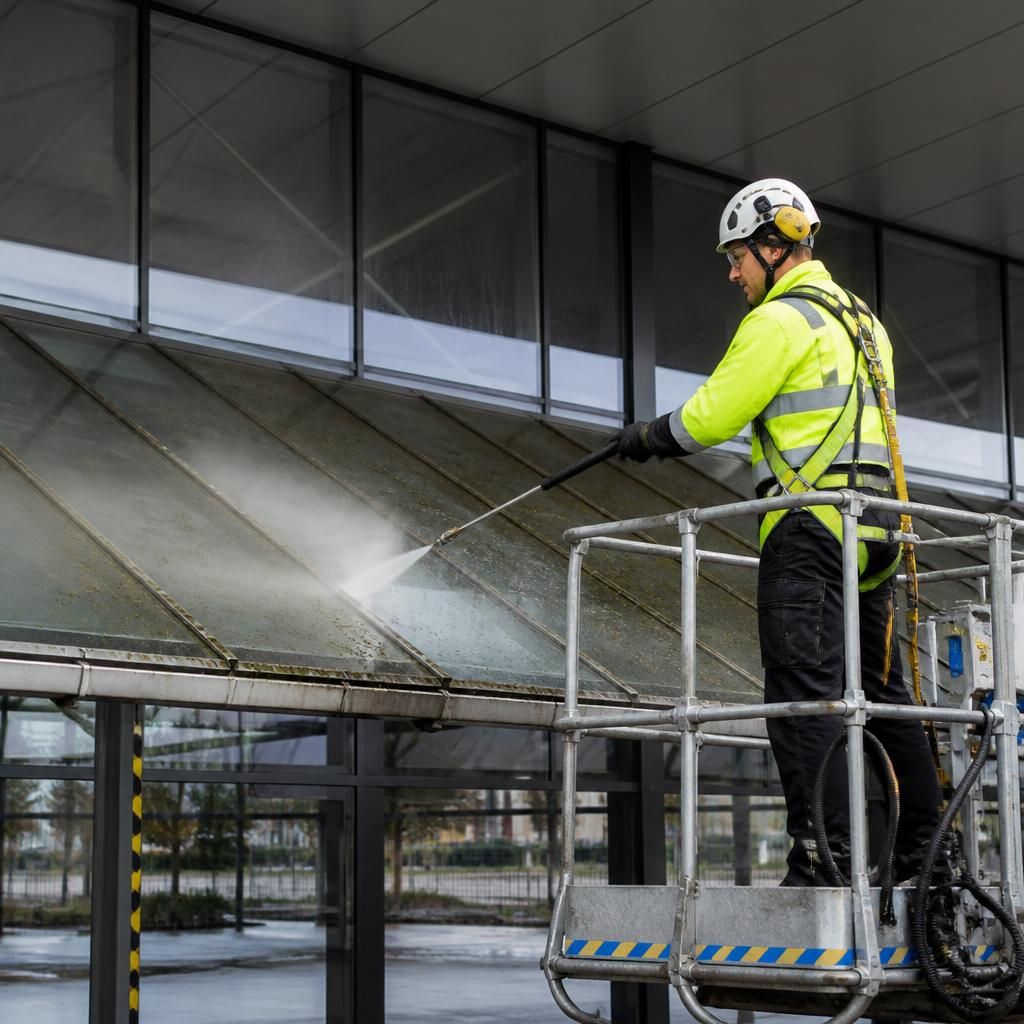
Protecting the canopy and tiles starts with identifying the surface material and testing the proposed cleaning method before the full detail begins. We check for cracked tiles, loose sections, failed sealants, corrosion, brittle coatings and existing leaks, then carry out a discreet test patch where needed. This confirms that the selected pressure, steam temperature, water flow and cleaning solution remove the contamination without marking, lifting or discolouring the surface.
During the work, operators maintain a suitable lance distance, use controlled settings and protect vulnerable details such as seals, drains, electrical fittings, joints and roof edges. Access equipment, hoses and cleaning equipment are inspected before use, while PPE, exclusion zones and runoff controls help protect the crew, occupants, visitors and surrounding finishes. If weather, access conditions or the surface changes create an unacceptable risk, the method is reviewed or the work is paused.