
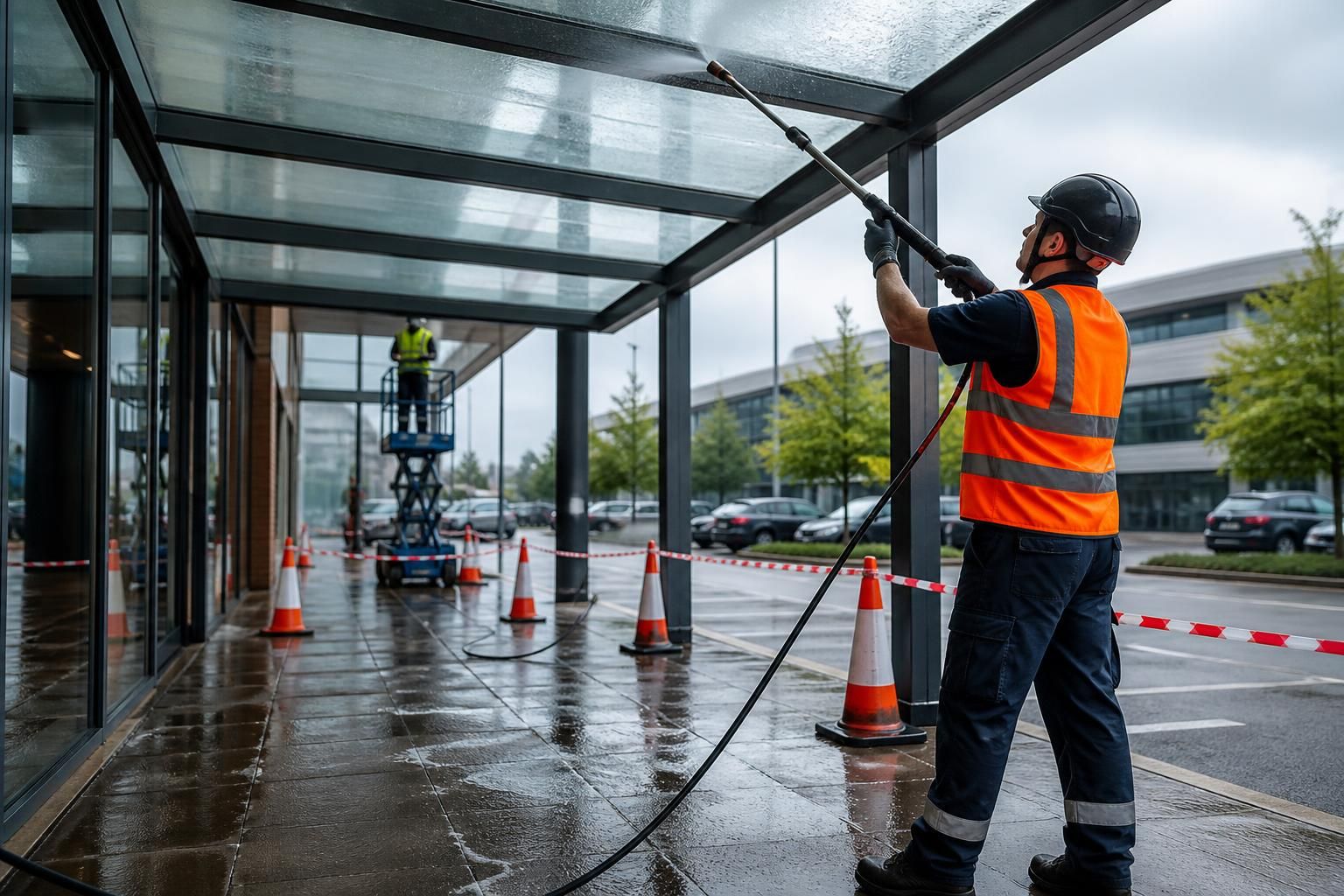
What safety measures are in place during canopy and tile detailing operations?
During canopy and tile detailing operations, we use trained cleaning teams, suitable access equipment, protective equipment and controlled work areas to protect people, vehicles and the building. We assess the surfaces and site beforehand, manage water and cleaning solutions responsibly, and follow safe working procedures throughout the work.
Safety during canopy and tile detailing is managed through a site-specific risk assessment, suitable access equipment, trained operatives, controlled work areas and methods matched to the building materials. Before work starts, we review the canopy or tiled surface, surrounding access routes, nearby occupants and vehicles, drainage arrangements, weather conditions and any hazards that could affect people, property or the cleaning process.
Site assessment and method planning
We identify risks such as fragile or deteriorated tiles, unstable canopy components, low-level obstructions, overhead services, electrical equipment, traffic movements and areas where falling debris or water could create a hazard. The planned work is recorded in appropriate risk assessments and method statements, with control measures explained to the cleaning team before operations begin. Where conditions change, the team reassesses the work rather than continuing with an unsuitable method.
Safe access and work at height
Canopies and tiled areas are accessed using equipment appropriate to the height, reach, ground conditions and structure. This may include mobile access equipment, towers, ladders for suitable short-duration tasks or other systems selected following the assessment. Access equipment is positioned on stable ground, kept clear of unauthorised use and operated by personnel who are competent for the equipment provided. Operatives do not stand on unsupported canopy panels, fragile roof areas or tiles that have not been assessed as suitable for loading.
Where work at height is necessary, the team plans how operatives will gain access, carry out the cleaning and return safely, including arrangements for preventing falls and for dealing with an emergency. Equipment, hoses and tools are managed to reduce trip, snagging and falling-object risks.
Personal protective equipment
Operatives use personal protective equipment selected for the task and the cleaning products involved. This can include safety footwear with suitable grip, gloves, eye protection, protective clothing and head protection where there is a risk from splashes, debris or overhead work. Additional protection is used when the risk assessment identifies hazards from particular chemicals, airborne particles or pressure-cleaning activity. PPE supports the wider controls; it is not treated as a substitute for safe access, isolation or site management.
Controlled work areas
We establish an appropriate exclusion or protection zone around the cleaning area. Barriers, cones, warning signs and temporary restrictions can be used to keep pedestrians, tenants, visitors and vehicles away from falling debris, wet surfaces, hoses and access equipment. Vehicle movements and deliveries may need to be coordinated with the site contact, particularly around entrances, car parks and service yards. The team keeps access routes as clear as practicable and communicates any temporary changes to the building manager.
Where work takes place above entrances or occupied areas, we consider whether those areas should be temporarily closed, diverted or protected. Cleaning is not started until the necessary controls are in place.
Protecting canopies, tiles and adjoining surfaces
Safety controls also prevent avoidable damage to the building. We inspect for cracked, loose, porous or previously repaired tiles, weakened joints, damaged sealants and vulnerable canopy finishes before selecting the cleaning method. Pressure, temperature, nozzle selection and cleaning products are adjusted to the condition and material rather than applying one setting to every surface.
Test cleaning can be carried out in a discreet area to confirm that the chosen process removes soiling without stripping coatings, disturbing joints, marking the finish or forcing water into the structure. Operatives keep water and equipment away from vulnerable electrical fittings, open joints and areas where moisture could enter the building. Loose items, signage, lighting and nearby finishes are protected or isolated where necessary.
Water, chemicals and electrical precautions
Cleaning solutions are selected and handled in accordance with the product information and the site assessment. Operatives use the required controls for storage, dilution, application and rinsing, and avoid mixing products that could create a hazardous reaction. COSHH information is considered where substances present a risk to health, with suitable PPE, ventilation and handling arrangements put in place.
Water is controlled to reduce slip hazards, prevent uncontrolled discharge and protect entrances, drains, landscaping and neighbouring areas. Run-off is managed in line with the site requirements and applicable environmental controls. Electrical equipment, lighting, signage and other services are identified before cleaning, kept protected from water where appropriate, and isolated by the responsible site representative when necessary. Cleaning equipment is checked before use and positioned to reduce damage to cables, hoses and connections.
Weather and changing conditions
Wind, rain, frost, poor visibility and extreme temperatures can make access, surface treatment or water management unsafe. We monitor conditions during the work and may pause or rearrange operations if the surface becomes too slippery, access equipment cannot be used safely, cleaning products will not perform as intended or water could create an additional hazard. This is particularly important for exposed canopies and tiled areas at height.
Supervision, communication and completion checks
The team maintains communication with the site contact and reports defects, restricted areas or unexpected conditions identified during the work. Operatives follow the agreed sequence, keep equipment under control and do not change the cleaning method without considering the resulting risks. On completion, the area is checked for remaining hazards such as standing water, loose debris, wet paving, unsecured equipment or restricted access points. Barriers are removed only when the area is safe for normal use, and relevant observations are passed to the customer.
These measures are applied alongside the agreed site requirements, so any known hazards, access restrictions or tenant and public protection arrangements should be shared with us before attendance. Providing that information helps us prepare the correct equipment and controls for the specific canopy, tiled surface and surrounding premises.
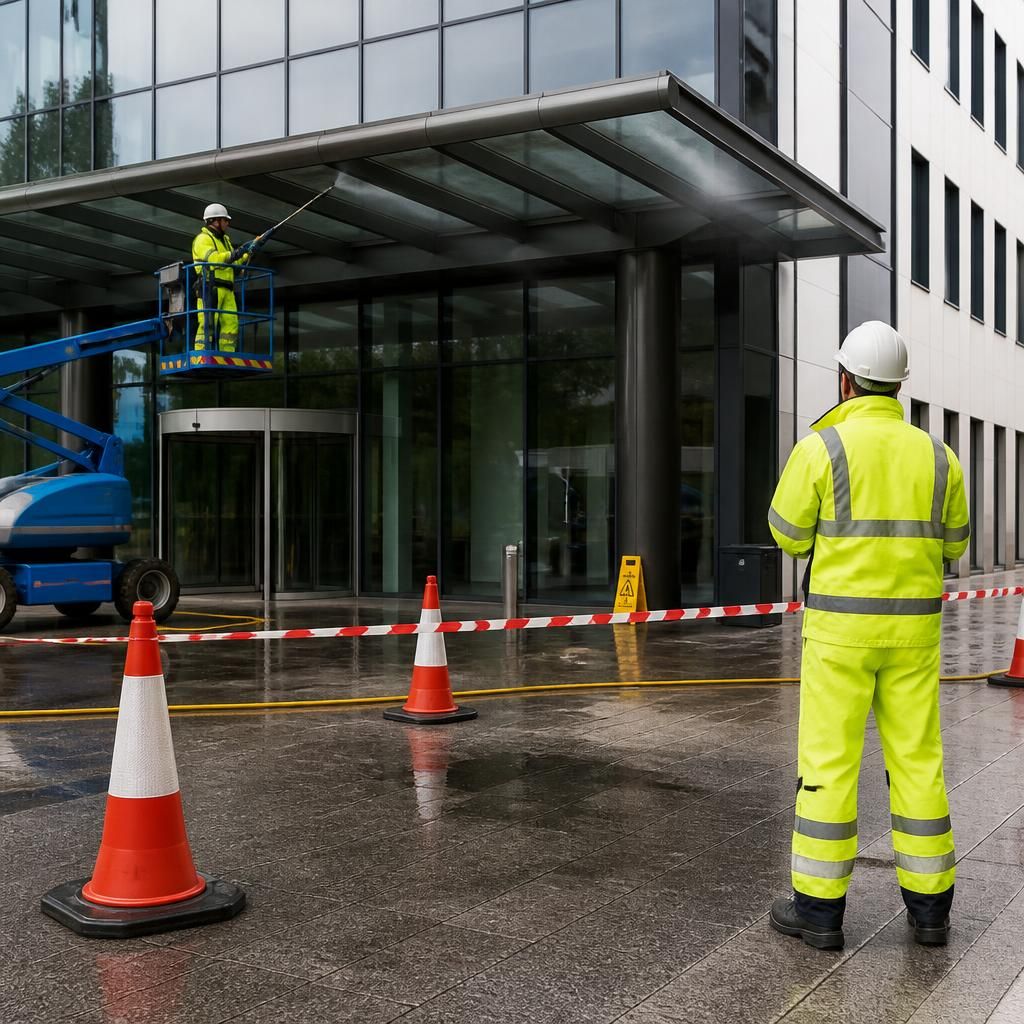
Controlled work areas are a key safety measure during canopy and tile detailing. Barriers, cones and warning signs keep pedestrians, vehicles and building occupants away from wet surfaces, hoses, falling debris and access equipment while work is underway.
Where cleaning takes place above an entrance, walkway or occupied area, we agree suitable closures, diversions or protective measures with the site contact before starting. The area remains controlled until water, debris and equipment have been removed and the surface is safe for normal use.