
What methods are used in canopy and tile detailing to ensure thorough cleaning?
Canopy and tile detailing combines a surface assessment, suitable pre-treatment, controlled pressure washing or steam cleaning, and manual work on stubborn deposits and hard-to-reach areas. The process is completed with thorough rinsing, water recovery where required, and a final inspection to confirm that grime, algae, grease and other contaminants have been removed without damaging the material.
Thorough canopy and tile detailing uses a combination of material assessment, controlled pre-treatment, appropriate pressure washing or steam cleaning, manual agitation and a final inspection. No single method is suitable for every surface: the cleaning approach is adjusted according to the material, construction, level of soiling and condition of the area.
Initial inspection and preparation
The process begins with an inspection of the canopy, tiles, fixings, joints, drainage points and surrounding surfaces. This identifies the type of material present, such as glass, polycarbonate, coated metal, fabric, concrete, clay or ceramic tile, together with any existing damage or weak points. The team also checks for loose tiles, failed sealant, cracked panels, blocked gutters and areas where water could enter the building.
Before cleaning starts, loose dirt, leaves and other debris are removed. Nearby doors, windows, vents, signage, lighting and sensitive equipment are protected where necessary. Drainage and runoff routes are considered so that loosened contamination and cleaning solution can be managed without spreading it across adjacent surfaces.
Pre-treatment of contamination
Suitable cleaning solutions may be applied before mechanical cleaning. These help loosen organic growth, atmospheric grime, grease, bird fouling, traffic film and other deposits so that less pressure or agitation is needed. The solution and dwell time are selected for the surface being treated; a product suitable for robust masonry may be inappropriate for a coated canopy, delicate sealant or an anodised finish.
Pre-treatment is applied in a controlled manner and is not allowed to dry on the surface. It is followed by thorough rinsing or extraction, depending on the material and site requirements. Where sensitive landscaping, drainage systems or occupied premises are nearby, additional controls may be needed to prevent unintended contact with the solution.
Controlled pressure washing
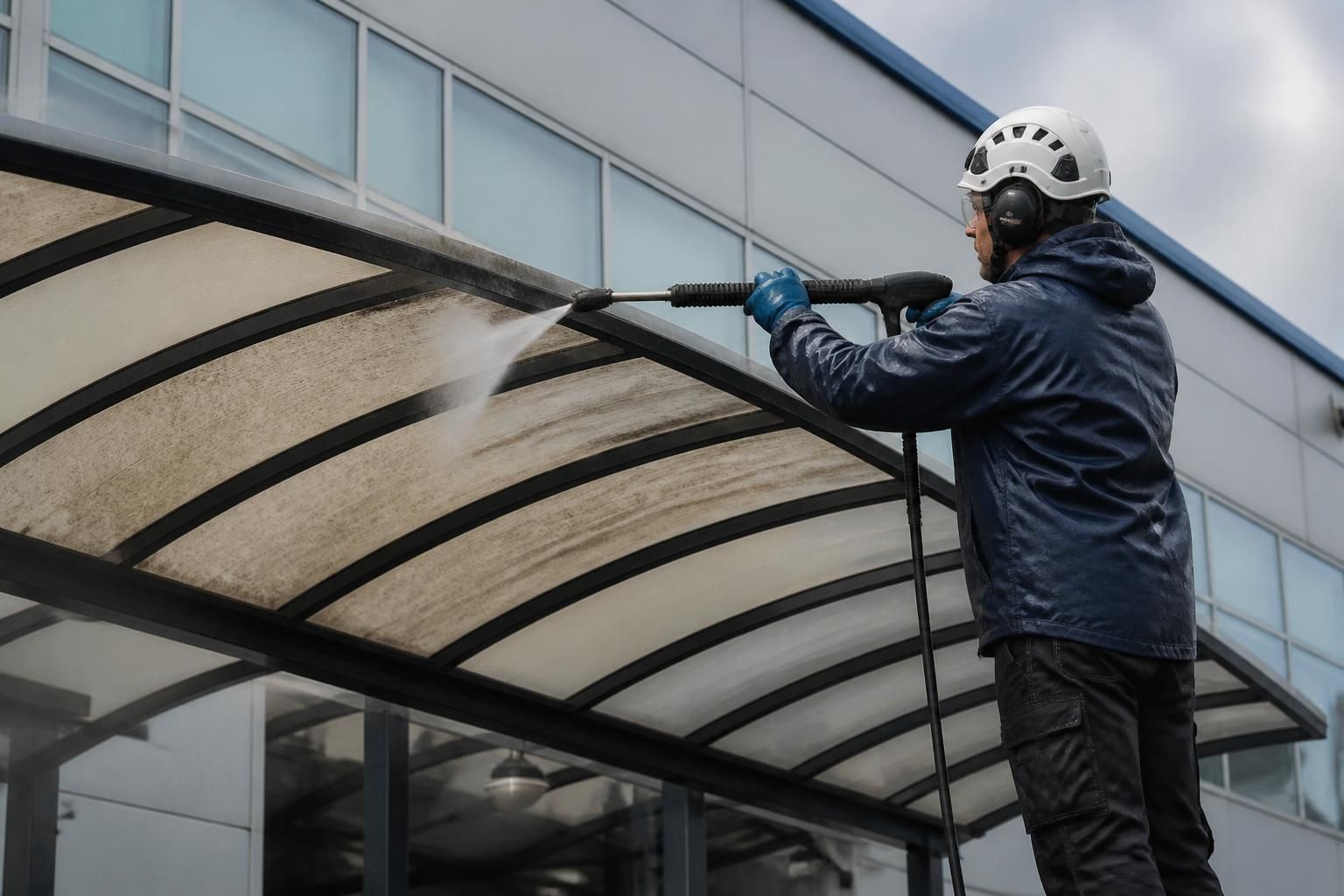
Pressure washing is effective on robust tiles, masonry, concrete surfaces and some hard-wearing canopy components. The operator controls the pressure, nozzle type, spray pattern and working distance rather than using the highest available setting. Cleaning is normally carried out in manageable sections, working methodically to prevent missed areas and to avoid driving dirt into joints or seals.
Care is taken around tile edges, pointing, flashing, sealant, fixings and canopy joints. Excessive pressure can dislodge tiles, strip protective coatings, force water behind panels or damage brittle surfaces. For that reason, the equipment is adjusted to the condition of the surface, and a small inconspicuous area can be tested before the main clean proceeds.
Steam cleaning
Steam cleaning uses heated water at a controlled flow to soften and remove ingrained dirt, algae, grease and other deposits. It can be useful where reduced water use, precise application or low chemical use is important. The heat helps break down contamination while the controlled delivery allows the operator to work around detailed profiles, joints and fittings.
Steam is not automatically suitable for every canopy or tile. The temperature and application method must take account of plastics, membranes, coatings, sealants and temperature-sensitive finishes. The operator also avoids concentrating heat on one point for too long, which could affect a surface or its components.
Manual detailing and specialist tools
Brushes, non-abrasive pads, scrapers and other hand tools are used for edges, corners, framework, joints, textured tiles and areas that cannot be cleaned effectively with a lance. Manual work is particularly important beneath canopy returns, around fixings, along tile overlaps and in narrow drainage channels where grime can remain after the main wash.
Tools are chosen to lift deposits without scratching glazing, scuffing coated panels or removing the finish from tiles. Stubborn stains may require more than one treatment, but aggressive abrasion is avoided where it could permanently mark the surface. Bird fouling and other localised deposits are handled with appropriate hygiene controls and careful removal.
Methods for different tile surfaces
- Clay and concrete tiles: Low-to-controlled pressure, suitable pre-treatment and careful rinsing can remove moss, algae and atmospheric deposits while reducing the risk of surface erosion or displaced tiles.
- Ceramic and glazed tiles: Cleaning focuses on removing film and deposits from the tile face and grout without damaging the glaze, joints or surrounding sealant.
- Textured or non-slip tiles: Agitation and controlled rinsing help reach the recesses where grime accumulates and can be more effective than a single pass over the surface.
- Roof or canopy tiles with fragile areas: Loose, cracked or degraded sections are treated cautiously, and cleaning does not replace repairs that are needed to make the surface sound.
Methods for different canopy materials
- Glass: Loose particles are removed first to reduce scratching, followed by a suitable cleaning solution, controlled washing and a detailed rinse. Edges, frames and seals receive separate attention.
- Polycarbonate and plastics: Non-abrasive methods and suitable detergents are used to reduce the risk of hazing, scratching or chemical damage.
- Coated or bare metal: The method is selected to avoid stripping the finish or encouraging corrosion. Particular care is taken around fasteners, joints and areas where the coating has already failed.
- Fabric or tensioned membranes: Cleaning is kept controlled and compatible with the fabric, stitching, tensioning system and any protective coating. Excessive pressure and unsuitable chemicals can weaken or mark these materials.
Rinsing, water recovery and finishing
After the contamination has been removed, the surface is rinsed thoroughly to clear loosened dirt and cleaning residue. Where runoff could affect pedestrians, vehicles, drainage systems or occupied areas, water recovery and containment measures may be used in line with the site requirements.
The cleaned area is then checked from different angles and, where appropriate, in dry conditions. This final inspection looks for remaining streaks, algae, grease, bird fouling, residue and missed edges. Canopy channels, tile overlaps, joints, framework and drainage points are checked separately because these details often retain contamination after the main surface has been cleaned.
If deposits remain, the affected section is treated again using the least aggressive effective method. The aim is not simply to make the broad surface appear cleaner; it is to clean the detailed areas thoroughly while preserving the material, coatings, seals and surrounding finishes. Any defects noticed during the work, such as loose tiles, failed sealant or damaged panels, can be recorded for the client so that cleaning and maintenance requirements are kept separate.
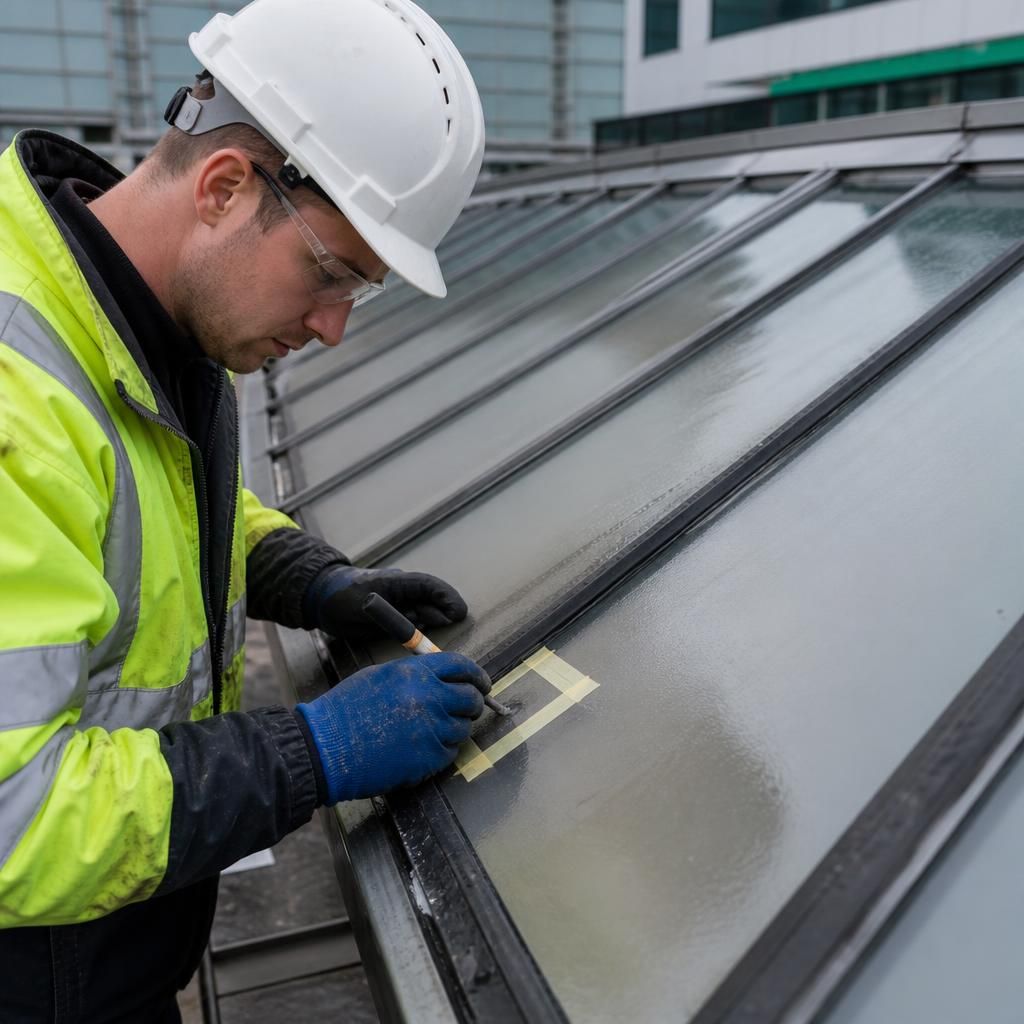
Material testing is a key part of canopy and tile detailing because the wrong pressure, temperature or cleaning product can damage coatings, seals, glazing and fragile tile surfaces. Before full cleaning begins, the team assesses the material, condition and type of contamination, then tests the proposed method in a discreet area.
The cleaning method is adjusted according to the results. Robust masonry or concrete tiles may tolerate controlled pressure washing, while polycarbonate, coated metal, glazed tiles and fabric membranes usually require gentler application, compatible detergents and non-abrasive tools. Edges, joints, fixings, drainage channels and tile overlaps are cleaned separately, as these areas commonly retain dirt after the main surface has been washed.
This combination of testing, controlled cleaning and detailed manual work removes contamination thoroughly while reducing the risk of etching, scratching, displaced tiles, failed sealant or water ingress.