
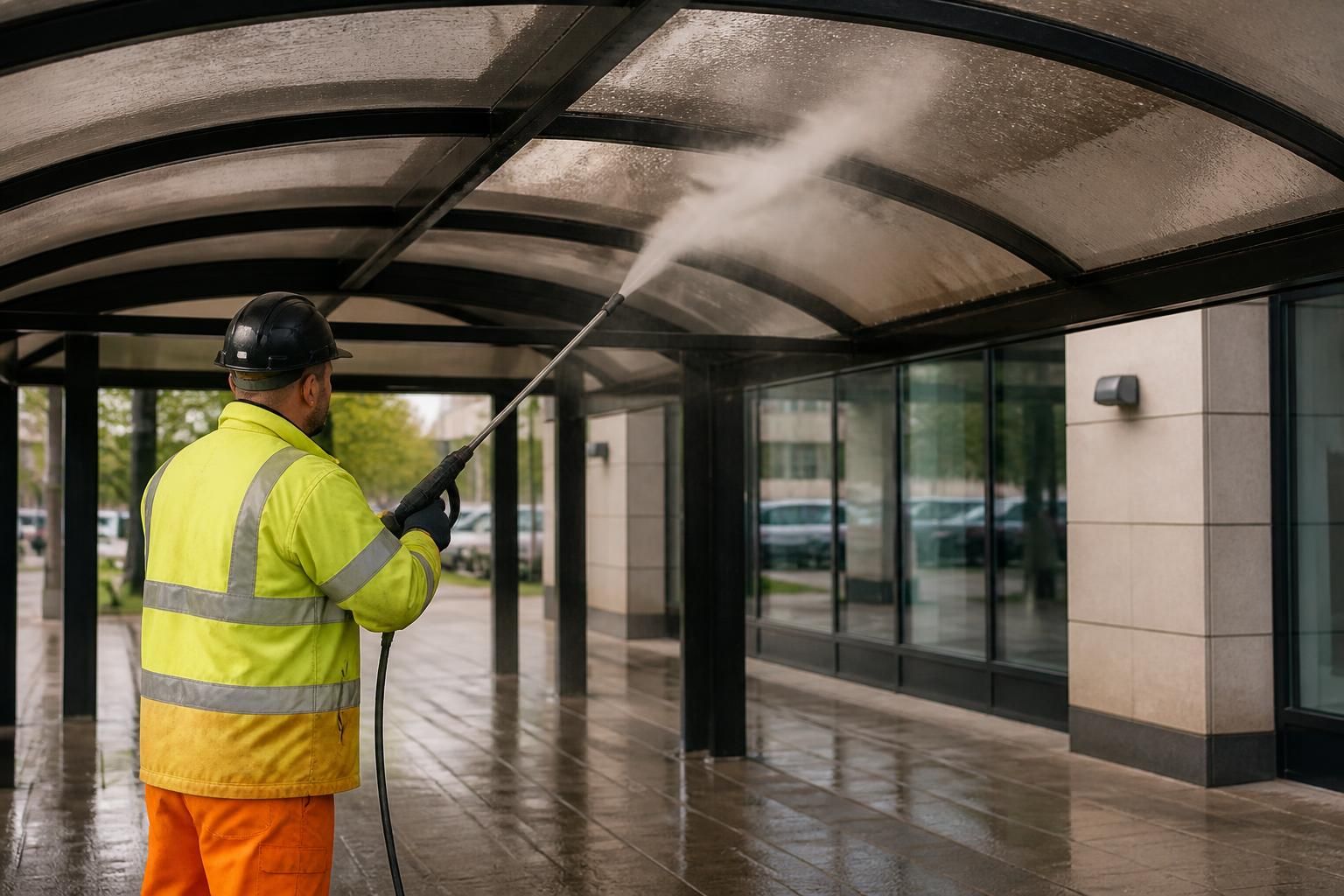
What makes steam cleaning a preferred method for canopy and tile detailing?
Steam cleaning uses controlled heat and low water volumes to loosen grease, algae, staining and embedded grime from canopies and tiles without relying on aggressive chemicals or high pressure. This makes it a precise, lower-impact method for detailed cleaning, provided the temperature and technique are matched to the surface material.
Steam cleaning is preferred for canopy and tile detailing because it combines controlled heat with relatively low water use, allowing technicians to soften and remove grease, algae, atmospheric soiling and embedded grime without depending on high pressure or aggressive chemical treatment. This makes it particularly suitable for detailed work on commercial canopies, tiled entrances, covered walkways, façades and other areas where surface appearance, water control and material protection are important.
Controlled heat loosens contamination at its source. Grease, oil residues, chewing gum, food deposits and traffic film can bond firmly to canopy fabrics, coated surfaces and textured tiles. Steam penetrates and softens these deposits so they can be lifted with suitable tools or rinsed away in a controlled manner. Algae, moss and other organic growths are also loosened from tile joints and textured surfaces, making subsequent removal more effective.
Unlike conventional high-pressure cleaning, steam cleaning does not rely primarily on force to break the bond between the dirt and the surface. This reduces the risk of forcing water beneath canopy edges, into joints or behind surface coatings. It can also help limit splashback and overspray around entrances, signage, glazing, pedestrian routes and neighbouring finishes.
Low water use is another practical advantage. Canopy and tile detailing often takes place around occupied commercial premises, where uncontrolled run-off can create slip hazards, disturb customers or staff, and carry loosened contaminants into drainage systems. Steam produces a much smaller volume of water than many standard pressure-washing methods. Even so, the resulting residue and run-off still need to be collected, directed and disposed of responsibly. Steam cleaning is not a substitute for proper site protection and drainage controls.
Steam is also useful where chemical use needs to be restricted. Heat can assist with removing organic and greasy contamination while reducing reliance on strong detergents. Where a deposit cannot be removed with steam alone, a carefully selected, surface-compatible cleaning solution may still be required. The aim is not to avoid every chemical in every situation, but to use the least aggressive treatment that will achieve a satisfactory result without damaging the material or creating unnecessary environmental impact.
The method is especially valuable for detailed rather than purely high-output cleaning. Technicians can work progressively around seams, hems, fixings, grout lines, raised lettering, tile profiles and other awkward areas. This makes it easier to distinguish between removable soiling and permanent staining, weathering or surface deterioration. It also allows the cleaning approach to be adjusted as the condition of the canopy or tile changes across the elevation.
However, steam cleaning is not automatically suitable for every material or every type of staining. Before work begins, the surface should be assessed for its construction, finish, age, previous coatings, sealants, joint condition and sensitivity to heat or moisture. Fabric canopies, coated metal, polycarbonate, natural stone, ceramic tiles, concrete pavers and painted surfaces all respond differently. Excessive heat, prolonged dwell time or incorrect technique may affect coatings, adhesives, sealants, grout or delicate finishes.
A professional steam-cleaning process normally includes:
- Inspecting the canopy or tiled area and identifying the material, finish and likely sources of contamination.
- Checking for loose edges, failed sealants, cracked tiles, open joints, corrosion or other defects that could be affected by cleaning.
- Testing the proposed temperature, pressure, nozzle and working distance on a discreet area.
- Protecting adjacent glazing, signage, entrances, electrical equipment, landscaping and pedestrian routes.
- Working in controlled sections, using agitation or compatible cleaning agents only where necessary.
- Removing loosened residue and managing run-off so that cleaned areas remain safe.
- Inspecting the finished surface and identifying any staining or damage that cleaning alone cannot resolve.
Steam can also provide a useful alternative where high pressure could erode grout, dislodge pointing, drive water into joints or strip a coating. It is generally quieter and more precise than some high-pressure applications, although access equipment, extraction systems and other controls may still be needed on larger or elevated commercial sites.
Safety remains essential. Hot steam can cause serious burns, and wet surfaces may become slippery during the operation. Suitable personal protective equipment, exclusion zones, controlled access, electrical precautions and clear communication with the site representative are required. The cleaning team should also consider vapour, ventilation, nearby occupants and the safe handling of any detergents or contaminated run-off.
In practice, steam is preferred when the priority is controlled removal of ingrained dirt with limited water, reduced overspray and careful protection of the underlying surface. The best results come from matching the steam system and cleaning technique to the material, testing before full application, and combining steam with suitable rinsing, extraction or manual detailing where the condition of the canopy or tiles requires it.
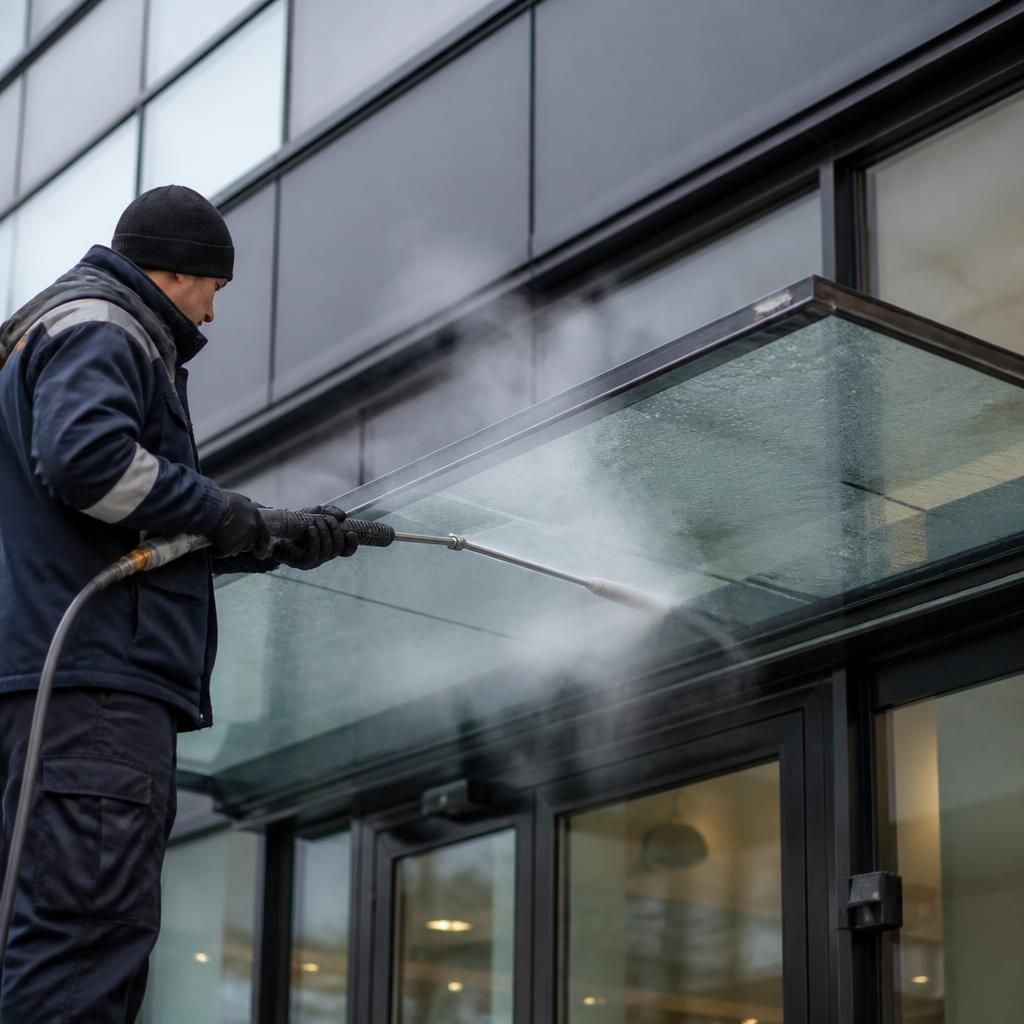
Steam cleaning uses controlled heat and low water volumes to loosen grease, algae, traffic film and embedded grime from canopies and tiles. Because it relies less on force than conventional pressure washing, it can reduce the risk of overspray, disturbed grout and water entering joints, seams or behind surface coatings.
This makes steam particularly useful around commercial entrances, glazing, signage and occupied walkways where water control is important. The method still requires a material assessment, discreet test area and suitable run-off management, as excessive heat or prolonged application can affect coatings, sealants, grout and delicate finishes.