
What are the benefits of regular canopy and tile detailing for commercial buildings?
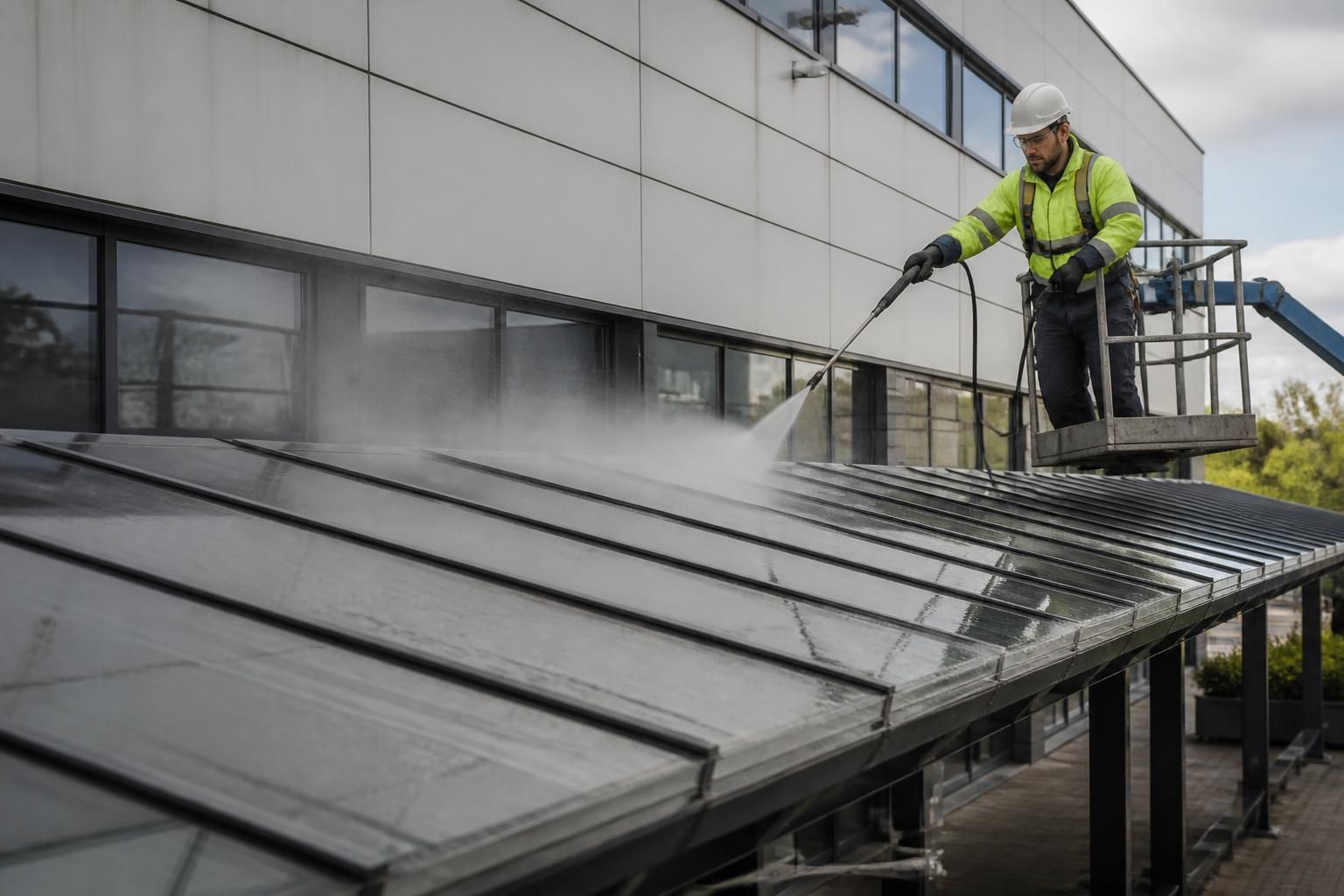
Regular canopy and tile detailing removes dirt, algae, staining and other deposits that can make commercial buildings look neglected and create slip or drainage risks. It also helps protect canopy and tile surfaces from premature deterioration, supporting a cleaner, safer and more professional property.
Regular canopy and tile detailing keeps commercial buildings cleaner, safer and easier to maintain by removing grime, algae, moss, staining, bird deposits and other build-up before it causes more serious problems. A planned detailing programme also helps protect surface finishes, preserve drainage routes and maintain a professional appearance across entrances, walkways and other visible areas.
Improved appearance and presentation
Canopies and tiled areas are often among the first parts of a property seen by visitors, customers, tenants and employees. Dust, traffic film, organic growth, water marks and airborne pollution can make otherwise well-maintained premises appear neglected. Regular cleaning restores a more consistent appearance and helps prevent localised staining from becoming difficult to remove.
This is particularly important around entrances, retail frontages, offices, residential developments, transport facilities and public buildings. Clean canopy panels, frames, fascias and tiles support a professional presentation without requiring the entire building envelope to be cleaned at the same time.
Reduced slip and hygiene risks
Algae, moss, grease and other deposits can make tiled surfaces slippery, especially when wet. Removing these contaminants helps reduce avoidable slip hazards on walkways, entrance areas, service yards and covered external circulation routes. Canopies can also collect bird fouling and organic debris, which may present hygiene concerns if left untreated or allowed to fall onto areas below.
Cleaning does not replace a formal risk assessment, repairs or appropriate signage, but it is an important part of maintaining safer external areas. Heavily trafficked locations may need more frequent inspection where contamination returns quickly.
Protection against premature deterioration
Deposits are not always purely cosmetic. Moss and algae can retain moisture against tile surfaces and joints, while pollution and organic matter may contribute to staining or deterioration of coatings and sealants. On canopies, accumulated dirt can affect transparent or translucent panels, painted finishes, powder-coated frames, membranes and drainage components if unsuitable conditions are allowed to persist.
Regular detailing removes contamination before it becomes firmly bonded or begins to affect the surface. The correct approach depends on the material: pressure, steam, soft washing or manual methods must be selected according to the condition, coating and construction of the canopy or tilework. Aggressive cleaning can cause damage, so surface testing and controlled application are essential.
Better drainage and fewer water-related issues
Leaves, silt, moss and other debris can restrict channels, outlets and gullies associated with canopies and tiled areas. Blocked or poorly draining components may lead to standing water, overflow, streaking and staining on adjacent walls or paving. Regular detailing helps identify and clear accessible build-up, while also making defects such as damaged joints, cracked tiles, loose trims or failed seals easier to spot.
Cleaning alone cannot correct defective falls, broken drainage components or failed waterproofing. However, combining detailing with visual checks gives property managers useful information for arranging repairs before minor defects contribute to wider maintenance problems.
Longer-lasting finishes and more manageable maintenance
Routine removal of contamination is generally more controlled than infrequent intensive cleaning. When deposits are allowed to accumulate, they may require stronger treatment, greater agitation or longer dwell times, increasing the risk of affecting delicate finishes. A planned programme allows the cleaning method to be adjusted to the surface condition and recorded for future visits.
Regular detailing can therefore support the serviceable life of tiles, coated metalwork, glazing and other canopy components, although it cannot prevent normal weathering, impact damage or the eventual need for replacement. It also helps maintenance teams identify recurring causes of soiling, such as overhanging vegetation, leaking gutters, nearby construction dust or heavy traffic pollution.
More predictable maintenance costs
Planned cleaning makes external maintenance easier to schedule around occupancy, trading hours, access restrictions and other site activities. It reduces reliance on reactive call-outs after surfaces become heavily soiled or a drainage issue becomes apparent. The appropriate frequency varies according to the building’s location, exposure, materials, footfall and surrounding environment, so the programme should be based on inspection rather than a fixed assumption.
Keeping records of the areas treated, methods used and defects observed also helps property managers compare conditions over time and coordinate cleaning with other planned works, such as façade maintenance, roof inspections or landscaping.
More reliable inspection and defect detection
Heavy dirt and organic growth can conceal cracks, failed sealant, corrosion, loose fixings and damage to tile joints or canopy panels. Detailed cleaning provides a clearer view of the surface and can highlight issues that require attention from a suitably qualified contractor. This is particularly useful on large commercial sites where defects may otherwise remain unnoticed between formal inspections.
Any concerns involving structural stability, waterproofing, electrical equipment, glazing or work at height should be assessed by the appropriate specialist. Cleaning operatives should not treat a cleaning visit as a substitute for structural or building-fabric inspection.
Support for site standards and environmental control
Clean external areas contribute to a consistent standard across managed property portfolios and can support housekeeping, facilities-management and landlord requirements. Appropriate cleaning methods can also limit unnecessary chemical use and reduce the risk of contaminated run-off. The work should be planned around drainage arrangements, local environmental requirements and the type of deposits being removed.
At Encanto Exterior Cleaning, the practical benefit of regular detailing comes from matching the method, equipment and access arrangement to each surface and site. Canopies and tiled areas are assessed before work begins so that sensitive finishes, drainage points, adjacent materials and pedestrian controls are considered. This helps deliver a repeatable maintenance service while protecting the building and keeping disruption to occupants and visitors under control.
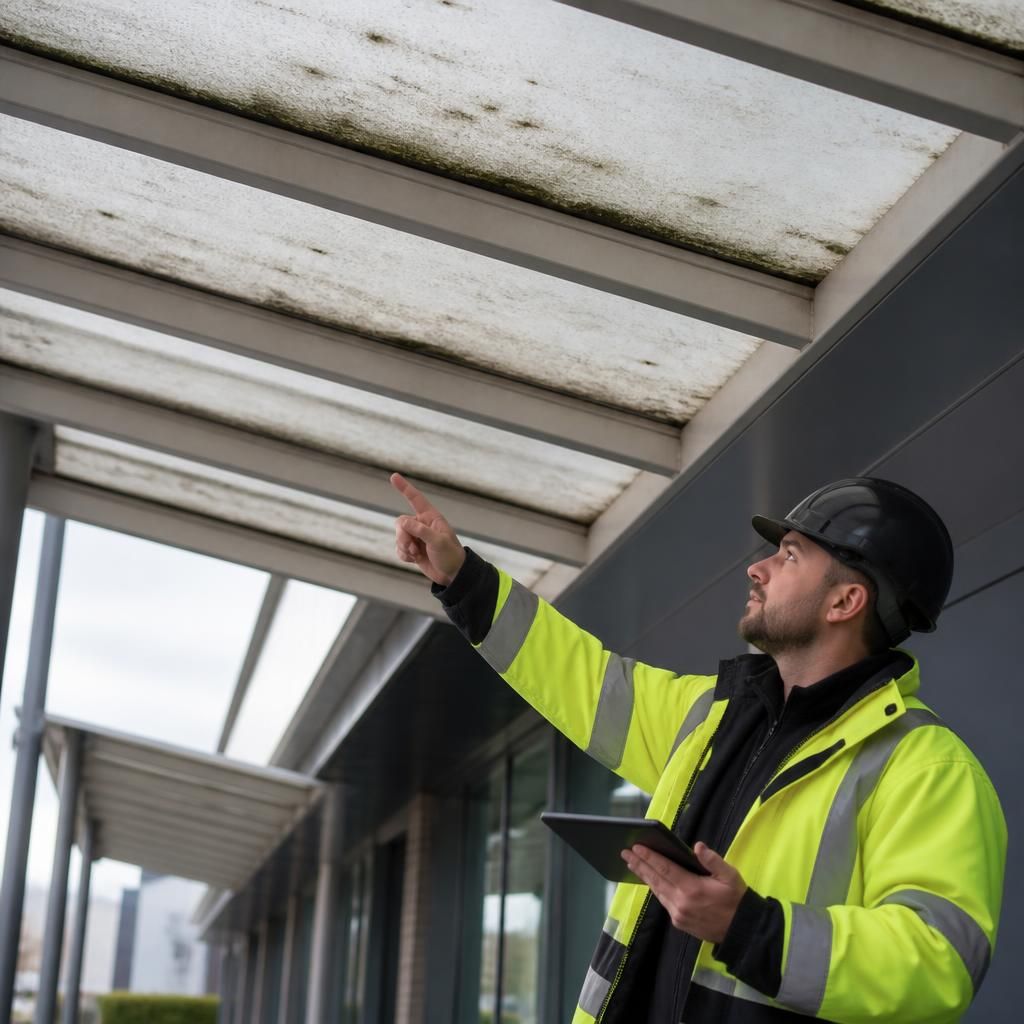
Regular canopy and tile detailing helps reveal maintenance issues that dirt, algae and organic growth can conceal. Once deposits are removed, site teams can more easily identify cracked tiles, failed sealant, blocked outlets, loose trims, corrosion or damaged panels and arrange the appropriate repair before the problem becomes more disruptive.
This does not replace a structural, waterproofing or electrical inspection, but it provides a clearer view of accessible surfaces and drainage points. Recording defects during scheduled cleaning also helps property managers plan remedial work, coordinate contractors and maintain safer, more presentable entrances and external circulation areas.