
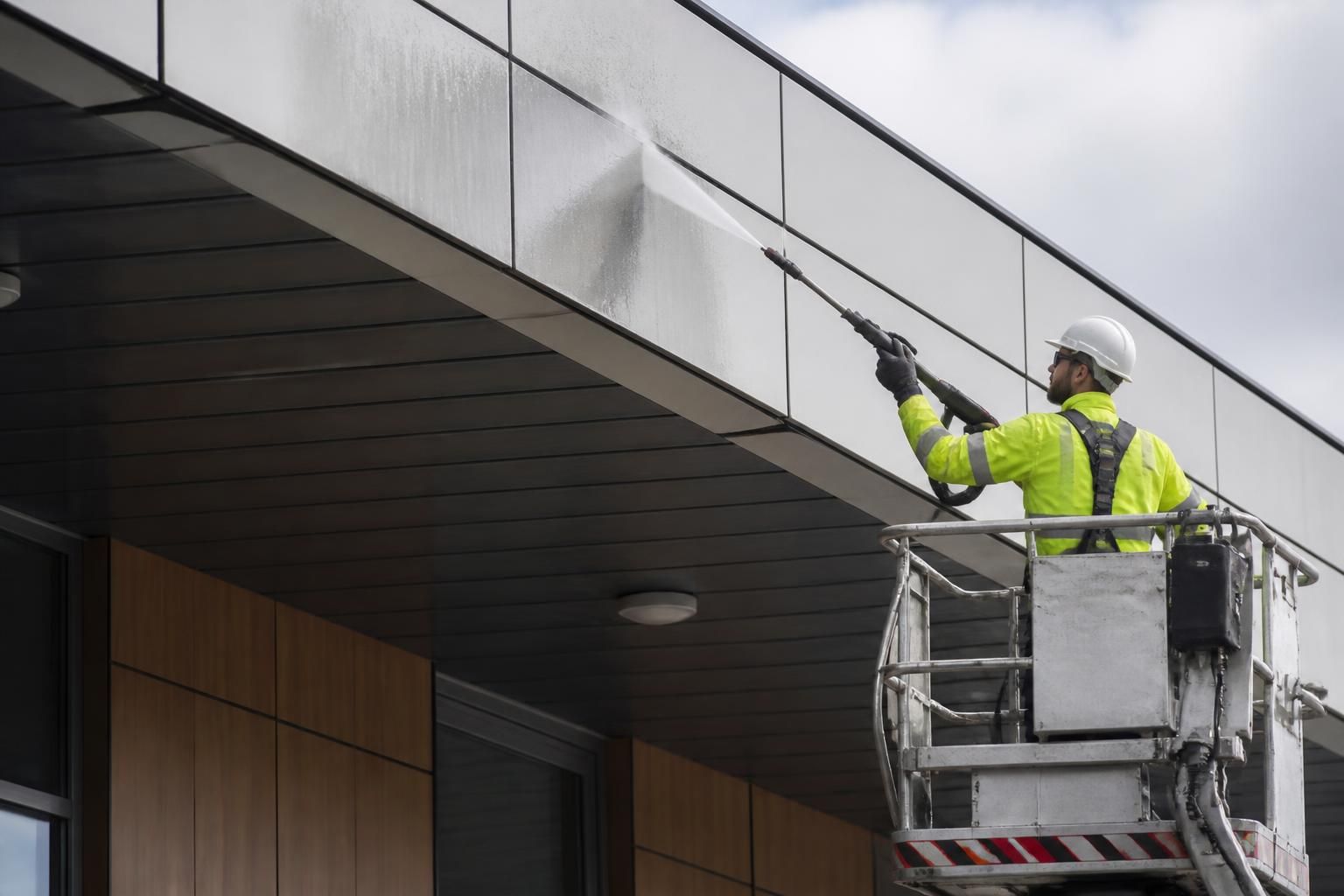
How often should canopy and tile detailing be performed on commercial properties?
Commercial canopy and tile detailing should generally be scheduled at least annually, with more frequent cleaning where surfaces are exposed to heavy traffic, pollution, food residues, nesting or persistent damp. The appropriate interval depends on the materials, site conditions and level of soiling, so we can confirm the maintenance schedule during a site assessment.
Commercial canopy and tile detailing should usually be carried out at least annually, with the interval adjusted to suit the surface material, site conditions, level of soiling and operational risks. Sites exposed to heavy traffic, industrial pollution, food residues, nesting, falling debris or persistent damp may require detailing every few months, while sheltered areas with light soiling may remain suitable for an annual planned clean.
The most reliable approach is to treat detailing as part of a planned maintenance programme rather than waiting until dirt becomes established. A site assessment can identify the appropriate frequency for each elevation, canopy, roof section or tiled area. Different parts of the same property may need different schedules depending on exposure and use.
Factors that influence the cleaning interval include:
- Traffic and footfall: Canopies above entrances, pedestrian routes and service areas collect dust, grit, oils and airborne pollutants more quickly than sheltered surfaces.
- Food and hospitality use: Canopies near restaurants, cafés, food production areas or waste-storage points can accumulate grease, organic residue and unpleasant odours. These areas often need more frequent attention than standard commercial premises.
- Industrial and urban pollution: Soot, exhaust deposits and airborne particles can bond to cladding, tiles and canopy materials. Regular cleaning helps prevent deposits becoming harder to remove.
- Weather and location: Rain, wind, shade and poor drainage can encourage algae, moss, lichen and surface staining. North-facing or damp areas may need additional inspections.
- Material and condition: Glazed tiles, unglazed tiles, coated canopies, fabric elements and painted or rendered surfaces each respond differently to cleaning. The method and frequency must account for existing wear, sealants, joints and coatings.
- Birds, insects and vegetation: Nesting, droppings, leaves and nearby trees can increase contamination and may also obstruct drainage points.
- Public safety and appearance: Slippery deposits, loose debris, blocked gutters or visibly stained entrances may justify cleaning before the next routine visit.
For many commercial properties, a practical programme combines a scheduled annual deep clean with regular visual inspections. The inspections can be included within broader external maintenance checks and should look for staining, biological growth, grease, blocked drainage, loose tile pointing, damaged coatings and areas where water is not shedding correctly. Small issues identified early are generally easier to manage than heavily bonded contamination or neglected drainage.
More frequent detailing is appropriate where the property has a high contamination risk. For example, a busy retail entrance, transport facility, food-service premises, industrial unit or public building may benefit from quarterly or seasonal cleaning reviews. This does not necessarily mean every surface must be fully cleaned at every visit. A targeted clean of high-use or high-risk areas can be combined with less frequent full detailing of the wider canopy and tiled surfaces.
Seasonal timing can also affect the programme. Cleaning before periods of increased public use can improve presentation and remove accumulated deposits. Cleaning after autumn leaf fall may help prevent organic matter from blocking drainage and encouraging staining. In shaded or damp locations, an inspection during wetter months can reveal moss or algae growth that may not be apparent during a dry period.
The condition of the surface should determine whether a routine clean is sufficient. Light dust and loose debris may be removed using a controlled low-pressure process, whereas grease, atmospheric staining or biological growth may require steam cleaning, carefully selected detergents or a staged treatment. Canopy fabrics, coated finishes, tile joints and fragile areas must be assessed before work begins so that an unnecessarily aggressive method is not used. The objective is to remove contamination without damaging the substrate, finish or drainage details.
Cleaning should normally be brought forward if you notice:
- Algae, moss, lichen or black spotting spreading across tiles or shaded surfaces.
- Grease, food residue or persistent staining around entrances and service areas.
- Bird fouling or organic debris accumulating on canopy tops, ledges or gutters.
- Slippery deposits on tiled walkways or areas used by pedestrians.
- Blocked outlets, overflowing gutters or water staining beneath a canopy.
- Visible deterioration of coatings, sealants, grout or tile joints.
- A decline in the appearance of a customer-facing entrance or other prominent elevation.
It is also important to distinguish detailing from routine housekeeping. Sweeping, litter removal and prompt removal of fresh spillages should continue between professional visits. These measures reduce the amount of contamination that becomes embedded and help the planned clean remain effective. They do not replace specialist detailing where deposits have bonded to tiles, canopy surfaces or difficult-to-access areas.
During a site assessment, the cleaning schedule should be based on the property’s use, the age and condition of the surfaces, access requirements, drainage arrangements, previous cleaning history and the type of contamination present. A written maintenance recommendation can then separate routine cleaning, targeted treatments and any remedial work that should be addressed before detailing. This makes the programme easier to coordinate with other contractors and reduces disruption to building users.
In practice, annual detailing is a sensible starting point for many commercial properties, but it should not be treated as a fixed rule. High-exposure sites may need a shorter interval, while low-risk areas may be maintained effectively through annual detailing supported by inspections and prompt spot cleaning. Reviewing the condition after each service allows the schedule to be refined using the property’s actual soiling pattern rather than an arbitrary timetable.
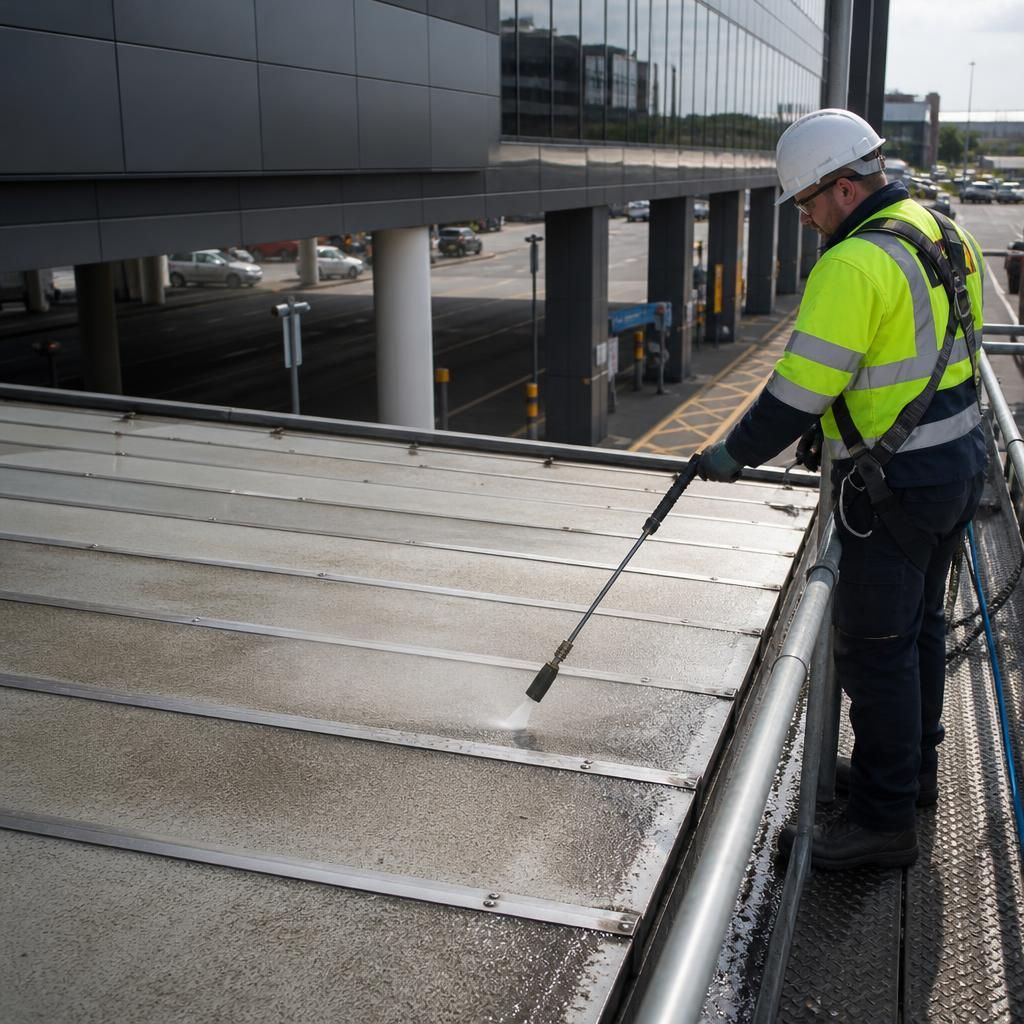
The right frequency for commercial canopy and tile detailing depends on how quickly each surface accumulates contamination, rather than on a fixed timetable alone. An annual planned clean is a suitable starting point for many properties, but entrances, food-service areas, shaded tiles and surfaces exposed to traffic or pollution may need more frequent inspection and targeted cleaning.
Regular visual checks help identify when detailing should be brought forward. Look for grease, bird fouling, moss, algae, slippery deposits, blocked drainage points and staining beneath canopies. A practical maintenance plan can combine routine inspections with scheduled full detailing, while high-use or heavily soiled areas are treated as required.
This approach keeps the cleaning interval aligned with the property’s actual condition and helps prevent contamination becoming bonded to canopy finishes, tile surfaces or joints.