
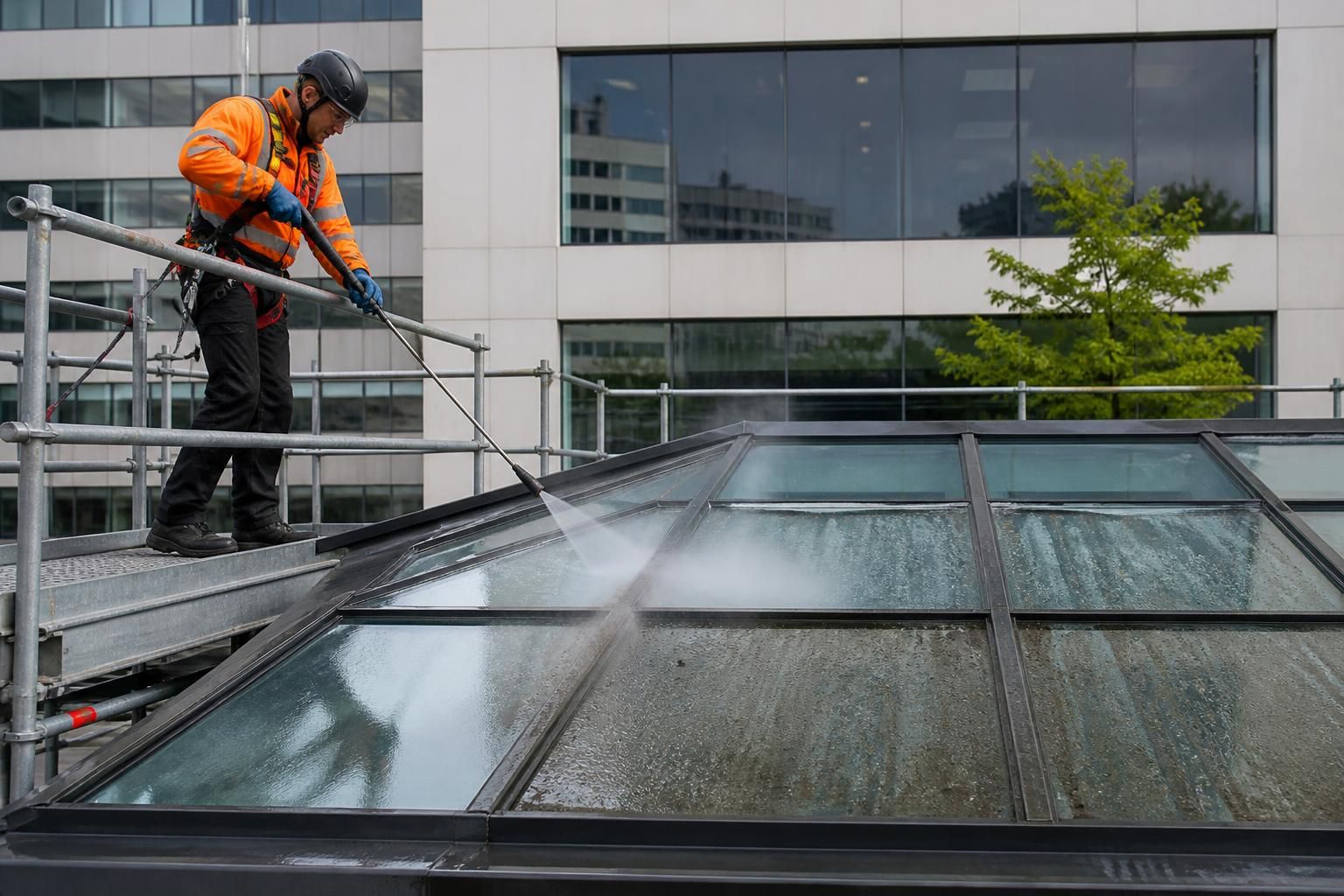
How do you tailor your cleaning solutions to address the environmental impact and sustainability of canopy and tile detailing?
We tailor canopy and tile detailing by selecting the least intensive cleaning method that will safely remove the identified dirt, staining and biological growth, while considering each surface’s material, condition and surroundings. Where suitable, we use controlled steam or low-pressure cleaning, environmentally considerate products and responsible water and waste management to reduce impact without compromising the finish.
We tailor canopy and tile detailing by matching the cleaning method, products, water use and access arrangements to the surface, the level of soiling and the surrounding environment. The aim is to remove dirt, algae, moss, grease and atmospheric staining effectively while using the least intensive process that will achieve a safe, durable result and minimise unnecessary water, chemical use, runoff and waste.
Before work begins, we assess the canopy or tiled area in context. This includes identifying the material, checking its condition, locating drainage points and considering nearby entrances, planting, watercourses, vehicles and pedestrian routes. We also establish whether the contamination is loose debris, biological growth, oil-based staining, bird fouling, construction residue or a combination of deposits. This information determines the appropriate pressure, temperature, cleaning product and recovery method.
Choosing a suitable cleaning method
We avoid treating every surface in the same way. Sound, robust tiles may tolerate a controlled pressure-washing process, whereas aged, porous, cracked or coated materials may require softer cleaning. Canopies can also vary considerably, including glass, polycarbonate, fabric, metal, coated panels and composite materials. Using excessive pressure or an unsuitable product can damage finishes, increase water use and create avoidable replacement or repair work.
- Steam cleaning: Controlled steam can loosen biological growth, greasy deposits and ingrained dirt with relatively low water consumption compared with some conventional washing methods. It is particularly useful where careful heat and pressure control can clean the surface without aggressive abrasion or heavy chemical treatment.
- Low-pressure washing: This can remove surface dirt while reducing the risk of driving water beneath tile edges, joints, seals or canopy components. Pressure is adjusted to the material and its condition rather than applied at a fixed setting.
- Manual detailing: Brushes, squeegees and targeted hand cleaning are used where precision is more important than speed, such as around fixings, seals, drainage channels, glazed sections and delicate finishes.
- Targeted treatment: Where a biological or organic deposit needs treatment, we use an appropriate product in a controlled application rather than applying more solution than the surface requires.
Testing a discreet area is an important part of this process. It helps confirm that the chosen method will not affect colour, gloss, coatings, sealants, pointing, joints or surrounding materials. If the initial method is effective, we continue with the same controlled approach; if it is not suitable, we reassess rather than escalating pressure or chemical strength unnecessarily.
Managing water, chemicals and runoff
Environmental control is considered before cleaning starts. We use only the amount of water needed for the selected process and avoid allowing contaminated wash water to spread across other parts of the site. Where practical, drainage points are protected or controlled, and runoff is directed and managed in accordance with the site conditions and applicable requirements. Particular care is taken near surface-water drains, planted areas, entrances and neighbouring property.
Cleaning products are selected according to the deposit and surface rather than used as a routine substitute for mechanical cleaning. This may reduce chemical demand and helps prevent unnecessary residues entering drainage systems. Products are applied at the correct concentration and dwell time, then rinsed or removed in a controlled manner. We do not assume that a stronger product provides a better result: it may increase the risk to the material, surrounding landscaping and the wider environment.
Where a site has specific environmental controls, drainage restrictions or waste-handling procedures, these are incorporated into the method statement and site arrangements. We can also coordinate the work around the client’s operational requirements so that cleaning, access equipment and any temporary protection do not create avoidable disruption.
Reducing waste and protecting surrounding areas
Loose moss, leaves and other debris are collected where practicable rather than being washed into drainage systems. Wastewater, residues and removed material are handled according to the nature of the contamination and the requirements of the site. Planting, vehicles, signage, electrical components, entrances and adjacent façades are protected before cleaning, which reduces the likelihood of damage and repeat work.
Access planning also contributes to sustainability. We select access equipment that is suitable for the height, reach, ground conditions and working area, avoiding unnecessarily large equipment where a more proportionate option is available. Safe positioning protects the building and helps prevent damage to paving, kerbs, canopies and landscaped areas. Any access limitations or fragile sections identified during the survey are included in the cleaning plan.
Balancing sustainability with effective maintenance
A sustainable approach does not mean accepting an incomplete clean or leaving damaging growth in place. Moss, algae, bird fouling and accumulated grime can retain moisture, obscure defects, affect slip resistance and contribute to the deterioration of tiles, joints and canopy finishes. Removing these deposits at an appropriate interval can support planned maintenance and may reduce the need for more intensive restoration later.
We therefore balance the immediate environmental impact of the cleaning operation against the condition of the asset and the consequences of leaving contamination untreated. For example, a lightly soiled canopy may need a precise low-impact clean, while heavily contaminated tiles may require staged treatment and controlled rinsing. The method is proportionate to the risk and the result required, not simply the fastest available option.
After completion, the cleaned area is checked for remaining deposits, uncontrolled runoff, residue and any pre-existing defects that have become visible. We can record the method used and identify issues such as damaged tiles, failed seals, blocked drainage or deteriorating coatings for the client’s maintenance planning. This supports a more targeted future schedule and helps avoid unnecessary repeat cleaning.
For commercial and industrial sites, our approach is designed to work alongside existing environmental, health and safety and facilities-management procedures. The final cleaning plan reflects the material, contamination, access conditions and sensitivity of the surrounding area, providing a practical way to maintain canopies and tiled surfaces while limiting avoidable environmental impact.
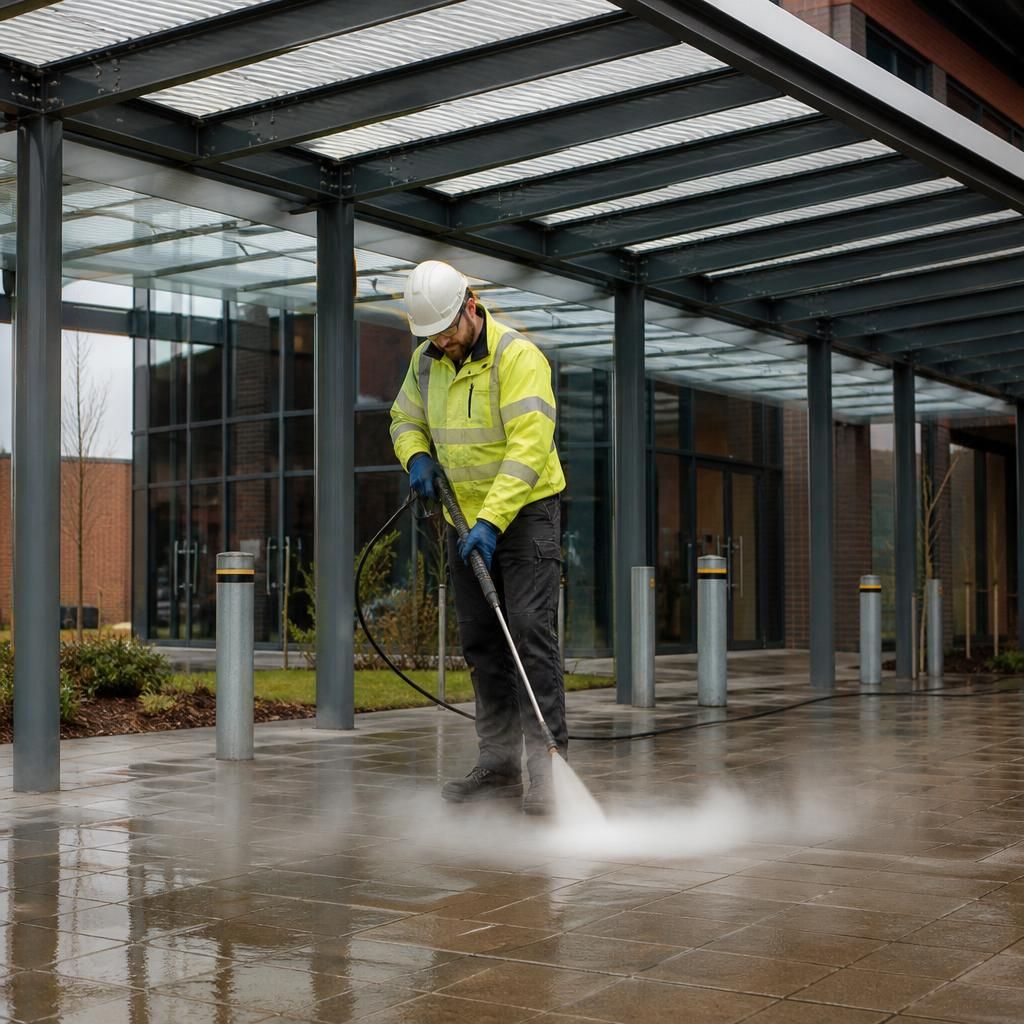
Environmental control in canopy and tile detailing means matching water use, cleaning products and runoff management to the surface, contamination and surrounding site conditions. This reduces avoidable impact while still removing dirt, algae, moss, grease and other deposits effectively.
Before cleaning, we identify nearby drains, planted areas, entrances, vehicles and water-sensitive features. We then select the least intensive suitable method, such as controlled steam, low-pressure washing or targeted manual cleaning. Products are used only where necessary and at an appropriate concentration, while loose debris and contaminated wash water are controlled rather than allowed to spread across the site.
This approach also helps protect the building. Avoiding excessive pressure, chemical treatment and water reduces the risk of damage to coatings, seals, joints, glazing and porous tiles. The completed area is checked for residue, uncontrolled runoff and remaining deposits, allowing future maintenance to be planned around the surface’s actual condition.
Discuss Your Sustainable Canopy and Tile Detailing Plan
Discuss your sustainable canopy and tile detailing plan with Encanto Exterior Cleaning, including the appropriate cleaning method, water and runoff controls, and protection for surrounding areas. We can assess your site and tailor the work to its surfaces, condition and environmental requirements.