
What steps should be taken to prepare a playground surface for cleaning?
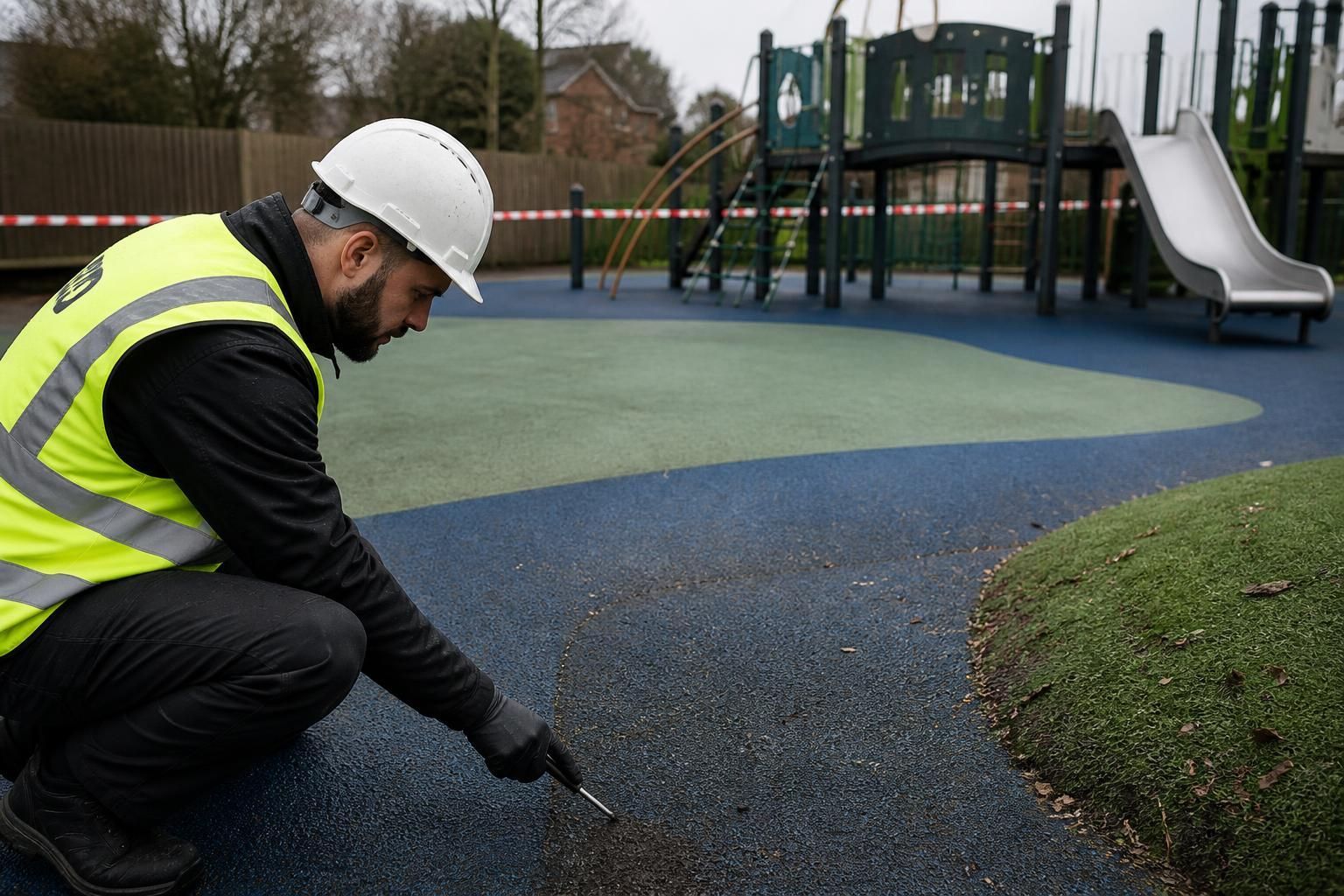
Prepare a playground surface by closing the area, removing toys and loose items, checking for hazards or damage, and clearing debris from the surface and drainage points. Confirm suitable access for cleaning equipment and identify any sensitive features so the cleaning method can be selected safely and effectively.
Preparing a playground surface for professional cleaning involves closing the area, removing loose items, checking for hazards or damage, clearing debris and confirming that the surface, drainage and surrounding features can be cleaned safely. Good preparation prevents avoidable damage, gives the cleaning team clear access and helps ensure that dirt, algae, chewing gum, staining and other contaminants can be removed without creating risks for children, staff or visitors.
Close and secure the playground
Take the play area out of use before the cleaning team arrives. Use suitable barriers or signage to prevent children, parents and other visitors from entering while equipment, water, cleaning solutions or access systems are in operation. The closure should include nearby routes that could become wet or slippery from overspray, runoff or tracked contamination.
Agree how the area will remain closed during the work and until the surface is safe to use again. Reopening should only take place after the cleaning has been completed, excess water has drained away, treated areas are dry where required, and any temporary barriers or equipment have been removed.
Remove play equipment and loose objects where possible
Remove portable toys, balls, bins, tables, chairs, planters and other movable items from the surface. These objects can obstruct cleaning, collect dirty water and prevent the operator from reaching the full surface. Store them away from spray, runoff and access routes, and do not place them over drainage points.
Fixed play equipment normally remains in position, but the cleaning team should be able to work around its posts, platforms, slides, swings and other components. If a fitting or item can be safely detached by the site operator, confirm this in advance rather than attempting to dismantle it during cleaning.
Inspect the surface and play equipment before cleaning
Carry out a visual inspection and report any defects before work begins. Look for lifted or torn wet-pour rubber, loose bonded rubber, damaged artificial grass, open seams, worn safety tiles, cracks in hard surfaces and areas where the surface has become uneven. Also check for exposed edges, loose aggregate and trip hazards around play equipment.
Inspect the equipment and its surroundings for damaged fixings, sharp edges, loose panels, corrosion, unstable components or areas where water could enter sensitive mechanisms. Cleaning is not a substitute for repairs. Mark or photograph defects so that they can be assessed before pressure, steam or other cleaning methods are applied. The cleaning approach may need to be adjusted or postponed where a defect could worsen during the work.
Remove surface debris and organic matter
Clear away leaves, twigs, litter, stones, mud, sand and other loose debris before wet cleaning starts. Manual sweeping or collection is particularly important around corners, beneath seating and at the edges of impact-absorbing surfaces. Organic matter can retain moisture and contribute to algae, moss and staining, while stones and hard debris can be displaced by pressure washing.
Do not sweep debris into gullies, channels or planting beds if it could block drainage or contaminate adjacent areas. Collect it for appropriate disposal, especially where it includes broken glass, animal fouling, needles or other potentially hazardous material. Tell the cleaning contractor about any contamination so that the correct protective measures and disposal arrangements can be confirmed.
Check drainage and runoff routes
Inspect gullies, channel drains, grates and nearby outlets before cleaning. Remove accessible leaves and silt, and report blocked or damaged drainage. A blocked outlet can leave standing water on the playground, carry dirty water across clean areas or increase the risk of slips after cleaning.
Confirm where wastewater will flow and whether any drainage restrictions apply. Runoff should not be allowed to enter sensitive planted areas, buildings, watercourses or neighbouring surfaces without suitable controls. Where the site has specialist drainage or environmental requirements, these should be discussed before work begins.
Identify sensitive areas and materials
Tell the cleaning team about surfaces and features that require additional protection. These may include rubber safety surfacing, artificial grass, painted markings, timber, soft landscaping, electrical fittings, access-control equipment, drainage components and nearby building façades. Different materials tolerate pressure, heat and cleaning products differently.
Protect vulnerable items from direct spray and prevent cleaning solutions from pooling against posts, edges or sealed joints. Any detergent or treatment should be selected for the material and used in accordance with the product instructions. A small test area may be appropriate where the surface is aged, heavily weathered, coloured or previously treated.
Confirm access for people, water and equipment
Before the appointment, check the route from the site entrance to the playground. Identify gates, steps, narrow paths, slopes, locked access points and areas with restricted vehicle access. Confirm where equipment, hoses and water supplies can be positioned without obstructing emergency routes or damaging surrounding surfaces.
Provide access instructions, contact details for the responsible site representative and information about any site-specific induction or permit requirements. If the playground is within a school, managed residential development, park or public facility, coordinate the work with the person responsible for closures and public safety.
Share relevant site information
Before cleaning, provide details of previous repairs, coatings, recurring algae or moss growth, known drainage problems and any areas that must not be treated. Explain whether the surface has manufacturer-specific maintenance requirements or whether a previous cleaning method caused damage or discolouration.
It is also useful to agree the required outcome in advance. Removing loose contamination, reducing organic growth, improving the appearance of rubber surfacing and treating deep staining may require different methods. Clear information allows the cleaning process to be planned rather than relying on excessive pressure or repeated treatment.
Complete a final pre-cleaning check
Immediately before work starts, confirm that the playground is empty, barriers and warning signs are in place, loose items have been removed, drains are clear, defects have been recorded and sensitive features are protected. The operator can then assess the surface condition and select an appropriate combination of pressure washing, steam cleaning, soft washing or manual treatment.
After preparation, keep the area closed until the contractor confirms that cleaning is complete and the surface can be safely returned to service. If damage, persistent contamination or drainage problems are identified during the work, record them and arrange the necessary repair or further maintenance rather than concealing the issue with additional cleaning.
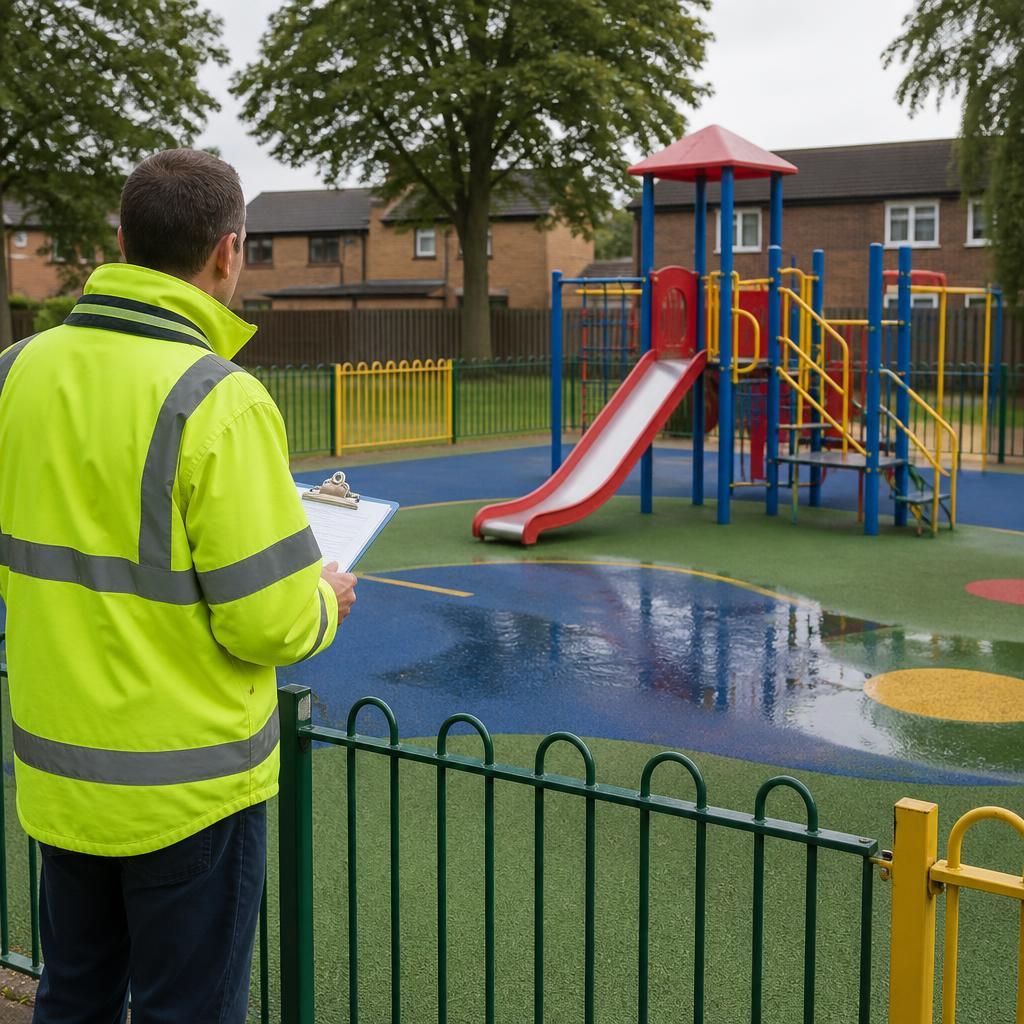
Before playground cleaning begins, complete a final inspection to confirm that the area is empty, secure and ready for the planned method. Check that barriers and warning signs are in place, loose debris has been removed, drainage points are clear and any damaged or vulnerable surfaces have been identified.
Record defects such as lifted wet-pour rubber, damaged artificial grass, open seams or unstable equipment before cleaning. Tell the cleaning team about these areas so pressure, steam, detergents and water flow can be adjusted to avoid worsening the damage. Keep the playground closed until the surface is clean, excess water has drained and the contractor confirms that it is safe to reopen.
Arrange Professional Playground Surface Cleaning
Once the playground is cleared, inspected and secured, arrange professional playground surface cleaning with Encanto Exterior Cleaning. Share details of the surface, access arrangements and any known defects so the correct cleaning method can be planned safely.