
What cleaning methods are best suited for different types of playground surfaces?
The best cleaning method depends on the playground surface: low-pressure washing and suitable detergents generally suit rubber and tarmac, while artificial grass needs controlled rinsing, brushing and careful moss or algae treatment. Timber, wet-pour rubber and other specialist surfaces should be cleaned with methods that remove contamination without damaging the material, safety markings or impact-absorbing properties.
The most suitable playground cleaning method depends on the surface material, its drainage, level of contamination and safety function. Low-pressure washing with a compatible detergent is generally appropriate for rubber and tarmac, while artificial grass needs controlled rinsing, brushing and careful treatment of moss or algae. Wet-pour rubber, safety tiles, concrete, block paving, timber and specialist surfaces require tailored methods that remove dirt without damaging impact-absorbing properties, joints, coatings or safety markings.
Before cleaning, the surface should be inspected for loose areas, cracks, failed joints, drainage problems, exposed aggregate, damaged edging and other defects. Remove litter, leaves, loose sand and stones first, and protect nearby planting, play equipment and electrical installations where necessary. Cleaning should follow the surface manufacturer’s instructions, particularly where a proprietary coating, bonded rubber system or specialist impact-absorbing material has been installed.
Wet-pour rubber surfaces
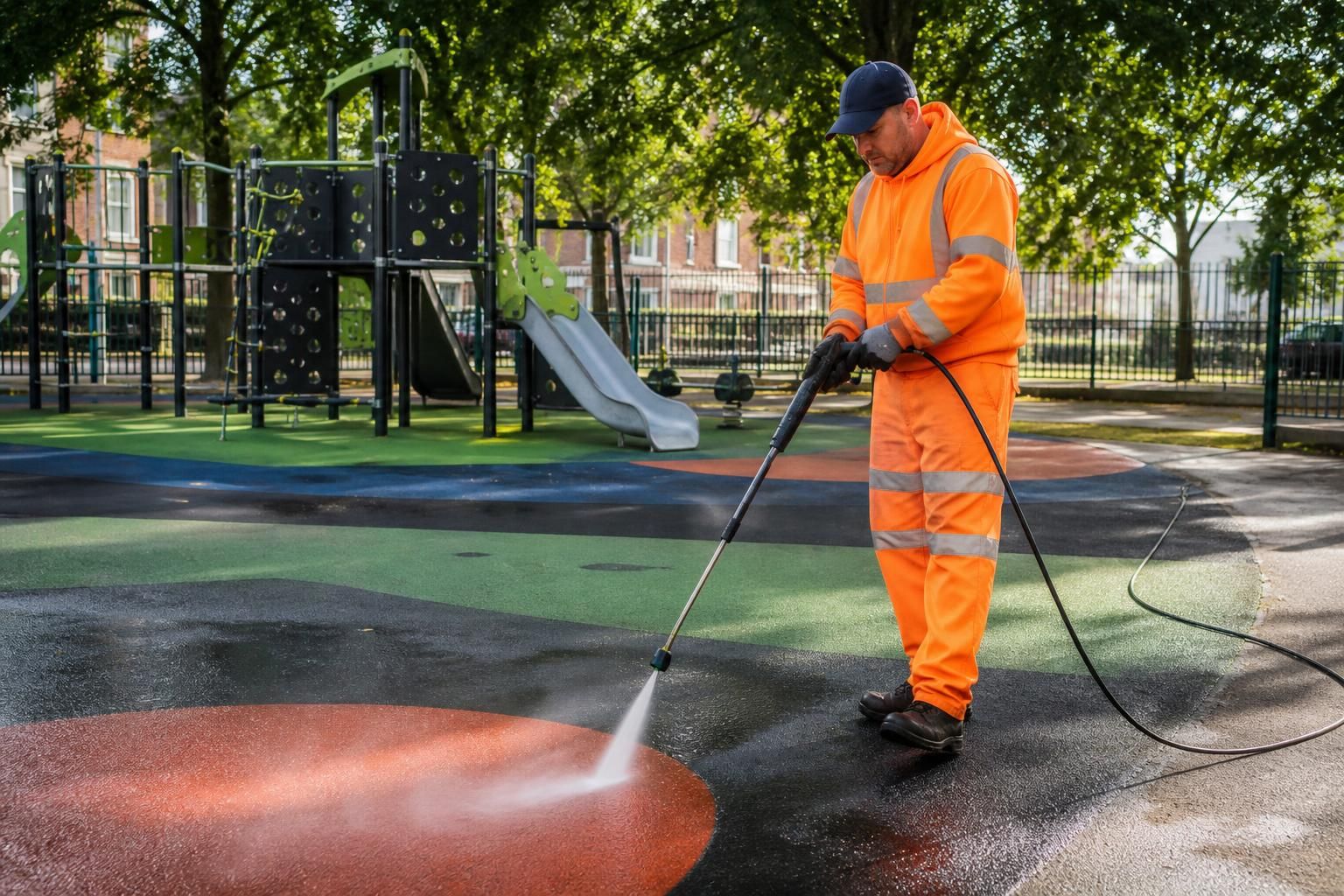
Wet-pour rubber is commonly cleaned using a low-pressure wash and a mild, surface-compatible detergent. The operator should work methodically so that dirt, food residue, bird fouling, algae and general traffic film are lifted without eroding the rubber or forcing water into weak joints. A soft or medium-stiff brush can help loosen ingrained contamination before rinsing.
Excessive pressure, aggressive rotary cleaning and harsh solvents can damage the binder, displace loose rubber granules or create areas with different textures. Water should be directed away from play equipment and towards suitable drainage, and any standing water should be investigated rather than ignored. If the surface has become slippery because of algae or moss, treatment should be controlled and thoroughly rinsed, with the area kept out of use until it is safe and dry.
Rubber tiles and rubber mats
Rubber tiles and mats can usually be cleaned with sweeping, spot treatment and low-pressure washing. Particular attention should be given to tile joints, edges and areas beneath swings, slides and climbing equipment, where organic debris and moisture can accumulate. Detergents should be neutral or specifically approved for rubber, as petroleum-based products and strong chemicals may affect the material or adhesive.
Loose tiles, lifted edges and open joints should be recorded during cleaning. Washing alone will not correct a trip hazard or restore impact performance, so damaged sections should be assessed and repaired or replaced by a competent contractor.
Artificial grass and synthetic play surfaces
Artificial grass is best maintained through regular brushing, removal of litter and controlled low-pressure rinsing. Brushing helps lift flattened fibres and remove leaves, soil and other loose debris, while rinsing clears fine contamination through the drainage system. The direction and intensity of brushing should suit the pile and infill so that fibres are not damaged or the infill displaced.
Moss, algae and weeds should be treated with a product confirmed as suitable for the particular synthetic surface and surrounding environment. Strong biocides, excessive water and unregulated pressure can affect the backing, infill, adhesive or drainage layer. Where animal fouling or spillages are present, the contamination should be removed promptly, the affected area treated appropriately and the surface rinsed without spreading the material.
Tarmac and asphalt
Tarmac play areas generally respond well to sweeping followed by low-pressure washing with a suitable detergent. Oil, chewing gum, food residue, algae and general grime may require localised pre-treatment and mechanical agitation. The cleaning method should avoid lifting loose aggregate or worsening existing cracks and potholes.
Painted lines, games markings and coloured coatings need particular care. Pressure should be reduced around markings, and any detergent must be compatible with the coating. Cleaning should not be used to conceal surface failure; cracks, depressions, loose edges and poor drainage should be reported for maintenance.
Concrete, paving and block surfaces
Concrete and paving can tolerate more intensive cleaning than many rubber surfaces, but pressure still needs to be controlled. A rotary surface cleaner may be suitable for sound, even concrete, whereas joints, loose blocks and ageing surfaces require a gentler approach. Weeds, moss and algae should be removed without dislodging jointing material or washing contamination into drainage channels.
Where block paving has sand-filled joints, excessive pressure can remove the jointing material and encourage movement. Reinstatement may therefore be needed after cleaning. Any detergent or treatment should be selected with regard to nearby grass, planting, drainage and watercourses.
Timber and composite surfaces
Timber play features, boardwalks and seating should normally be cleaned with brushing, a mild detergent and a low-pressure rinse. Excessive pressure can raise the grain, strip protective coatings and leave a rough surface that may create splinters. Water should not be forced into joints, end grain or damaged areas.
Composite boards should also be cleaned according to the manufacturer’s guidance, as some products can stain, mark or become discoloured when exposed to strong chemicals. After cleaning, the surface should be checked for splintering, rot, loose fixings, slippery deposits and coating failure.
Metal equipment, painted surfaces and safety markings
Play equipment, railings and painted components are usually cleaned with a soft brush, compatible detergent and controlled rinsing. Abrasive pads and high-pressure jets can remove paint, expose corrosion and damage protective finishes. Avoid directing water into bearings, electrical components, sealed joints or moving mechanisms.
Cleaning should preserve safety labels, graphic markings and surfacing indicators. If paint or markings are already flaking, the condition should be documented so that remedial work can be planned separately.
Choosing the right method in practice
- Use dry removal first to clear litter, leaves, loose grit and organic debris.
- Select detergents according to the surface and the type of contamination, not simply the strength of the product.
- Use the lowest effective pressure and test an inconspicuous area before wider cleaning.
- Keep dirty water, detergents and biological treatments away from drains, planting and watercourses where possible.
- Allow the area to dry and inspect it for slipperiness, displaced infill, loose joints, damaged markings and defects before reopening it.
- Record defects found during cleaning and arrange repairs where the surface no longer provides the required safety or drainage performance.
Professional cleaning is particularly useful where a playground combines several surface types or has persistent algae, staining, graffiti, poor drainage or restricted access. The work method should be agreed after inspecting the site, with cleaning intensity adjusted for the material, contamination and condition of the surface. This approach keeps the playground presentable while protecting its intended impact-absorbing and slip-resistant performance.
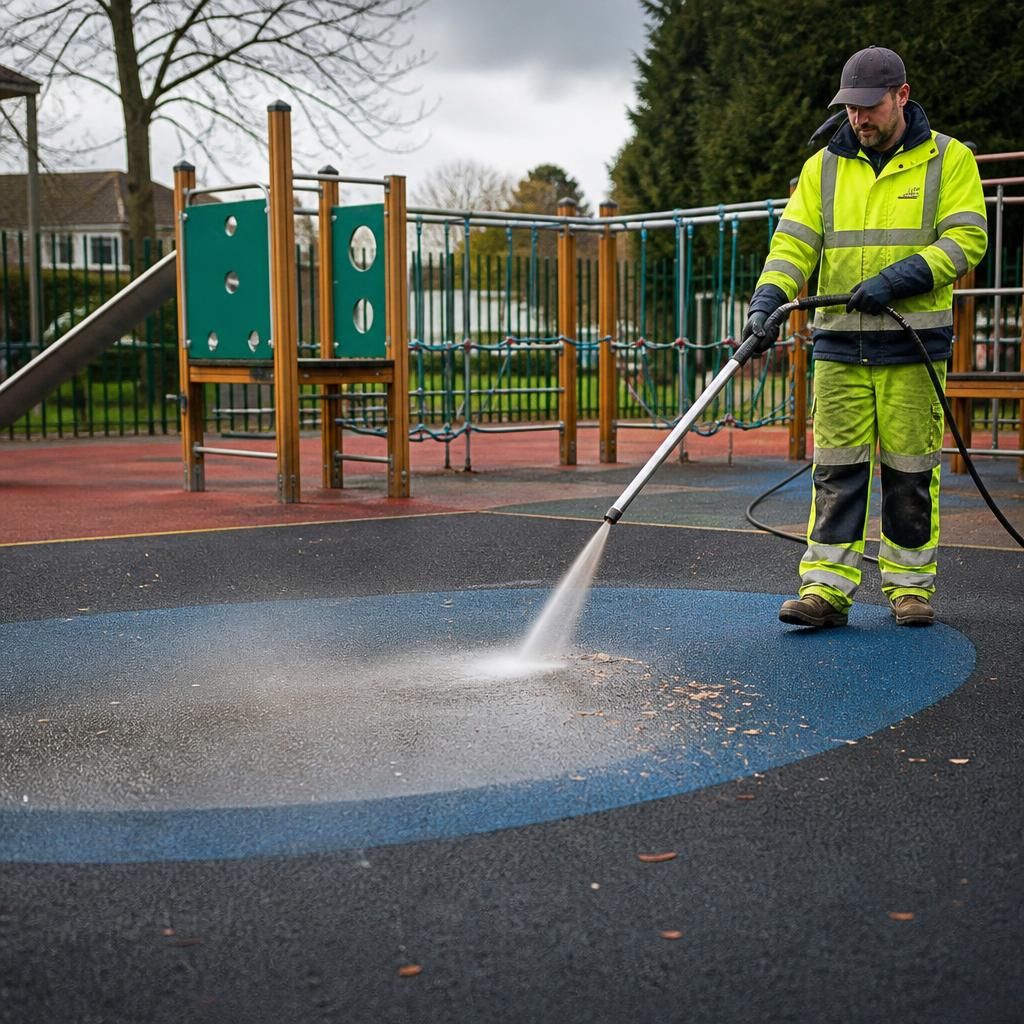
The safest cleaning method is the least aggressive one that removes the contamination effectively. Begin with dry removal of litter and loose debris, then use a surface-compatible detergent, soft brushing and controlled low-pressure rinsing. This approach helps protect wet-pour rubber, artificial grass, safety tiles, coatings and jointing materials from unnecessary damage.
Before cleaning the full area, test the proposed method in an inconspicuous section. Check for colour transfer, displaced infill, loose granules, damaged markings or changes to the surface texture. Adjust the pressure, brush type and detergent if needed, and keep the playground closed until the surface is clean, dry and safe to use.
Arrange professional playground surface cleaning
Arrange professional playground surface cleaning with Encanto Exterior Cleaning to ensure each material is treated using the appropriate pressure, detergent and rinsing method. Contact our team to discuss your site and schedule a suitable cleaning service.