
What are the recommended techniques for maintaining different playground surface materials?
Maintain each playground surface with a material-appropriate approach: use low-pressure detergent cleaning for rubber and wet pour, controlled pressure washing for tarmac, and gentle brushing with limited water for artificial grass. Always remove debris, inspect for damage, clear drainage points and allow the surface to dry fully before reopening the play area.
Maintaining a playground surface safely requires a method suited to its material, construction and condition. Rubber and wet pour surfaces generally need low-pressure cleaning with a compatible detergent; tarmac can tolerate more controlled pressure when it is sound; and artificial grass should be maintained with gentle brushing, careful debris removal and limited water. Every method should include a pre-clean inspection, protection of surrounding equipment, attention to drainage and a complete drying period before the play area reopens.
Start with an inspection and preparation
Before applying water or cleaning products, remove loose litter, leaves, soil, moss and other debris by hand or with a soft brush. Check the surface for lifting, cracking, loose edges, worn patches, exposed aggregate, depressions and areas where water is not draining correctly. Pay particular attention to transitions around kerbs, play equipment posts, access gates and changes between different surface materials.
Cleaning should not be used to conceal defects that could affect impact attenuation or create a trip hazard. Record significant damage and arrange appropriate repairs before the area is returned to use. Drainage channels, gullies and outlets should be cleared so that wash water does not remain on the surface or flow into unsuitable areas.
Rubber tiles and rubber safety surfacing
Rubber tiles and bonded rubber surfaces should be cleaned using a soft brush or suitable low-pressure equipment, clean water and a mild, surface-compatible detergent where required. Agitation should be controlled so that dirt is lifted without damaging joints, loosening edges or removing the finish from the tiles.
Avoid aggressive pressure washing, rotary surface cleaners and harsh chemicals unless the surface manufacturer has specifically confirmed that they are suitable. Strong solvents, petroleum-based products and unapproved disinfectants can affect the binder, colour or flexibility of rubber. Treat oil, chewing gum, paint and other localised contamination separately, using a method that will not soften or discolour the surface.
After cleaning, inspect tile joints and perimeter restraints. Any movement, gaps or raised edges should be addressed promptly because water penetration and repeated foot traffic can increase deterioration. Do not reopen the area until standing water has cleared and the surface is fully dry.
Wet pour rubber surfacing
Wet pour consists of rubber granules bound together, so the cleaning approach must protect the surface integrity while removing dirt from its open texture. Use a soft-bristled brush, low-pressure rinse and a mild detergent that is confirmed as compatible with the binder. Work in manageable sections and avoid forcing water into failed joints, cracks or gaps at the edges.
Do not direct a high-pressure lance closely at the surface. Excessive pressure can dislodge granules, widen existing defects and expose the underlying foundation. Avoid abrasive pads and concentrated chemicals that may weaken the binder or leave a slippery residue.
Once the surface is clean, check for loose granules, bald patches, cracking, shrinkage around equipment posts and separation from kerbs or other surfacing. These defects may require specialist patching rather than further cleaning. Ensure that detergent and dirty water are removed without allowing contaminated runoff to enter planting areas or drainage systems where it may cause harm.
Tarmac and asphalt play areas
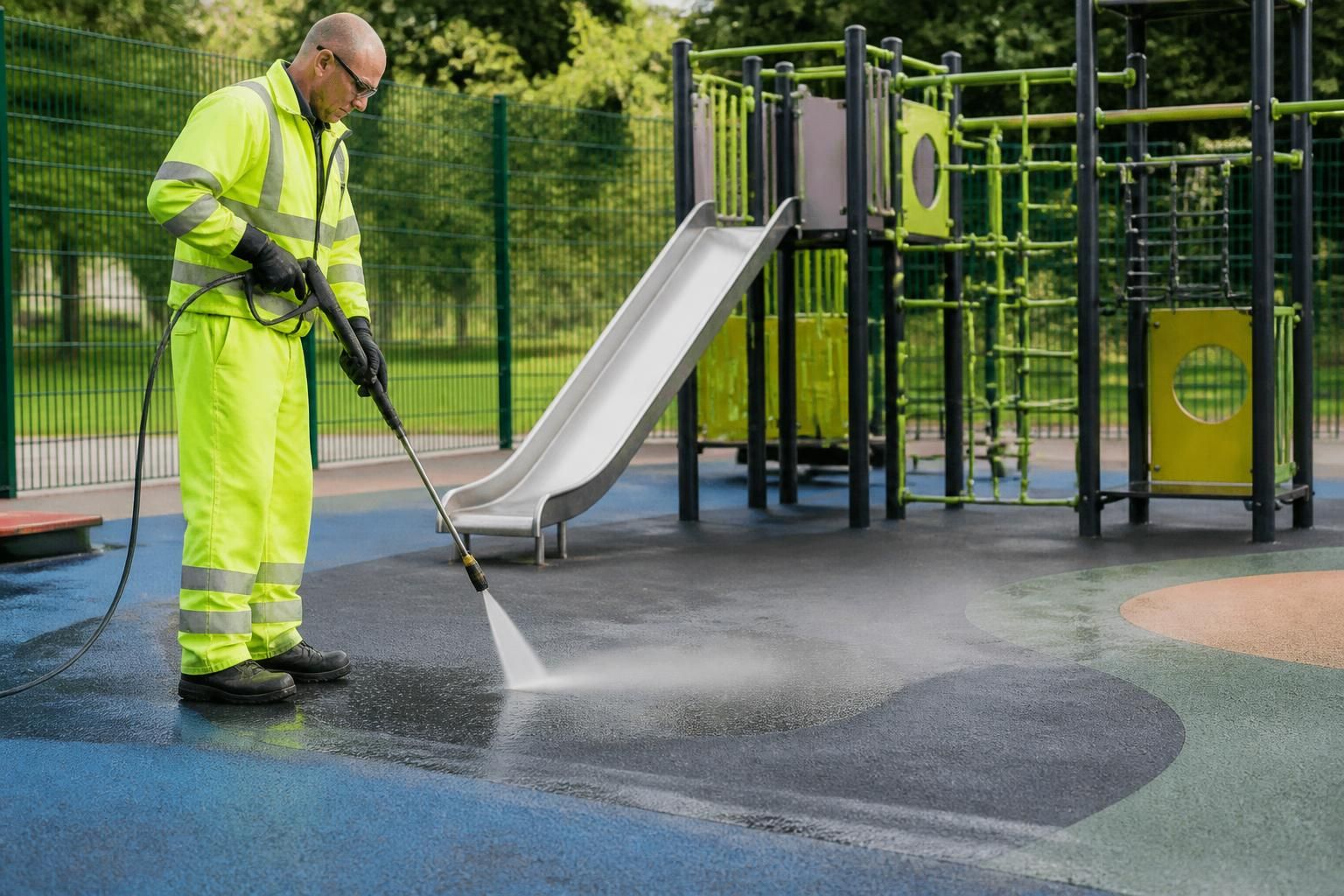
Sound tarmac is relatively robust and can usually be cleaned with a controlled pressure-washing method. Begin with a lower pressure setting and increase it only when necessary and safe for the condition of the surface. Keep the lance moving, avoid holding it close to one spot, and take care around painted lines, joints, patched sections and edges.
A suitable detergent may be used to loosen traffic film, algae, food residue and general grime. It should be applied according to the product instructions and thoroughly rinsed away. Oil and fuel contamination needs prompt attention because it can soften asphalt and create a slip risk. Use a product approved for asphalt and collect or control the resulting runoff.
Before pressure cleaning, look for loose aggregate, crumbling edges, potholes, open cracks and areas where the surface has become uneven. High pressure can worsen these problems. Moss and algae should be removed carefully, followed by a thorough rinse and drying period. Reinstatement of worn markings or repairs to damaged tarmac should be treated as separate maintenance work.
Artificial grass and synthetic sports surfacing
Artificial grass should be maintained by removing litter and organic debris, then brushing the pile with a suitable stiff-but-not-abrasive brush. Brushing helps lift flattened fibres and distribute loose infill where an infill system is present. Follow the pile direction and avoid equipment that can tear the backing or displace the infill excessively.
Use limited water and low-pressure rinsing for ingrained dirt or localised contamination. Excessive water can move infill, saturate the backing and place unnecessary demand on drainage. Do not use a rotary cleaner, aggressive pressure washing or unapproved weed-killing and chemical treatments. Organic matter left on the surface can support moss, algae and weed growth, so it should be removed routinely rather than allowed to build up.
Inspect seams, edges, joins around equipment and the condition of the backing. Look for ripples, exposed seams, displaced infill, worn areas and poor drainage. Contamination from animal fouling should be isolated and removed using an appropriate hygienic procedure and compatible disinfectant, followed by rinsing that does not spread contamination across the play area.
Loose-fill surfaces
Where a play area uses engineered wood fibre, bark or another loose-fill material, cleaning is mainly a matter of removing litter, organic debris and contaminated material by hand or with suitable screening equipment. Avoid washing loose-fill surfacing because water can displace it, create uneven areas and affect the depth available for impact absorption.
Rake and redistribute the material as needed, particularly beneath swings, slide exits and other high-use zones. Check for compaction, exposed sub-base, holes and migration beyond the perimeter. Top-up material should be compatible with the existing surface and installed to the required depth by a competent provider.
General cleaning and maintenance controls
- Use cleaning products that are compatible with the surface, surrounding planting, drainage system and play equipment.
- Test a detergent or cleaning technique in a discreet area before treating the whole surface.
- Prevent overspray and runoff from reaching electrical components, rubber safety edges, planted areas or public routes.
- Use barriers and clear signage to keep children and other users away while work is taking place.
- Remove all detergent residue and check that the surface is not slippery when wet or after drying.
- Allow the area to dry fully and confirm that access routes, equipment bases and drainage points are safe before reopening.
- Keep records of cleaning, inspections, defects, repairs and any products used, particularly where the playground forms part of a managed estate or public facility.
Routine visual checks should be supported by more detailed inspections at planned intervals and after severe weather, vandalism, flooding or construction activity nearby. Cleaning frequency should reflect usage, surrounding trees, pollution, animal fouling, seasonal growth and the condition of the drainage. High-use areas may need targeted cleaning and redistribution or repair between full maintenance visits.
Professional maintenance is particularly appropriate where the surface has specialist impact-attenuating properties, extensive staining, blocked drainage, biological growth or defects that cannot be assessed safely by visual inspection alone. A competent contractor can select the correct pressure, brush, detergent and recovery method for each material, while identifying deterioration that needs repair rather than more intensive cleaning.
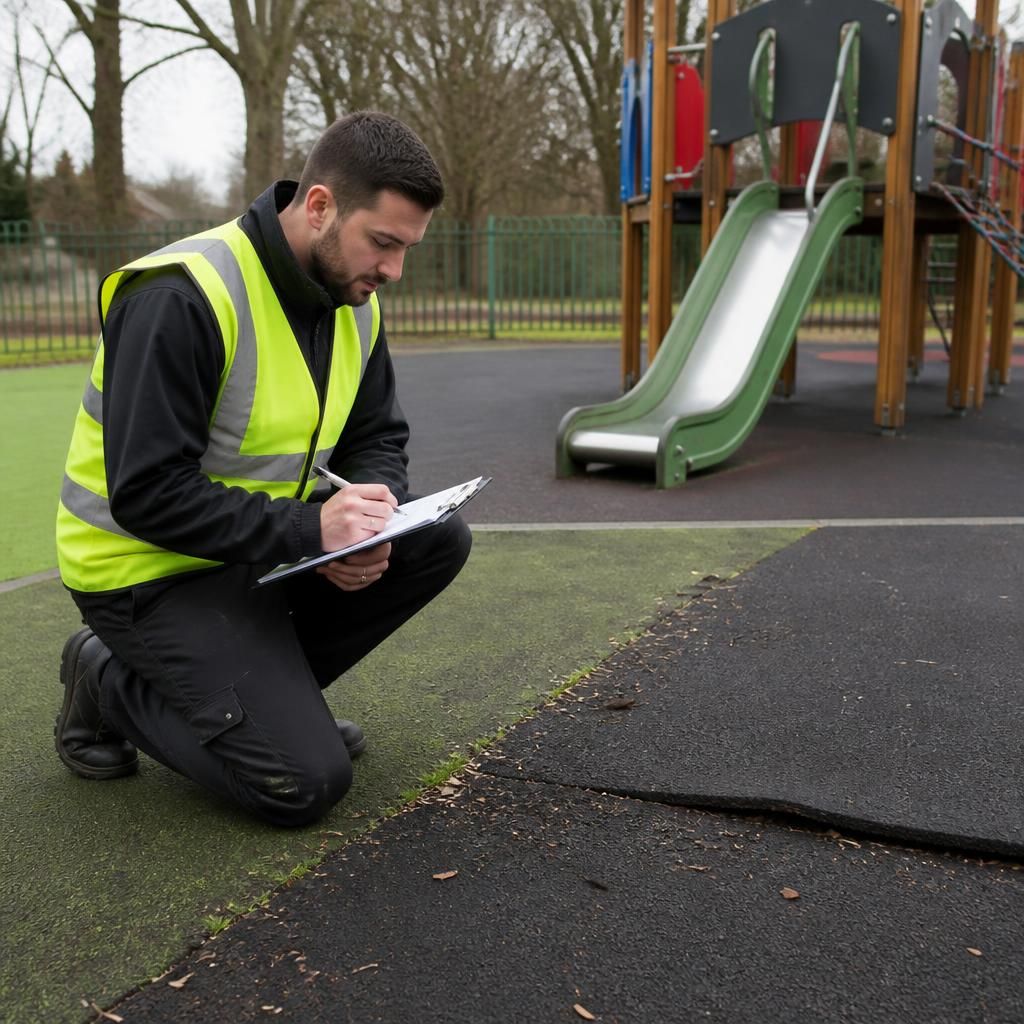
Each playground surface needs a pre-clean inspection before the appropriate technique is chosen. Rubber and wet pour surfacing should be cleaned with soft agitation and low-pressure rinsing, while sound tarmac can withstand controlled pressure washing. Artificial grass is better maintained by brushing, careful debris removal and limited water. Inspect for cracks, loose edges, displaced infill, worn patches and blocked drainage first, as cleaning cannot correct defects that may affect safety or impact attenuation.
Arrange Professional Playground Surface Maintenance
Arrange professional playground surface maintenance to ensure the correct cleaning method is used for each material and that defects affecting safety are identified promptly. Contact Encanto Exterior Cleaning to discuss a planned maintenance visit for your play area.