
What are the best practices for scheduling and carrying out playground maintenance?
Best practice is to use a risk-based maintenance schedule covering routine visual checks, planned cleaning, detailed inspections and prompt repairs, with additional checks after severe weather, vandalism or heavy use. Work should be carried out by competent personnel using suitable equipment and safe exclusion zones, then recorded alongside defects, actions taken and the date the playground was returned to service.
Effective playground maintenance uses a documented, risk-based programme that combines routine visual checks, planned cleaning, operational inspections, periodic detailed examinations and prompt repairs. The schedule should reflect the playground’s equipment, surfacing, location, level of use, exposure to weather and history of vandalism or defects. Every inspection and maintenance action should be recorded, and any area that cannot be used safely should be isolated until the risk has been controlled.
Set out a maintenance schedule based on risk
There is no single interval that suits every playground. A busy public play area, a school playground and a sheltered residential development may require different levels of inspection. When preparing the schedule, consider:
- How frequently the site and individual items of equipment are used.
- The age, design and condition of the equipment and safety surfacing.
- Exposure to rain, frost, wind, standing water, algae and other environmental conditions.
- The likelihood of litter, broken glass, animal fouling, graffiti or deliberate damage.
- Whether the area is close to roads, building work, trees, water or other external hazards.
- Previous defects, recurring drainage problems and manufacturer maintenance instructions.
The risk assessment should define who carries out each type of check, what is inspected, how defects are classified and who has authority to close the playground. Review the schedule when equipment is replaced, use changes, a serious defect occurs or inspection findings show that existing controls are insufficient.
Use several levels of inspection
A reliable programme normally includes the following activities:
- Routine visual checks: Look for immediate hazards before the playground is opened or used. Check for broken glass, sharp objects, animal fouling, vandalism, missing components, exposed foundations, damaged surfacing, trip hazards and unsafe contamination. Remove minor debris where it is safe to do so and record anything requiring further action.
- Operational inspections: Examine the way equipment moves and functions. Check swings, gates, bearings, fixings, ropes, chains, handles, seats, platforms, barriers and moving joints for looseness, excessive wear, corrosion or damage. Confirm that protective features remain in place and that access and exit routes are clear.
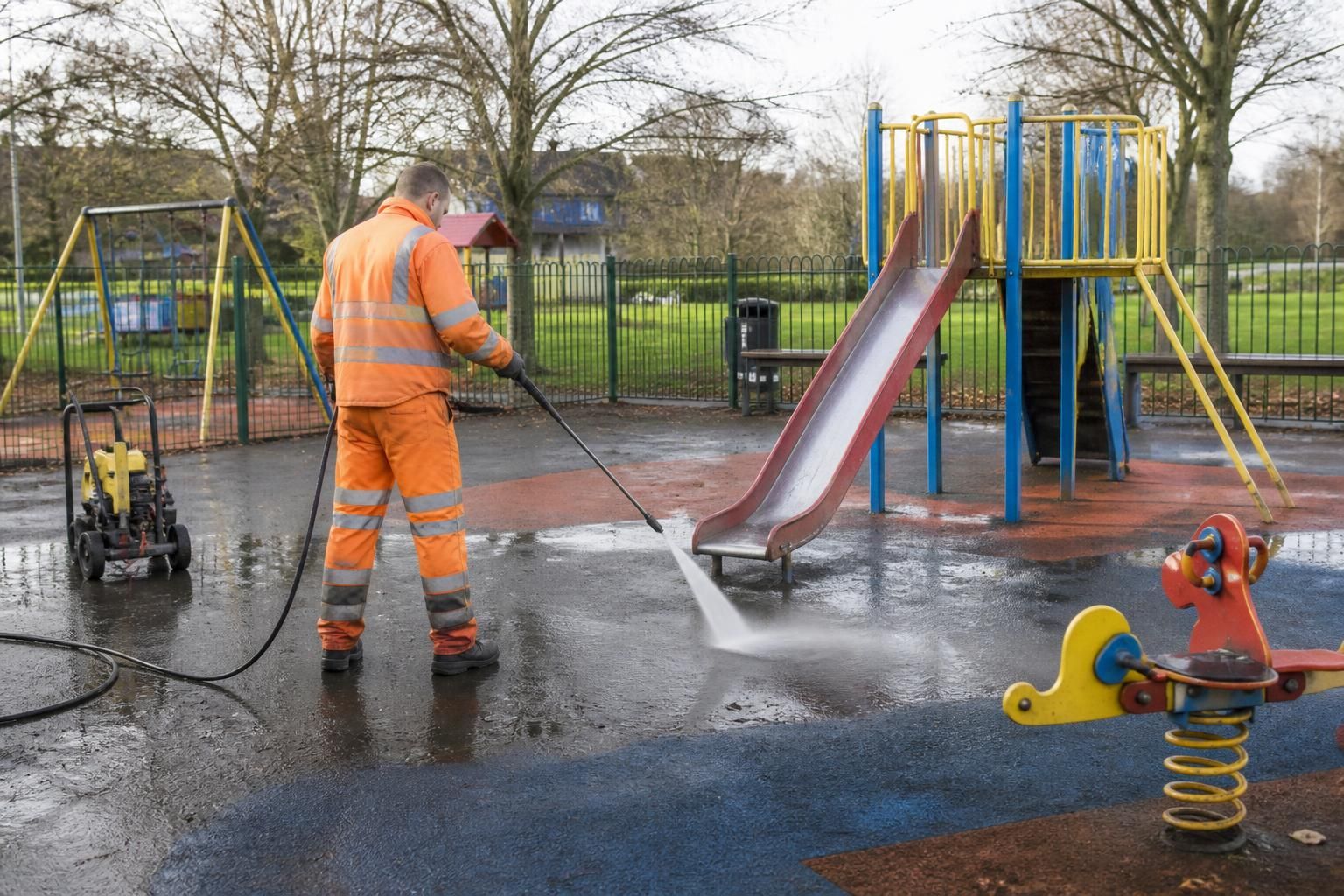
- Planned cleaning: Remove litter, organic growth, staining, mud and other contamination from equipment and play surfaces. Cleaning should be scheduled more frequently where there is heavy use, poor drainage, tree cover, food waste or a known fouling problem.
- Detailed periodic inspections: A competent person should assess the overall condition of the equipment, foundations, surfacing, drainage, fencing and ancillary features. This should identify developing defects that may not be obvious during a quick visual check.
- Annual or principal inspections: Arrange a thorough examination at an appropriate interval, taking account of the relevant manufacturer guidance and recognised playground safety standards, including BS EN 1176 where applicable. The inspection should assess structural integrity, deterioration, stability, entrapment risks and the continued suitability of impact-attenuating surfacing.
Inspect the whole play environment, not just the equipment
Maintenance should cover the complete usable area. Check that safety surfacing is continuous, suitably level and free from depressions, exposed edges, loose sections and trip points. Loose-fill materials may need raking, levelling, topping up or removal of embedded debris. Wet-pour, rubber tiles, artificial grass and other bonded surfaces should be checked for cracking, lifting, shrinkage, open joints and failed repairs.
Also examine drainage channels, gullies, kerbs, fencing, gates, seats, bins, signs, lighting columns and nearby vegetation. Overhanging branches, roots, thorny growth and leaf build-up can create hazards or prevent surfaces from drying properly. A clean appearance is useful, but maintenance decisions must be based on safety, hygiene, condition and function rather than appearance alone.
Plan cleaning around use and site conditions
Cleaning should be carried out when the area can be closed safely and the surface has adequate time to dry. Avoid scheduling pressure washing or steam cleaning immediately before opening if residual moisture could create a slip risk. Account for forecast rain, freezing conditions and wind, particularly where cleaning could spread contaminated water or affect adjacent paths.
Use the least aggressive method that will achieve the required result. Dry removal is appropriate for loose litter and debris. Low-pressure washing may suit robust, washable surfaces, while controlled steam cleaning can be useful for removing ingrained organic contamination without relying on excessive chemical use. The chosen method must be compatible with the surface material, equipment finishes, drainage arrangements and surrounding planting.
Do not use chemicals without checking the manufacturer’s instructions and the site risk assessment. Any cleaning product must be suitable for areas used by children, applied at the correct dilution and removed or neutralised as required. Prevent run-off from entering play areas, watercourses or planted areas where it could cause harm. Never leave pooled water, detergent residue or loosened contamination on a surface that is about to reopen.
Control the work area before maintenance begins
Playgrounds should be closed or segregated before cleaning, inspection or repair work starts. Use suitable barriers and clear signage rather than relying only on verbal warnings. The exclusion zone should cover equipment, wet surfaces, hoses, cables, vehicles, access equipment and any area where debris or contaminated water could travel.
Before starting, identify underground services, restricted access points, fragile surfaces, overhead obstructions and nearby members of the public. Select equipment that can be operated safely in the available space. Pressure washing requires particular care around children, pedestrians, electrical equipment, drainage points and delicate coatings. Operators should use appropriate personal protective equipment and follow the method statement, site rules and control measures for water, chemicals, noise and slips.
Repair defects according to their risk
Classify findings so that urgent hazards are dealt with immediately. Examples include unstable equipment, exposed sharp edges, broken components, significant surfacing failure, dangerous contamination and defects that create a fall or entrapment risk. Close the affected equipment or the whole playground where necessary, make the area secure and arrange a competent repair.
Less urgent defects should still have an assigned owner and target date. Temporary measures, such as removing a damaged component or isolating one item, must not be treated as a permanent repair. Replacement parts should be compatible with the equipment and installed in accordance with the manufacturer’s instructions. After repair, inspect the affected area, confirm that fixings and safety zones are satisfactory, remove tools and debris, and formally authorise reopening.
Carry out extra checks after unusual events
Arrange an additional inspection after severe wind, flooding, frost damage, nearby construction, vandalism, fire, a reported accident or any event that could have affected the equipment or surfacing. Check for movement, undermining, fallen branches, damaged fencing, displaced loose-fill material, pooling water and contamination. Do not assume that equipment is safe because the visible damage appears minor; foundations, fixings and impact surfaces may also require examination.
Keep records that support decisions
Maintenance records should identify the date, time, weather or site conditions where relevant, person completing the check, equipment or area inspected, defects found, photographs where useful, action taken, parts or cleaning methods used, and the date the area was returned to service. Record defects that were considered safe to monitor as well as those that were repaired, explaining the decision where appropriate.
Review records regularly to identify repeated problems, such as blocked drainage, recurring algae, loose fixings or rapid surfacing wear. These patterns can justify changes to the cleaning frequency, drainage improvements, replacement of unsuitable materials or a wider maintenance review. A clear audit trail also demonstrates that inspections were planned, hazards were assessed and corrective action was followed through.
Use competent people and review the programme
Routine checks may be completed by trained site staff, but detailed inspections, specialist repairs and assessments of structural or impact-attenuating performance should be undertaken by people with suitable competence and experience. Training should cover defect recognition, safe isolation, cleaning equipment, chemical handling, manual handling, work at height where relevant and emergency procedures.
The maintenance programme should be reviewed after inspections, incidents, complaints, changes in use and completed improvement work. This continual review keeps the schedule proportionate to the actual risks and helps ensure that playgrounds remain clean, serviceable and safe for use throughout their working life.
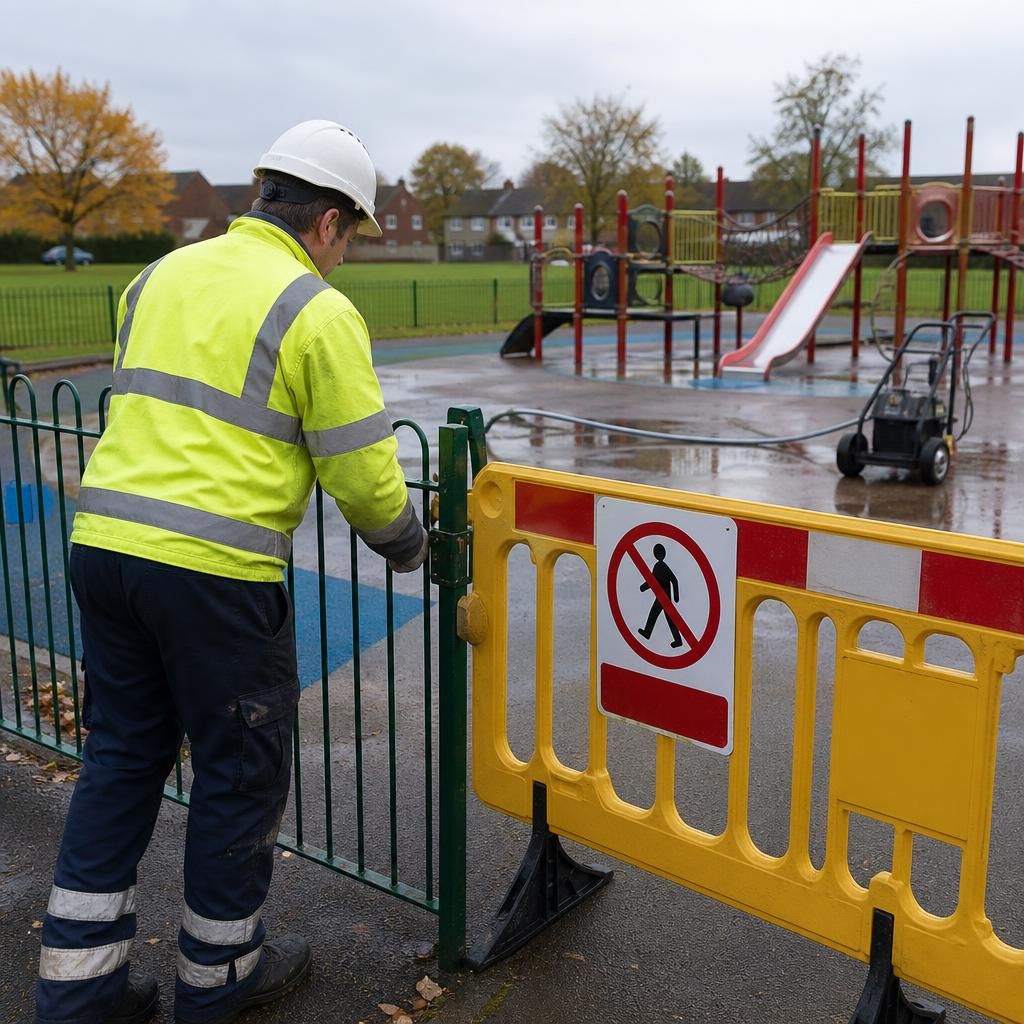
Scheduling playground maintenance around periods of low use helps keep children away from wet surfaces, cleaning equipment, contaminated run-off and repair activity. Plan cleaning and inspections when the area can be fully closed, allowing enough time for surfaces to dry and for staff to complete a final safety check before reopening.
Consider forecast rain, freezing temperatures, wind, drainage and nearby pedestrian routes when choosing the work period. Use barriers and clear signage throughout the task, and do not reopen until there is no pooled water, loose debris, chemical residue, trailing hose or other temporary hazard. Record the closure, work completed and authorisation to return the playground to service.
Schedule Your Playground Maintenance Service
Arrange your playground maintenance service with Encanto Exterior Cleaning to schedule cleaning, inspections and safe site preparation around your operational requirements. Contact us to discuss a planned maintenance programme for your playground surfaces and surrounding areas.