
What are the best cleaning methods for different playground surface materials?
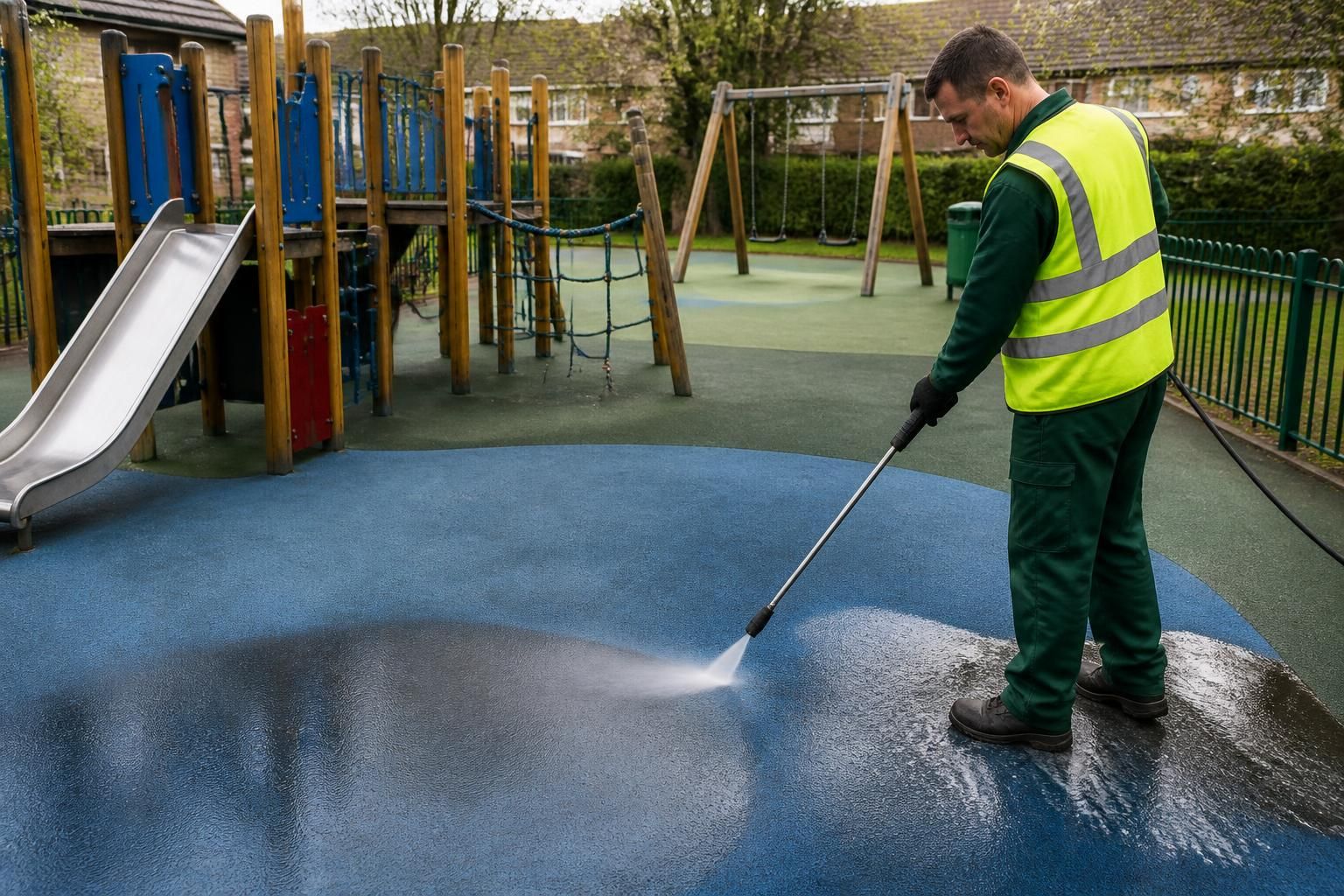
The best cleaning method depends on the playground surface: low-pressure washing with a suitable detergent is generally appropriate for rubber and wet pour, controlled pressure washing suits tarmac, and gentle brushing with low-pressure rinsing is safest for artificial grass. Cleaning should remove dirt, algae, stains and debris without damaging the surface, loosening rubber granules or affecting drainage.
The best cleaning method depends on the playground surface and its condition. Low-pressure washing with a compatible detergent is generally suitable for rubber tiles and wet pour rubber, controlled pressure washing can be used on tarmac, and artificial grass should usually be cleaned by brushing, debris removal and low-pressure rinsing. In every case, the aim is to remove dirt, algae, stains and organic debris without loosening rubber granules, damaging the surface, blocking drainage or leaving slippery residues.
Rubber tiles and rubber slabs
Begin by removing leaves, litter, loose soil and other debris with a soft brush or suitable vacuum equipment. A pH-neutral or surface-compatible detergent can then be applied to break down general soiling, algae and greasy deposits. Agitation with a soft-bristled brush helps lift contamination from the textured surface without cutting or scuffing the rubber.
Rinse using low to moderate water pressure, keeping the lance at a safe distance and avoiding concentrated spray on joints, edges and damaged areas. Excessive pressure may lift tile edges, open joints, displace infill or mark the rubber. Particular care is needed where tiles have started to curl, where seams are separating or where the surface has been repaired. These defects should be recorded and addressed rather than concealed by aggressive cleaning.
Wet pour rubber surfacing
Wet pour consists of rubber granules bound into a continuous safety surface. It should be cleared of loose debris before cleaning, as trapped organic matter can encourage algae and moss growth. Apply a suitable detergent evenly, allow it to work for the recommended dwell time without letting it dry, and use soft brushing to loosen embedded dirt.
Low-pressure rinsing is normally the safest approach. The spray should be kept moving and directed across the surface rather than held in one spot. High pressure can expose or remove rubber granules, damage the binder, create visible lines and affect the surface’s shock-absorbing performance. Rinse thoroughly towards functioning drainage points, but do not force dirty water into damaged joints, open edges or blocked outlets.
Algae and moss may require a treatment specifically approved for rubber play surfaces. The product must be used in accordance with its instructions, with controls in place to prevent contact with children, planting, nearby watercourses and other sensitive areas. The playground should remain closed until the surface is fully rinsed, dry and free from treatment residue.
Tarmac and asphalt
Tarmac is more resistant to mechanical cleaning than many rubber surfaces, but it can still be damaged by excessive pressure, heat, deteriorated areas and exposed aggregate. Sweep the area first, then pre-treat oil, food, chewing gum, algae or other stains with a suitable product. Different stains may need different treatments; an unsuitable solvent can soften markings, affect coatings or leave a slippery film.
Controlled pressure washing is suitable for sound tarmac when the operator uses an appropriate nozzle, pressure and working distance. Work methodically, avoid prolonged spraying over cracks and repairs, and direct runoff towards suitable drainage. If the tarmac is heavily weathered, has loose chippings or contains failed patches, use lower pressure and rely more on detergent and agitation.
Road markings, play markings and painted graphics may need gentler treatment than the surrounding tarmac. Test the cleaning method in an inconspicuous area where possible, particularly when the surface has a specialist coating or recently applied markings.
Artificial grass
Artificial grass should be cleaned without flattening the pile, disturbing the backing or removing stabilising infill. Start with a stiff but non-damaging brush, leaf blower or suitable vacuum system to remove leaves, litter and loose debris. Brush against the direction of the pile where appropriate to lift fibres and expose trapped material, taking care around seams and perimeter restraints.
For general soiling, use a mild, compatible detergent and low-pressure water. Avoid aggressive rotary pressure-washing equipment, high-pressure spot cleaning and excessive water volumes, as these can damage the backing, move infill and carry contamination into the drainage layer. Rinse thoroughly and confirm that water is draining freely rather than pooling beneath the grass.
Animal fouling, food residue and other biological contamination should be removed promptly using appropriate hygiene procedures and a product approved for synthetic grass. Do not use harsh disinfectants, bleach or strong solvents unless the surface manufacturer has confirmed compatibility. These substances may discolour fibres, weaken the backing or leave residues that are unsuitable for a children’s play area.
Concrete, block paving and other hard surfaces
Where a play area includes concrete paths, paving or hardstanding, sweep first and treat oil, algae and organic staining separately. Pressure washing may be appropriate for sound concrete and paving, but the pressure must be reduced around joints, drainage channels, tactile paving, loose blocks, painted markings and adjacent rubber surfacing. Sand or jointing material can be displaced if the spray is directed into paving joints.
Hard surfaces should be rinsed until detergent and loosened contamination have been removed. Runoff must be managed so that dirty water does not flow onto a rubber safety surface or remain where it could create a slip hazard. Any chemical treatment should be selected for the specific material and used in line with the manufacturer’s instructions.
A suitable cleaning process for all playground surfaces
- Inspect the area before work begins, noting damaged surfacing, open seams, trip hazards, blocked drains, loose edging, worn markings and areas of standing water.
- Remove litter, leaves, soil, stones and other loose debris. This prevents abrasive material from being driven into the surface during washing.
- Protect or remove movable equipment where possible, and isolate the playground so children and unauthorised users cannot enter during cleaning.
- Choose a detergent and cleaning method that match the surface, the type of contamination and any manufacturer’s requirements. Test unfamiliar products or methods in a discreet area first.
- Apply the detergent evenly and allow suitable dwell time. Do not allow it to dry, and do not mix cleaning chemicals.
- Agitate with soft brushes or appropriate equipment, using extra care around seams, edges, markings, repairs and drainage points.
- Rinse using the lowest effective pressure and control the runoff. Avoid directing water into damaged areas or towards sensitive planting and watercourses.
- Allow the surface to dry fully, then inspect it again for remaining contamination, slippery residue, displaced material, blocked drainage and newly visible defects.
Cleaning alone will not correct failed surfacing, poor drainage, loose edging or structural defects. If rubber granules are missing, wet pour is cracking, artificial grass is lifting or tarmac is breaking up, the area should be assessed for repair before it is returned to use. Cleaning records should note the surface type, products and equipment used, areas treated, defects identified and any follow-up work required.
For routine maintenance, the safest approach is to match the cleaning intensity to the material and contamination rather than applying the same pressure across the whole playground. Regular sweeping, prompt removal of spills and organic debris, inspection of drainage and timely treatment of algae can reduce the need for aggressive cleaning and help preserve the surface’s safety and appearance.
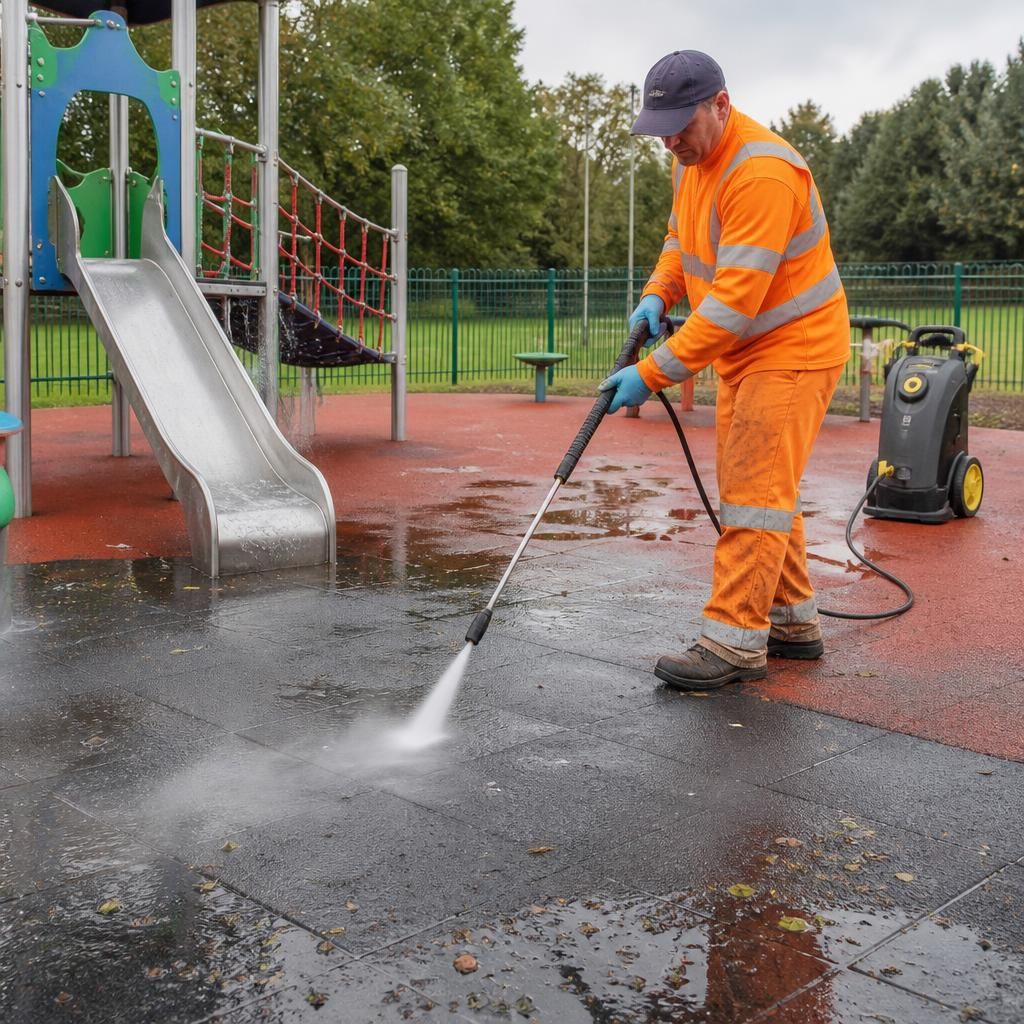
The cleaning method must match the playground surface because excessive pressure or unsuitable chemicals can damage safety surfacing, disturb infill and affect drainage. Rubber tiles and wet pour generally require compatible detergent, soft agitation and low-pressure rinsing, while sound tarmac can usually tolerate controlled pressure washing. Artificial grass is best maintained by brushing out debris and using gentle rinsing to protect the fibres, backing and drainage layer.
Before cleaning, inspect for lifting edges, cracks, loose granules, damaged seams and blocked drains. These defects should be recorded and addressed rather than hidden with more aggressive cleaning. Always test unfamiliar products in a discreet area and keep the playground closed until the surface is fully rinsed, dry and free from residue.