
What are the benefits of using professional playground cleaning services?
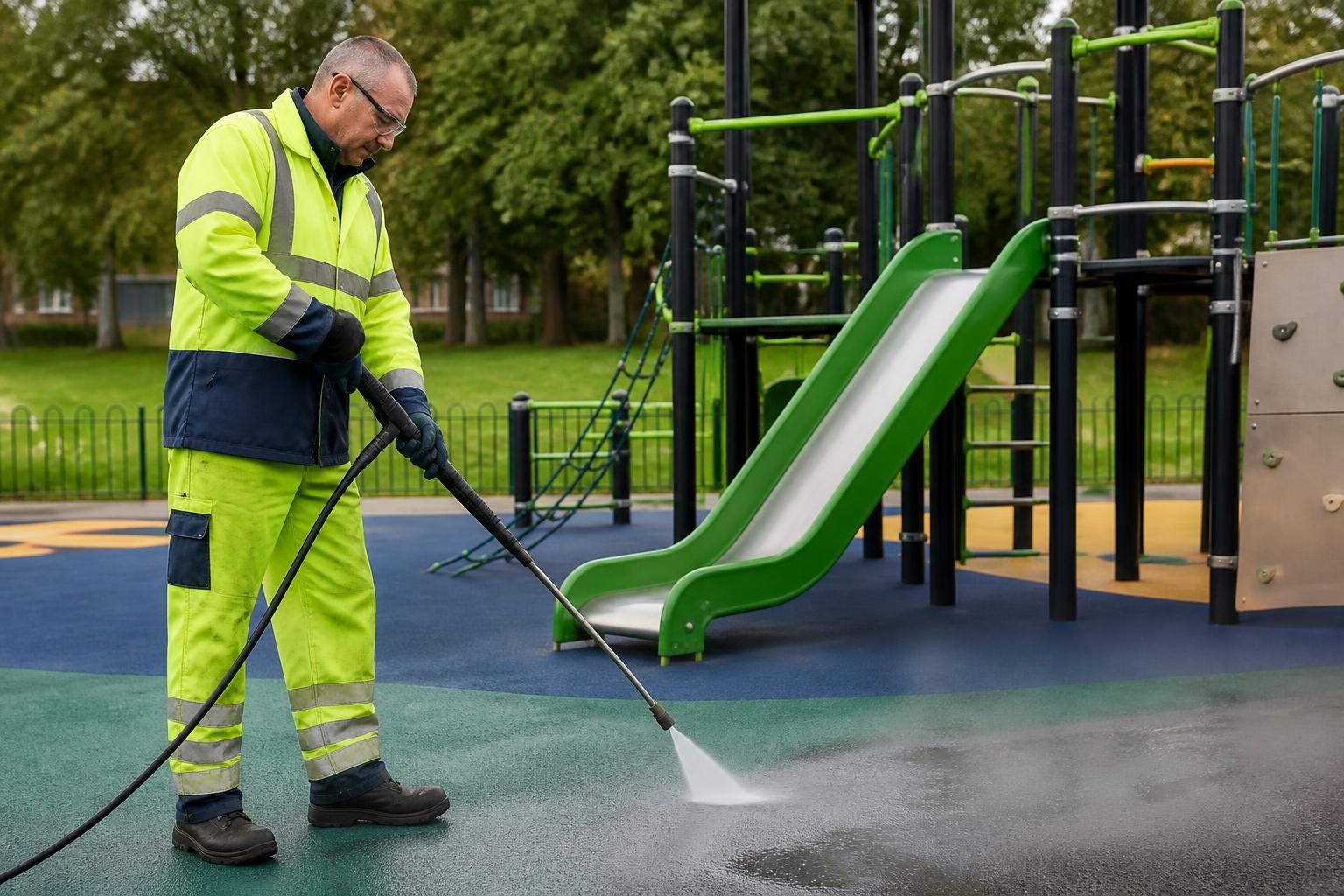
Professional playground cleaning services help keep play areas hygienic, safer to use and compliant with relevant maintenance requirements. Specialist cleaning removes dirt, algae, organic matter, stains and potential contaminants from equipment and surfaces while helping preserve their condition and professional appearance.
Professional playground cleaning services help maintain safer, more hygienic and better-presented play areas by removing dirt, algae, moss, organic matter, staining and other surface contaminants from equipment and surrounding areas. Specialist contractors can select suitable pressure washing, soft washing or steam-cleaning techniques for each material, while taking account of drainage, access, nearby surfaces and the need to keep the site safe for children and the public.
Improved hygiene and cleanliness
Playgrounds are exposed to bird fouling, mud, leaves, food residue, bodily fluids and other organic contamination. These materials can collect on touch points, platforms, barriers, seating and surfacing. Professional cleaning provides a controlled way to remove visible contamination and reduce the build-up of residues that can contribute to unpleasant odours and poor hygiene.
Cleaning is not a substitute for repairs, inspections or appropriate disinfection procedures. Where there is known contamination, the cleaning method should be selected according to the material involved and the site’s health and safety arrangements. A competent contractor can also advise when an area should remain closed until it has been cleaned, disinfected, rinsed or fully dried.
Reduced slip and trip risks
Algae, moss, lichen, mud and decomposing leaves can make paths, wet-pour rubber, tiles, concrete, tarmac and other hard surfaces slippery. Removing this build-up helps improve surface traction and visibility of the play area. It also makes defects such as loose surfacing, cracks, standing water and damaged edges easier to identify during a follow-up inspection.
Cleaning alone cannot correct a damaged or unsuitable surface. Any defects found during the work should be recorded and referred for assessment so that repairs, replacement or further maintenance can be arranged where necessary.
Protection of playground equipment and surfacing
Accumulated grime and organic growth can retain moisture against metal, timber, plastic and composite components. Over time, this may contribute to corrosion, staining, surface deterioration or accelerated wear. Regular, correctly specified cleaning removes damaging deposits before they become more difficult to treat.
The method must be matched to the construction and condition of the equipment. Excessive pressure can damage paint finishes, loosen components, force water into joints or disturb loose-fill surfacing. Professional operatives should therefore control pressure, temperature, water volume and cleaning products rather than applying the same process across the whole site.
More effective cleaning of different surface materials
Playgrounds commonly contain wet-pour rubber, rubber tiles, artificial grass, safety matting, tarmac, concrete, timber, coated metal and plastic. Each material has different tolerances and drainage characteristics. A professional service can assess the surface before work begins and use an appropriate combination of methods, such as low-pressure washing, steam cleaning, controlled rinsing or targeted treatment.
- Rubber and wet-pour surfaces generally require controlled pressure and careful rinsing to avoid disturbing the bound aggregate.
- Artificial grass needs attention to debris, moss and drainage rather than aggressive cleaning that could damage fibres or loosen the backing.
- Concrete and tarmac may tolerate more robust cleaning, but surrounding joints, edges and drainage points still need protection.
- Painted or powder-coated metal requires a method that removes contamination without stripping the protective finish.
- Timber should not be saturated unnecessarily, particularly where coatings, joints or signs of decay are present.
Better appearance and public presentation
Clean equipment, surfacing, paths, fencing and seating present a site that is properly maintained. Removing black spotting, green growth, traffic film, staining and accumulated litter residue can restore the appearance of areas that have become weathered or neglected. This is particularly relevant to play areas managed by schools, housing providers, local authorities, commercial estates and other organisations responsible for public-facing facilities.
Improved appearance should be treated as one part of responsible maintenance, not as a replacement for safety checks. Clean surfaces can make wear and damage more visible, allowing other maintenance needs to be identified earlier.
Support for maintenance and safety procedures
Playground operators remain responsible for inspection, risk assessment, repairs and keeping the area suitable for use. Professional cleaning supports these duties by removing contamination that can obscure defects and by providing a clear maintenance record. Work documentation can include the areas treated, the methods used, notable defects, access restrictions and any recommendations for follow-up action.
In the UK, playground management should take account of relevant guidance and standards, including the principles associated with BS EN 1176 for playground equipment and BS EN 1177 for impact-attenuating surfacing, where applicable. Cleaning does not by itself demonstrate compliance with these standards, but it can form part of a wider planned inspection and maintenance regime.
Lower disruption and safer working arrangements
Professional contractors are equipped to plan work around opening hours, school timetables, public access and weather conditions. They can establish exclusion zones, manage hoses and equipment, protect adjacent buildings and control runoff so that members of the public are not exposed to wet, slippery or contaminated areas during the work.
A suitable method statement and risk assessment should consider water use, electrical equipment, chemical handling, nearby roads, drainage, vulnerable users and the time required for surfaces to dry. The playground should only be reopened when the responsible person is satisfied that the area is safe and free from avoidable hazards created by the cleaning process.
More predictable long-term maintenance costs
Planned cleaning helps prevent heavy accumulation that may require more intensive treatment later. Removing contamination regularly can reduce the need for aggressive intervention and may help preserve coatings, surfacing and equipment finishes. It also provides opportunities to identify minor defects before they develop into larger repair requirements.
These cost benefits depend on the condition of the site, the materials used, exposure, usage and the quality of the maintenance plan. Cleaning cannot prevent normal wear, vandalism, structural failure or the eventual replacement of worn surfacing, but it can contribute to better-informed maintenance decisions.
How to obtain the best results from a professional service
- Arrange an initial assessment of equipment, surfacing, drainage, access and contamination.
- Confirm which areas must be closed and how the site will be protected during cleaning.
- Agree a method suited to each material, including controls for pressure, heat, detergents and runoff.
- Ensure the contractor reports damage, loose components, poor drainage and other issues noticed during the work.
- Allow adequate drying time and complete a post-clean inspection before reopening the area.
- Set a repeat cleaning and inspection schedule based on use, exposure, seasonal growth and site conditions.
For existing playgrounds, the main benefit of professional cleaning is that hygiene, appearance and surface condition are addressed as part of a controlled maintenance process. A properly planned service keeps cleaning proportionate to the material and contamination, supports the site’s wider safety procedures and gives the responsible organisation a clearer record of work completed and further action required.
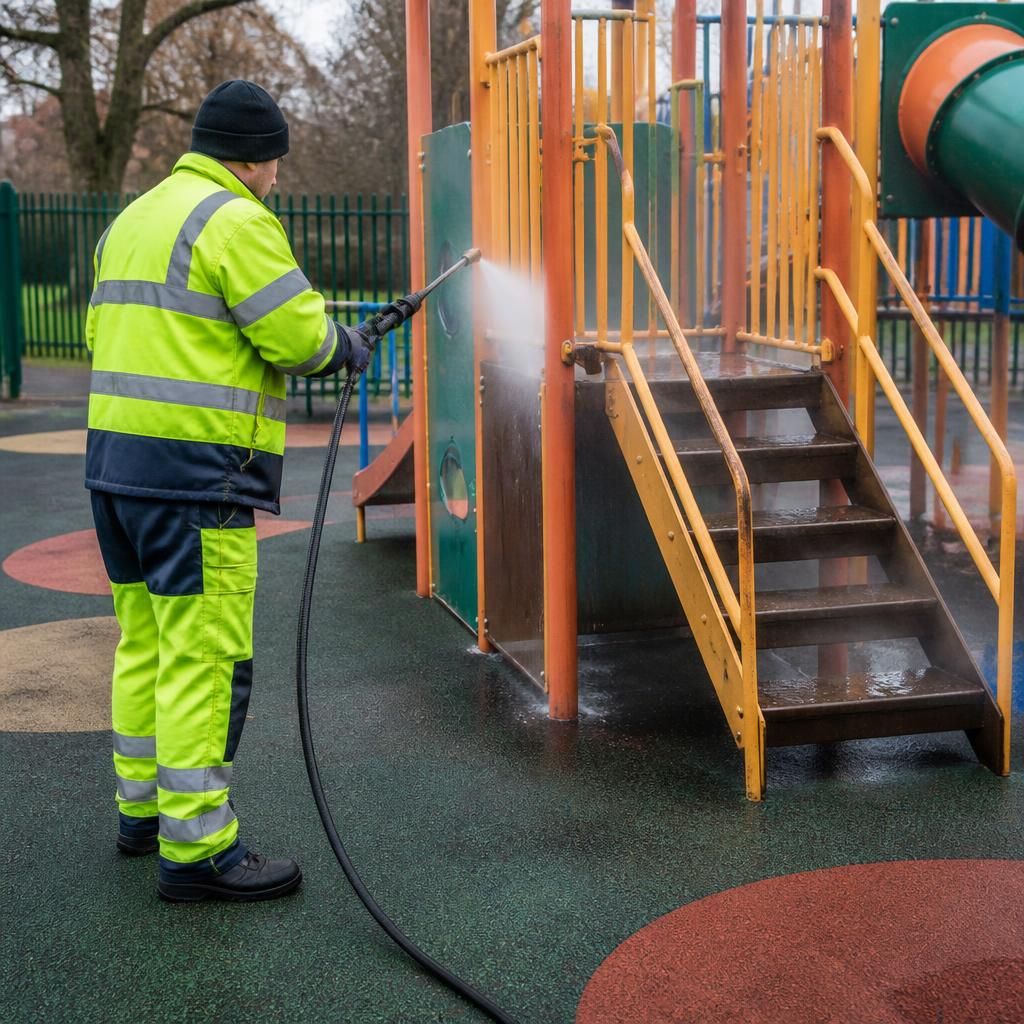
Professional playground cleaning removes organic contamination, algae, moss, mud and staining from equipment, safety surfacing and surrounding paths. This helps reduce slippery residues, unpleasant odours and hygiene concerns while making defects such as damaged surfacing, standing water or loose components easier to identify.
Specialist operatives match the cleaning method to each material, controlling pressure, heat, detergents, rinsing and runoff to avoid damaging rubber, artificial grass, timber, coated metal or plastic. The area can then be inspected, allowed to dry fully and reopened only when it is safe for use. Cleaning supports, but does not replace, routine inspections, repairs and risk assessments.
Arrange professional playground cleaning for your site
Arrange a professional playground cleaning assessment to review the equipment, surfacing, drainage and access requirements at your site. We can recommend a suitable cleaning method and help plan the work around inspections, drying time and safe reopening.