
What types of surfaces are suitable for playground cleaning using pressure washing and steam cleaning?
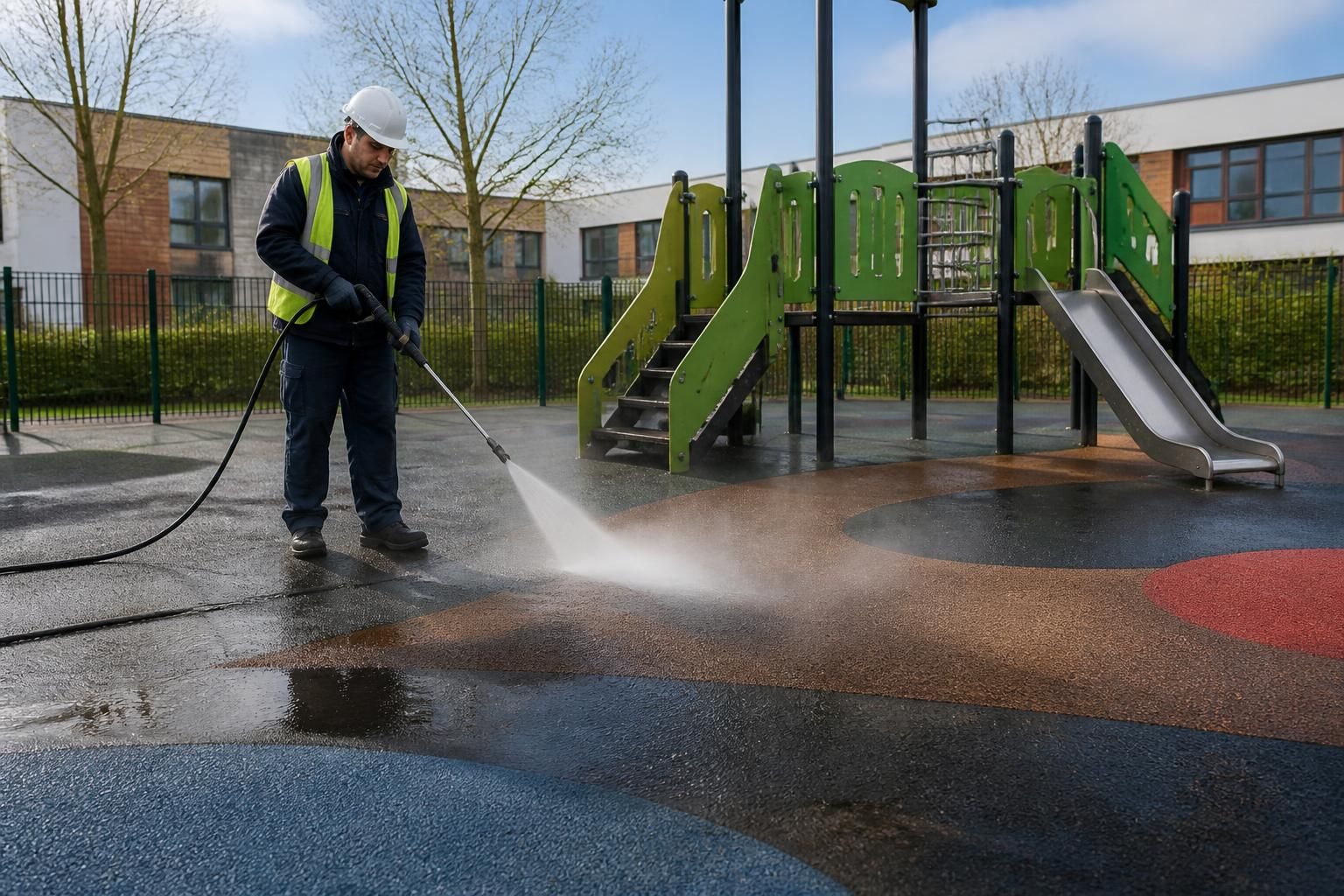
Pressure washing and steam cleaning are generally suitable for robust playground surfaces such as rubber safety surfacing, tarmac, concrete, block paving, metal equipment and many sealed plastics. The cleaning method and pressure must be adjusted to the material and its condition, while delicate, loose, painted, timber or damaged surfaces require a prior assessment and potentially gentler cleaning.
Pressure washing and steam cleaning are generally suitable for robust playground surfaces, including rubber safety surfacing, tarmac, concrete, block paving, metal equipment and many sealed plastic components. The cleaning method must be matched to the material, surface condition and type of contamination. Excessive pressure, heat or water can damage worn, loose, painted, timber or porous surfaces, so a professional assessment is required before cleaning begins.
Rubber safety surfacing
Poured rubber, rubber tiles and bonded rubber mulch can usually be cleaned using controlled low-pressure washing. This removes mud, algae, food residue, bird fouling and general surface grime without the aggressive force that can loosen the material. A wide spray pattern is preferable to a concentrated jet, particularly where the surface is jointed or has started to deteriorate.
Steam cleaning may be suitable for localised contamination and areas where reduced water use is important. However, heat must be carefully controlled. Excessive temperature can affect binders, soften certain rubber products or accelerate existing damage. Before cleaning, the surface should be checked for lifting edges, open joints, cracking, loose granules and areas where the bond has failed.
Tarmac and asphalt
Tarmac is normally compatible with pressure washing when the surface is sound and the cleaning is carried out with suitable pressure and spray distance. It is effective for removing dirt, algae, moss, chewing gum residue and some spillages from paths, play areas and access routes. Operators should avoid directing a powerful, narrow jet at cracks, worn patches or exposed aggregate, as this can enlarge defects and dislodge the surface.
Steam cleaning can be useful for spot treatment, gum removal and oily deposits, provided the heat is appropriate for the condition of the asphalt. Water should not be allowed to collect around damaged edges or drain into areas where it could undermine the surface or create a slip risk.
Concrete and block paving
Sound concrete is well suited to pressure washing and steam cleaning. These methods can remove ingrained dirt, algae, moss, staining and residues from hard-standing areas, pedestrian routes and seating zones. Block paving can also be cleaned effectively, although the joints require particular care. A concentrated jet may remove jointing material, leave uneven gaps or wash debris into drainage channels.
Where block paving has been previously sealed, the cleaning approach should protect the sealant. An inconspicuous test area can establish whether the coating remains stable. Damaged concrete, crumbling edges and areas with exposed reinforcement should be recorded before cleaning rather than treated as if they were sound surfaces.
Metal play equipment
Galvanised steel, stainless steel and powder-coated metal are commonly suitable for controlled pressure washing. Cleaning can remove soil, algae, bird fouling and surface contamination from frames, rails, barriers and other equipment. The spray should not be directed into bearings, moving joints, electrical fittings, drainage holes or enclosed mechanisms.
Steam may be appropriate for targeted cleaning, but heat and moisture can affect certain coatings, labels and protective finishes. Rust, flaking paint and exposed metal need inspection before work. Cleaning alone will not repair corrosion or restore a failing coating, and aggressive washing can expose more of the underlying material.
Plastic and composite components
Many robust, sealed plastics and composite play components can be cleaned with low-pressure washing or controlled steam. Slides, panels, tunnels, seats and activity features should be assessed for fading, brittleness, surface scratches and existing cracks. A narrow jet can mark plastic or force water behind joints and fittings, while excessive heat may distort or dull some materials.
Cleaning should be carried out with a compatible detergent where required, followed by thorough rinsing. Products must not leave a slippery film on climbing surfaces, platforms, steps or slide beds. Manufacturer guidance is particularly important where the plastic has a specialist coating or contains electrical or sensory-play components.
Timber and painted surfaces require greater caution
Pressure washing is not automatically suitable for timber play equipment, timber edging, painted panels or decorative finishes. Wood can absorb water, raise its fibres and suffer damage to coatings when exposed to excessive pressure. Painted surfaces may flake or lose their protective layer, especially where the paint is already weathered.
These materials may be better suited to gentle washing, soft-brushing or carefully controlled steam, subject to a test area and the condition of the finish. Any cleaning method should avoid forcing water into end grain, joints, fixings and cracks. If timber is soft, split, heavily weathered or showing signs of rot, cleaning should be postponed until the responsible party has assessed the need for repair or replacement.
Surfaces that need a pre-cleaning assessment
A site inspection helps determine whether pressure washing or steam cleaning is appropriate. The assessment should consider:
- the material, construction and manufacturer’s cleaning recommendations;
- cracks, loose sections, failed joints, corrosion, worn coatings or other existing defects;
- the type of contamination and whether it requires detergent, steam, brushing or specialist treatment;
- nearby drainage, planting, play equipment, electrical items and sensitive surfaces;
- the risk of creating standing water, slippery residues or contaminated run-off; and
- safe access for operators, children, staff and members of the public during the work.
A small test clean is useful where the material or finish is uncertain. The test should confirm that the surface does not discolour, shed granules, lose jointing material, become roughened or retain a slippery residue. The chosen method can then be adjusted before wider cleaning takes place.
Choosing between pressure washing and steam cleaning
Pressure washing is usually the practical option for larger robust areas and heavy deposits of soil, moss and general grime. It provides efficient coverage, but the pressure, nozzle, spray angle and working distance must be controlled. Steam cleaning is often more suitable for targeted treatment, sensitive contamination or situations where a lower volume of water is preferred. It is not automatically safer for every material: heat can affect rubber binders, coatings, plastics and sealants.
Neither method should be selected solely because it removes contamination quickly. The finished surface must remain safe, stable and suitable for play. Cleaning should therefore be followed by an inspection for loose material, damage, residual moisture, slippery areas and blocked drainage. Any defect identified during the work should be reported so that cleaning is not mistaken for maintenance or repair.
For mixed-material playgrounds, the safest approach is normally a planned combination of methods rather than one setting across the whole site. Robust hard surfaces may receive controlled pressure washing, while equipment, joints, coated components and vulnerable areas are treated with gentler techniques. This protects the surface and supports a consistent hygiene and maintenance standard without unnecessarily shortening the life of playground materials.
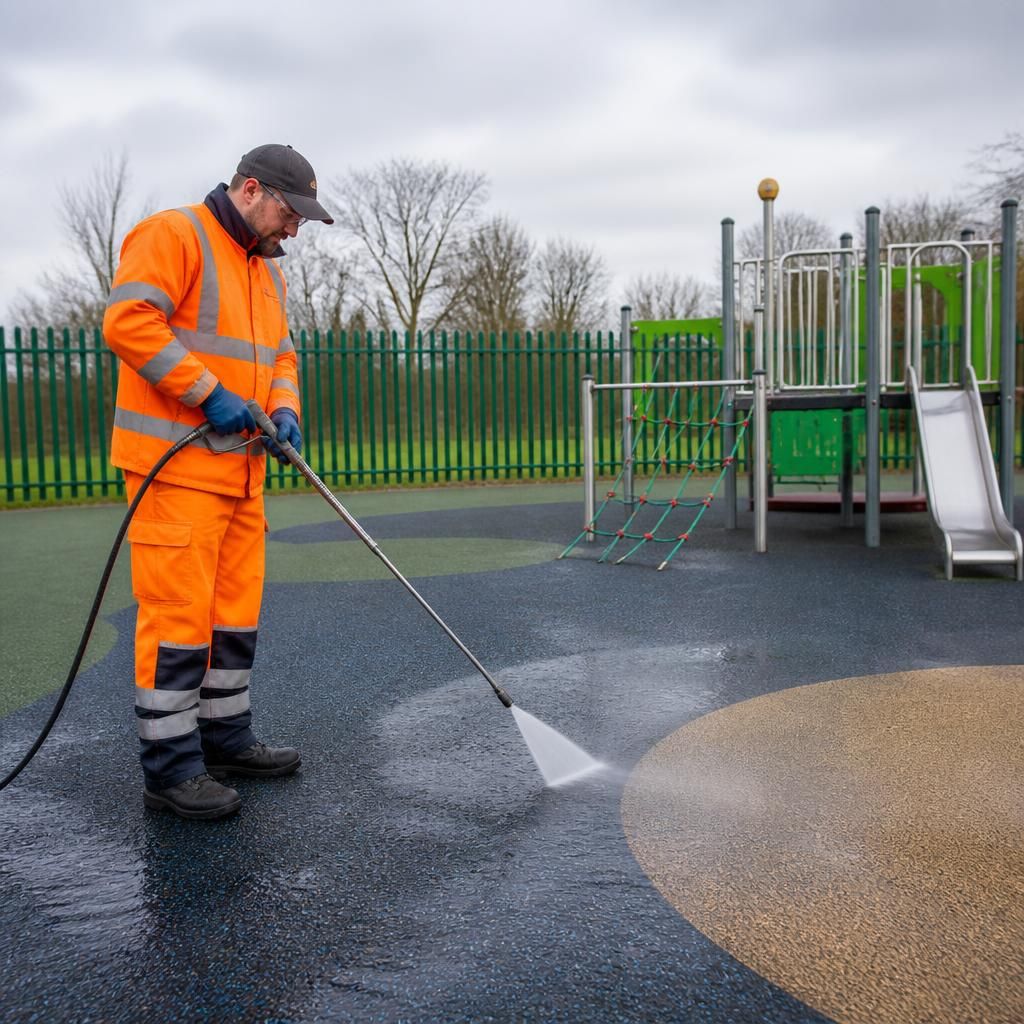
Playground surfaces suitable for pressure washing or steam cleaning are generally sound, robust materials such as rubber safety surfacing, tarmac, concrete, block paving, metal and sealed plastic. The cleaning method must still be matched to the surface condition, contamination and manufacturer’s guidance.
Before cleaning, inspect for loose rubber, open joints, cracks, corrosion, flaking paint, damaged coatings and drainage issues. Where the material or finish is uncertain, carry out a small test clean first. Use controlled pressure and a wide spray pattern on vulnerable areas, and take care around equipment fittings, moving parts and surfaces that could retain slippery residues. Timber, heavily weathered paint and damaged materials may require gentler cleaning or repair assessment instead.
Arrange a professional playground surface assessment
Arrange a professional playground surface assessment to confirm which areas are suitable for pressure washing or steam cleaning and identify any repairs or precautions needed first. Contact Encanto Exterior Cleaning to plan the appropriate cleaning method for your site.