
What tools and equipment are used in playground surface cleaning?
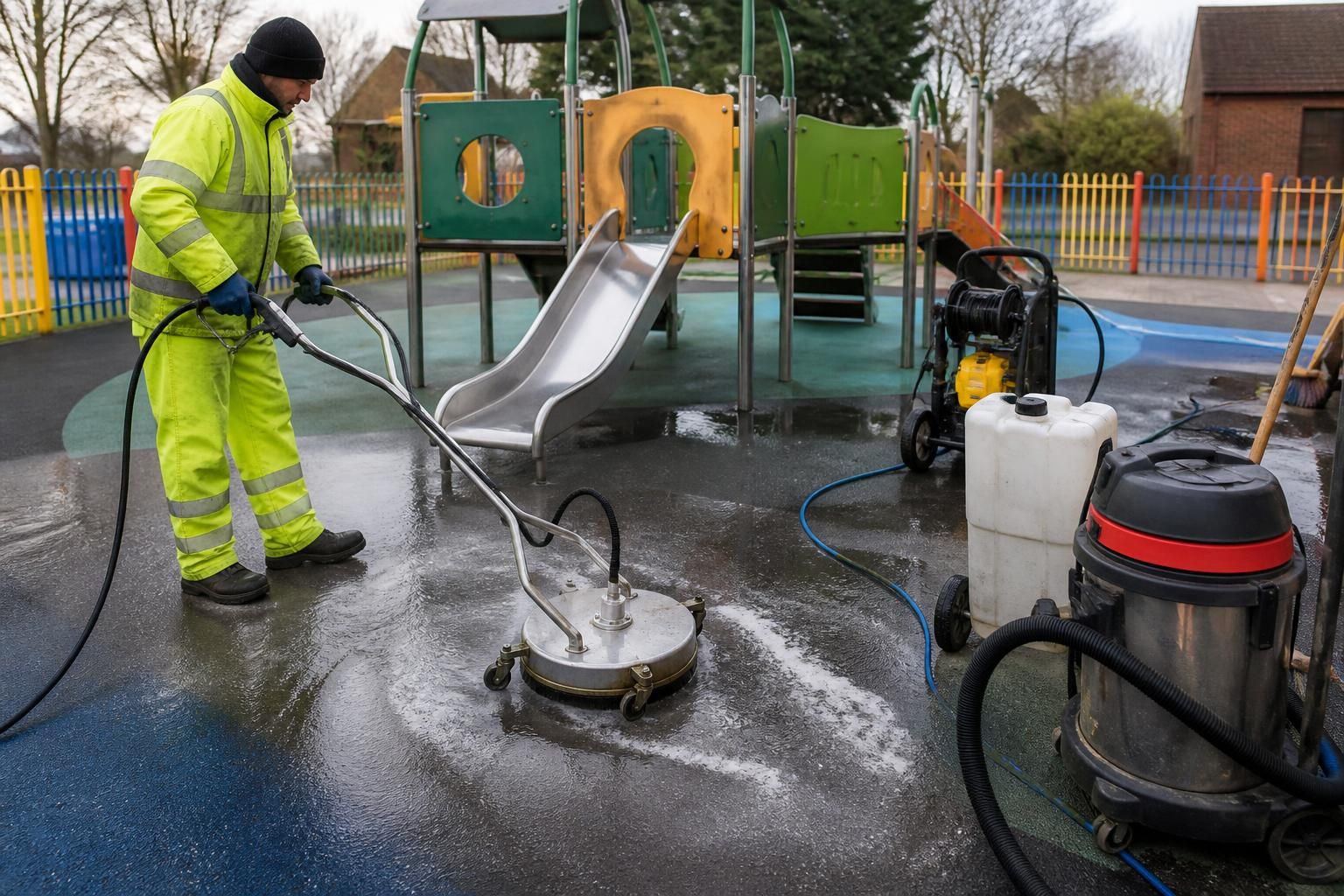
Professional playground surface cleaning uses adjustable pressure washers, steam-cleaning equipment, rotary surface cleaners, wet vacuums and specialist brushes to remove dirt, algae, gum and other contamination without damaging safety surfacing. Operatives may also use low-pressure attachments, suitable detergents, water-recovery equipment and access or inspection tools, selecting each item according to the surface material, contamination and drainage arrangements.
Professional playground surface cleaning uses adjustable pressure-washing systems, steam-cleaning equipment, rotary surface cleaners, wet vacuums and specialist brushes. The equipment is selected according to the surfacing material, the type of contamination, the condition of the area and how water can be safely contained or discharged. The aim is to remove dirt, algae, moss, chewing gum, food residue and other contamination without loosening safety surfacing, damaging coatings or creating a slip hazard.
Adjustable pressure washers are used to remove embedded soil, organic growth and general surface grime. Professional machines allow the operative to control pressure, flow and temperature rather than applying maximum power to every surface. Lower-pressure settings and wider spray patterns are generally more appropriate for wet-pour rubber, rubber tiles and aged surfaces, while more robust materials such as concrete or some tarmac areas may tolerate more intensive cleaning. The nozzle is kept at a suitable distance and moved consistently to reduce the risk of streaking, surface scarring or displacement of loose granules.
Hot-water pressure washing can help break down greasy deposits, biofilm and stubborn dirt more efficiently than cold water alone. However, heat and pressure must be matched to the surface. Excessive heat may affect certain binders, coatings or synthetic materials, so the cleaning method is normally confirmed after inspecting the play area and, where appropriate, testing an inconspicuous section.
Steam-cleaning equipment uses high-temperature steam with relatively low water consumption and controlled mechanical action. It is useful where contamination needs to be softened or sanitised without saturating the playground surface. Steam can assist with chewing gum, greasy marks, algae and ingrained organic residue, particularly around entrances, seating areas and beneath equipment. It is not automatically suitable for every material: the operator must consider heat sensitivity, drainage, surface joints and the condition of the underlying adhesive or binder.
Rotary surface cleaners have a covered rotating head that distributes cleaning action more evenly than a single lance. They can improve consistency across larger hard-surfaced areas and help reduce splash-back onto play equipment, fencing and nearby buildings. The correct head, pressure and operating speed are important. Using an unsuitable rotary cleaner on loose, worn or flexible safety surfacing can cause damage, so these machines are normally reserved for compatible surfaces or used with carefully adjusted settings.
Specialist brushes and agitation tools are used to work detergent into textured or porous areas before rinsing. Soft or medium-bristle brushes may be appropriate for rubber surfacing, while stiffer brushes can help clean compatible hard surfaces and joints. Small hand brushes are useful around drainage channels, kerbs, edges, posts and the bases of play equipment where larger machines cannot reach. Brushes should be chosen to avoid tearing, scratching or pulling granules from the surface.
Wet vacuums and water-recovery equipment collect dirty water after cleaning. This is particularly important where the playground is close to buildings, public footpaths, planted areas, drains or watercourses, or where the drainage system cannot accept a large volume of contaminated runoff. Recovery equipment can also help remove standing water from low points and leave the surface safer to inspect and reopen. Recovered water must be handled and disposed of in accordance with the site arrangements and applicable environmental requirements.
Low-pressure and soft-washing attachments may be used for delicate components surrounding the surfacing, such as painted metal, plastic panels, shade structures and fencing. These attachments allow cleaning solution or rinse water to be applied with less impact than a concentrated high-pressure jet. They are useful for reducing the risk of damage to adjacent equipment, although detergents still need to be compatible with the material and prevented from entering play areas or planted ground unnecessarily.
Detergent application equipment includes proportioning systems, low-pressure sprayers, pump-up sprayers and foaming attachments. A suitable product can loosen organic matter, grease and general soiling before mechanical cleaning. On playgrounds, the product selection is especially important because children may come into contact with the surface. Cleaning chemicals should be used only where necessary, applied at the correct dilution and thoroughly rinsed or removed. Product instructions, COSHH information and the site’s environmental requirements should be followed.
Inspection and assessment tools help determine which equipment can be used safely. Operatives may use torches, moisture checks, surface probes or simple visual inspection tools to identify damaged seams, loose rubber, open joints, blocked drainage and areas where the surface is lifting. Photographs and condition notes can record defects before work begins and distinguish pre-existing maintenance issues from cleaning-related observations. Cleaning equipment is not a substitute for a formal playground safety inspection, but the process may identify defects that require referral to the responsible site manager.
Access equipment may be required for cleaning external play structures, canopies, roofs or high-level surfaces associated with a playground. Depending on the location, this could include portable access systems or other suitable equipment operated by trained personnel. Access arrangements must account for ground conditions, exclusion zones, overhead hazards, nearby users and the possibility of water falling onto people or equipment. Playground cleaning should not begin until the area has been segregated from children, staff and members of the public.
Safety and site-control equipment is used alongside the cleaning machinery. This commonly includes barriers, cones, warning signs, hoses and cable covers, personal protective equipment, gloves, eye and hearing protection, suitable footwear and clothing appropriate to the cleaning chemicals in use. Where there is a risk of aerosol or splash, additional protection may be required. Operators should also have access to clean water, first-aid arrangements and emergency procedures appropriate to the site.
The best equipment combination depends on the surface. Wet-pour rubber and rubber tiles generally require controlled pressure, soft brushing, carefully selected detergents and effective removal of dirty water. Artificial grass may need gentle brushing, low-pressure rinsing and attention to drainage, while avoiding excessive force that could disturb infill or lift edges. Tarmac and concrete can often accept rotary cleaning or higher mechanical action, subject to their age, condition and any painted markings. Coated or specialist surfaces should be treated conservatively and tested before wider cleaning.
Equipment should also be selected according to the contamination. Loose litter is removed manually before wet cleaning; algae and moss may need pre-treatment and brushing; chewing gum often responds to steam or a targeted removal tool; and oily deposits may require a compatible degreasing product followed by controlled rinsing and water recovery. Combining methods is usually more effective and safer than relying on one machine at maximum power.
Before the playground is reopened, the operative should check that visible contamination has been removed, no detergent residue remains, drainage is functioning and the surface is not left excessively wet or slippery. The area should remain closed for as long as necessary for drying and any treatment instructions to be completed. Using adjustable equipment, suitable recovery systems and trained operators helps maintain the cleaning standard while protecting the safety surfacing and surrounding environment.
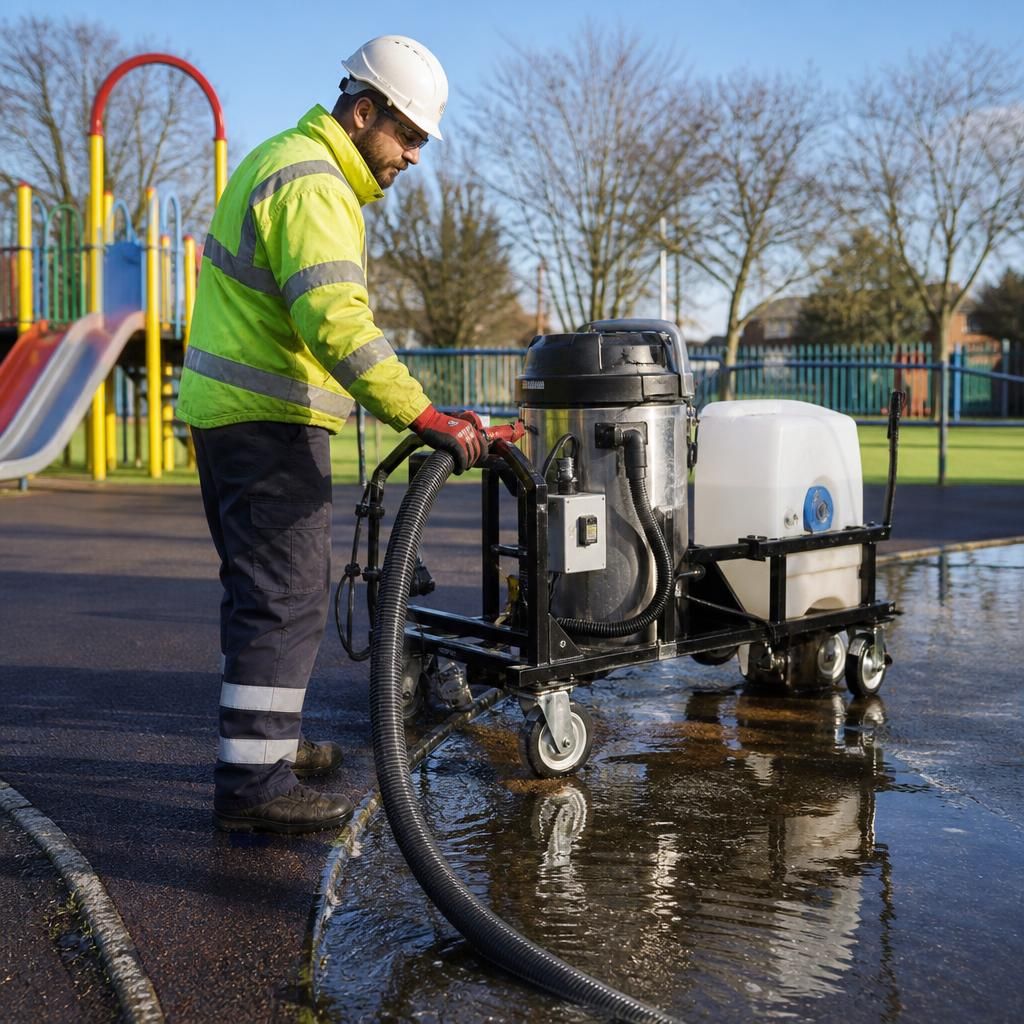
Water-recovery equipment is an important part of playground surface cleaning because it collects contaminated runoff instead of allowing it to spread across paths, planted areas or drainage systems. Wet vacuums, recovery tanks and suitable hoses can remove standing water after pressure washing or rinsing, helping the surface dry more safely and allowing operatives to check for remaining dirt, residue or drainage problems.
Recovery methods are selected according to the playground’s layout, surface condition and drainage arrangements. Collected water must be managed in line with site procedures and environmental requirements, particularly where it may contain detergent, oil, algae or other contaminants. This equipment works alongside barriers, warning signs and personal protective equipment so the area remains segregated until cleaning is complete and the surface is safe to reopen.