
What specific cleaning methods are most effective for different playground surface materials?
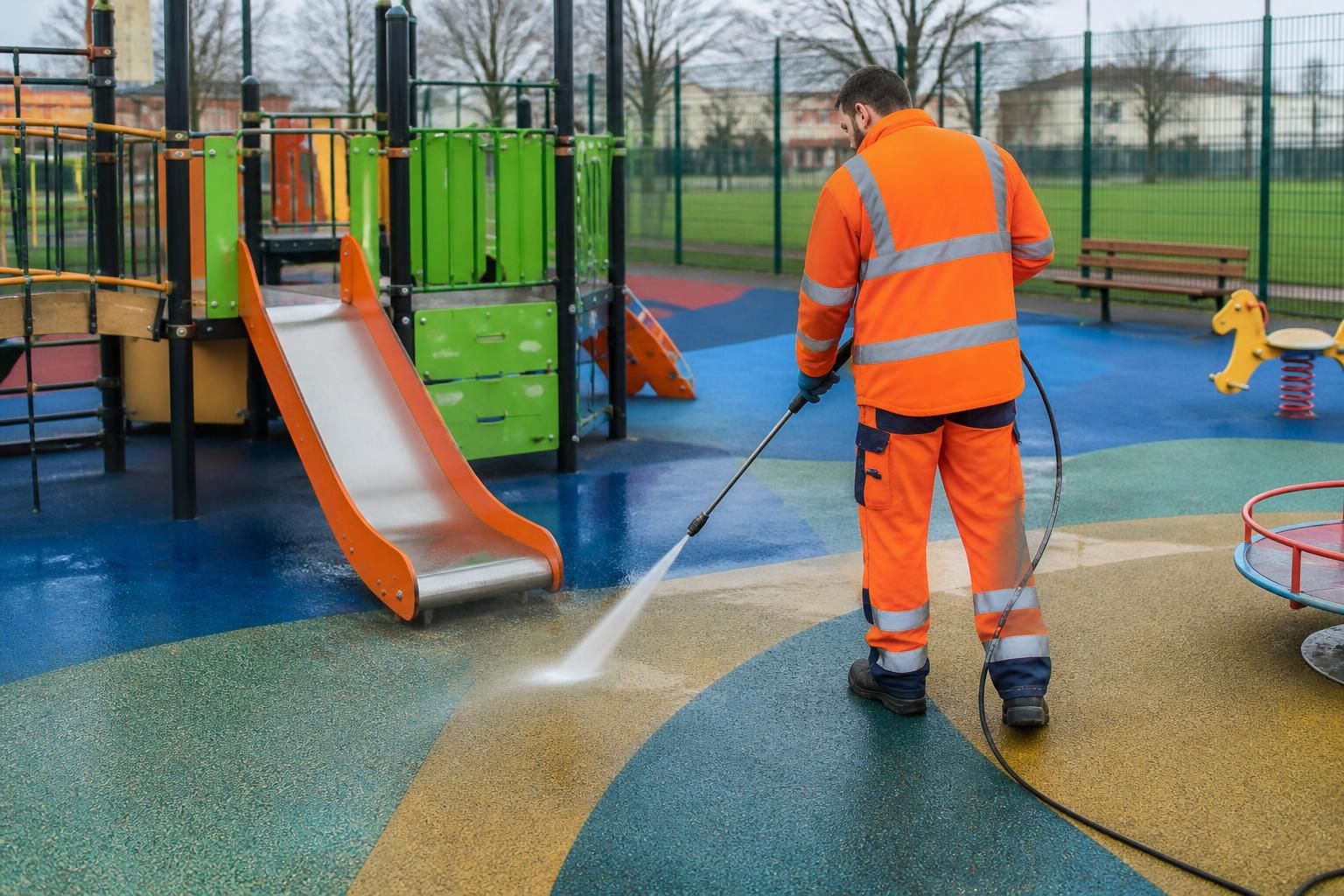
The most effective method depends on the material: low-pressure washing and suitable detergent work well for rubber and wet-pour surfaces, steam cleaning is useful for sensitive or heavily soiled areas, and controlled pressure washing is generally effective for tarmac, concrete and paving. Artificial grass usually needs brushing, debris removal and low-pressure rinsing, while timber or composite decking requires gentler cleaning to avoid damaging the surface or compromising its safety performance.
The most effective playground cleaning method depends on the surface’s construction, porosity, drainage and safety function. Low-pressure washing with a compatible detergent is generally suitable for rubber and wet-pour surfacing; controlled pressure washing works well on tarmac, concrete and paving; steam cleaning is useful where lower water volumes or targeted treatment are needed; and artificial grass usually requires brushing, debris removal and low-pressure rinsing rather than aggressive washing. Timber, composite decking, bark and loose-fill materials need particularly gentle, material-specific treatment.
Before cleaning, the surface should be identified and checked for damage, loose areas, exposed edges, blocked drainage and contamination. The cleaning approach must remove dirt, algae, organic matter, chewing gum, spillages and other contamination without reducing slip resistance, loosening bonded rubber, disturbing impact-attenuating layers or leaving chemical residues. Manufacturer guidance should take priority where it specifies limits for pressure, temperature, detergents or access equipment.
Rubber wet-pour surfaces
Wet-pour rubber, commonly used beneath play equipment, is best cleaned using a low-pressure application of water and a pH-neutral or otherwise surface-compatible detergent. The detergent can be applied evenly, allowed sufficient dwell time to loosen ingrained dirt, and then rinsed away using controlled pressure. Rotary surface cleaners may help produce an even result on suitable installations, but pressure must be kept low enough to avoid damaging the rubber binder or opening joints.
Algae, moss and organic staining should be treated carefully rather than removed by forcing the lance close to the surface. Excessive pressure can dislodge rubber granules, damage the resin bond and expose weak points around seams or drainage channels. Cleaning should be followed by a thorough rinse, with dirty water collected or directed to an appropriate drainage route. Any persistent biological growth may require a compatible biocidal treatment, used in accordance with the product instructions and site environmental controls.
Rubber tiles and modular safety surfacing
Rubber tiles can usually be cleaned in a similar way to wet-pour rubber, but their joints require additional care. Low-pressure washing and a mild detergent are normally preferable to concentrated high-pressure cleaning. The operator should avoid directing water underneath lifted or damaged tiles, as this can worsen movement, undermine the base or leave trapped moisture.
Loose tiles, open joints and damaged edges should be recorded before cleaning. Cleaning will not correct a failed adhesive bond or an uneven impact surface, so defects should be referred for repair rather than concealed by treatment. Where tiles have a textured finish, a soft or medium brush can help lift dirt without abrading the surface.
Artificial grass and synthetic turf
Artificial grass should generally be cleaned by removing litter, leaves and other loose debris first, followed by mechanical brushing or grooming to restore the pile. A low-pressure rinse can remove surface dust, mud and soluble contamination. The water should be directed so that it does not flood the backing or wash out infill.
Strong pressure washing, aggressive rotary cleaning and harsh solvents can flatten fibres, disturb sand or rubber infill and damage the backing. A suitable detergent may be used for food, drink or animal contamination, but it should be tested in an inconspicuous area and rinsed thoroughly. Foul odours or biological contamination may need a specialist product that is compatible with the turf and safe for the intended users. Drainage outlets should be checked after cleaning because compacted debris in the backing can prevent water from leaving the play area.
Tarmac and asphalt
Tarmac is comparatively robust and can usually be cleaned effectively with controlled pressure washing. A surface cleaner or wide fan nozzle helps distribute the water evenly and reduces the risk of creating stripes or scouring marks. Detergent may be used for grease, food residues and organic staining, provided it is compatible with the surface and the resulting wastewater can be managed correctly.
Pressure should be reduced around cracks, repaired sections, soft areas and exposed aggregate. Directing a narrow jet into joints can enlarge defects and remove loose material. Oil, paint and chewing gum often need targeted pre-treatment or specialist removal rather than repeated high-pressure washing. Any repairs should be assessed before cleaning, as water penetration may worsen an already damaged surface.
Concrete, paving slabs and block paving
Concrete and hard paving generally tolerate controlled pressure washing, making it effective for mud, algae, moss, surface grime and many spillages. A rotary surface cleaner can provide a consistent finish across larger areas, while a lance with a suitable fan pattern is useful around play equipment, kerbs and edges.
Porous concrete and paving may retain oils, food residues and biological staining. A compatible detergent or degreaser can be applied before rinsing, with sufficient dwell time to work without drying on the surface. Care is needed around loose slabs, open joints, soft mortar and damaged concrete. Excessive pressure can remove jointing material, create surface etching or expose aggregate. Re-sanding or other remedial work may be necessary where joint material has been displaced.
Timber and composite decking
Timber should be cleaned with a soft brush and a mild, suitable detergent, followed by low-pressure rinsing along the grain. Excessive pressure can raise the grain, strip protective coatings, mark the boards and create splinters. Particular attention should be paid to algae on walking routes, but treatment must not leave the surface excessively slippery or saturated.
Composite decking may tolerate more moisture than natural timber, but it can still be marked by concentrated pressure, heat or unsuitable solvents. A soft brush, low-pressure rinse and manufacturer-approved cleaner are usually the safest combination. Board gaps and drainage channels should be cleared without forcing debris beneath the decking.
Loose-fill surfaces, bark and engineered wood fibre
Loose-fill materials are not normally suited to conventional pressure washing. Water can displace the material, create uneven depths and carry contaminants into the surrounding ground or drainage system. Cleaning should focus on litter picking, raking, levelling and removing contaminated or compacted material. Bark and engineered wood fibre may need topping up or partial replacement rather than washing.
Where a loose-fill area has been contaminated by bodily fluids, animal fouling, fuel or chemicals, the affected material should be isolated and removed in line with the site’s hygiene and waste procedures. The underlying drainage and surrounding fixed surfaces can then be cleaned using methods appropriate to those materials.
Steam cleaning for sensitive or targeted areas
Steam cleaning can loosen grease, chewing gum and biological contamination while using less rinse water than conventional washing. It is useful around rubber edges, equipment supports, narrow access points and areas where wastewater needs to be limited. However, heat is not automatically suitable for every playground surface. Excessive temperature can affect rubber binders, coatings, adhesives, artificial grass components or composite materials, so the equipment must be set according to the surface manufacturer’s guidance.
Steam treatment should be tested on a small, discreet area first. It is normally a targeted method rather than a replacement for removing loose debris and rinsing an entire site. Any loosened contamination and residue still need to be collected, and the area must be left safe and suitably dry before reopening.
Practical method selection and quality checks
- Remove litter, leaves, soil and loose contamination before applying water or detergent.
- Protect or isolate play equipment, nearby planting, electrical items and drainage points where necessary.
- Test the proposed detergent and pressure setting in an inconspicuous area.
- Use the lowest pressure, temperature and chemical strength that will achieve the required result.
- Work from cleaner areas towards dirtier areas and prevent dirty water from spreading across cleaned surfaces.
- Rinse thoroughly where detergent has been used, ensuring no slippery residue remains.
- Inspect joints, edges, drainage, infill levels, rubber granules and repaired areas after cleaning.
- Keep the playground closed until the surface is safe to use and any required drying or treatment period has passed.
Professional cleaning should be treated as part of wider playground maintenance. Cleaning can improve hygiene, appearance and surface traction, but it does not replace inspections, impact-surface testing, repairs or checks on the condition and depth of safety surfacing. Recording the material, cleaning method, products used, defects found and any follow-up work provides a useful maintenance history and helps ensure future cleaning is both effective and appropriate.
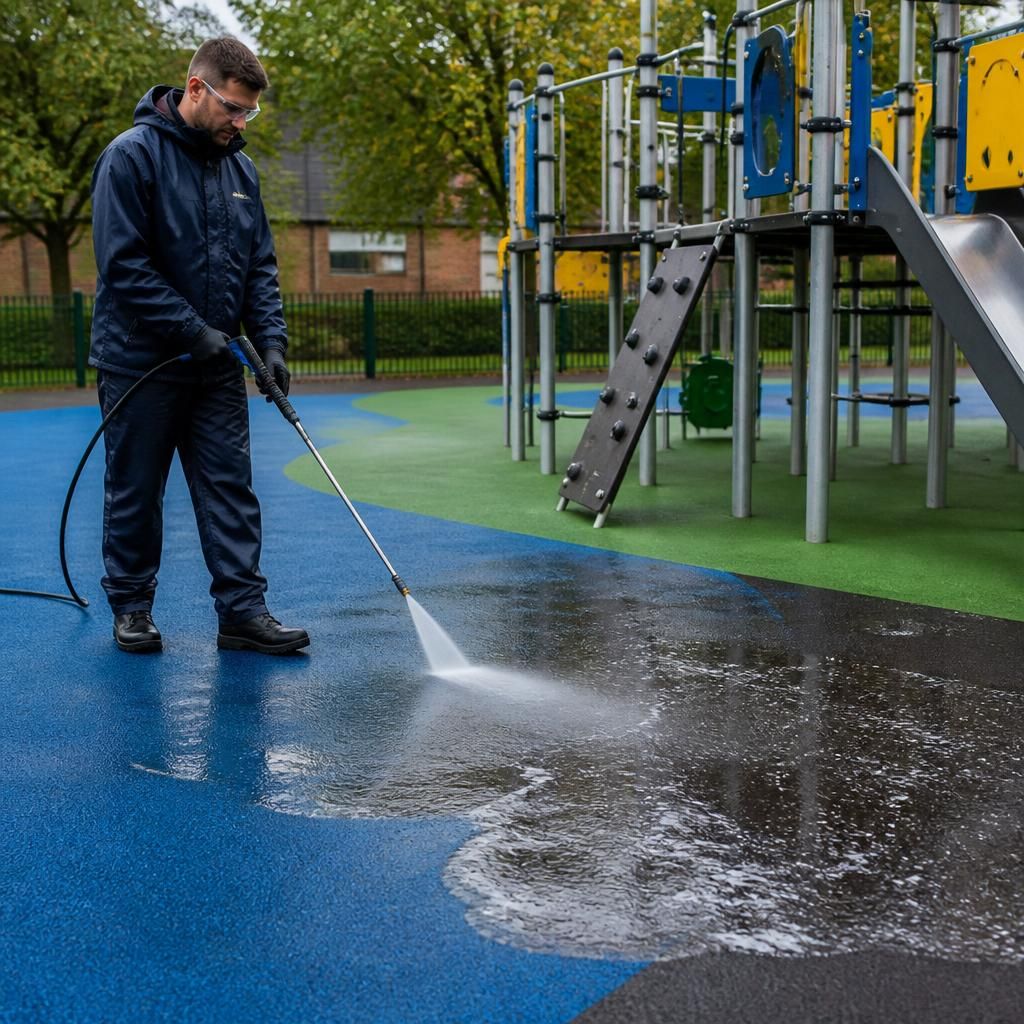
The safest cleaning method is the least aggressive method that removes the contamination effectively. Before treating a playground surface, identify the material and test the proposed pressure, temperature and detergent on a discreet area. This is particularly important for wet-pour rubber, artificial grass, timber and composite decking, where excessive pressure or heat can damage binders, fibres, coatings or joints.
Use low-pressure washing and a compatible detergent for rubber surfaces, controlled pressure for tarmac and paving, and brushing with gentle rinsing for artificial grass. Steam cleaning can be useful for targeted grease, gum or biological contamination, but it must be suitable for the surface and followed by residue removal. After cleaning, inspect drainage, joints, edges, infill and impact-attenuating areas before reopening the playground.