
What factors influence the frequency of professional cleaning for playground surfaces?
The frequency of professional playground surface cleaning is influenced by how heavily the area is used, the type and condition of the surface, weather exposure, nearby trees or pollution, and the level of hygiene and safety risk. Regular inspections should determine whether scheduled cleaning or additional treatment is needed after heavy use, adverse weather, vandalism, spills or visible contamination.
Professional playground surface cleaning frequency is determined by the level of use, the surface material, weather exposure, surrounding environment, visible contamination and the safety risks identified during inspections. A busy public playground beside trees, roads or food areas will normally require more frequent cleaning than a lightly used private play area in a sheltered location. The correct approach is to combine planned maintenance with additional cleaning whenever conditions create a hygiene, slip or surface-performance concern.
Usage is one of the main influences. High footfall brings more soil, grit, food residue, litter and organic matter onto safety surfacing. Frequent use can also work contaminants into textured rubber, wetpour, artificial grass and other porous materials. Playgrounds used by nurseries, schools, parks, holiday facilities or residential developments may therefore need closer monitoring than areas with intermittent use. Usage should be assessed alongside the age of the equipment, the number of entrances, the presence of seating and whether users commonly eat or drink nearby.
The type and condition of the surface also affect the appropriate interval. Smooth sealed surfaces are generally easier to inspect and clean, while porous or textured surfaces can retain moisture, soil, algae and other residues. Wetpour rubber, rubber tiles, artificial grass, bonded rubber and concrete each respond differently to pressure, steam, detergents and water recovery. A surface that is worn, cracked, loose, poorly drained or beginning to delaminate may require gentler methods and more frequent inspections rather than simply more aggressive cleaning.
Weather has a direct effect on contamination and biological growth. Rain can spread mud and organic debris across a play area, while persistent dampness encourages algae, moss and other growth, particularly in shaded locations. Warm, wet conditions can increase the rate at which organic residues become established. Dry weather may leave dust and fine grit on the surface, and strong winds can deposit leaves, pollen and other debris. Cleaning should be reviewed after prolonged wet weather, storms, flooding or periods when the surface remains damp because drainage is restricted.
The surrounding environment can shorten the cleaning interval. Trees shed leaves, seeds, sap and bird mess, especially where branches overhang equipment or safety surfacing. Playgrounds near busy roads, construction sites, industrial premises or unmade ground may receive additional dust, soot and airborne particles. Sites close to cafés, schools or picnic areas can also experience more food and drink spillages. These conditions should be considered when setting a maintenance plan rather than relying on the same frequency for every location.
Visible contamination is a reason for responsive cleaning, regardless of the planned schedule. This includes bird droppings, animal fouling, vomit, blood, chewing gum, spilled drinks, grease, paint, graffiti, broken glass and other hazardous debris. Contamination should be isolated and assessed promptly, particularly where it could be spread by contact or create a slip, cut or trip risk. The cleaning method must suit the material and the substance involved, with appropriate collection and disposal of contaminated waste.
Hygiene expectations and the vulnerability of users are also relevant. Playgrounds used by young children involve frequent hand-to-mouth contact, so residues on touch points and adjacent surfaces deserve particular attention. Where a site is used by children with additional needs, or forms part of a school, nursery, healthcare or managed residential setting, the operator may require more detailed inspection records and a more controlled cleaning programme. Cleaning should support, but not replace, routine litter picking, hand hygiene and prompt removal of animal fouling.
Inspection findings should determine whether the planned frequency remains suitable. Inspections should look for staining, odours, algae, moss, embedded dirt, slippery areas, blocked drainage, standing water, loose granules, damaged joints and changes in the surface texture. They should also identify contamination around gates, benches, bins, entrances and the bases of play equipment, where debris often accumulates. Recurring defects may indicate a drainage, landscaping or maintenance issue that cleaning alone will not resolve.
A practical programme normally combines several levels of attention:
- Routine checks: remove litter and obvious debris, identify fouling or spillages and confirm that the surface remains clean, dry and usable.
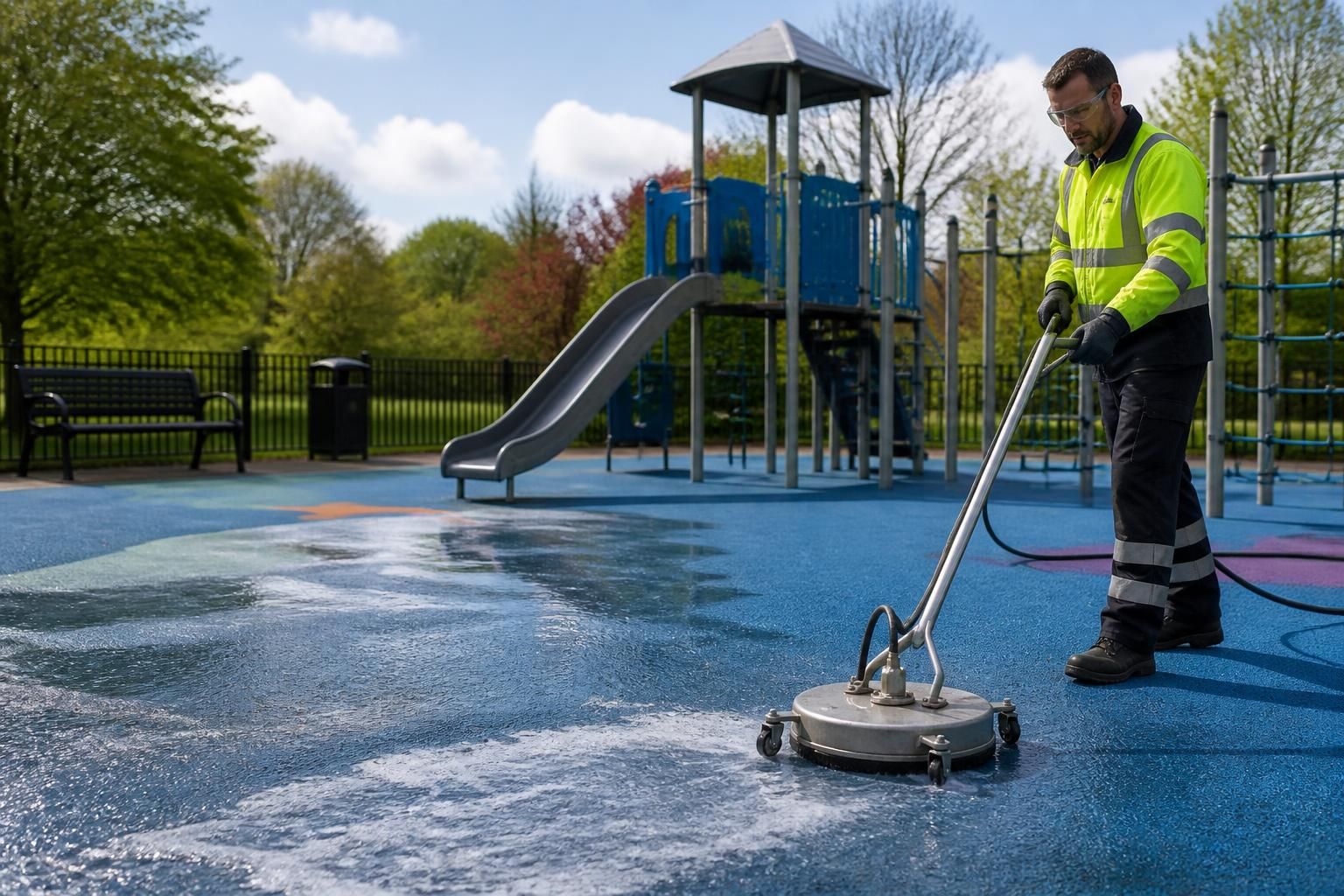
- Planned professional cleaning: use an appropriate pressure washing, steam cleaning or low-pressure treatment process to remove accumulated dirt, organic growth and ingrained residues.
- Triggered cleaning: arrange additional treatment after adverse weather, heavy events, vandalism, flooding, construction work, significant spillages or other contamination.
- Review cleaning: reassess the programme when inspections show recurring algae, staining, poor drainage or a change in usage.
Pressure and temperature should be selected according to the surface manufacturer’s guidance and the condition of the installation. Excessive pressure, heat or chemical use can damage rubber, dislodge infill, affect colour or drive contamination deeper into porous materials. Professional cleaning should therefore include a site assessment, suitable test areas where necessary, controlled water use and protection of nearby planting, drainage systems and equipment. Any treatment should be rinsed or recovered appropriately so that residues do not remain where children play.
Seasonal planning is useful, but a calendar alone is not sufficient. A thorough clean may be appropriate before a period of increased use, after autumn leaf fall or when damp conditions have encouraged biological growth. The timing should then be adjusted according to the site’s actual condition, weather and usage. Keeping records of inspections, contamination incidents, treatments, products and surface defects helps demonstrate that the frequency is based on risk rather than guesswork.
There is no universal cleaning interval that is suitable for every playground. The most reliable schedule is a documented, risk-based plan that reflects use, surface type, local exposure and inspection results. If a surface becomes slippery, heavily contaminated, waterlogged or damaged, it should be taken out of use where necessary and assessed before cleaning or repair. Working to the manufacturer’s care requirements and the operator’s health and safety procedures helps maintain hygiene without compromising the safety performance of the playground surface.
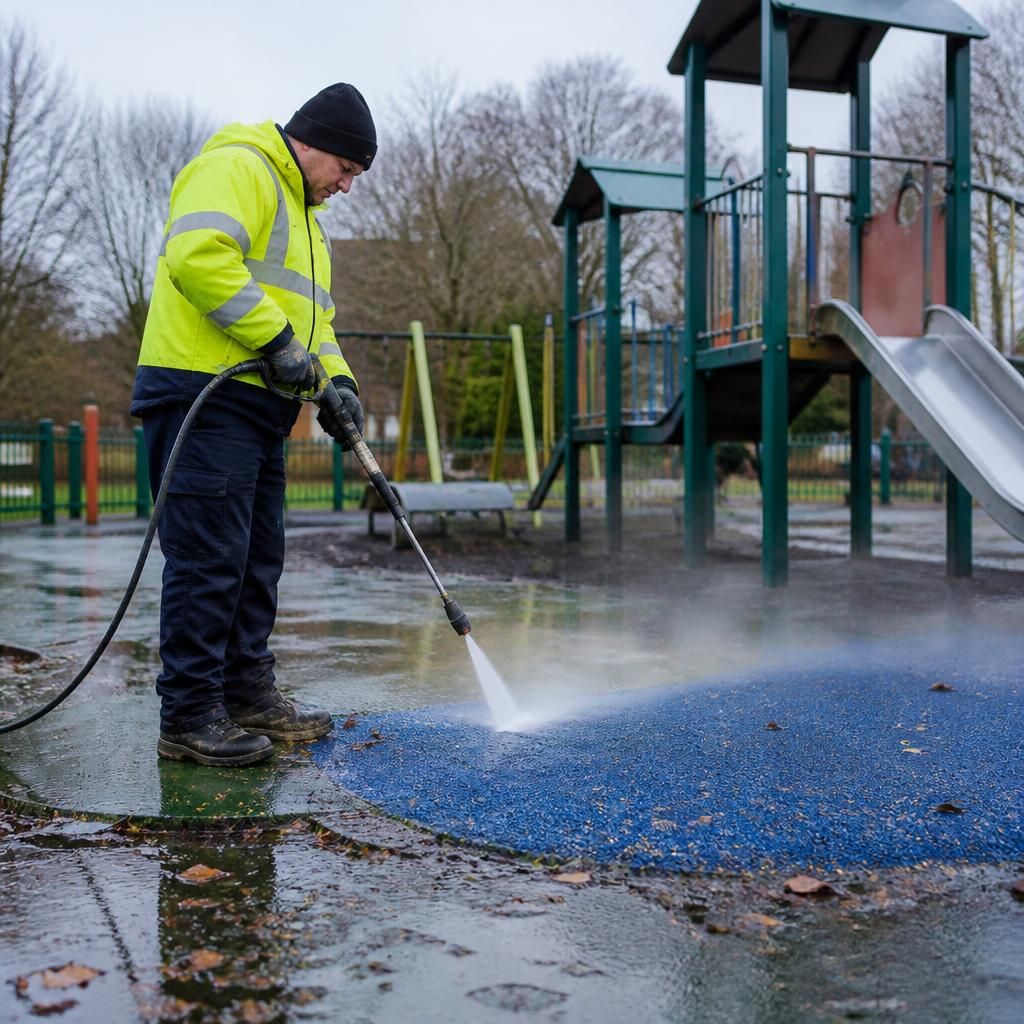
Playground cleaning frequency should be based on risk, not a fixed calendar alone. Busy areas, porous safety surfaces, shaded locations and sites exposed to leaves, mud, food waste or road dust usually need closer inspection and more frequent professional cleaning than lightly used, sheltered play areas.
Additional cleaning may be needed after heavy rain, flooding, storms, events, vandalism or spillages. Inspections should check for algae, moss, embedded dirt, standing water, odours, slippery patches and surface damage. These findings help determine whether the existing schedule remains suitable and whether the surface needs cleaning, repair or temporary isolation.
Arrange a Professional Playground Surface Cleaning Assessment
Arrange a professional playground surface cleaning assessment with Encanto Exterior Cleaning to review usage, surface condition, drainage, contamination and local environmental exposure. We can help establish a practical cleaning schedule suited to your site and safety requirements.