
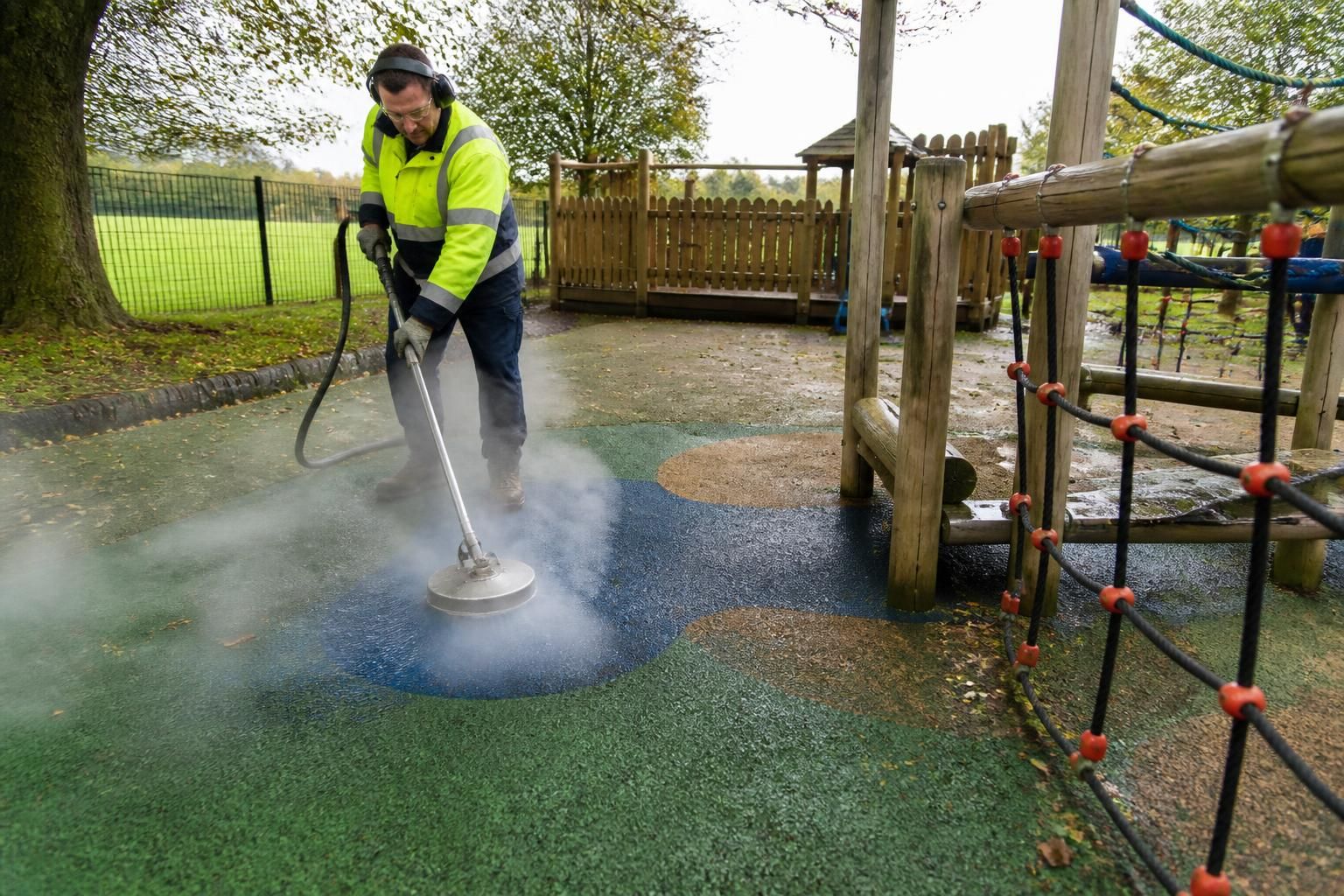
What environmental benefits can result from using eco-friendly cleaning products for playground surfaces?
Eco-friendly cleaning products can reduce harmful chemical runoff, protect nearby soil and water, and limit damage to grass, planting and playground surface materials. When selected and applied correctly, biodegradable or low-toxicity solutions also reduce fumes and residues while supporting safer, more sustainable playground maintenance.
Using suitable eco-friendly cleaning products on playground surfaces can reduce harmful chemical runoff, protect surrounding soil and drainage systems, limit residues on play areas and reduce the risk of damage to vegetation, surface materials and nearby watercourses. The environmental benefit depends on the product formulation, the type of playground surface, the cleaning method and how wastewater is managed.
Reduced chemical pollution
Traditional cleaning products may contain strong solvents, chlorine compounds, phosphates, fragrances or other substances that can enter surface water through drains and runoff. A biodegradable, low-toxicity product is generally less harmful when used correctly, particularly where the playground is close to grassed areas, planting beds, ponds or open drainage channels.
This does not mean that every product labelled as “eco-friendly” is harmless in all circumstances. Cleaning chemicals still need to be selected according to their ingredients, intended use and environmental instructions. Products should be used at the lowest effective concentration, with no unnecessary repeat application.
Better protection for soil, planting and water
Runoff from a playground can carry cleaning residues into soil or drainage systems. Excessive exposure to unsuitable chemicals may affect grass, ornamental planting and soil organisms, while contaminated water can place additional pressure on receiving watercourses. Using an appropriate biodegradable solution helps reduce the persistence of residues after cleaning, especially when combined with controlled application and responsible wastewater collection or disposal.
Care is particularly important on sites where rainwater drains discharge directly into the environment. A cleaning plan should identify nearby drains, watercourses and planted areas before work begins. Runoff should not simply be directed into a surface-water drain unless this is permitted and the discharge is suitable.
Lower risk of residues on play surfaces
Children may have direct contact with wet or recently cleaned playground flooring, equipment and surrounding hard surfaces. Products with lower toxicity and fewer persistent ingredients can reduce the likelihood of problematic residues being left behind. Thorough rinsing, where appropriate for the material and drainage arrangements, and allowing the surface to dry fully are still essential.
Eco-friendly products do not replace normal hygiene controls. Areas affected by animal fouling, bodily fluids, vomit or other contamination may require a specific disinfectant or specialist treatment. In these situations, the safest approach is to use a product that is effective against the relevant contamination while selecting the least environmentally damaging option that meets the required hygiene standard.
Less damage to playground materials
Harsh chemicals can accelerate fading, corrosion, surface breakdown or deterioration of certain materials, including rubber safety flooring, artificial grass, painted metal, plastics, timber and sealants. A compatible, milder product can help preserve these materials and reduce the need for premature replacement.
Extending the service life of a playground surface has an environmental advantage because it can reduce demand for new materials, manufacturing, transport and disposal. Compatibility should always be checked first, as a product that is suitable for concrete or paving may not be appropriate for wet-pour rubber, bonded rubber mulch or synthetic grass.
Reduced air pollution and chemical vapour
Low-odour and low-volatility formulations can reduce the release of unpleasant fumes during application. This can be beneficial for workers, nearby residents and users of the site, particularly where cleaning takes place in enclosed play areas or close to buildings.
Steam cleaning can also reduce reliance on chemical products for some types of dirt and organic build-up. However, steam is not suitable for every material or contamination type, and excessive heat can affect certain rubber, plastic, painted or bonded surfaces. The method should be chosen after assessing the surface condition and manufacturer’s care requirements.
Potentially lower water and energy impacts
Some eco-friendly cleaning systems are designed to work effectively at lower concentrations or with mechanical agitation, which may reduce the volume of product and water needed. Pressure washing, steam cleaning and targeted manual treatment can also be used selectively rather than applying chemicals across the whole site.
These benefits are not automatic. Pressure washing can create substantial runoff, while steam equipment requires energy. A responsible method uses the least intensive combination of water, heat, pressure and cleaning solution that achieves the required hygiene result. Avoiding unnecessary cleaning passes is often as important as choosing the product itself.
How professional practice increases the environmental benefit
- Inspect the surface and identify the type of contamination before choosing a product.
- Check the product’s safety data sheet, dilution instructions and environmental disposal guidance.
- Confirm compatibility with rubber, artificial grass, resin, concrete, tarmac, timber, plastics and painted equipment.
- Protect or avoid nearby planting, soil, watercourses and sensitive drainage points.
- Apply solutions precisely rather than over-spraying surrounding areas.
- Use controlled pressure, steam or agitation to reduce unnecessary chemical use.
- Prevent contaminated wastewater from entering unsuitable drains or natural water.
- Rinse and dry the area as required, while avoiding uncontrolled discharge.
- Keep records of the products and methods used for site management and compliance purposes.
The strongest environmental outcome comes from combining a suitable eco-friendly product with sound site controls. Product claims should be assessed carefully rather than accepted solely because of terms such as “natural” or “green”. A product may be biodegradable but still harmful to aquatic life at high concentrations, and a disinfectant may be necessary for hygiene even though it requires more careful handling.
For playground cleaning in Birmingham, the West Midlands and elsewhere in the UK, the cleaning specification should therefore consider the surface material, nearby drainage, contamination risk, weather conditions, required hygiene level and wastewater arrangements. This ensures that environmental protection supports, rather than compromises, safe and effective playground maintenance.
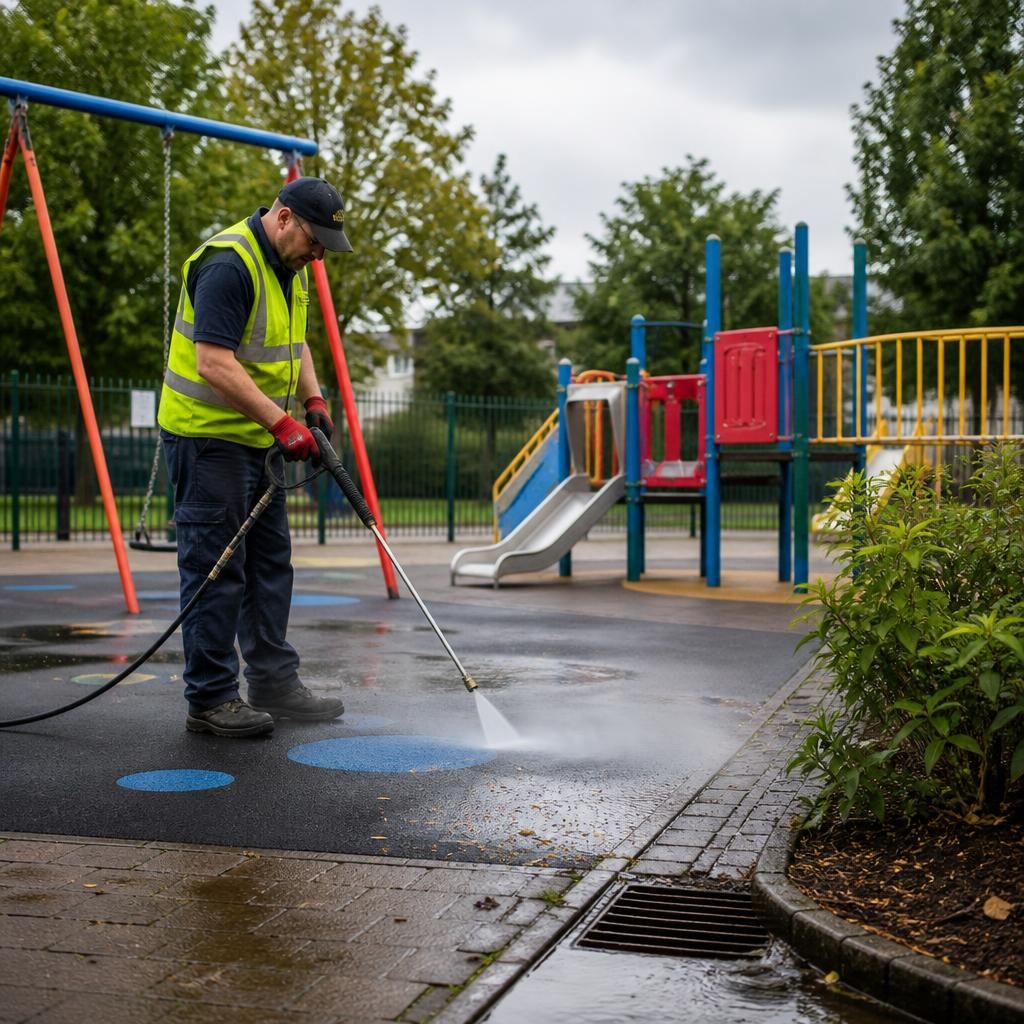
Eco-friendly cleaning products can reduce the environmental impact of playground surface cleaning by limiting persistent chemical residues in runoff. When a suitable biodegradable or low-toxicity product is applied at the correct dilution, there is less risk of harming nearby planting, soil, drainage systems and watercourses.
The product alone does not determine the outcome. The cleaning team should identify surface-water drains and sensitive areas before work, apply the solution precisely, and prevent contaminated wastewater from entering unsuitable drains. Product instructions and safety data should also be checked, as some biodegradable ingredients can still affect aquatic life if used at high concentrations.
Using the least intensive combination of cleaning solution, water, pressure and heat needed for the surface helps reduce unnecessary resource use. Correct product selection can also protect rubber flooring, artificial grass, plastics and painted equipment from premature deterioration, reducing the environmental impact associated with replacement and disposal.
Request an Eco-Friendly Playground Cleaning Assessment
Request an eco-friendly playground cleaning assessment from Encanto Exterior Cleaning to review the surface materials, contamination risks, drainage and suitable cleaning products. We can recommend a practical cleaning method that supports hygiene while limiting environmental impact.